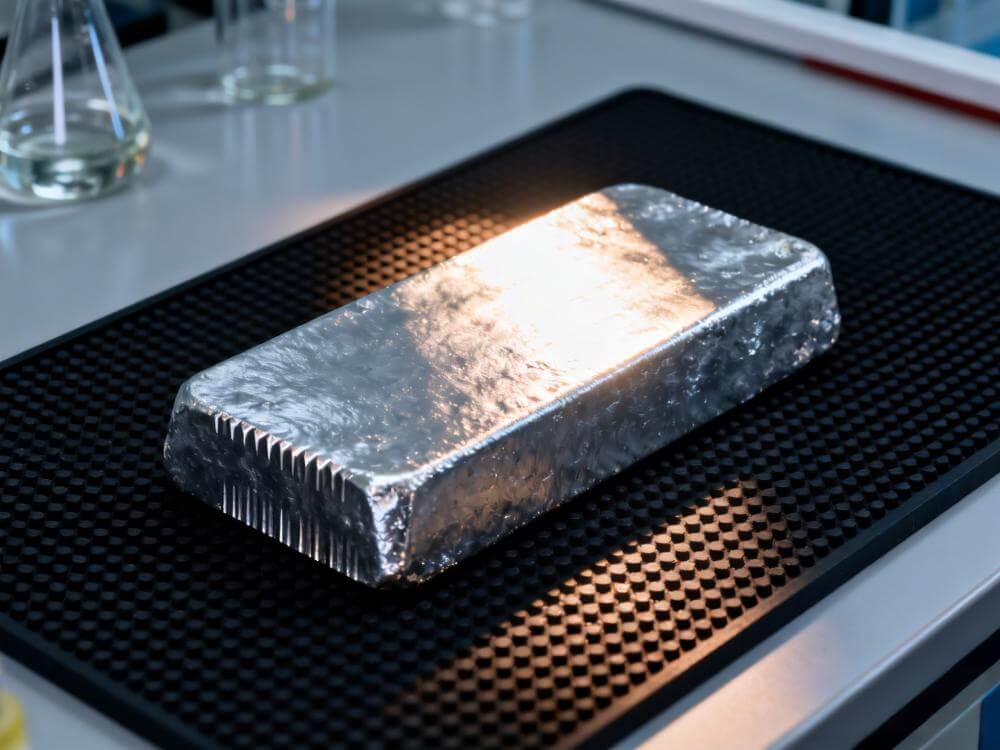
The United States Geological Survey announced on Monday that it would consult the public on the revised draft of key minerals by December 9. The revised draft currently lists 50 minerals.
Under the Energy Act of 2020, "critical minerals" are defined as non-fuel minerals or mineral materials that are critical to the United States economy or national security and the supply chain, and are vulnerable to interference.
Key minerals are also characterized as playing an important role in the manufacturing process of products, without which they would have a significant impact on the economy or national security.
"the USGS list of key minerals provides industry, policy makers, economists and scientists with important information about the most important minerals in the US supply chain," said Tanya Trujillo, assistant secretary for water and science at the Home Office.
"Statistics and information are critical to understanding the vulnerability of the United States to critical mineral supply disruptions, including global supply and demand data on minerals and materials that are critical to the U.S. economy and national security."
In 2018, the Ministry of the Interior, in consultation with other cabinet agencies, developed the first list of key minerals in the United States in response to Executive order 13817.
Under the Energy Act, the department needs to review and update the list of key minerals at least every three years, update the methods used to identify potentially critical minerals, collect inter-agency feedback and public comments through the Federal Gazette, and finalize the list of key minerals, also known as the "government as a whole" list of key minerals.
Two years later, the United States Geological Survey, in cooperation with the key Minerals Subcommittee of the National Council for Science and Technology, released a report describing the updated methods and results of the assessment list of key minerals. The report forms the basis of the draft government-wide list of key minerals in 2021.
The draft list of key mineral resources of the whole government in 2021 includes the following:
Aluminum, used in almost all sectors of the economy
Antimony, for lead-acid batteries and flame retardants
Arsenic for semiconductors
Barite, used in the production of hydrocarbons.
Beryllium, used as an alloying agent in the aerospace and defense industries
Bismuth, used in medicine and atomic research
Cerium for catalytic converters, ceramics, glass, metallurgy and polishing compounds
Cesium for research and development
Chromium, mainly used in stainless steel and other alloys
Cobalt for rechargeable batteries and superalloys
Dysprosium for permanent magnets, data storage devices and lasers
Erbium for optical fibers, optical amplifiers, lasers and glass colorants
Europium for phosphors and nuclear control rods
Fluorite, used in the manufacture of aluminum, cement, iron and steel, gasoline and fluorine chemicals
Gadolinium for medical imaging, permanent magnets and steelmaking
Gallium for optical devices such as integrated circuits and LED
Germanium for optical fiber and night vision applications
Graphite for lubricants, cells and fuel cells
Hafnium for nuclear control rods, alloys and high temperature ceramics
Holmium for permanent magnets, nuclear control rods and lasers
Indium for liquid crystal displays
Iridium, used as anodic coating and chemical catalyst for electrochemical processes
Lanthanum, used in the production of catalysts, ceramics, glass, polishes, metallurgy and batteries
Lithium for rechargeable batteries
Lutetium, a scintillator for medical imaging, electronics and some cancer treatments
Magnesium, used as alloys and reducing metals
Manganese, for steelmaking and batteries
Neodymium for permanent magnets, rubber catalysts and medical and industrial lasers
Nickel, used in the manufacture of stainless steel, superalloys and rechargeable batteries
Niobium, mainly used in steel and superalloys
Palladium for catalytic converters and as catalysts
Platinum for catalytic converters
Praseodymium for permanent magnets, batteries, aviation alloys, ceramics and colorants
Rhodium for catalytic converters, electronic components and catalysts
Rubidium for electronic research and development
Ruthenium, used as a catalyst, as well as electrical contacts and chip resistors in computers
Samarium, used in permanent magnets, absorbents for nuclear reactors and cancer treatment
Scandium for alloys, ceramics and fuel cells
Tantalum, used in electronic components, mainly capacitors and superalloys
Tellurium, used in solar cells, thermoelectric equipment and as an alloy additive
Terbium for permanent magnets, optical fibers, lasers and solid-state devices
Thulium for various metal alloys and lasers
Tin, used as a protective coating and alloy for steel
Titanium, used as a white pigment or metal alloy
Tungsten, mainly used in the manufacture of wear-resistant metals
Vanadium, mainly used as alloying agent for iron and steel
Ytterbium for catalysts, scintillators, lasers and metallurgy
Yttrium for ceramics, catalysts, lasers, metallurgy and phosphors
Zinc, mainly used in metallurgical production of galvanized steel
Zirconium for high temperature ceramics and corrosion resistant alloys.
![ถ่านหินพุ่งจุดชนวนตลาดแมกนีเซียม การปรับฐานสองเดือนสิ้นสุดลง การลดกำลังการผลิตและการลดสต็อกส่งสัญญาณขาขึ้นรอบใหม่ [บทวิเคราะห์ SMM]](https://imgqn.smm.cn/usercenter/mLwgx20251217171723.jpeg)
![ต้นทุนที่สูงขึ้นดันราคาแมกนีเซียมพุ่ง แต่ดีมานด์อ่อนแอทำให้การปรับขึ้นไม่ยั่งยืน [บทวิเคราะห์แมกนีเซียมรายสัปดาห์จาก SMM]](https://imgqn.smm.cn/usercenter/rUQIB20251217171723.jpeg)