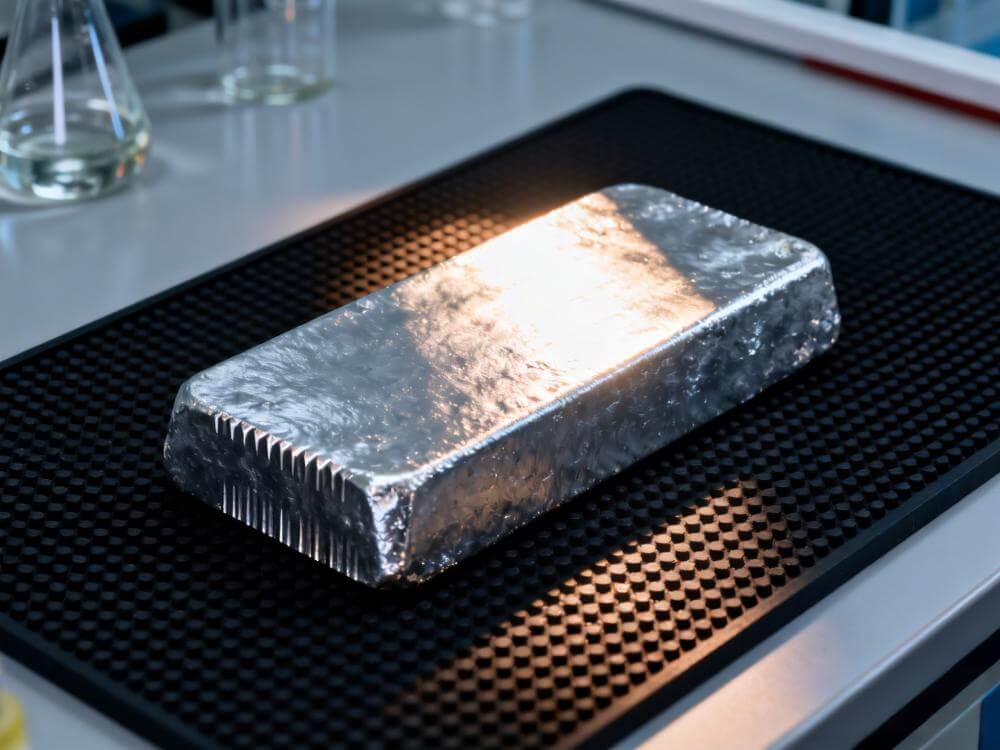
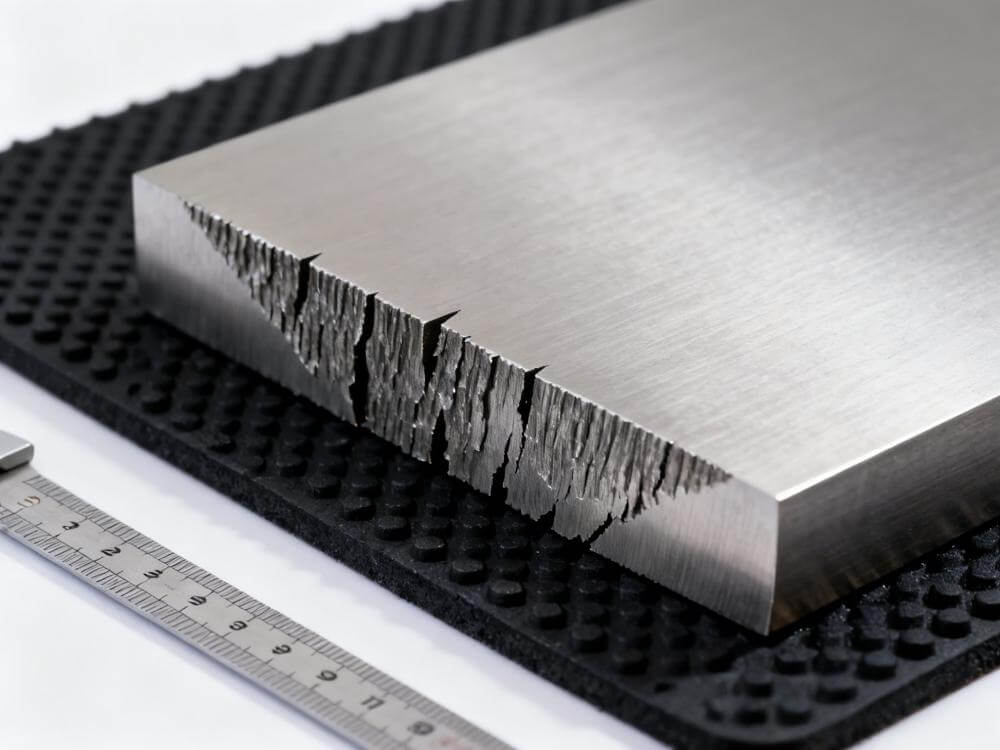
Recently, Xu Daokui, a researcher at the key Laboratory of Nuclear Materials and Safety Evaluation, Institute of Metals, Chinese Academy of Sciences, worked with Xin Yunchang, a professor at Nanjing University of Technology, to make progress in the research of high-strength and corrosion-resistant magnesium alloy materials. The researchers used the multi-pass triaxial compression technology to prepare the twin structure. Through the unique design of the compression path and pass strain, the high density twin structure with an average lamellar thickness of about 200nm was prepared in AZ80 magnesium alloy by alternating compression of 12 passes of low strain and high strain. The average grain size was refined from about 33mm of the initial material to 300nm, and the tensile strength was as high as 469MPa. It is the highest strength of this series of magnesium alloys reported so far. The high density ultra-fine twin structure is used to refine the grains, which avoids the adverse effect of non-equilibrium grain boundaries on the corrosion resistance, and changes the morphology and distribution of β-Mg17Al12 phase. The β-Mg17Al12 precipitates are granular, fine and uniformly distributed in the magnesium matrix, which significantly restrains the occurrence of local corrosion and reduces the corrosion rate by an order of magnitude.
The density of magnesium alloy is one of the lightest metal structural materials, which is one of the lightest metal structural materials, and the density of magnesium alloy is one of the lightest metal structural materials, but its practical engineering application is limited by its low absolute strength and corrosion resistance. The (SPD) method of severe plastic deformation is usually used to greatly improve the strength of magnesium alloys, and ultra-fine grained ultra-high strength magnesium alloys can be prepared. However, due to the poor cold deformation ability of closely packed hexagonal magnesium alloys, SPD processing is needed at higher temperature, which is easy to cause grain growth and difficult to obtain ultra-fine grain structure. The non-equilibrium grain boundaries formed by ultra-fine grains prepared by traditional SPD will significantly reduce the corrosion resistance of magnesium alloys. In addition, the size of ultra-fine grained magnesium alloy prepared by traditional SPD is small, so it is difficult to be used in engineering. Previous studies have shown that the twin structure can be used to refine the grains and improve the strength, and the energy of the twin boundary is low, which will not significantly affect the corrosion resistance of magnesium alloys. However, the tensile twin interface which is easy to start in magnesium alloy is easy to grow and merge under stress. Therefore, the preparation of high density ultra-fine twin structure is a key problem to be solved urgently.
![ถ่านหินพุ่งจุดชนวนตลาดแมกนีเซียม การปรับฐานสองเดือนสิ้นสุดลง การลดกำลังการผลิตและการลดสต็อกส่งสัญญาณขาขึ้นรอบใหม่ [บทวิเคราะห์ SMM]](https://imgqn.smm.cn/usercenter/mLwgx20251217171723.jpeg)
![ต้นทุนที่สูงขึ้นดันราคาแมกนีเซียมพุ่ง แต่ดีมานด์อ่อนแอทำให้การปรับขึ้นไม่ยั่งยืน [บทวิเคราะห์แมกนีเซียมรายสัปดาห์จาก SMM]](https://imgqn.smm.cn/usercenter/rUQIB20251217171723.jpeg)