[live] focus: global economy, Nickel, Cobalt, Lithium Price, Battery Technology and Battery Recycling
"[live broadcast] under the background of carbon neutralization, the development prospect of stainless steel and nickel industry chain 2021 Review of the Global Nickel Market and its Prospect in 2022
"[live broadcast] Review and Prospect of Cobalt and Lithium Market; Analysis on Recycling of carbon Neutralization Battery current situation and trend of Power Battery Recycling
SMM May 21: at the 2021 (sixth) China International Nickel-Cobalt-Lithium Summit Forum held by SMM, Liu Xiaoyi, senior analyst of lithium industry of Shanghai Nonferrous net Information Technology Co., Ltd., reviewed the situation and development of lithium industry in 2020 for the guests, and made an in-depth analysis of the global lithium industry pattern from 2021 to 2025. She believes that the price of lithium salt will rebound from the bottom in 2020 and remain high in 2021, and the prices of lithium carbonate and lithium hydroxide in China will fluctuate at high levels in the next five years.
Since October 2020, the price of lithium has continued to rise. since the beginning of 2021, the price of lithium carbonate has doubled, and the prices of lithium ore and lithium hydroxide have also gradually rised. the fundamental reason is that the sales of terminal new energy vehicles are relatively bright, and the number of batteries continues to rise, so that the demand for basic lithium raw materials has increased significantly.
Demand-driven recovery of Lithium City in the Post-epidemic era
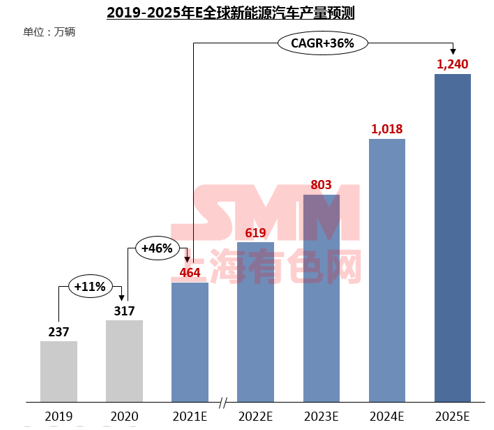
The global output of new energy vehicles will reach 3.17 million in 2020 and will maintain a growth rate of 36% in the next five years.
According to SMM data, the global production of new energy vehicles reached 3.17 million in 2020, an increase of 11% compared with 2019. With the gradual increase in penetration, global production of new energy vehicles is expected to reach 12.4 million in 2025, with a five-year compound growth rate of 36 per cent.
China's new energy vehicle market has picked up significantly in 21 years and will reach 6.18 million in 2025.
It can be clearly seen from the monthly sales chart of China's new energy vehicles from 2019 to 2021 that although China's production and sales of new energy vehicles fell by about 40% in the first half of 2020 due to the epidemic, it has been positive year on year since July 2010. production and sales are growing for the first time compared with the same period last year, mainly due to the rapid recovery of domestic demand for new energy vehicles. The market demand increased significantly from October to December, with the highest increase in pure electric passenger cars.
Entering 2021, the rising trend of new energy vehicles is even more unstoppable. The latest data show that from January to April of 2021, domestic sales of new energy vehicles increased by as much as 290% compared with the same period last year.
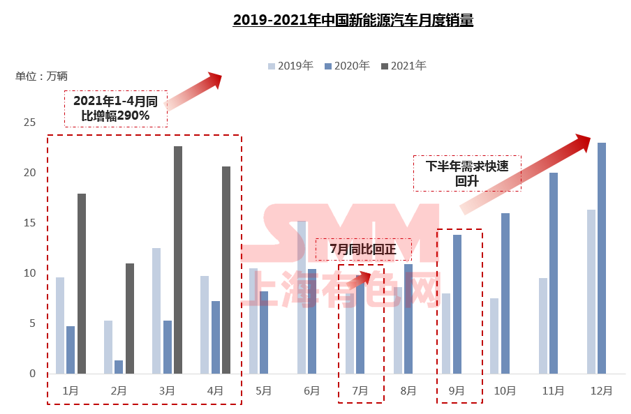
Overall, in 2020, sales of new energy vehicles reached 1.367 million, an increase of 11% over the same period last year, and the epidemic still achieved positive annual growth. With the gradual promotion of the new energy vehicle industry in the 14th five-year Plan, we expect that sales of new energy vehicles in China will reach 6 million in 2025, with a compound annual growth rate of about 36 per cent.
Since the fourth quarter of 2020, the installed capacity of power batteries has increased sharply, and the increase is expected to be as high as 55% in 21 years.
According to SMM data, as the core of new energy vehicles, the overall trend of power batteries closely follows the sales trend of new energy vehicles. The installed capacity of power batteries in China in 2020 is 64G Whminute. From November to December, the installation increment of commercial vehicles is more obvious. At the beginning of 2021, due to the sufficient stock in the early stage, the installed capacity has a short-term decline, and will gradually pick up in March.
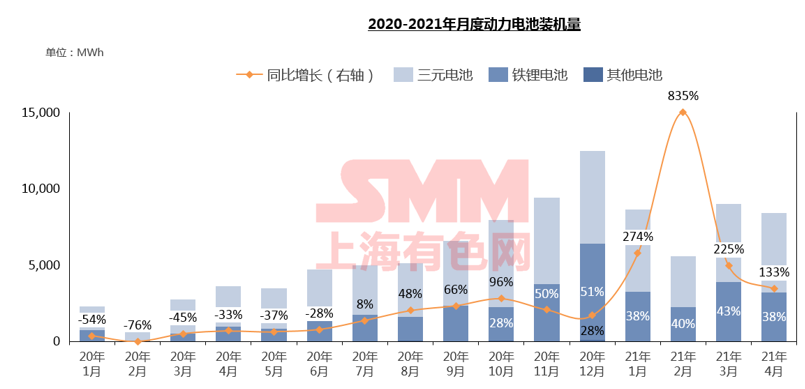
With the increase of the new energy market in 2021, the demand for lithium batteries in the new energy market is expected to reach 102 GWH, an increase of 60% over the same period last year, and the corresponding demand for lithium salt will increase significantly.
The increment of lithium demand mainly comes from electric vehicles and energy storage industry, and the demand of traditional industry is stable for a long time.
According to SMM research statistics, the current increase in lithium demand in the market mainly comes from electric vehicles and energy storage industries, and the demand for lithium in traditional medicine, glass ceramics and grease industries is likely to remain stable for a long time in the future.
From the point of view of the demand for split lithium batteries, the demand for ternary materials is still dominated by the demand for ternary materials in 2020, followed by lithium iron phosphate. With the gradual opening of the domestic high nickel market, the proportion of ternary materials will further increase to 59% by 2025. The increase in materials and batteries is considerable, but the share of demand for lithium may decline slightly.
The price of lithium salt rebounded from the bottom in 2020 and remained high in 2021.
As the turning point of lithium price in 2020, it declined all the way from 2018 to the end of 2020, and the lithium price increased from 39750 yuan / ton to the current price of nearly 90, 000 yuan / ton. In the first half of 2020, due to the impact of the epidemic, market demand fell sharply, and the price of lithium carbonate continued to decline. From the second half to March this year, the price of battery-grade lithium carbonate in China bottomed out.
It is worth mentioning that during the period from November 2020 to February this year, there was a price surge, with a gap of more than 20% between domestic production and demand, difficulties in spot procurement downstream, and prices continued to accelerate. However, since the second quarter of this year, due to the impact of the 3C end consumption off-season and lithium purchase off-season, the output of superimposed enterprises has increased significantly compared with the previous month, some enterprises have inventory pressure, and prices have fallen.
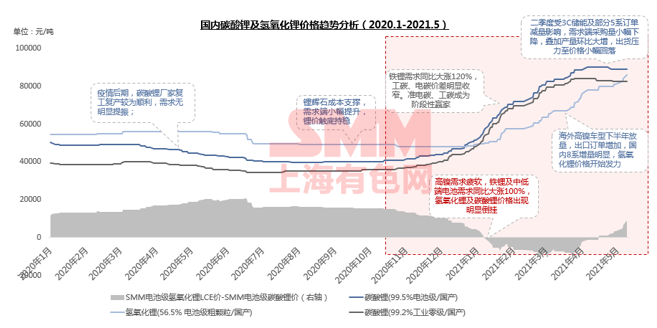
However, considering that new overseas high-end models will go on sale in the second half of 2021, orders for battery factories in Japan and South Korea have increased significantly, while the demand for domestic high-end lithium hydroxide has increased significantly, and domestic exports have increased to 60%. The export volume of some large domestic smelters will also rise to about 90%, and their domestic supply will be significantly reduced in the future, and the rising demand will play a role in promoting prices. So lithium prices are expected to remain high in 2021.
Retrospect and Future Prospect of Lithium Industry in the past 20 years
Reviewing the development history of the lithium industry from 2000 to 2020, from the first salt lake lithium extraction production line with an annual production capacity of 3000 tons / year in Qinghai in 2004 to an annual growth rate of 40% in 2010, the iron-lithium market grew at an annual rate of 40%. Then in 2013, the promotion and subsidy policy for new energy vehicles was introduced, supporting upstream raw materials to expand production, and finally, by 2020, batteries accounted for more than 75% of the demand for lithium resources, and the lithium industry was steadily developing in a better and better direction.
During these 20 years of development, the demand for lithium in different industries has also undergone earth-shaking changes. In 2000, glass ceramics accounted for a much higher proportion of lithium demand than lithium batteries. By 2020, lithium batteries have accounted for 76% of the total demand for lithium, which on the other hand reflects the rapid development of lithium batteries in the past 20 years.
Twenty years of Lithium Industry in China: from the demand of traditional Industry to the concentration of Electric Industry
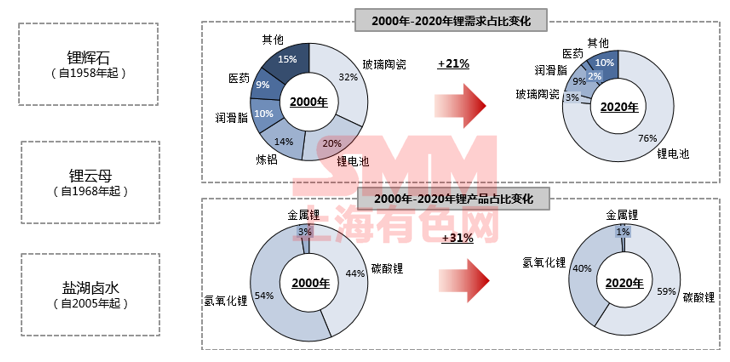
From the perspective of demand segmentation, China's lithium battery industry has increased to 76% from only about 20% in 2000, and the product level is from lithium hydroxide to lithium carbonate with a wider range of applications.
The lithium battery industry broke out in 2015, accounting for more than 75% of the demand.
Specifically, the lithium battery industry first began to soar in 2005, from 20% in 2000 to 52% in 2005, and then broke out in 2015. the development of the overall new energy vehicle industry has reduced the traditional industry's share of lithium resource demand. however, it still maintains an average annual growth rate of about 6-8%. In 2020, the demand for lithium in the lithium battery industry once accounted for more than 75%, and there is no doubt about its development potential.
In the past decade, battery cathode materials are still dominated by high nickel ternary, and the demand for lithium will increase significantly.
In the next decade, SMM believes that the mainstream technology route of overall lithium battery may focus on iron lithium, ternary, and future de-cobalt, while solid-state battery will become another mainstream route in the next 5-10 years. Over the past five years, solid-state batteries will be mass-produced on a small scale by about 2025 and mass-produced in 2030.
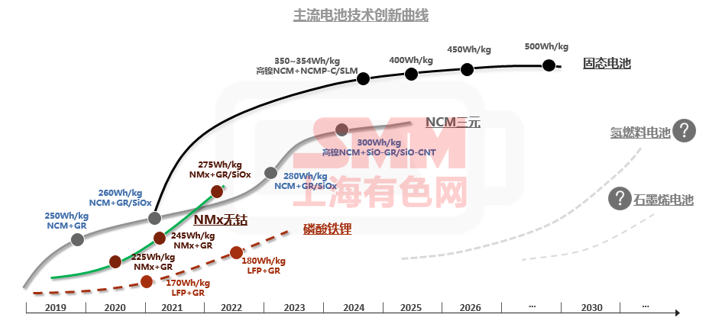
However, there is no doubt that whether it is solid-state batteries or the trend of high nickel or the increment of iron and lithium, the demand for lithium will show an obvious growth trend, especially in solid-state batteries, the negative electrode will mainly use metal lithium as anode material in the future. it is conceivable that the demand for lithium will further increase.
The amount of scrapped batteries will reach 1.2 TWH in 2030, and the metal recycling of nickel and lithium will continue to grow by more than 30%.
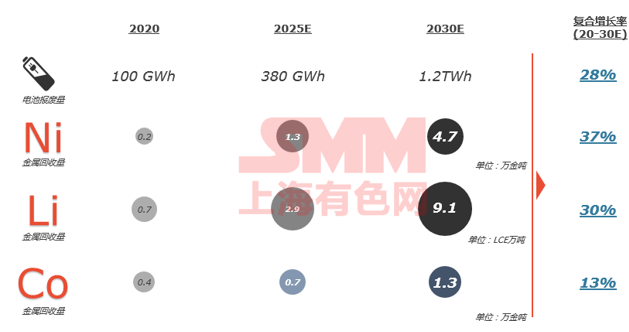
According to SMM estimates, the national recovery of lithium batteries reached 100 GWH in 2020, corresponding to lithium products that have produced more than 7800 tons of lithium carbonate equivalents. In the future, battery replacement will gradually drive the recycled lithium market to rise at a compound growth rate of 37%. By 2030, the supply of lithium raw materials for recycling will reach 90, 000 tons of lithium carbonate equivalent, which is expected to account for about 9% of the total supply in 30 years.
Introduction of SMM New Energy products
SMM whole industry chain pricing: SMM salt price is the industry benchmark, extending to the field of battery and recycling.
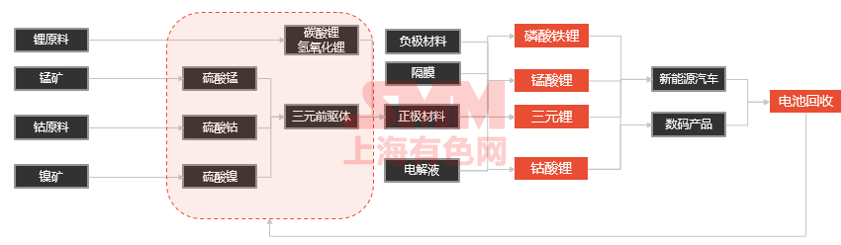
At present, SMM is based on the quotation of the whole industry chain, covers the whole industry chain completely, and forms the completed industrial closed-loop research from mining, smelting, material battery, new energy vehicle and recovery. In-depth research with supply and demand and technology as the core.
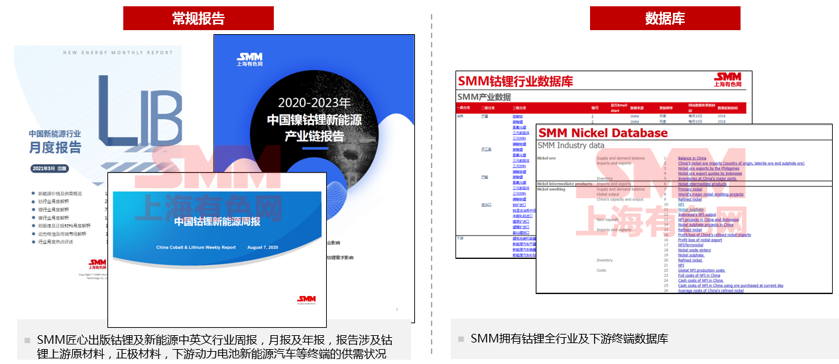
Data / research: provide data and research services for more than 50 industrial chain enterprises
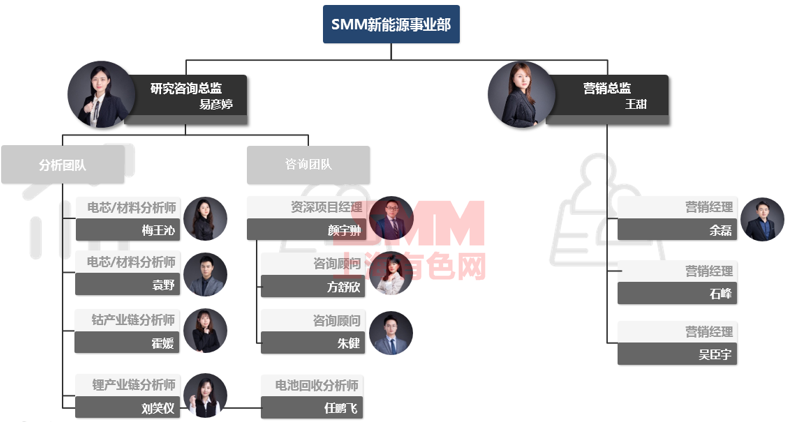
Team: analysis and research team + consulting team + marketing team integrate the resources of the whole industry chain
![[SMM รีวิวรายสัปดาห์ตลาดเซลล์แบตเตอรี่กักเก็บพลังงาน 9.3] อุปทานฟอยล์ทองแดงตึงตัวจำกัดแผนการผลิตเดือนกันยายน ราคาเซลล์แบตเตอรี่กักเก็บพลังงานยังคงทรงตัว](https://imgqn.smm.cn/usercenter/tKgKv20251217171725.png)

![ตลาดลิเทียมคาร์บอเนตรายสัปดาห์: 8.31-9.3 ราคาสปอตลิเทียมคาร์บอเนตปรับขึ้นก่อนแล้วปรับลง แนวโน้มโดยรวมลดลง [SMM รายงานรายสัปดาห์]](https://imgqn.smm.cn/usercenter/PPLUj20251217171727.jpg)