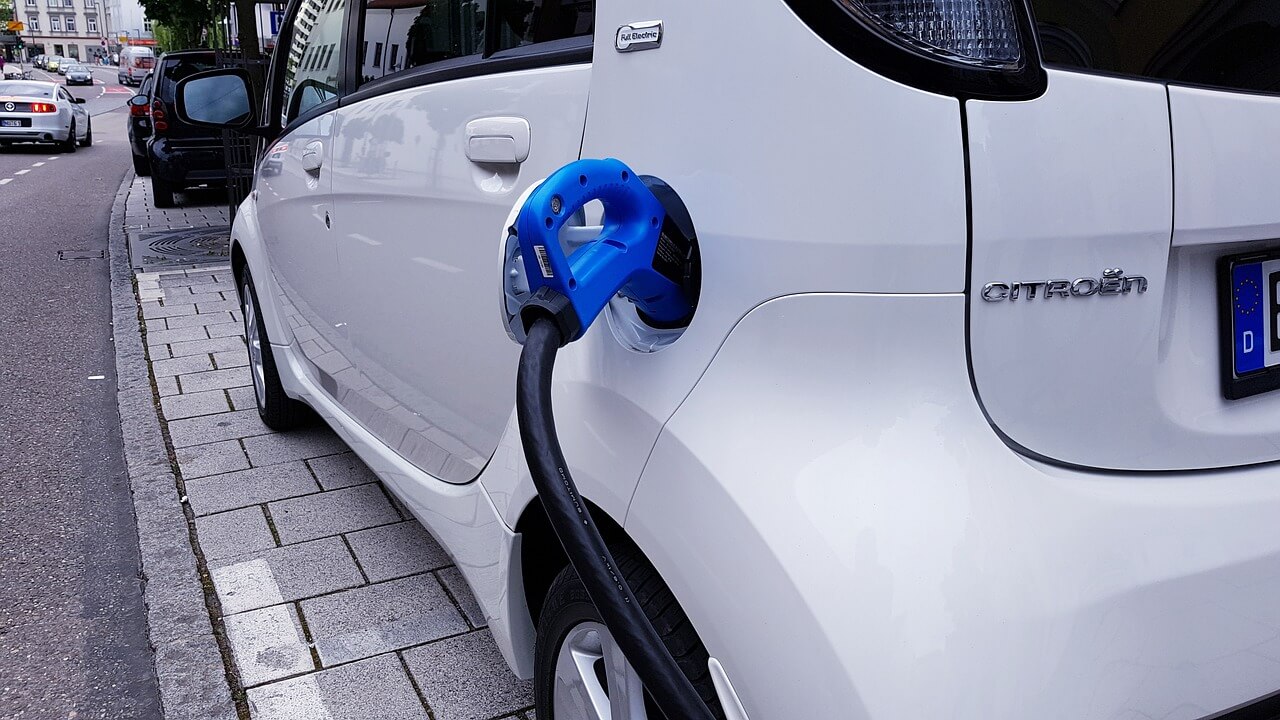
Once upon a time, a series of "bundling" behaviors that took place in the Ningde era are translating to the key raw materials upstream of the power battery.
On March 23, Yiwei LiNeng announced that the company will set up a joint venture with German Nano in the form of joint investment, with a registered capital of 100 million yuan, Yiwei LiNeng subscribed 40 million yuan and held 40% of the shares, while German Nano subscribed 60 million yuan and held 60% of the shares. According to the announcement, the joint venture will focus on the production of low-cost and high-quality lithium iron phosphate cathode materials and give priority to supply to Yiwei Lithium Energy and its subsidiaries. The joint venture project plans to invest 2 billion yuan to build an annual production capacity of 100000 tons of lithium iron phosphate cathode materials.
According to people familiar with the matter, Yiwei LiNeng is already the second largest customer of German Nano, and the largest customer of German Nano is Ningde era.
It is worth noting that before setting up a joint venture with German Nano, Yiwei Lithium Energy has just announced two major investments, both involving lithium iron phosphate projects, and targeting the new energy passenger car market:
On February 19, Yiwei Lithium Energy announced that Huizhou Yiwei Power intends to invest its own and self-raised funds in the construction of the "passenger car Lithium Ion Power Battery Project (Phase I)", with an investment amount of no more than 1 billion yuan respectively. Yiwei Lithium Energy announcement announced that it intends to invest another 3.9 billion yuan to start the "passenger car Lithium Ion Power Battery Project (Phase II)" project. The above two projects are square lithium iron phosphate cell and module.
In fact, with the decline of subsidies, the economy of lithium iron phosphate battery has been highly concerned. At the same time, the continuous improvement of lithium iron phosphate battery technology and the optimization of structural process and system integration such as CTP, blade battery and so on, make lithium iron phosphate battery more and more popular in the passenger car market. In particular, the car companies represented by Tesla, BYD and Xiaopeng Automobile have quickly introduced supporting facilities, and the demand for lithium iron phosphate batteries in the passenger car market continues to hit a new high.
The person in charge of Yiwei Lithium Energy said that based on the background of the development of the new era and the research and analysis of the development of the power battery market at home and abroad, with the rapid advance of the global electrification wave, they think that the spring tide of electrification will come ahead of schedule, and it is expected that it will enter the TWh era in 2023 or even earlier; from the technical route, lithium iron phosphate battery and ternary battery will coexist for a long time in the future.
Like Yiwei Lithium Energy, there are not a few head battery companies that spare no effort to lay out the lithium iron phosphate battery project. At present, there are lithium iron phosphate battery projects for passenger cars, such as Ningde era, BYD, Guoxuan Hi-Tech, AVIC Lithium, Honeycomb Energy, Wanxiang 123, Weihong Power and so on, and the scale continues to grow.
01 Battery Enterprises "bind" Iron Lithium cathode Materials
The turn of car enterprises and battery enterprises began to transmit further upstream. At the same time, in order to take the initiative in the battlefield of lithium iron phosphate, battery companies also began a new round of upstream resource "binding" action.
This is a bit like the "bundling" of BAIC, SAIC, Geely, FAW and Ningde a few years ago. As more leading enterprises join lithium iron phosphate passenger cars and energy storage markets, the "binding" action with upstream resources is expected to become the new normal.
As the leader of lithium iron phosphate cathode material, German Nano has already had the case of battery enterprises bundled in the first place. The battery company that was the first to set up a joint venture with it is the Ningde era, the leader of the industry.
In May 2019, Ningde Times contributed 40 million yuan to participate in the joint venture project of Germany Nanqu Jing City Lin Iron Technology Co., Ltd. (referred to as "qu Jinglin Iron"), accounting for 40% of qu Jinglin's registered capital.
As the demand for lithium iron phosphate batteries continues to rise, Ningde era has increased its cooperation with German Nano. In January this year, Ningde Times and German Nano signed an investment agreement with the people's Government of Jiang'an County, Yibin City, Sichuan Province, agreeing to invest in the construction of a "lithium iron phosphate project with an annual production capacity of 80,000 tons", with a total investment of about 1.8 billion yuan.
In addition to "binding" German nanoscale, in order to share risks and ensure diversified supply, Ningde era also participated in the capital increase of lithium iron phosphate material enterprises such as Hunan Yuneng and Jiangxi sublimation.
Also involved in the upstream lithium iron phosphate material layout is BYD.
In December 2020, Hunan Yuneng completed the capital increase, and both BYD and Ningde were on the list of capital increase parties. Hunan Yuneng is one of the leading enterprises of lithium iron phosphate materials in China at present. The company has three production bases of Xiangtan in Hunan, Jingxi in Guangxi and Suining in Sichuan, with an annual production capacity of 50,000 tons of lithium iron phosphate. At the same time, it has also invested in a new lithium iron phosphate project with an annual production capacity of 170000 tons in Suining.
Guoxuan Hi-Tech, another leading iron phosphate battery company, currently relies mainly on self-supply of iron and lithium materials with a production capacity of more than 30,000 tons. As a traditional lithium iron phosphate head enterprise, Guoxuan Hi-Tech has been through its own layout to ensure the supply of lithium iron phosphate materials, but also can control costs and enhance competitiveness.
Thanks to the optimistic market prospects, recently, Guoxuan Hi-Tech has also increased its layout in the field of upstream minerals and raw materials, in order to further enhance the control of raw materials such as lithium iron phosphate. On March 22nd, Guoxuan Hi-Tech signed an investment cooperation agreement with the people's Government of Feidong County to invest 12 billion yuan in building a series of power battery industry chain projects in Feidong County, mainly for power lithium battery upstream raw material production and battery recycling projects; March 24, Guoxuan Hi-Tech also signed an agreement with relevant units in Yichun City, Guoxuan Hi-Tech plans to build Yichun Lithium Power Industry Park project, including the extraction, processing and application of lithium carbonate resources. Among them, lithium carbonate is one of the important raw materials for the production of lithium iron phosphate.
In the editor's view, at present, including Ningde era, BYD, Yiwei LiNeng, Guoxuan Hi-Tech, and so on, are "bundling" or ploughing deeply in this field, mainly to ensure the stability of raw material supply when the new energy passenger car market and energy storage market erupts.
02 upstream material enterprises enter a new production expansion cycle?
In 2018, the financial subsidy of new energy vehicles in China is linked to energy density, and high energy density models can get higher subsidies. At that time, battery companies have to cooperate with customers to produce ternary batteries with higher energy density, lithium iron phosphate batteries were once marginalized. BYD, which started with lithium iron phosphate, announced in 2018 that all its passenger cars would be switched to ternary batteries from 2019. Other battery companies are not willing to lag behind, one after another layout, expansion of ternary battery capacity.
In this context, lithium iron phosphate battery and its raw materials for production have encountered an unprecedented crisis, and the market demand has been greatly reduced, which leads to a continuous decline in the price of lithium iron phosphate materials, which once hovered below 40,000 yuan / ton in the first half of 2020. The performance of most enterprises mainly engaged in lithium iron phosphate materials is very ugly.
Even German Nano, one of the leading enterprises, has experienced a continuous jump in the price of lithium iron phosphate in the second half of 2020, but it still has a pre-loss of 20.1912 million-28.8286 million yuan in 2020, and a loss of more than 100 million yuan in 2019.
In the case of shrinking demand and uncertain prospects, the enthusiasm for capacity expansion of lithium iron phosphate enterprises decreased significantly in the past few years. To a certain extent, this also affects the supply and demand pattern of lithium iron phosphate material market at the present stage.
The demand for lithium iron phosphate batteries transmitted from the end of the vehicle once again allows lithium iron phosphate to gain market recognition, while several battery companies in the head have been laying out in the passenger car market, and the competition for expanding production of lithium iron phosphate battery materials seems to have begun.
In addition to German Nano, Hunan Yuneng, Betteri, Hubei Wanrun and other enterprises to expand production, many of the recent second and third line iron and lithium material project investment news has also frequently flowed out. In addition, titanium companies such as Dragon Python Burley, medium Nuclear Titanium dioxide and Anada have also spent a lot of money on participating in the production capacity competition of lithium iron phosphate materials because their products are by-products of manufacturing lithium iron phosphate materials. However, some people in the industry believe that the production of one ton of titanium * requires a by-product of nearly four tons of ferrous sulfate (lithium iron phosphate upstream material), and does not rule out the possibility that titanium * enterprises invest in lithium iron phosphate materials to provide cover for the environmental problems faced by titanium * production expansion.
Driven by the demand for energy storage, electric passenger cars, electric ships, electric light vehicles and many other scenarios, the demand for lithium iron phosphate batteries and materials is exploding. Data show that in 2020, the output of lithium iron phosphate cathode materials in China was 142000 tons, an increase of 45.7% over the same period last year, and the growth rate in that year was much higher than that of other cathode materials. Some institutions predict that driven by downstream demand, the output of lithium iron phosphate materials is expected to be more than 250000 tons in 2021.
03 head customer binding future material end trend will be differentiated?
The domestic power battery industry has experienced a deep reshuffle and entered a stage of healthy and rapid development. The market share of TOP10 enterprises in the Chinese market has exceeded 90%, which will have an impact on upstream material enterprises to a certain extent. On the one hand, such as Ningde era, Yiwei LiNeng, BYD "bind" German Nano, Hunan Yuneng, lock in some raw materials, occupy a certain advantage in ensuring the supply of raw materials and reducing costs; on the other hand, this "binding" will also accelerate the growth of leading enterprises such as German Nano and Hunan Yuneng, and further open the gap with second-and third-tier materials enterprises. The market concentration of material enterprises is increasing, and the reshuffle in the field of materials is coming at an accelerated pace.
Of course, for downstream customers, there is only one supplier, and the risk is self-evident. Mature battery enterprises will cultivate several suppliers to share the risk, so although power battery head enterprises are more concentrated, in the layout of upstream raw materials, on the one hand, through "binding" to achieve reliable supply, on the other hand, it will also "support" multiple suppliers to maximize profits, in this case, In the future, lithium iron phosphate material enterprises may also show a pattern similar to that of battery manufacturers.

![การวิเคราะห์การผลิตลิเทียมซัลไฟด์เกรดแบตเตอรี่เดือนสิงหาคม: ไตรมาส 4 จะเห็นการพุ่งขึ้นหรือไม่? [บทวิเคราะห์ SMM]](https://imgqn.smm.cn/usercenter/mpqgn20251217171727.jpg)