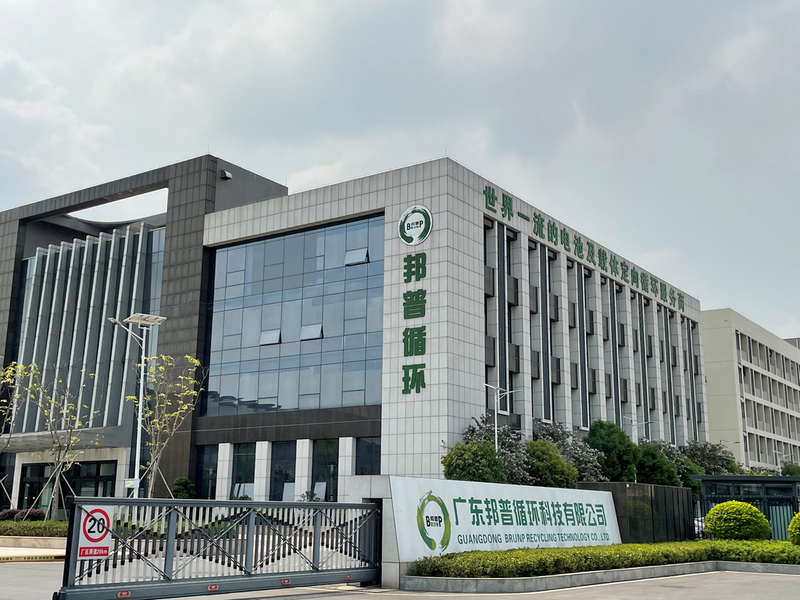
SHANGHAI, Mar 25 (SMM) – Guangdong Brunp (Group) was founded in 2005. With its original "reverse product positioning design" concept and "directional cycle" core technology, it has successfully realised a sustainable cycle from the recycling and dismantling of used lithium batteries to the recycling of key battery materials, being the first to become a leader in the recycling industry.
The company obtained the qualification for automobile recycling and dismantling in 2013 and became a national circular economy standardization pilot in 2014.
In 2015, Guangdong Brunp was controlled by CATL and became a key part of its ternary and precursor layout. The group’s headquarters and R&D center are located in Foshan, Guangdong. Hunan Brunp (Changsha) is the largest battery recycling base and vehicle recycling base of the group. At present, the annual battery scrap recycling and dismantling capacity has exceeded 30,000 mt, taking the lead in the world. The company became the first batch of domestic enterprises that meet the "Industry Standards and Conditions for Comprehensive Utilization of Waste Power Batteries for New Energy Vehicles" whitelisted enterprises.
Brunp Organisational Structure
Guangdong Brunp (corporate headquarters): Foshan Battery Recycling Base (recycling used lithium batteries and battery material production and sales) and Brunp R&D Center (recycling and dismantling of used batteries and end-of-life automobiles, and research and development of parts remanufacturing technology).
Hunan Brunp: Changsha battery recycling base (recycling and processing of lithium battery scrap and battery material production and sales) and automobile recycling base (recycling and dismantling of traditional and new energy scrapped automobiles, and remanufacturing of key components).
Indonesia Puqing: Brunp's overseas battery recycling base is hindered by the shortage of local battery waste recycling capacity, and all parties look forward to the relaxation of raw material supervision policies. According to reports, although Indonesia's Puqing has battery recycling technology, its production capacity has not been released due to the insufficient supply of battery scrap in Indonesia. The company cannot import used batteries that have been classified as hazardous waste B3 by the government before obtaining an import license. The director of the Industrial Pollution Prevention Technology Center (BBTPPI) called on all stakeholders to deepen cooperation and accelerate the compilation of academic research reports, so as to rationally promote the introduction of industry reform policies and solve the problem of insufficient waste from recycling enterprises.
|
Main circulation base |
Recycling begins |
Recycling channels |
Corporate recycling/production capacity |
|
Guangdong Brunp (Foshan) |
2005 |
First obtain the authorisation of the vehicle company, as the designated recycler of its power battery, the recycling methods are divided into: 1. Power batteries scrapped during the trial phase of vehicle companies 2. The power battery that the consumer replaces in the middle of the sales network (4S shop) 3. Power batteries scrapped by end consumers in their cars 4. Social recycling of consumer lithium cobalt oxide batteries, etc. |
Official website: The annual recycling and dismantling capacity of used batteries exceeds 120,000 mt (the total amount of the group), and the total recycling rate of core metal materials of battery products reaches 99.3%. |
|
Hunan Brunp (Changsha) |
2008 |
2020: The annual recycling and dismantling capacity of used batteries exceeded 30,000 mt, with an annual output of 2500 t of cobalt salt, 1500 t of nickel salt, and 3000 t of lithium salt (under construction). The recovery rate of nickel reached over 99%, and the recovery rate of cobalt and manganese reached above 97%. |
|
|
Indonesia Puqing (Morowali) |
2019 |
2020: Annual battery scrap recycling and dismantling capacity reached 20,000 mt. |
Data source: SMM collation
According to Brunp, at present, the company's recycling is mainly based on regeneration recycling, supplemented by echelon. Hunan Brunp has one battery pack disassembly line and two black powder manufacturing lines. The recycling outlets established by Brunp currently mainly cover first- and second-tier cities. They are constructed according to the standards of the Ministry of Industry and Information Technology and have an earlier layout.
Hunan Brunp has established strategic partnerships with 1) new energy vehicle manufacturers and 2) battery manufacturers to make full use of the network system of 4S shops and maintenance outlets in the new energy vehicle factory system to realise the quick transfer of waste power batteries collected and generated at various outlets to the recycling and utilisation of automobile factory cooperation, reducing the cost of business negotiation between enterprises and various branches, and improving the efficiency of battery turnover.
In addition, Brunp mentioned that the transportation cost of used batteries was high. Battery recycling has not yet formed a large-scale, but considering the safety issues, battery plants have urgent needs for the disposal of used batteries, and other situations occur from time to time, and enterprise transportation costs account for a relatively high proportion.
![[SMM วิเคราะห์] แอโนดกราไฟต์เทียมปรับขึ้นเล็กน้อยก่อนวันหยุด โดยรวมทรงตัวในช่วงวันหยุด](https://imgqn.smm.cn/usercenter/MjfPv20251217171728.jpg)