Flat steel production to grow in January, while long steel output to fall

เผยแพร่แล้ว: Jan 09, 2020 15:01 (GMT+8)
Chinese steelmakers plan to produce 9.71 million mt of hot-rolled coils and plates in January, up 5.32% from December

SHANGHAI, Jan 9 (SMM) – Chinese steelmakers are sharply stepping up production of flat products but trimming that of long products this month, as flat steel enjoys wider profit margins.

The latest SMM survey showed that Chinese steelmakers plan to produce 9.71 million mt of hot-rolled coils and plates in January, up 5.32% from the realised output in December. January’s flat steel output increase is larger than that in December, pointing to mounting supply pressure. About 427,000 mt would be exported, up 5.4% from a month earlier, and volumes slated to enter domestic markets are likely to increase 5.3% to 9.28 million mt.

Planned production of long steel, including rebar and wire rods, however, will shrink 2.1% from December to 10.69 million mt, according to the SMM survey. Output for domestic sales is planned at 10.42 million mt this month, down 1.98% on the month, with scheduled exports also lower by 6.8% to 275,000 mt.

Chart: Flat steel-long steel production difference (Source: SMM)
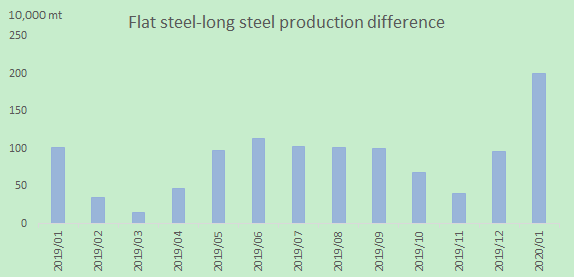
Rebar was more profitable than hot-rolled coil for much of the past year. The rebar-HRC profit spread peaked in late November as prices of construction steel jumped on certain product supply shortages, which prompted some mills to cut production of flat products and shift to long products.

Strong supply, coupled with seasonally weakening demand, later led to a pullback in prices of long steel however. Prices of long steel have been on the decline since late December, while those of flat steel have been firm, supported by supply shortfalls. This drove HRC profits to exceed those on rebar, and encouraged steelmakers to recover flat steel production.

Chart: Flat steel-long steel profit spreads (Source: SMM)
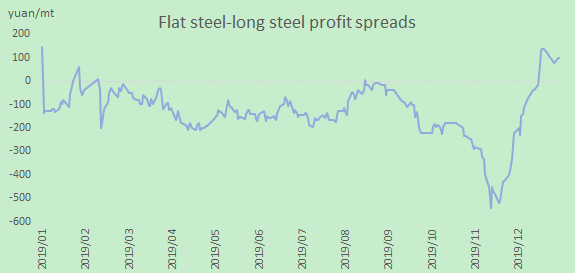
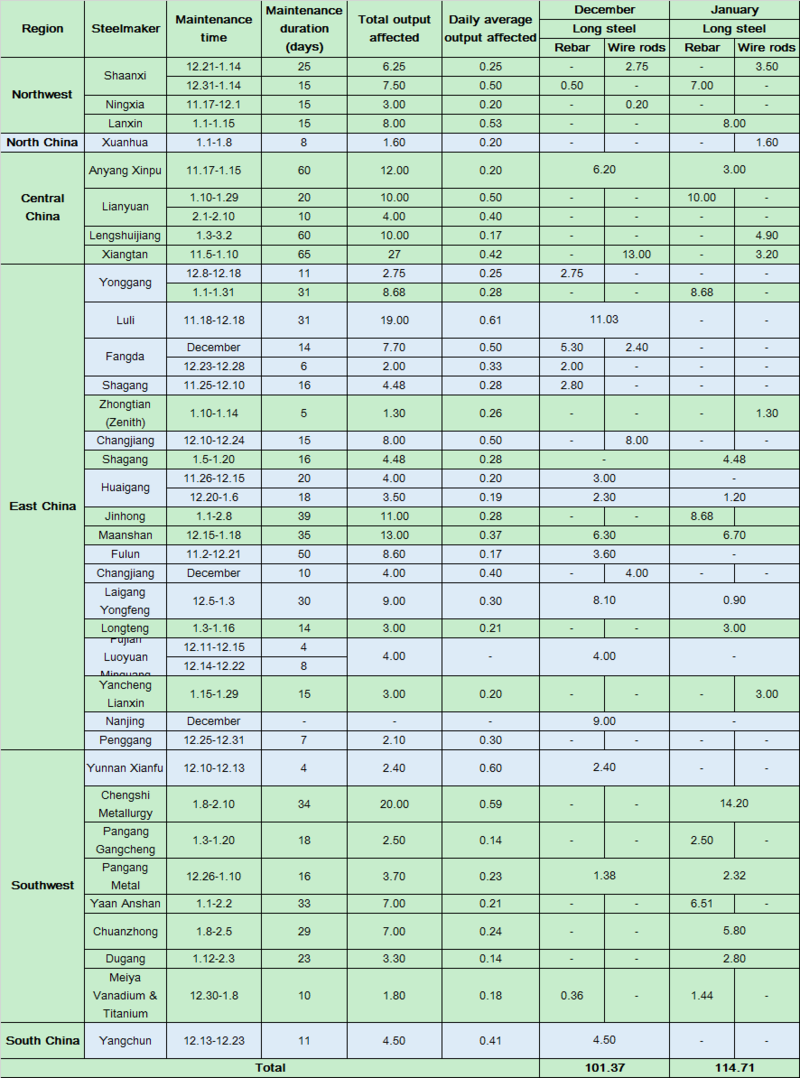
On the back of the divergence in profits between flat and long products, more long steel producers chose to conduct maintenance this month, while there is barely any maintenance scheduled at flat steel producers. Driven by enticing profits and healthy orders, flat steel mills will operate at full capacity this month and some even plan to put additional blast furnaces into operation to help ramp up production.

With end-user demand grinding to a halt ahead of the Chinese New Year holiday which falls in late January this year, spot prices of flat steel are set to weaken amid high supply. Prices of long steel, meanwhile, are expected to hover in a tight range on weakness in both demand and supply.

Chart: Maintenance at flat steel mills or facility shutdown (10,000 mt)
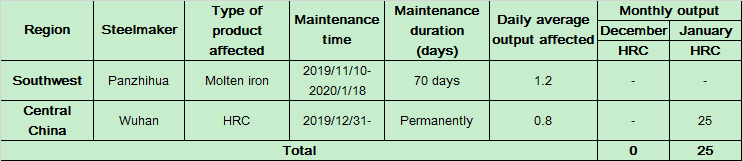
Chart: Maintenance at long steel mills (10,000 mt)
คำชี้แจงแหล่งที่มาของข้อมูล: นอกจากข้อมูลที่เปิดเผยต่อสาธารณะแล้ว ข้อมูลอื่นๆ ทั้งหมดได้รับการประมวลผลโดย SMM จากข้อมูลสาธารณะ การสื่อสารกับตลาด และการพึ่งพาแบบจำลองฐานข้อมูลภายในของ SMMข้อมูลเหล่านี้มีไว้เพื่ออ้างอิงเท่านั้น ไม่ถือเป็นข้อเสนอแนะในการตัดสินใจ

หากมีข้อสงสัยหรือต้องการทราบข้อมูลเพิ่มเติม กรุณาติดต่อ: lemonzhao@smm.cn
หากต้องการข้อมูลเพิ่มเติมเกี่ยวกับวิธีการเข้าถึงรายงานการวิจัยของเรา โปรดติดต่อ:service.en@smm.cn
ข่าวที่เกี่ยวข้อง
บริษัทย่อยเวสเทิร์นไมนิงได้รับใบอนุญาต 17 ปีสำหรับเหมืองโพลีเมทัลลิกในชิงไห่
2 ชั่วโมงที่แล้ว
บริษัทย่อยเวสเทิร์นไมนิงได้รับใบอนุญาต 17 ปีสำหรับเหมืองโพลีเมทัลลิกในชิงไห่
อ่านเพิ่มเติม
บริษัทย่อยเวสเทิร์นไมนิงได้รับใบอนุญาต 17 ปีสำหรับเหมืองโพลีเมทัลลิกในชิงไห่
เมื่อวันที่ 22 กันยายน บริษัทเวสเทิร์นไมนิงประกาศว่า บริษัทย่อยที่ถือหุ้นทั้งหมด ชิงไห่กานซินไมนิงดีเวลอปเมนต์ จำกัด (“กานซินไมนิง”) ได้รับใบอนุญาตทำเหมืองที่ออกโดยกรมทรัพยากรธรรมชาติมณฑลชิงไห่ เหมืองดังกล่าวมีชื่อว่า เหมืองเหล็กและโพลีเมทัลลิกเก๋เอ่อมู่ถูเหวินชาฮั่น ของบริษัทชิงไห่กานซินไมนิงดีเวลอปเมนต์ จำกัด ครอบคลุมแร่เหล็ก ทองแดง ทองคำ โมลิบดีนัม สังกะสี ตะกั่ว และเงิน เป็นแร่ที่ได้รับอนุญาตให้ทำเหมือง ใบอนุญาตทำเหมืองมีอายุตั้งแต่วันที่ 3 สิงหาคม 2026 ถึงวันที่ 30 สิงหาคม 2043
2 ชั่วโมงที่แล้ว
โครงการ 7.4 พันล้านดอลลาร์สหรัฐของ Korea Zinc ในสหรัฐฯ ผ่านการประเมินสิ่งแวดล้อม เตรียมทดลองเดินเครื่องปี 2029
21 Sep 2026 17:02 (GMT+8)
โครงการ 7.4 พันล้านดอลลาร์สหรัฐของ Korea Zinc ในสหรัฐฯ ผ่านการประเมินสิ่งแวดล้อม เตรียมทดลองเดินเครื่องปี 2029
อ่านเพิ่มเติม
โครงการ 7.4 พันล้านดอลลาร์สหรัฐของ Korea Zinc ในสหรัฐฯ ผ่านการประเมินสิ่งแวดล้อม เตรียมทดลองเดินเครื่องปี 2029
เมื่อวันที่ 21 กันยายน Korea Zinc ประกาศว่าโครงการผลิตในสหรัฐฯ มูลค่า 7.4 พันล้านดอลลาร์สหรัฐ ผ่านการประเมินผลกระทบสิ่งแวดล้อมแล้ว โรงงานมีกำหนดเริ่มทดลองเดินเครื่องในปี 2572 และเริ่มการผลิตเชิงพาณิชย์ในปีถัดไป โดยจะผลิตแร่สำคัญ 11 ชนิด โลหะนอกกลุ่มเหล็ก 12 ชนิด และกรดซัลฟิวริกระดับเซมิคอนดักเตอร์ เมื่อเดือนเมษายน Korea Zinc ระบุว่าได้เข้าซื้อโรงถลุงสังกะสีในท้องถิ่นและบริษัทที่เกี่ยวข้องอื่น ๆ เสร็จสิ้นแล้ว บริษัทมีแผนดำเนินโครงการโดยการขยายและปรับปรุงโรงงานเดิม
21 Sep 2026 17:02 (GMT+8)
ออสเตรเลียทบทวนภาษีตอบโต้การทุ่มตลาดเหล็กชุบสังกะสีจากอินเดีย มาเลเซีย เวียดนาม ท่ามกลางข้อกังวลเรื่องสังกะสี
11 Sep 2026 18:30 (GMT+8)
ออสเตรเลียทบทวนภาษีตอบโต้การทุ่มตลาดเหล็กชุบสังกะสีจากอินเดีย มาเลเซีย เวียดนาม ท่ามกลางข้อกังวลเรื่องสังกะสี
อ่านเพิ่มเติม
ออสเตรเลียทบทวนภาษีตอบโต้การทุ่มตลาดเหล็กชุบสังกะสีจากอินเดีย มาเลเซีย เวียดนาม ท่ามกลางข้อกังวลเรื่องสังกะสี
เมื่อวันที่ 9 กันยายน 2026 ออสเตรเลียได้เริ่มการทบทวนมาตรการตอบโต้การทุ่มตลาดรอบพระอาทิตย์ตกครั้งที่สองสำหรับเหล็กแผ่นเคลือบสังกะสีจากอินเดีย มาเลเซีย และเวียดนาม และแยกต่างหากได้เริ่มการทบทวนมาตรการตอบโต้การอุดหนุนสำหรับการนำเข้าจากอินเดีย การทบทวนครอบคลุมช่วงเดือนกรกฎาคม 2025 ถึงมิถุนายน 2026 โดยคาดว่ารายงานฉบับสุดท้ายจะออกภายในวันที่ 11 กุมภาพันธ์ 2027 เนื่องจากเหล็กเคลือบสังกะสีเป็นภาคการใช้งานปลายทางที่ใหญ่ที่สุดของสังกะสี มาตรการดังกล่าวจึงส่งผลโดยตรงต่อต้นทุนการส่งออกและความสามารถในการแข่งขัน ซึ่งอาจกระทบต่ออุปสงค์สังกะสีในประเทศและห่วงโซ่อุปทานของออสเตรเลีย การคงภาษีไว้จะช่วยคุ้มครองกำลังการผลิตเหล็กและการเคลือบผิวในประเทศได้ระดับหนึ่ง ขณะที่การยกเลิกอาจทำให้มีการนำเข้าสินค้าราคาต่ำเพิ่มขึ้นและส่งผลต่อการบริโภคสังกะสีในภูมิภาค ผลลัพธ์สุดท้ายยังขึ้นอยู่กับการวินิจฉัยของหน่วยงานผู้มีอำนาจ
11 Sep 2026 18:30 (GMT+8)