South China Metals Summit 2019: Global copper ore output to increase 2% in 2020

เผยแพร่แล้ว: Nov 7, 2019 15:35
Copper raw material market has yet to see a shortage of supply, despite tightness

SHANGHAI, Nov 7 (SMM) – Copper raw material market has yet to see a shortage of supply, despite tightness, said Ye Jianhua, senior copper analyst at SMM, estimating a low growth rate of 2% for the global production of copper ore in 2020.
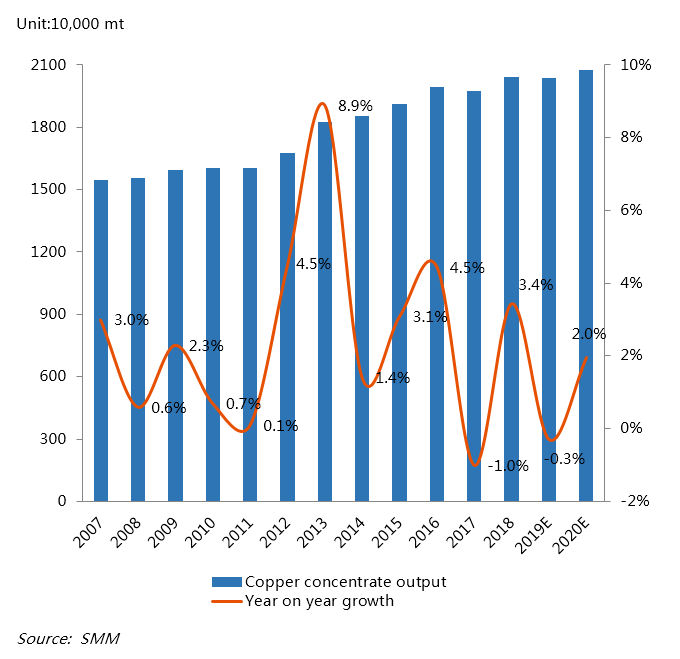
China accounted for most of the global greenfield and brownfield copper smelting projects in recent years, Ye told delegates at the South China Metals Summitc 2019, organised by SMM in Foshan of Guangdong province on November 7. 

High treatment charges/refining charges (TC/RCs) and the aim to lift domestic copper self-sufficiency rate was behind the expansion of smelting capacity in China. 

While TCs for spot copper concentrate came off from highs this year, domestic smelters were not affected significantly, said Ye, citing stable TCs under long-term contracts, which stood at $80.8/mt and secured profits at domestic large major smelters.

The analyst added that TCs under long-term contracts in 2020 between Chile’s Antofagasta, Jiangxi Copper and Tongling Nonferrous Metals stood at around $65/mt, well below $80.8/mt in 2019. This will be a reference for long-term contract TCs next year in China.
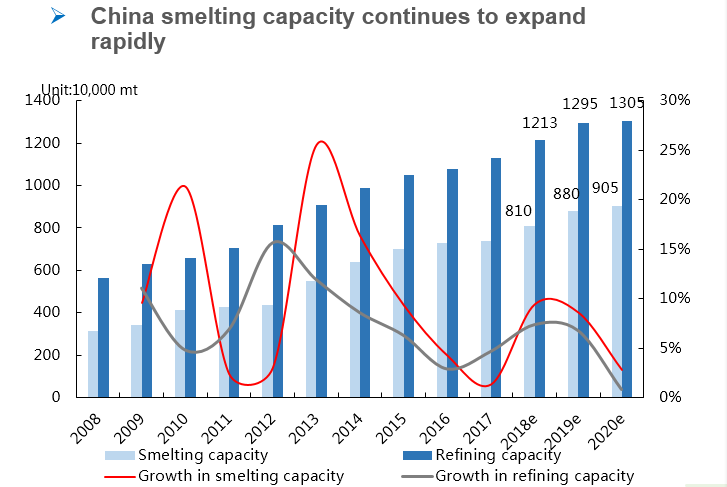
Customs data showed that China’s year-to-date copper concentrate imports through September rose 7% from a year ago, suggesting that concentrate supply is not yet in deficit.

Domestic supply of copper cathode, meanwhile, was restrained by a shortage of blister copper and scrap, as well as environmental issues, Ye believed. 

Closure and production cuts at medium-sized and small copper refineries since the second half of 2018 tightened the supply of blister copper, he said. Blister copper imports also shrank, by nearly 20% from a year ago in 2019. 

As the world’s largest copper producer, China saw its refined copper output at 8.73 million mt in 2018, 40% of the global production. Strong domestic demand kept the net imports above 3 million mt last year. 

The market share of refined copper produced from recycled materials narrowed to 16% in 2018 from 37% in 2008, pressured by the expansion of primary copper capacity and the government intensified controls on pollution and waste imports. 

SMM cut its estimates for annual output additions of refined copper in China, to 300,000 mt, due to greater impact of maintenance, slower-than-expected release of new capacity and accidents at some smelters. 

According to SMM data, China produced some 8.73 million mt of refined copper in 2018, a rise of 9.1% from the previous year. 
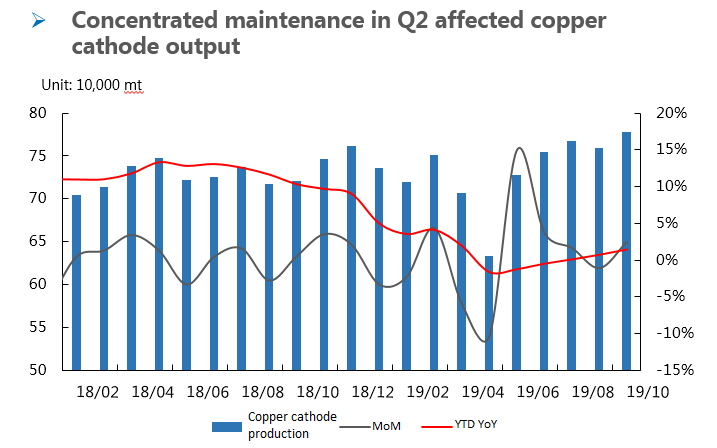
Slower growth in copper cathode production and tight raw materials supply will continue to support copper prices, but unable to trigger a price rally, said Ye. 

He expected demand for copper scrap in China unlikely to continue to be replaced by copper cathode, which will not make copper scrap the key factor to reverse copper fundamentals.

On the inventory front, destocking in China occurred mostly in the second quarter when a slew of smelters undertook maintenance, Ye said. But the inventory draw was mostly driven by lower supply rather than strong consumption.  

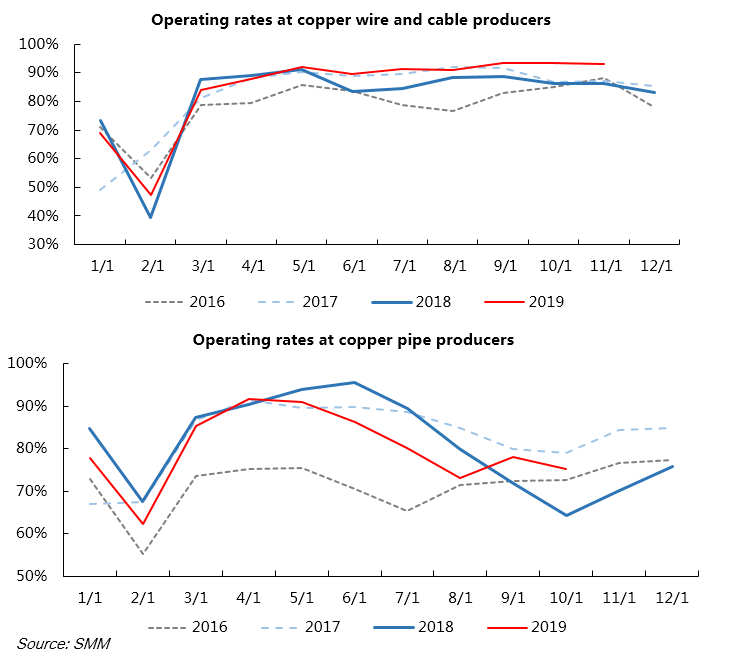
Copper consumption will remain sluggish in the fourth quarter, with operating rates across key downstream producers, including copper wire, cable, pipe and rod, standing lower from a year ago, according to SMM surveys. 

Consumption will also receive limited support from the power investment, property market, and car sales for the rest of the year, Ye cited official data. 
คำชี้แจงแหล่งที่มาของข้อมูล: นอกจากข้อมูลที่เปิดเผยต่อสาธารณะแล้ว ข้อมูลอื่นๆ ทั้งหมดได้รับการประมวลผลโดย SMM จากข้อมูลสาธารณะ การสื่อสารกับตลาด และการพึ่งพาแบบจำลองฐานข้อมูลภายในของ SMMข้อมูลเหล่านี้มีไว้เพื่ออ้างอิงเท่านั้น ไม่ถือเป็นข้อเสนอแนะในการตัดสินใจ

หากมีข้อสงสัยหรือต้องการทราบข้อมูลเพิ่มเติม กรุณาติดต่อ: lemonzhao@smm.cn
หากต้องการข้อมูลเพิ่มเติมเกี่ยวกับวิธีการเข้าถึงรายงานการวิจัยของเรา โปรดติดต่อ:service.en@smm.cn
ข่าวที่เกี่ยวข้อง
ชิลีอนุญาตให้โคเดลโกคงกำไรทั้งก้อน 2.42 พันล้านดอลลาร์ของปี 2025 ท่ามกลางผลผลิตทองแดงที่ซบเซา
10 ชั่วโมงที่แล้ว
ชิลีอนุญาตให้โคเดลโกคงกำไรทั้งก้อน 2.42 พันล้านดอลลาร์ของปี 2025 ท่ามกลางผลผลิตทองแดงที่ซบเซา
อ่านเพิ่มเติม
ชิลีอนุญาตให้โคเดลโกคงกำไรทั้งก้อน 2.42 พันล้านดอลลาร์ของปี 2025 ท่ามกลางผลผลิตทองแดงที่ซบเซา
ตามรายงานของสื่อต่างประเทศ รัฐบาลชิลีจะอนุญาตให้บริษัทขุดทองแดงของรัฐ Codelco นำกำไรปี 2568 ทั้งหมดประมาณ 2.42 พันล้านดอลลาร์ไปลงทุนต่อได้ 100% นับเป็นครั้งแรกที่บริษัทได้รับอนุญาตให้เก็บกำไรทั้งปีไว้ทั้งหมดนับตั้งแต่ก่อตั้งในปี 1976 การตัดสินใจครั้งนี้ช่วยเพิ่มความสามารถทางการเงินให้แก่ Codelco ในขณะที่พยายามรักษาเสถียรภาพการผลิตทองแดง พร้อมดำเนินโครงการที่ต้องใช้เงินลงทุนสูงเพื่อยืดอายุเหมืองที่ทรุดโทรม บริษัทมีหนี้สินสะสมกว่า 2 หมื่นล้านดอลลาร์ สร้างแรงกดดันต่องบดุลมากขึ้นเนื่องจากข้อกำหนดด้านการลงทุนยังสูงอยู่ ในช่วงหลายปีที่ผ่านมา Codelco มักได้รับอนุญาตให้เก็บกำไรไว้ประมาณ 30% ส่วนใหญ่จะถูกโอนให้รัฐบาลชิลี การสนับสนุนทางการเงินนี้เกิดขึ้นท่ามกลางภาวะการผลิตทองแดงของ Codelco ที่อ่อนแออย่างต่อเนื่อง หลังการทบทวนภายใน บริษัทปรับประมาณการผลผลิตปี 2568 ลงเหลือ 1.308 ล้านตัน ต่ำกว่าที่เคยประมาณไว้เกือบ 27,000 ตัน ตัวเลขใหม่นี้เป็นผลผลิตต่อปีที่ต่ำที่สุดของ Codelco ในรอบเกือบสามทศวรรษ และต่ำกว่าผลผลิตปี 2564 ประมาณ 19% คณะผู้บริหารชุดใหม่ของ Codelco ระบุว่า การเพิ่มผลกำไรและการดำเนินโครงการจะมีลำดับความสำคัญเหนือการผลักดันเป้าหมายการผลิตที่สูงลิ่ว กำไรสะสมที่ได้รับอนุญาตให้เก็บไว้คาดว่าจะช่วยให้การจัดหาเงินทุนสำหรับแผนการลงทุนของบริษัทมีความคล่องตัวมากขึ้น ซึ่งอาจลดการพึ่งพาการกู้ยืมเพิ่มเติมในขณะที่กำลังปรับปรุงประสิทธิภาพการดำเนินงาน จากมุมมองของตลาดทองแดง ความสามารถของ Codelco ในการรักษาเสถียรภาพและฟื้นการผลิตในที่สุดยังคงมีความสำคัญอย่างยิ่ง เนื่องจากบริษัทครองส่วนแบ่งอุปทานทองแดงโลกราว 5% การให้นักขุดรายนี้เก็บกำไรทั้งปี 2568 ไว้ทั้งหมดช่วยเพิ่มขีดความสามารถในการระดมทุนสำหรับโครงการฟื้นฟูเหมือง แต่ผลกระทบต่ออุปทานทองแดงในอนาคตจะขึ้นอยู่กับว่าเงินทุนที่เพิ่มขึ้นนี้แปรเปลี่ยนเป็นการดำเนินโครงการที่ดีขึ้นและการฟื้นตัวของการผลิตอย่างยั่งยืนได้หรือไม่
10 ชั่วโมงที่แล้ว
PT Freeport Indonesia พัฒนาเหมือง Kucing Liar เพื่อเป็นแหล่งทองแดงและทองคำในระยะยาว
12 ชั่วโมงที่แล้ว
PT Freeport Indonesia พัฒนาเหมือง Kucing Liar เพื่อเป็นแหล่งทองแดงและทองคำในระยะยาว
อ่านเพิ่มเติม
PT Freeport Indonesia พัฒนาเหมือง Kucing Liar เพื่อเป็นแหล่งทองแดงและทองคำในระยะยาว
ตามรายงานของสื่อต่างประเทศ PT Freeport Indonesia ยังคงพัฒนาเหมืองใต้ดินทองแดง-ทองคำ Kucing Liar ภายในเขตแร่ Grasberg ในปาปัวกลาง โดยตั้งเป้าเริ่มการทำเหมืองในปี 2029 และคาดว่าจะเพิ่มกำลังการผลิตในภายหลัง โครงการนี้ถูกพัฒนาเพื่อเป็นแหล่งอุปทานทดแทนระยะยาว เนื่องจากผลผลิตจากเขต Deep Mill Level Zone ปรับตัวลดลง การพัฒนาแหล่งแร่ใต้ดินนี้ดำเนินการมานานหลายปี และต้องใช้เงินลงทุนจำนวนมากสำหรับทางเข้าเหมืองและสาธารณูปโภคใต้ดินที่สนับสนุน รายงานล่าสุดระบุว่า มีการลงทุนไปแล้วประมาณ 1.4 พันล้านดอลลาร์ และคาดว่าจะต้องใช้เพิ่มอีกประมาณ 4 พันล้านดอลลาร์จนถึงปี 2033 ตามความคืบหน้าของการพัฒนา เมื่อดำเนินการเต็มกำลังการผลิต Kucing Liar คาดว่าจะแปรรูปแร่ประมาณ 130 000 ตันต่อวัน และผลิตทองแดงราว 750 ล้านปอนด์ต่อปี หรือเทียบเท่ากับประมาณ 340 000 ตัน ควบคู่กับทองคำประมาณ 735 000 ออนซ์ Freeport-McMoRan ประเมินว่าแหล่งแร่นี้สามารถให้ผลผลิตทองแดงมากกว่า 8 พันล้านปอนด์จนถึงปี 2041 ในมุมมองของตลาดทองแดง Kucing Liar ถือเป็นแหล่งอุปทานเหมืองระยะยาวที่สำคัญจากเขต Grasberg การพัฒนานี้มีความสำคัญเป็นพิเศษ เนื่องจากมีจุดประสงค์เพื่อช่วยชดเชยผลผลิตที่ลดลงจากพื้นที่เหมืองใต้ดินที่เก่าแก่ และรักษาระดับการผลิตทองแดงขนาดใหญ่ของ Freeport Indonesia ในระยะยาว
12 ชั่วโมงที่แล้ว
สต็อกวัตถุดิบปลายน้ำเหลือเฟือ การซื้อขายระหว่างวันซบเซา [SMM บทวิเคราะห์รายวันทองแดงทุติยภูมิ]
15 ชั่วโมงที่แล้ว
สต็อกวัตถุดิบปลายน้ำเหลือเฟือ การซื้อขายระหว่างวันซบเซา [SMM บทวิเคราะห์รายวันทองแดงทุติยภูมิ]
อ่านเพิ่มเติม
สต็อกวัตถุดิบปลายน้ำเหลือเฟือ การซื้อขายระหว่างวันซบเซา [SMM บทวิเคราะห์รายวันทองแดงทุติยภูมิ]
15 ชั่วโมงที่แล้ว