Advances in Magnesium Extraction From Australian Lignite and Magnesium Alloy R&D Both Make Progress, Local Supply Capacity and High-End Applications Both Enhanced [SMM Survey]

Published: Jul 16, 2026 15:29
[SMM Magnesium Survey: Australian Brown Coal Magnesium Extraction and Mg Alloy R&D Both Make Progress, with Enhanced Domestic Supply Capacity and High-End Applications] Latrobe Magnesium has secured $16 million in financing for the commissioning of the magnesium metal section of its demonstration plant, plans to start production in H2, and has already locked in sales to the US market. Monash University, in partnership with CSIRO, has developed a new-type magnesium alloy that increases shear stress by 33 times, providing a new material foundation for automotive and aerospace lightweighting.

Latrobe Magnesium Secures $16 Million Funding: Brown Coal Ash Magnesium Demo Plant Races Toward H2 Production Start

Australia's Latrobe Magnesium has signed a financing agreement of up to $16 million with strategic investor Long State Investment. The first tranche of $6 million will be received by September 30, 2026, for completing the installation and commissioning of the magnesium metal section at the demonstration plant in Victoria. The remaining funds will be flexibly utilized by the company based on development milestones over the next 36 months, to expand the demo plant to an annual output of 1,200 mt and complete refinery construction. The project uses a patented process to extract magnesium metal and by-products such as magnesium oxide from waste fly ash generated by brown coal power generation, and has previously produced about 20 mt of 90%-purity magnesium oxide. The company plans to achieve first magnesium metal delivery in H2 2026, with future output entirely locked in by US distributors.

Monash University Develops New-Type Magnesium Alloy, Breaking Through Lightweight Application Bottleneck

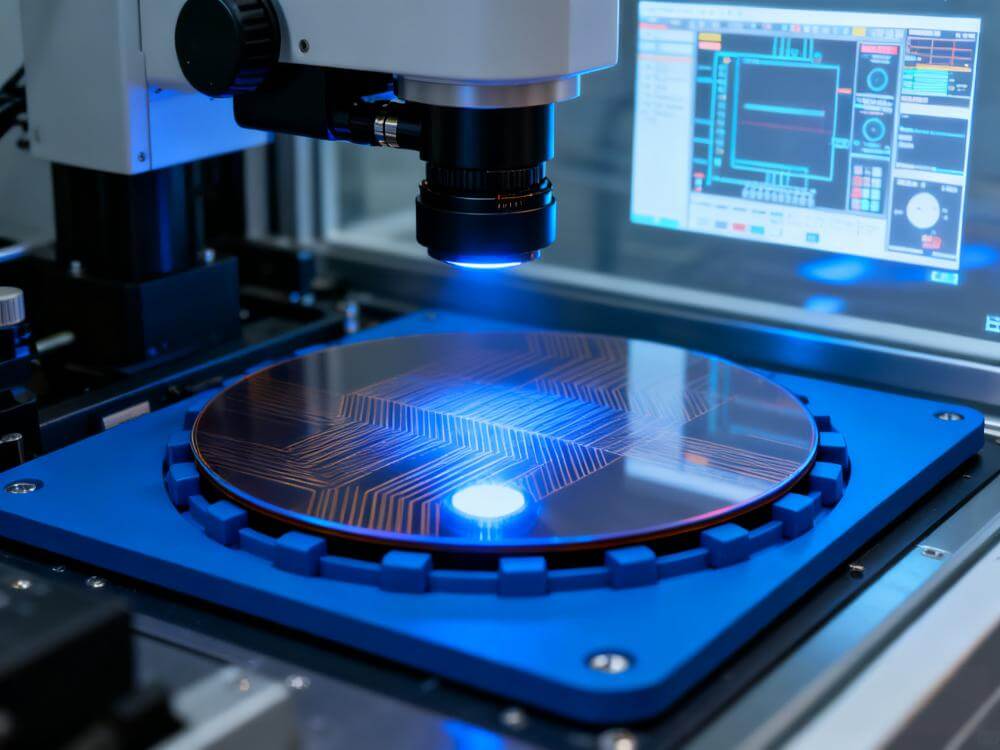
Monash University, in collaboration with CSIRO and Chongqing University, has made a breakthrough in the field of magnesium alloys. The research team used 120kV low-voltage atomic-resolution X-ray technology to clearly observe for the first time the segregation patterns of neodymium and silver elements at twin boundaries. Experiments show that the new segregation pattern enhances the boundary pinning effect by over 30 times and improves shear stress by 33 times, significantly boosting the strength and deformation resistance of magnesium alloys. This achievement solves the longstanding challenge of magnesium alloys being prone to deformation during thermomechanical processing and difficult to replace steel, offering a lighter and stronger material choice for automotive, aerospace and other fields. It is expected to significantly improve fuel efficiency and structural integrity, driving large-scale application of magnesium alloys in high-end manufacturing.

Data Source Statement: Except for publicly available information, all other data are processed by SMM based on publicly available information, market communication, and relying on SMM's internal database model. They are for reference only and do not constitute decision-making recommendations.

For any inquiries or for more information, please contact: lemonzhao@smm.cn
For more information on how to access our research reports, please contact:service.en@smm.cn
Related News
Magnesium Output Declines 2.95% MoM as Plants Enter Maintenance Cycle
Common.Time.minsAgo
Magnesium Output Declines 2.95% MoM as Plants Enter Maintenance Cycle
Read More
Magnesium Output Declines 2.95% MoM as Plants Enter Maintenance Cycle
[SMM Weekly Magnesium Output Briefing] From July 10 to July 16, the weekly output of sampled magnesium plants across the country stood at 22,729 tonnes, with a weekly operating rate of 74.57%, down 2.95% month-on-month. According to surveys, a number of primary magnesium smelting enterprises entered the centralized shutdown and maintenance cycle this week, leading to a continuous decline in the overall operating rate of the industry. Some primary magnesium smelters have resumed production starting this week; considering that a number of producers still have maintenance schedules in the late July, the primary magnesium output will bottom out and stabilize.
Common.Time.minsAgo
Magnesium Inventories Rise 1.78% MoM Amid Supply Cuts and Weaker Demand
Common.Time.minsAgo
Magnesium Inventories Rise 1.78% MoM Amid Supply Cuts and Weaker Demand
Read More
Magnesium Inventories Rise 1.78% MoM Amid Supply Cuts and Weaker Demand
【SMM Weekly Magnesium Inventory Express】This week, producer inventories edged up 1.78% month-on-month. On the supply side, multiple primary magnesium smelters in major production regions have suspended production for centralized maintenance, leading to a notable reduction in the industry's spot supply of magnesium metal. On the demand side, constrained by both overseas summer holidays and the off-season of the downstream die-casting sector, market procurement demand has weakened in tandem, putting pressure on the digestion of industrial output. As a result, producer inventories continue to show a rising trend.
Common.Time.minsAgo
SMM Weekly: Magnesium Inventory Rises 3.4% MoM Amid Production Halts and Weak Demand
Common.Time.minsAgo
SMM Weekly: Magnesium Inventory Rises 3.4% MoM Amid Production Halts and Weak Demand
Read More
SMM Weekly: Magnesium Inventory Rises 3.4% MoM Amid Production Halts and Weak Demand
[SMM Weekly Magnesium Inventory Express] This week, the social inventory increased by 3.4% month-on-month, showing an overall inventory accumulation trend. There are two main reasons: First, affected by the news that magnesium ingot manufacturers in the main production areas have suspended production for maintenance, some traders have appropriately stocked up. However, both the domestic and overseas markets are in the off-season of demand, with limited new orders. Except for individual delivery needs, the overall shipment is relatively small. Second, the high sea freight coupled with exchange rate fluctuations has compressed export profits, and downstream price pressure is obvious. Traders' willingness to ship is low, and the pick-up rhythm has slowed down. Most of the purchased magnesium ingots are stored in warehouses in Shaanxi and Tianjin ports for accumulation. The overall downstream demand is insufficient to digest, the inventory destocking rhythm is slow, and the social inventory continues to accumulate.
Common.Time.minsAgo
Register to Continue Reading
Gain access to the latest insights in metals and new energy
Already have an account?Sign in here
Advances in Magnesium Extraction From Australian Lignite and Magnesium Alloy R&D Both Make Progress, Local Supply Capacity and High-End Applications Both Enhanced [SMM Survey] - Shanghai Metals Market (SMM)