Zimbabwe has recently continued to advance its domestic lithium-processing policy while simultaneously improving the logistics infrastructure used for lithium concentrate exports. At first glance, the construction of new railway transport links appears inconsistent with the proposed restrictions on concentrate exports. In practice, however, the two policies correspond to different stages of industrial development. Railway investment is intended to support current mine operations, export earnings and logistics cost reductions, while export restrictions are designed to encourage the extension of the domestic value chain into intermediate products such as lithium sulphate. The principal objective is therefore not to halt lithium exports immediately, but to use export permits and policy deadlines to retain a greater share of processing investment and capital expenditure within Zimbabwe.
From a policy perspective, the restrictions are better understood as an industrial investment requirement than as a conventional trade ban. Zimbabwe remains dependent on mineral exports for foreign-exchange earnings, tax revenue and employment. A complete suspension of concentrate exports before sufficient domestic processing capacity has been established would therefore conflict with the country’s near-term economic interests. A more probable policy path would be to link export quotas to the construction progress of processing facilities, local investment commitments and the operating status of individual projects. Under this framework, export access would effectively be exchanged for additional domestic investment.
The main constraint on implementation is that Zimbabwe’s existing processing capacity is largely captive capacity built to serve individual mining projects. The country has not yet developed a market-based processing system capable of handling concentrate from multiple third-party suppliers. Concentrates from different mines vary in lithium grade, impurity content, particle size and metallurgical characteristics. Third-party processing therefore requires not only technical adaptation, but also commercial arrangements covering recovery rates, treatment charges, material losses and product-quality responsibilities. As a result, nominal processing capacity should not be treated as equivalent to effective capacity available to the broader industry. The existence of several lithium sulphate plants does not necessarily provide a viable conversion route for mines without their own processing facilities.
This constraint is likely to reshape the competitive structure of Zimbabwe’s lithium industry. Project value will increasingly depend not only on resource size, grade and mining costs, but also on access to processing capacity, export permits, logistics infrastructure and end-market channels. Vertically integrated companies controlling mines, concentrators, conversion plants and customer relationships in China will be better positioned to comply with the policy and monetise their resources. Smaller mines without processing facilities may become increasingly dependent on toll treatment, offtake agreements, equity partnerships or asset sales. The export restrictions could therefore raise the domestic processing ratio while also accelerating the concentration of lithium resources in the hands of a limited number of integrated operators.
For the Chinese lithium supply chain, the policy does not imply that Zimbabwean lithium resources will permanently disappear from the market. Rather, the form in which those resources enter China and the channels through which they are traded are likely to change. Part of the current concentrate supply may eventually be exported as lithium sulphate or other intermediate products. At the same time, supply may shift from a relatively fragmented network of miners and traders towards a smaller number of integrated producers. This would reduce the volume of African concentrate directly available to independent Chinese lithium refiners and increase the share of material moving through long-term offtake agreements or internal corporate supply chains.
The principal market impact may therefore be reflected less in a substantial reduction in annual resource supply and more in changes to supply timing and spot-market liquidity. During the transition, export-quota adjustments, delays to processing projects and changes in product form could create volatility in mine inventories, export volumes and Chinese arrivals. When downstream inventories are low or freely tradable concentrate is limited, such disruptions can be amplified and translated into a higher short-term risk premium for both spodumene concentrate and lithium carbonate.
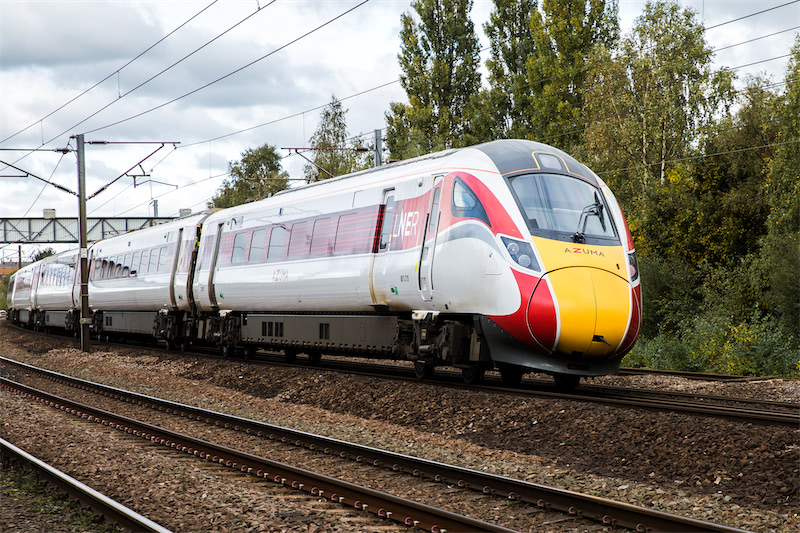
The expansion of railway infrastructure is not inherently inconsistent with the domestic-processing policy. Railways can support current concentrate exports, but they can also transport lithium sulphate, processing equipment and chemical inputs in the future. The more important issue is that the pace of policy implementation may exceed the development of processing capacity, electricity supply, chemical inputs and commercial infrastructure. If the restrictions are implemented too rapidly, they may result in production cuts, inventory accumulation and project delays. A sufficiently long transition period would allow processing capacity to develop gradually while limiting disruption to existing exports and employment.
Overall, Zimbabwe is more likely to adopt an approach based on formal restrictions, transitional quotas and investment-linked exemptions, rather than impose a complete and immediate halt to all concentrate exports. The long-term effect of the policy will not be to reduce the country’s underlying lithium resource base, but to redistribute processing margins and control across the value chain. The companies best positioned to benefit will not simply be those that own lithium resources, but those able to integrate mining, processing, logistics, export access and downstream customer relationships.
![[SMM Analysis] Zimbabwe Opens Rail Route to Maputo, Easing Lithium Export Logistics Constraints](https://imgqn.smm.cn/usercenter/mzgdV20251217171729.png)