- In H1 2026, the HRC-rebar price spread was slightly higher than the same period of 2025.
Since early 2026, the HRC-rebar spread of the most-traded contracts has fluctuated between 130-230 yuan, averaging 187 yuan, which is higher than the average of 128 yuan in the same period of 2025.
Figure 1 – SHFE Most-Traded Contract HRC-Rebar Spread Movement
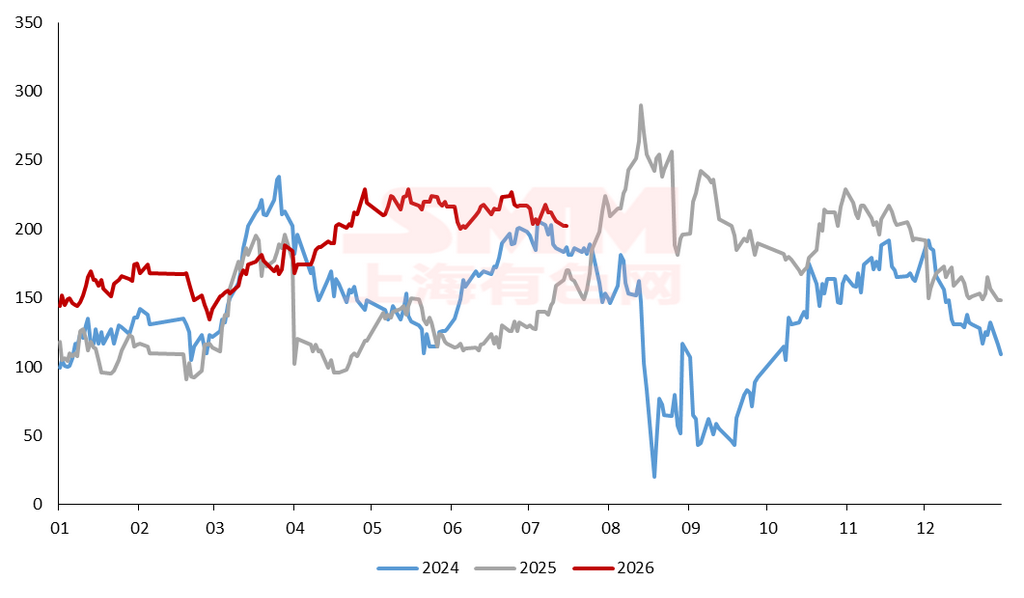
This year, the HRC-rebar spread as a whole has been slightly higher than the same period last year. The main reason still lies in supply-demand fundamentals. In 2025-2026, the property sector continued to decline, and rebar supply and demand operated at low levels. Meanwhile, thanks to the resilience of China’s manufacturing demand and the active role of sheets & plates exports in diverting supply, the supply-demand imbalance for HRC was relatively lower than that for rebar against the backdrop of overall weak domestic steel demand.
- In H2 2026, Room for HRC-Rebar Spread to Widen Is Limited
Looking ahead, starting from end-August, the off-season impact will gradually dissipate, and demand will gradually return to the peak season. At that time, demand from rebar-related property and infrastructure sectors and HRC-related manufacturing sectors is expected to improve. It is expected that in H2, both rebar and HRC prices may rebound slightly in tandem. However, considering that the overall steel supply-demand imbalance in China remains prominent, the room for the HRC-rebar spread to widen is relatively limited, and it may fluctuate between 180-230 yuan.
Towards year-end, as temperatures drop in many regions, the pace of outdoor construction will continue to slow down, while certain manufacturing sectors still have expectations of a year-end demand push. At that time, the HRC-rebar spread may widen slightly, entering a range of fluctuation between 200-250 yuan.

![[SMM Analysis]China-Indonesia Steel Price Spread Inverted, Overseas Demand Still Shows No Improvement](https://imgqn.smm.cn/usercenter/wSpkX20251217171718.png)