SMM, August 30:
As August drew to a close, a look back at China’s aluminum billet market for the month showed that “divergence” and “pressure” were the two most striking key words. On one side was the strong and impressive performance of aluminum prices; on the other was the continued slump in aluminum billet processing fees—Foshan φ120 aluminum billet processing fees fell steadily from 180 yuan/mt at the end of July, briefly touched a record low of 30 yuan/mt in intraday trading on August 12, and were quoted at only 110 yuan/mt as of August 28, clearly below the industry’s average production cost line. Aluminum billet social inventory accumulated for four consecutive weeks to a phase high of 144,500 mt. Spot trades cooled several times, suppliers’ willingness to cash out and downstream wait-and-see sentiment were locked in a repeated tug of war, and market participants’ fatigue grew day by day.
1. Aluminum Prices and Processing Fees: Seesaw Effect Throughout the Month
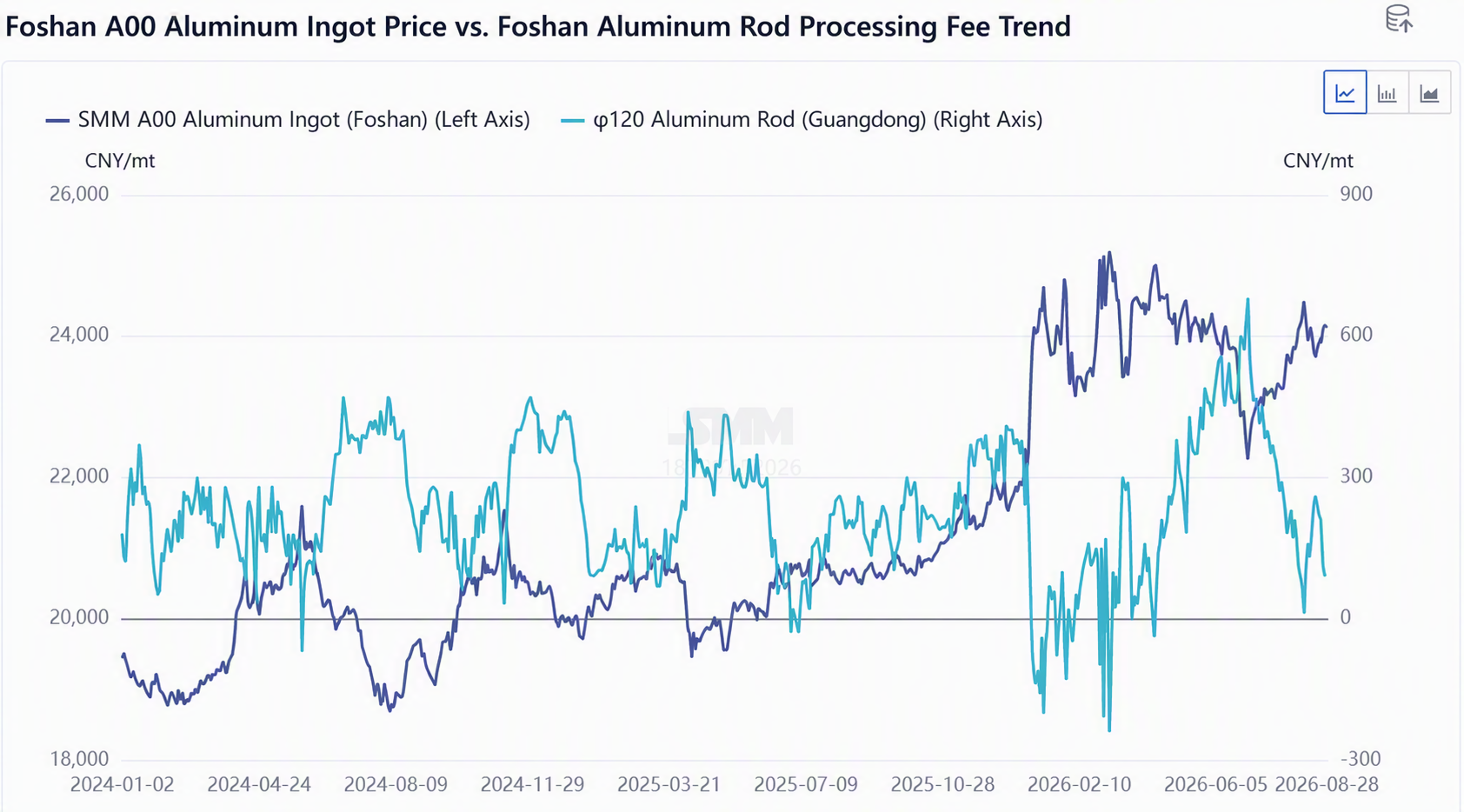
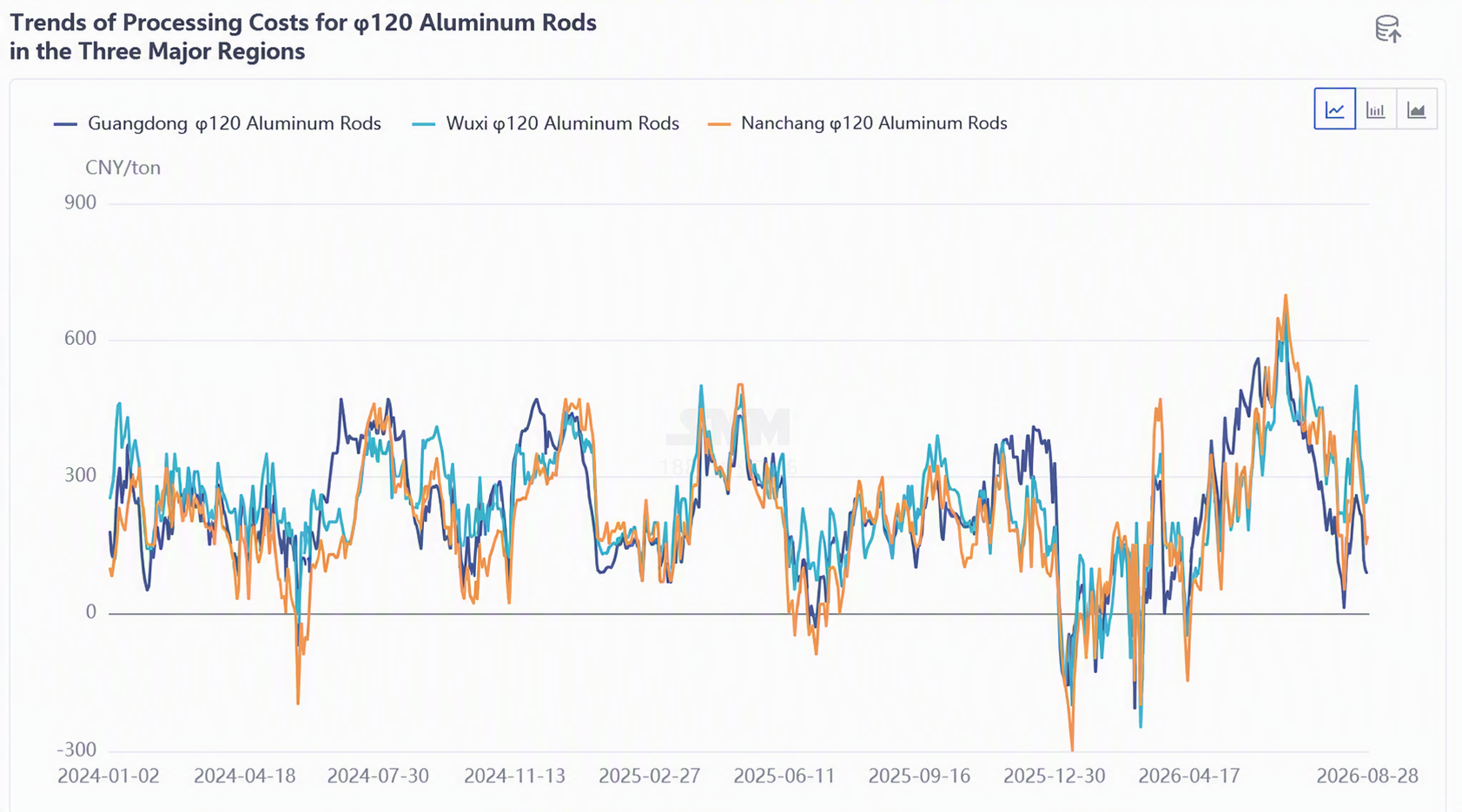
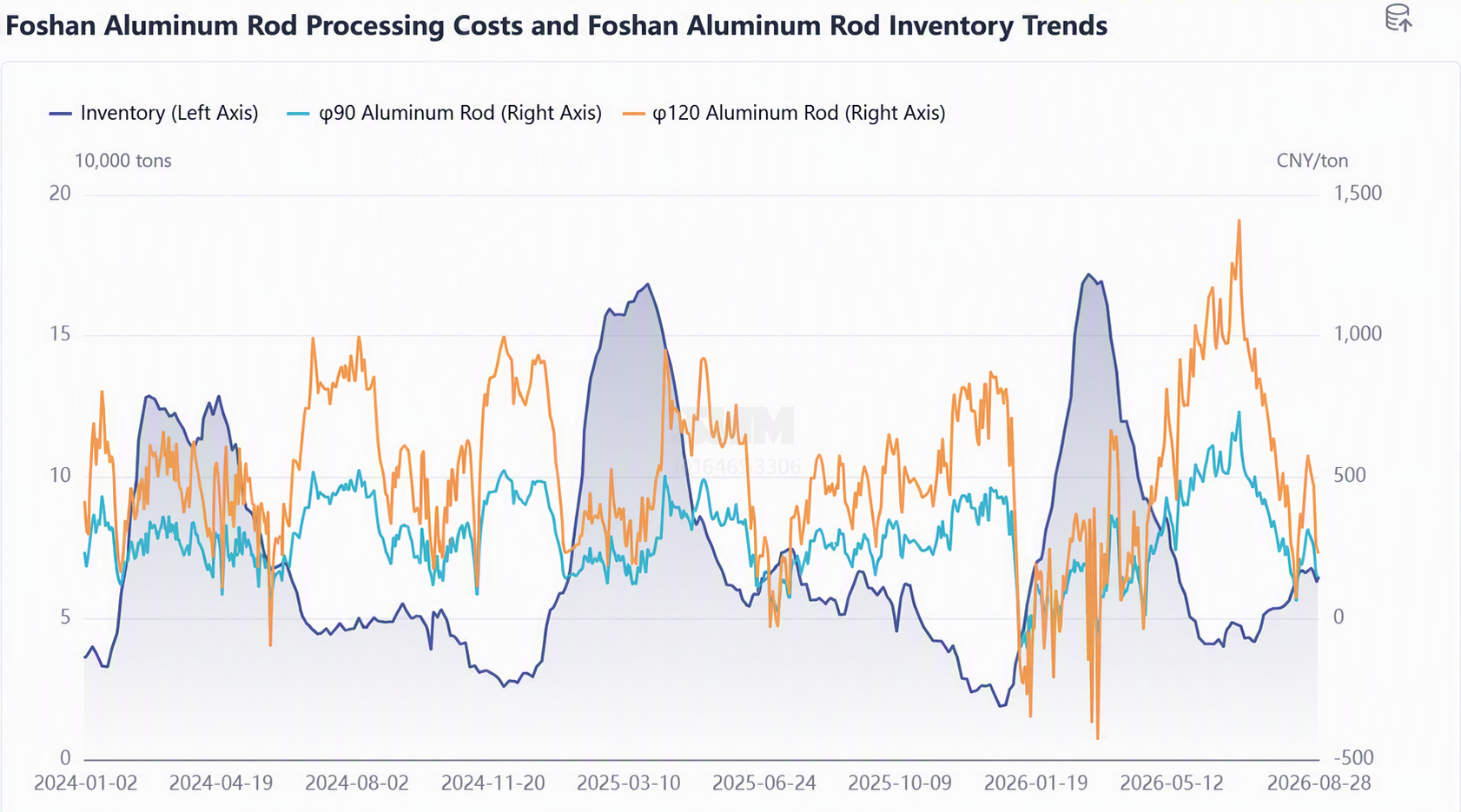
The “seesaw” relationship between aluminum prices and processing fees ran through the month, as Foshan, Wuxi, and Nanchang simultaneously played out a full roller-coaster ride. In late July, aluminum prices rebounded, downstream acceptance of high-priced aluminum billets dropped sharply, and processing fees began to fall broadly, with Foshan φ90/φ120 dropping 120 yuan/mt to 230/180 yuan/mt respectively. In mid-August, aluminum prices shot up to a phase high and processing fees fell to their lowest levels of the month. The Foshan φ120 weekly average was only 110 yuan/mt and briefly hit 30 yuan/mt mid-week; Nanchang plunged 170 yuan/mt in a single week, while Wuxi remained relatively firm due to tight arrivals and limited supply. In the week of August 20, aluminum prices pulled back sharply from high levels, producers strongly held prices firm based on earlier high-cost raw material inventories, and processing fees saw a sharp rebound—Foshan φ90/φ120 surged 150 yuan/mt to 310/260 yuan/mt, Wuxi φ120 jumped 200 yuan/mt to 500 yuan/mt, and Nanchang rose by as much as 250 yuan/mt. In the final week of August, aluminum prices stopped falling and rebounded, downstream wait-and-see sentiment heated up again, and processing fees gave back gains across the board: Foshan φ120 returned to a low of 90 yuan/mt, Wuxi φ120 tumbled 260 yuan/mt to 240 yuan/mt, and Nanchang also fell 250 yuan/mt.
For the whole month, Foshan φ120 processing fees went from 180 yuan/mt to 90 yuan/mt, passing through an extreme low of 30 yuan/mt and a rebound high of 260 yuan/mt along the way. Notably, every rebound failed to win downstream acceptance and quickly gave back gains, fully reflecting the structural weakness in suppliers’ bargaining power—price hikes were met with wait-and-see sentiment, and only price declines could move volume, making volume discounts a normal choice under pressure.
2. Supply Side: Inertia Pressure After the Operating Rate Hit a New High for the Year
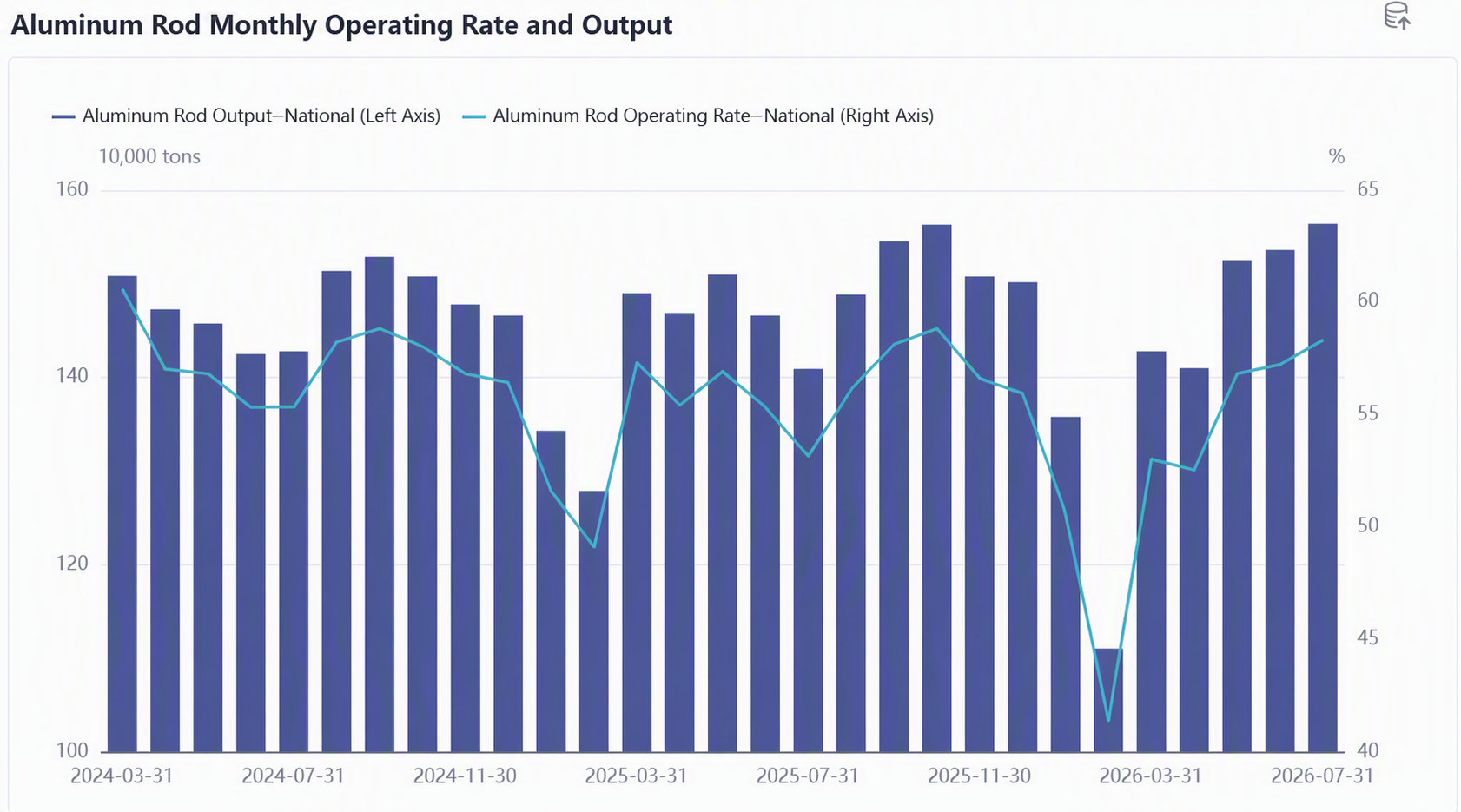
The continuous increase in supply was the root cause of the pressure on processing fees. According to SMM data, the operating rate of China's aluminum billet industry rose 1.1 percentage points MoM to 58.3% in July, up 5.2 percentage points YoY, hitting a new high for the year and also a high for the same period in nearly three years. Benefiting from strong Q2 processing fees, producers, driven by profits, generally raised output or ran at full capacity, while supply-side adjustment showed a clear lag—as processing fees retreated from June highs, July supply continued to move higher on inertia.
In August, although processing fees had fallen below the industry average production cost line and a small number of enterprises began adjusting production strategies and suspending or cutting production ahead of schedule, the overall contraction was limited: with earlier orders still to be delivered, operating rates remained rigid; capacity in south-west China continued to be released, and supply from Xinjiang, Qinghai and other regions also flowed into South China in batches due to attractive price spreads, creating a mismatch between ample supply and weak demand. SMM expects the August operating rate to pull back to around 56.9%; the direction of a supply-side retreat from highs is clear, but the magnitude will be mild and unlikely to reverse the oversupply pattern.
III. Inventory and Warehouse Withdrawals: First Destocking After Consecutive Inventory Buildup
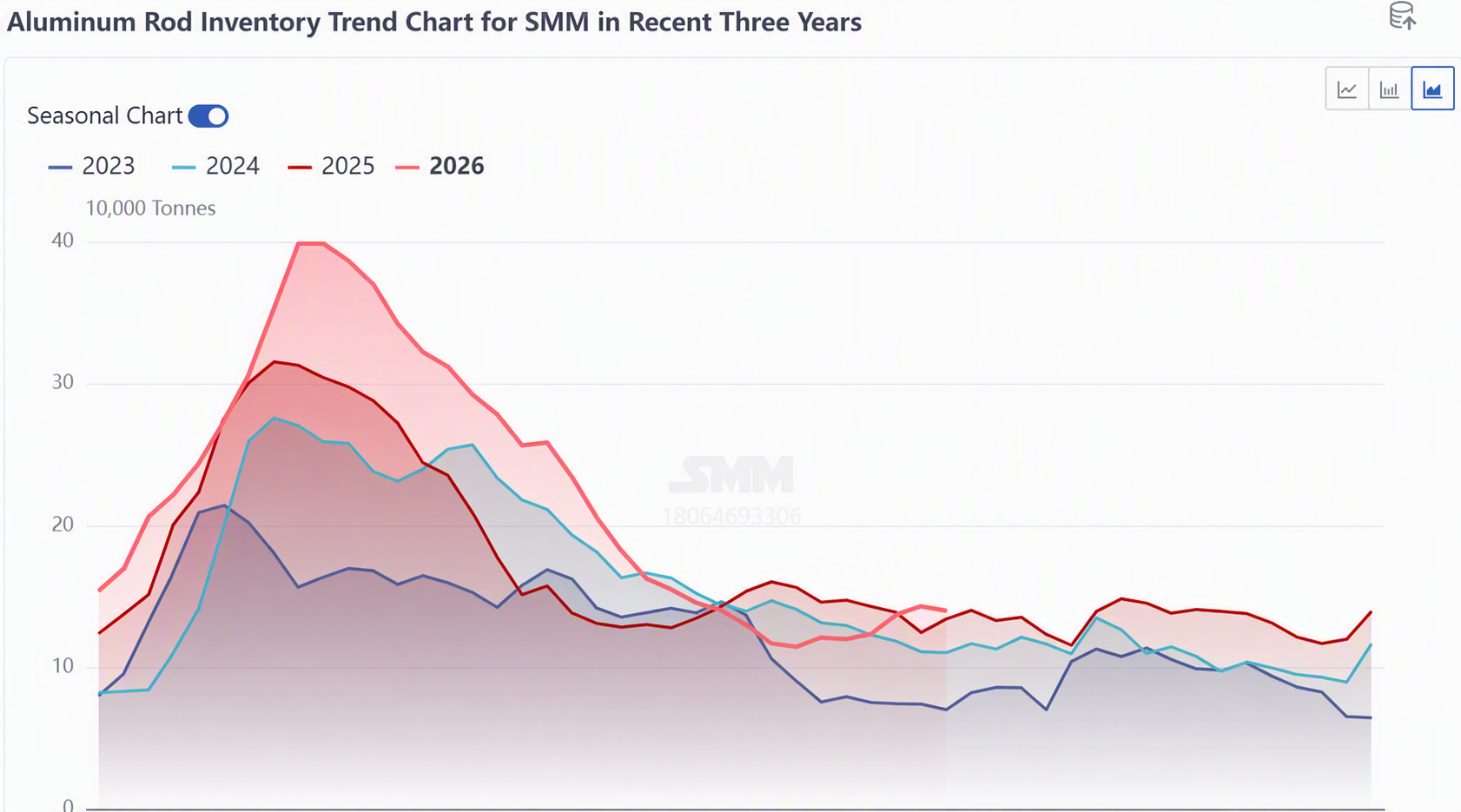
The inventory trend also clearly depicted the evolution of the supply-demand imbalance. According to SMM statistics, aluminum billet inventory in major consumption areas in China built up continuously from 119,500 mt on July 30 to a stage high of 144,500 mt on August 24, with the total rising to the highest level for the same period in nearly five years. Foshan was the main driver of this buildup—its inventory rose from 53,500 mt at end-July to a high of 67,500 mt on August 24, up 26% MoM; with the off-season combined with sustained arrivals, South China bore the brunt.
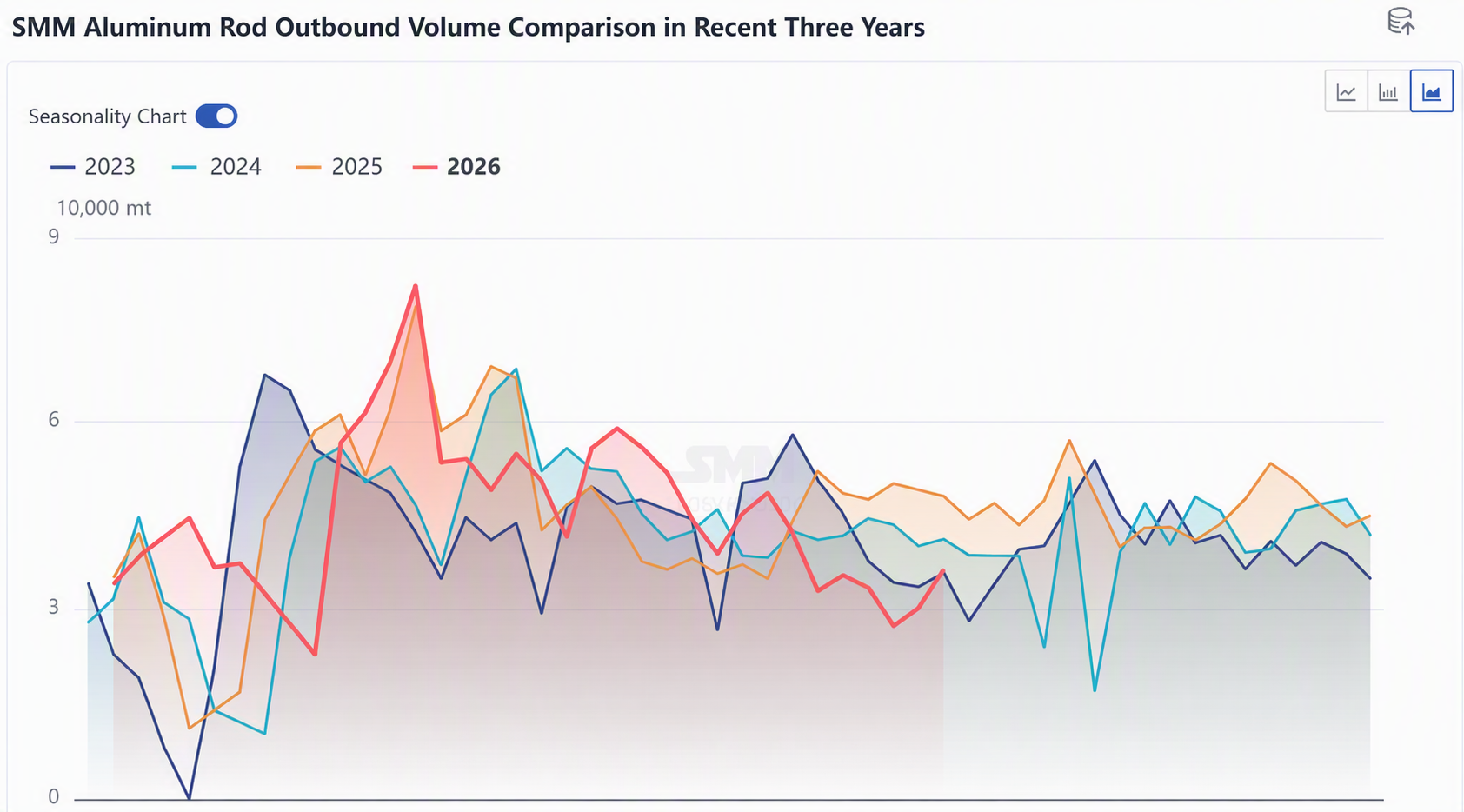
Warehouse withdrawal data directly reflected downstream sentiment. According to SMM data, weekly warehouse withdrawals fell from 35,500 mt at end-July to a year-to-date low of 27,500 mt in the week of August 10, with Foshan at only 6,000 mt, down nearly 40% WoW. Subsequently, as two sharp declines in aluminum prices stimulated bargain-hunting restocking, warehouse withdrawals in the week of August 24 recovered to 36,500 mt, with Foshan rebounding to 13,000 mt in a single week, which drove national inventory down to 139,500 mt on August 27, ending the streak of inventory buildup; Foshan inventory also fell to 62,500 mt over the same period. However, this should be viewed soberly: this round of destocking was driven more by a slower pace of arrivals and pulse-like restocking triggered by falling prices than by a trend recovery in demand, so the foundation for an inventory inflection point is not solid.
IV. Demand Side: Off-Season Combined with High Prices, Restraining Factors Layer Upon Layer
Weakness on the demand side had stronger seasonal and structural characteristics. August, as a traditional consumption off-season, had an especially severe impact on the Guangdong market, where building materials consumption is the mainstay: new orders were scarce, and enterprises' willingness to purchase was already low; the sustained rise in aluminum prices pushed the absolute price of aluminum billets sharply higher, and the surge in costs further cooled downstream purchasing sentiment; even rigid-demand purchases were made by choosing lower-priced supplies. A deeper change is that downstream acceptance of high processing fees is inherently limited—if processing fees stay high, some extrusion enterprises have already turned to remelting aluminum ingots as an alternative procurement source, which has created a hard-to-break ceiling for processing fees. In addition, export momentum is weakening at the margin as the price spread between Chinese and overseas markets narrows, making low-price volume sales increasingly common and further weakening the downside resilience of processing fees.
On the support side, the supply-side constraint from tighter liquid aluminum supply persists. Passive production cuts at some billet plants in southwestern China are unlikely to improve fundamentally in the short term and still provide a certain floor for processing fees. However, four consecutive weeks of inventory buildup in August have already significantly weakened the support from low inventories, and caution is needed over the risk of inventory buildup materializing again.
V. September Outlook: Peak Season Strength Remains to Be Tested; Limited Room for Processing Fee Recovery
As of end-August, looking ahead to September, the market still holds some expectations for the "September peak season"—a small number of downstream buyers of certain products have begun early negotiations on September production schedules, but large-scale pre-restocking has not yet started. SMM believes that the aluminum billet market will face a tug-of-war among multiple factors in September:
Supply side, as processing fees fall below the cost line, more billet plants will be forced to cut or suspend production; operating rates are expected to continue pulling back, and supply pressure will ease at the margin. This is passive contraction rather than active improvement, so its support for processing fees is limited.
Demand side, the direction of peak-season consumption recovery is fairly certain, but its elasticity should not be overestimated—demand release is more likely to unfold in a gradual manner rather than as an explosive surge; moreover, if aluminum prices stay high, high costs will continue to suppress downstream purchasing willingness.
Inventory side, as arrival pressure eases and peak-season demand improves at the margin, inventory in early September is likely to extend the destocking momentum seen at end-August; however, if supply-side contraction falls short of expectations, inventory may build again in mid-to-late September.
Overall, SMM expects domestic aluminum billet processing fees in September to consolidate at lows within the current low range, with opportunities for a phased recovery but limited upside; the main trading range for Foshan φ120 processing fees is likely to remain below the cost line. Nationwide aluminum billet inventory in absolute terms will remain at a high level compared with the same period in recent years, and the pace of destocking will depend on the implementation pace of billet plant production cuts and the actual fulfillment of peak-season orders. For aluminum billet enterprises, the "September peak season" is more like a long and arduous test—whether their struggle below the cost line can see a turning point will still need to be assessed cautiously in light of the strength of the demand recovery and the direction of aluminum price fluctuations.
Data source: SMM
![Aluminum Billet Processing Fees Plunge Below Cost Line; Foshan Market Consolidates Weakly at Lows [SMM Analysis]](https://imgqn.smm.cn/usercenter/ppauU20251217171651.jpg)