SMM April 30:
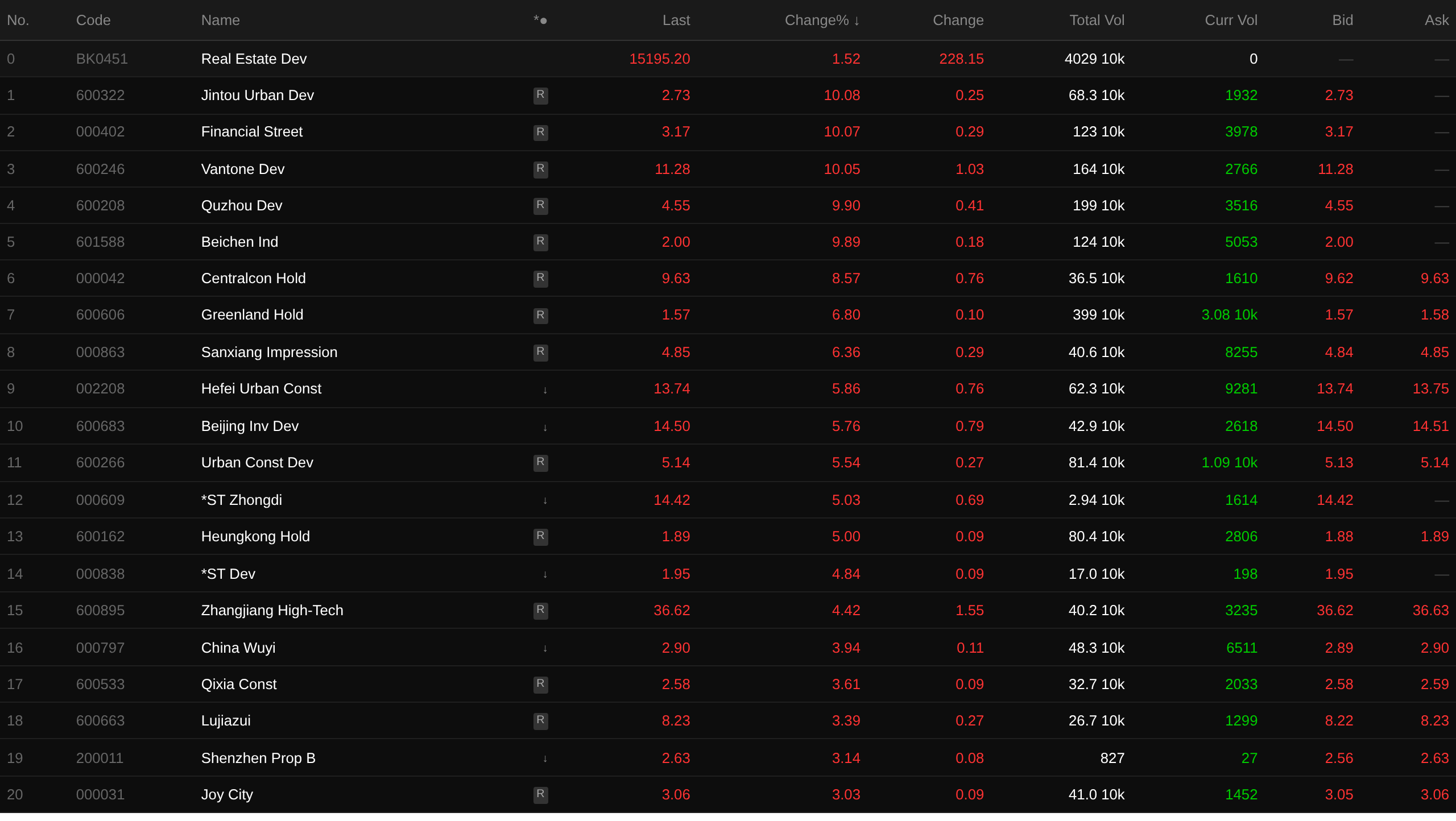
The CPC Central Committee Political Bureau meeting proposed to "effectively prevent and resolve risks in key areas, strive to stabilize the real estate market, and solidly advance urban renewal." On April 29, the Shenzhen Municipal Housing and Construction Bureau issued a notice to further optimize real estate regulation policies. The Guangdong 15th Five-Year Plan outline calls for accelerating the construction of a new model for real estate development, implementing city-specific policies to increase supply of essential and upgrading housing. Six departments including the Zhuhai Municipal Housing and Urban-Rural Development Bureau optimized and adjusted local real estate policy measures... Industry fundamentals simultaneously recovered at the margin: the latest data from the China Index Academy showed that total bond financing in the real estate sector in March was up 5.7% YoY and up 48.4% MoM, with the financing environment continuing to improve. Meanwhile, new home transactions in Guangzhou rose significantly MoM, leading first-tier cities. Multiple policy dividends, financing improvements, and recovering property market transactions resonated together, jointly driving the real estate development sector higher. As of the market close on April 30, the real estate development sector rose 1.52%. In terms of individual stocks: Jintou Chengkai, Jinrongjie, Wantong Development, Quzhou Development, and Beichen Industrial hit the daily limit, while Zhongzhou Holdings, Greenland Holdings, Sanxiang Impression, Hefei Urban Construction, and Jingtou Development led gains.
News
[CPC Central Committee Political Bureau Held a Meeting to Analyze and Study the Current Economic Situation and Economic Work]The CPC Central Committee Political Bureau held a meeting on April 28 to analyze and study the current economic situation and economic work. CPC Central Committee General Secretary Xi Jinping presided over the meeting. The meeting noted that since the beginning of this year, the CPC Central Committee with Comrade Xi Jinping at its core has strengthened overall leadership over economic work, taking a holistic and forward-looking approach. All regions and departments have acted proactively and implemented comprehensive policies. China's economy got off to a strong start, with major indicators exceeding expectations, demonstrating strong resilience and vitality. At the same time, there are some difficulties and challenges, and the foundation for sustained and steady economic improvement needs further consolidation. Confidence should be strengthened, and economic work should be pursued with greater intensity and more practical measures. The meeting pointed out the need to effectively prevent and resolve risks in key areas.Efforts should be made to stabilize the real estate market and solidly advance urban renewal.Local government debt risks should be resolved in an orderly manner, with focus on addressing the issue of overdue payments to enterprises. Reform of small and medium-sized financial institutions should be promoted, and confidence in the capital market should be stabilized and strengthened.
[Shenzhen Municipal Housing and Construction Bureau Issued a Notice on Further Optimizing and Adjusting Local Real Estate-Related Policies]On April 29, the Shenzhen Municipal Housing and Construction Bureau issued a notice to further optimize real estate regulation policies. Purchase restrictions: eligible resident families can purchase one additional housing unit in Futian, Nanshan, and Bao'an Xin'an Subdistrict; non-Shenzhen-hukou families with valid residence permits can also purchase one unit in the above areas. Housing provident fund: the maximum family loan amount was raised to 1.3 million yuan, with first-home buyers and multi-child families eligible for up to 70% upward adjustment. The new policy takes effect from April 30.
[Guangdong 15th Five-Year Plan Outline: Accelerating the Construction ofa New Model for Real EstateDevelopment, Increasing Rigid and Improvement-oriented Housing Supply Based on City-specific Policies]The Outline of Guangdong Province's 15th Five-Year Plan for National Economic and Social Development was officially released, mentioning accelerating the construction of a new model for real estate development, improving the housing system featuring multi-entity supply, multi-channel guarantee, and both rental and purchase options, striving to stabilize the real estate market and comprehensively enhancing residential quality. City-specific policies will increase rigid and improvement-oriented housing supply, expand supply of both large and small units, appropriately develop high-quality housing meeting the needs of high-net-worth individuals, and better satisfy diversified improvement-oriented housing demand.
[China Index Academy: March Real EstateBond Financing Total Up 48.4% MoM]Latest data from China Index Academy showed that in Q1 2026, financing support policies for real estate enterprises remained accommodative with more diversified financing instruments. Bond financing scale was flat YoY, with credit bonds and ABS remaining the dominant instruments. In March, total real estate bond financing was up 5.7% YoY and up 48.4% MoM.
[Guangzhou New Home Transactions Surge MoM, Leading First-tier Cities]Since the beginning of this year, the Guangzhou real estate market has shown clear signs of recovery. In March, new home volume and prices rose simultaneously, and the "mini spring" momentum continued into April. NBS data showed that Guangzhou new home selling prices were up 0.3% MoM in March, with 7,059 new home online signings citywide, up 241% MoM and up 26.67% YoY. Trading volume and price gains led first-tier cities. Entering April, the Guangzhou market maintained a steady upward trend. According to institutional monitoring, mid-April weekly new home transactions rebounded 5.4% WoW, with project visits and subscriptions in core areas remaining at high levels. By district, Tianhe District, as the core of Guangzhou's main urban area, led the city in transaction activity. In March, Tianhe District new home transactions surged over 500% MoM, ranking first among all 11 districts and becoming the strongest support for this round of Guangzhou's "mini spring." Destocking cycles in core district sub-markets continued to shorten, improvement-oriented demand was concentrated in release, and multiple high-grade projects saw strong sales. (Zhitong Finance)
[China Index Academy: National Real Estate Market Still Consolidating at Lows in Q1, Floor Space of New Commercial Buildings Sold Continued to Pull Back YoY]Zhitong Finance APP learned that China Index Academy stated that in Q1 2026, the national real estate market was still consolidating at lows, with the floor space of new commercial buildings sold continuing to pull back YoY. Against this backdrop, quality projects in core cities maintained relatively stable sales performance. According to China Index data, the top 20 projects by sales in key cities in Q1 recorded a combined transaction value exceeding 50 billion yuan, with first-tier city projects occupying 12 spots. CITIC City Development·Xinyue Bay in Nanshan District, Shenzhen topped the list with 6.55 billion yuan in signed contract value, followed by Shenzhen Bay Yunxi and Guangzhou Poly Yuexi Bay in second and third place respectively.
[Xinhua Commentary: Stabilization Signals Strengthening, Further Consolidating the Foundation for Real Estate High-Quality Development]The property market's "Golden March, Silver April" is showing initial warmth, with market expectations undergoing positive changes. A series of signals indicate that the real estate market, led by first-tier and hot second-tier cities as "bellwethers," is showing a strengthening trend of stabilization, with industry confidence entering a sustained recovery track. This is not a simple stabilization, but rather the real estate market accumulating momentum to consolidate at lows and recover after undergoing deep adjustment. From adjusting and optimizing housing provident fund policies to the normalization of urban real estate financing coordination mechanisms, from housing trade-in policies to intensified efforts in purchasing existing commercial housing for use as affordable housing, the more precise and forceful policy measures since the beginning of this year have consolidated the foundation for real estate high-quality development. The stable and healthy development of the real estate market is related to economic performance and people's well-being. Against the backdrop of continued advancement of new-type urbanization, optimizing and adjusting existing stock and achieving a higher level of "housing for all" is a requirement for sustainable economic and social development. Looking toward the "15th Five-Year Plan" development goals, accelerating transformation with more precise and forceful measures, balancing short-term market stabilization with long-term institutional improvement, is the way to truly drive real estate to achieve high-quality development.
[Lujiazui: Residential Sales Contract Value at 9.343 Billion Yuan in 2025, Up 28% YoY]Lujiazui announced that from January to December 2025, the company achieved real estate leasing cash inflows of 3.763 billion yuan, down 10% YoY; equity leasing cash inflows were 3.071 billion yuan, down 10% YoY. Contract sales of residential properties totaled 9.343 billion yuan, up 28% YoY, with equity contract sales of 6.283 billion yuan, up 25% YoY. Cash inflows from residential property sales reached 10.791 billion yuan, up 76% YoY, with equity sales cash inflows of 7.104 billion yuan, up 64% YoY. Cash inflows from office project sales were 641 million yuan, with equity sales cash inflows of 353 million yuan. Newly started GFA was 163,900 m², and completed GFA was 410,200 m².
[China Merchants Shekou Secured Two Land Parcels in Shanghai in One Day, with the Xuhui Botanical Garden Plot at a 25% Premium]On April 21, during Shanghai's third land auction of 2026, the plot xh290-09 in the S031201 unit of Xuhui District was acquired by Shanghai Zhaohui Qingya Real Estate Development Co., Ltd. for 3.3 billion yuan after 82 rounds of bidding, at a floor price of approximately 87,000/m² and a premium rate of 25%. Excluding the 3,500 m² of mandatory construction, the available-for-sale floor cost was approximately 96,000/m². The plot attracted 9 bidders, including Shanghai Chengtou, China Merchants Shekou, CNOOC, the "C&D+Xiangyu" consortium, Yuexiu, the "Poly+West Bund" consortium, CR Land, Greentown, and the "Jinmao+Qingneng" consortium.
[Six Departments Including Zhuhai Municipal Housing and Urban-Rural Development Bureau Optimized and Adjusted Local Real Estate Policy Measures]Six departments including Zhuhai Municipal Housing and Urban-Rural Development Bureau issued a notice on optimizing and adjusting local real estate policy measures. The notice proposed optimizing housing provident fund loan policies. First, raising the maximum housing provident fund loan limits. For those eligible for provident fund loans, the maximum personal housing loan limits for single and dual-contributor employee families were adjusted from 800,000 yuan to 1 million yuan and from 1.3 million yuan to 1.5 million yuan, respectively. Second, expanding the scope of home purchase support for multi-child families. When multi-child families purchase a second self-use residence and apply for provident fund loans, the loan amount may be increased by 20% above the eligible loan amount, but shall not exceed the city's maximum provident fund loan limit. Third, raising the loan amount increase ratio for purchasing green buildings. When contributing employees purchase commercial housing that meets the national two-star green building standard or commercial housing certified as prefabricated construction projects, the loan amount may be increased by 20% above the eligible loan amount, but shall not exceed the city's maximum provident fund loan limit; for commercial housing meeting the national three-star green building standard, the loan amount may be increased by 30% above the eligible loan amount, but shall not exceed the city's maximum provident fund loan limit.
[Foshan Launched Trade-in Program for Commercial Housing!First batch involving 22 housing projects]Recently, the "Notice on Organizing the First Batch of Commercial Housing 'Trade-in' Program by Foshan Municipal Housing and Urban-Rural Development Bureau" was officially released. This is not a simple encouragement document, but a systematic solution to unblock replacement bottlenecks through model innovation and a policy package. It promotesthe real estatemarket's transition from "one-sided transactions" to "a virtuous cycle between existing and incremental housing," achieving a win-win outcome for residents, enterprises, and the market. The innovation of Foshan's trade-in policy lies in introducing multiplereal estateenterprises to participate jointly: Foshan Anju, Chancheng Anju, Nanhai Youju, Shunde Chengtie, Gaoming Airport Construction, and Sanshui Anju serve as acquisition entities; Foshan Chengfa, Foshan Urban Renewal, Foshan Lianzhi, Heyue Yaji, Shunkong Chengtou, Yongdeli Commerce, Sanshui Chanfa, and MiaohuiReal Estateprovide new housing sources. This model determines the value of existing homes through negotiation, sets a "contract termination protection period" to avoid blindly pushing for lower prices, thereby completing the "sell old, buy new" closed loop and serving as a market stabilizer.
[ChinaReal EstateNews: Make good and flexible use of policies to strengthen efforts in stabilizing the property market]ChinaReal EstateNews published a commentary article. In this opening year, thereal estatemarket achieved encouraging results in its upward and stable trajectory. In terms of transaction data, from Shanghai, Beijing, and Shenzhen, to Nanjing, Hangzhou, Changchun, Yinchuan, and Dalian, and further to Yichang, Ningbo, and Yantai across all city tiers, the property market at the start of this year exuded signs of recovery. Both new and second-hand housing markets showed clear momentum of activity, with cities like Shanghai and Beijing even showing obvious transaction expansion signals. In March, Shanghai's second-hand housing online signed transactions reached 31,215 units, the highest in nearly five years; Beijing's new commercial housing transactions exceeded 3,600 units, more than tripling from February. From the national perspective, the property market also exhibited increasingly strong structural recovery characteristics.Real estatestable development has always been closely linked to financial and tax policy. Every subtle policy optimization and empowerment adds "lubricant" at critical junctures of market operation, reducing the "friction coefficient." Currently, the market has shown a positive "Golden March, Silver April" trend, which is also a critical period for efforts to stabilize thereal estatemarket. Local governments should strive to act where policies can make a difference and intensify efforts where action is warranted. This approach is ultimately anchored in the two short-term and long-term goals of stabilizing thereal estatemarket and promotinghigh-quality development of real estate,continuously enhancing the certainty and sustainability of China'sreal estatestability and high-quality development.
[Jiangsu Taizhou: Encouraging State-Owned Enterprises and Real Estate Development Enterprises to Launch Shared-Ownership Commercial Housing for Sale to Young People, New Urban Residents and Other Groups] The Notice on Implementing Several Measures to Stabilise the Real Estate Market, jointly issued by the Taizhou Municipal Housing and Urban-Rural Development Bureau and the Municipal Finance Bureau, officially took effect on the 17th. It proposed increasing housing purchase support for "young and new resident groups," implementing loan interest subsidies for "young talents." For young talents who use housing provident fund and commercial loans to purchase their first new commercial housing in the urban area, a 2% fiscal interest subsidy on the loan amount will be provided annually for a period of 2 years. Meanwhile, it supports shared-ownership commercial housing pilot programmes, encouraging state-owned enterprises and real estate development enterprises to launch shared-ownership commercial housing for sale to young people, new urban residents and other groups.
[NDRC: Focusing on Expanding Effective Domestic Demand, to Formulate the 2026–2030 Implementation Plan for Expanding Domestic Demand Strategy] On 17 April, the State Council Information Office held a thematic press conference in the series of "Getting Off to a Good Start in the 15th Five-Year Plan Period," introducing the high-quality economic and social development during the 15th Five-Year Plan period. Wang Changlin, Deputy Director of the National Development and Reform Commission (NDRC), stated that since the beginning of this year, the economy has shown positive changes, with notable improvements on both the supply and demand sides, better playing the role of a global economic stabiliser, and performing better than the expectations of many institutions and experts in and outside China. Going forward, efforts will focus on five areas. First, implementing a macro policy package, preparing a batch of comprehensive policy measures in advance and rolling them out in a timely manner as needed; second, focusing on expanding effective domestic demand, formulating the 2026–2030 implementation plan for expanding domestic demand strategy, and promoting the early commencement of qualified major projects; third, strengthening scientific and technological innovation, accelerating the development of emerging industries, deeply implementing the AI+ initiative, fostering new forms of intelligent economy, thoroughly implementing the spirit of the national services industry conference, and advancing the mechanism for expanding the services sector; fourth, intensifying efforts to stabilise employment and boost incomes, implementing the action plan for stabilising jobs, expanding capacity and improving quality, formulating and implementing income growth plans for urban and rural residents, strengthening inclusive and basic livelihood programmes, and enhancing social security for vulnerable groups; fifth, consolidating the foundation for safe development, making every effort to ensure supply and stabilise prices of energy resources, grain and other important livelihood commodities, accelerating the construction of a new-type energy system, and working to stabilise the real estate market.
[National New Commercial Housing Sales Reached Approximately 1.73 Trillion Yuan in Q1, with the "Little Spring" Rally Driving Month-on-Month Increases in Both Volume and Price in March] On 16 April, the National Bureau of Statistics (NBS) released the basic situation of the national real estate market for January–March 2026. Data showed that in Q1, the decline in national commercial housing sales narrowed significantly compared to the first two months. Driven by the "mini spring boom," both volume and price rose in March alone. However, supply-side indicators such as development investment and new construction starts remained in a downward range, with the overall market still consolidating at lows and recovering. Wang Xiaoqiang, chief analyst at Linping Residential Big Data Research Institute, noted that in terms of monthly performance, national new commercial housing saw both volume and price rise in March, with sales area and sales revenue up 10.1% and 10.9% YoY respectively, and an average selling price of 8,870 yuan/m², up 0.7% MoM. Driven by the traditional spring peak season, trading volume in March rebounded significantly from February. However, based on cumulative data, Q1 national new housing transactions remained weaker than the same period last year, with the market still in a consolidation phase.
[Zhengzhou Introduces 8 New Housing Policies] On April 10, the Zhengzhou Housing Security and Real Estate Administration Bureau issued the "Notice on Further Stabilizing the Real Estate Market." 1. Supporting young people in home purchases. Financial institutions are encouraged to offer specialized financial products and services to young people under 35 who come to Zhengzhou for employment or entrepreneurship, better meeting their diversified housing credit needs. 2. Strengthening home purchase support for multi-child families. Multi-child families that already own one home locally may apply for housing provident fund loans with a maximum loan amount 20% higher than the family's first-home loan cap when purchasing another commercial residence. 3. Implementing down payment ratios for commercial property loans. Financial institutions are guided to implement the policy of a minimum down payment ratio of no less than 30% for commercial property purchase loans. 4. Clarifying standards for determining the number of homes owned. When purchasing a new home within the city, only the buyer's housing status in the administrative district where the intended property is located will be checked; those with no housing will be recognized as first-home buyers. 5. Optimizing provident fund loan application conditions. Before December 31, 2026, when applicants meet other existing loan conditions and have no outstanding provident fund loan balance, they may apply for housing provident fund loans under first-time loan policies when purchasing upgrade housing. 6. Increasing affordable rental housing supply. Through multiple channels including acquisition, new construction, and conversion, supply will be effectively increased, with 10,000 units allocated in 2026; the application and allocation process will be optimized to improve efficiency and fairness, leveraging housing's role in attracting and retaining talent. 7. Improving supporting public services. Families that have purchased commercial housing and actually moved in may enjoy basic public services such as school district enrollment for school-age children by presenting their online-registered commercial housing sales contracts. 8. Implementing a "one property, one code" system for second-hand housing. Information disclosure in the second-hand housing market will be strengthened, with enhanced property verification and code assignment. Using trading platforms such as "Zheng Hao Fang" and "Zheng Fang Trading Network" to complete ownership verification and generate a unique property verification code, achieving "one property, one code" for second-hand housing.
[CRIC Real Estate Research: The top 20 real estate enterprises by new agency construction scale in Q1 saw new contracted construction area up 11% YoY] According to Zhitong Finance, CRIC Real Estate Research reported that in Q1 2026, the top 20 real estate enterprises by new agency construction scale achieved new contracted construction area of 50.437 million m², up 11% YoY. Compared with the 16% growth rate of the top 20 enterprises in 2025, this represented a slowdown of 5 percentage points; however, it was 5 percentage points higher than the growth rate in Q1 2025. Overall, competition in agency construction business expansion remained intense, with deep differentiation emerging among enterprises.
[Shanghai Second-hand Home Monthly Transactions Returned to 30,000 Units for the First Time in 5 Years! Multiple New Home Projects Plan to Gradually Reduce Discounts] For the first time in 5 years, Shanghai's monthly second-hand home transactions returned to the 30,000-unit threshold, with the "Golden March" market rally delivering strongly. According to data from the Shanghai Real Estate Transaction Center's official website "Online Real Estate," in March, cumulative online signings of second-hand homes in Shanghai reached 31,215 units, hitting the highest level in nearly 5 years since March 2021. Li Gen, head of Shanghai Lianjia Research Institute, stated that the "mini spring rally" in Shanghai's second-hand housing market in March was robust, with transaction data confirming a strong return of market confidence. Citywide second-hand home trading volume not only grew 6% YoY from March last year but also surged 37% from January this year. The heated second-hand housing market was also gradually transmitting to the new home market. Shanghai Centaline Property data showed that in March, the transaction area of newly built commercial residential properties in Shanghai reached 563,000 m², surging 251.6% MoM, an unprecedented rebound. Notably, as the market recovered, signals of narrowing discounts and stabilizing prices in the new home market began to emerge. Among them, Poly Duhui Hexu had previously announced that transaction prices for townhouse units on sale would be raised by 0.5% across the board starting March 9; starting March 23, discounts were further tightened. In addition, Jinhai Yunshu, Huafa Haishang Duhui, Yijiang Zhendi and other projects also plan to gradually reduce discounts starting April.
[China Index Academy: Top 100 Enterprises' Total Land Acquisition Amounted to 146.52 Billion Yuan in January–March] The latest "Top 100 National Real Estate Enterprises by Land Acquisition in January–March 2026" ranking released by China Index Academy showed that in January–March 2026, the total land acquisition amount of the top 100 enterprises was 146.52 billion yuan, down 49.4% YoY, with the decline narrowing by 3.0 percentage points MoM. After the Chinese New Year holiday, land supply and transactions recovered across various regions. Hot topic land parcels were offered in cities such as Shanghai and Hangzhou, and developers' land acquisition intensity rebounded MoM, with the decline in land acquisition value narrowing. In terms of characteristics, premium land parcels in core cities attracted intense competition, with state-owned enterprises remaining the dominant buyers.
Voices from Various Parties
Rajiv Batra, a strategist at JPMorgan in Singapore, said Hong Kong's property recovery is spreading to major mainland cities, while the lagged wealth effect from China's stock market rebound is helping revive housing demand. "After five years of correction, early signs of recovery have emerged in China's real estate sector in March, potentially approaching a turning point," Batra said. "We are relatively optimistic that China will outperform other emerging markets."
Huatai Securities noted in a research report that March real estate data showed marginal improvement in both sales volume and prices, with home prices entering a phase of positive second-order derivative, especially as first-tier cities saw MoM price rebounds, signaling gradual restoration of market confidence. Huatai Securities believes that although the investment side is still hitting bottom, the increasing spontaneity of market recovery has enhanced the sustainability of price improvement and is also expected to bring opportunities for positioning in property stocks. Key recommendations: enterprises with lighter historical burdens or healthier cash flows, preparing for a new round of expansion; enterprises with low valuations and sufficient impairment provisions; enterprises with exposure in regions where the first-order derivative has turned positive; enterprises in existing property transactions and the back-end of the real estate industry chain.
CITIC Construction Investment pointed out that in 2025, high-quality development has become the core theme for the property management and commercial management industry. Enterprises have refocused on their core property management service business. As cost reduction and efficiency gains materialize and impairment pressures are gradually released, overall corporate performance has shown positive changes. Enterprise performance has diverged, with some quality property and commercial management companies achieving sustained earnings growth. Against the backdrop of expanding domestic demand, the overall development of the real estate industry continues to be supported by policies. The firm remains optimistic about property management and operational services, recommending leading transaction intermediaries, construction agency service providers, and property enterprises with high service quality and operational efficiency.
China Post Securities stated: Overall, the real estate industry is at a critical period of consolidating at lows, structural differentiation, and business model reshaping. The cumulative effect of policies is beginning to emerge, and the worst phase of the market may have passed, but industry recovery will still exhibit structural and gradual characteristics. April to May is a window for trend verification. If a stronger-than-usual off-season with price stabilization materializes, the expectation gap between the "policy bottom" and "earnings bottom" is expected to converge rapidly, improving the risk-reward of positioning for valuation recovery. Conversely, if price pressures intensify, allocation should lean more toward defensive plays and cash flow certainty, with secondary market activity remaining a leading signal.
China Chengxin International analyzed in a research report: At the national level, policy guidance in housing and urban construction continues to be strengthened, using "quality housing" construction as the lever to systematically enhance residential quality across standards, design, construction, and operation & maintenance, promoting developers to focus on product quality upgrades. The concurrent urban renewal efforts, leveraging the promotion of mature experience and targeted central fiscal support, have established a standardized and efficient implementation framework, effectively resolving implementation challenges and forming a new development paradigm where housing quality improvement and urban renewal work in synergy.
BOC International Securities stated that the property market has seen a "mini spring rally" over the past two months, but its sustainability remains to be observed, with subsequent trends depending on inventory destocking progress and whether prices stabilize. The continuation of the phased recovery also requires stronger policy support. Attention should be paid to the sequence of "late-April Politburo meeting — May ministerial detailed rules — local execution." We expect that the positive stance is likely to continue under the existing "stabilizing real estate" framework, with greater emphasis on implementation and policy coordination. In Q2, attention can be given to high-frequency fundamentals and the pace of local policy implementation, where policy-driven trading opportunities exist. Additionally, a "fundamental inflection point" may emerge around Q4, potentially reflected in a narrowing decline in second-hand housing prices. From an investment perspective, most property developers made relatively large impairment provisions in 2025, and may consolidate at lows in 2026, meaning sector profit margins and earnings could rebound in 2027, thereby driving a reassessment of 27E valuations by the market in Q4 this year. Beyond that, some commercial real estate companies with investment properties have already proactively positioned themselves in new business formats, new models, and new scenarios, making them better equipped to seize opportunities in the new consumption era.
![Ferrous Metals May Continue to Fluctuate at Highs in the Short Term [SMM Steel Industry Chain Weekly Report]](https://imgqn.smm.cn/usercenter/wskzp20251217171746.jpg)