В середине февраля 2026 года Ассоциация автомобильной промышленности Китая (CAAM) и Китайский инновационный альянс индустрии тяговых аккумуляторов последовательно опубликовали данные о рынках автомобилей и тяговых аккумуляторов за январь 2026 года. Согласно анализу Ассоциации автомобильной промышленности Китая, в январе 2026 года автомобильная промышленность в целом функционировала стабильно, рынок легковых автомобилей испытал некоторое снижение, рынок коммерческих автомобилей продолжил положительную динамику, рынок новых энергетических транспортных средств функционировал стабильно, а экспорт автомобилей сохранял рост... SMM собрала соответствующие данные о рынке автомобилей и рынке тяговых аккумуляторов в январе 2026 года для справки читателей.
Автомобильный сектор
CAAM: В январе 2026 года производство и продажи автомобилей превысили 2 млн. единиц, производство выросло в годовом исчислении
В январе производство и продажи автомобилей составили 2,45 млн. и 2,346 млн. единиц соответственно,при этом производство выросло на 0,01% в годовом исчислении,в то время как продажи снизились на 3,2% в годовом исчислении и на 25,7% и 28,3% в месячном исчислении соответственно.
CAAM: Производство и продажи новых энергетических транспортных средств в Китае в январе 2026 года составили 1,041 млн. и 945 тыс. единиц соответственно, увеличившись на 2,5% и 0,1% в годовом исчислении
В январе производство и продажи новых энергетических транспортных средств составили 1,041 млн. и 945 тыс. единиц соответственно,увеличившись на 2,5% и 0,1% в годовом исчислении соответственно, при этом продажи новых автомобилей на рынке новых энергетических транспортных средств составили 40,3% от общего объема продаж новых автомобилей.
CAAM: Экспорт автомобилей продолжал расти в январе, экспорт новых энергетических транспортных средств демонстрировал быстрый рост
В январе экспорт автомобилей составил 681 тыс. единиц,увеличившись на 44,9% в годовом исчислении,но снизившись на 9,5% в месячном исчислении. Экспорт новых энергетических транспортных средств составил 302 тыс. единиц,удвоившись в годовом исчислении и увеличившись на 0,5% в месячном исчислении; экспорт традиционных автомобилей с бензиновым двигателем составил 380 тыс. единиц,увеличившись на 18,8% в годовом исчислении,но снизившись на 16,1% в месячном исчислении.
Относительно январского автомобильного рынка CAAM заявила, что автомобильная промышленность в целом функционировала стабильно, рынок легковых автомобилей испытал некоторое снижение, рынок коммерческих автомобилей продолжил положительную динамику, рынок новых энергетических транспортных средств функционировал стабильно, а экспорт автомобилей сохранял рост. Основными факторами, способствовавшими снижению рынка, были: во-первых, переходная корректировка политики налога на покупку новых энергетических транспортных средств; во-вторых, многие местные политики субсидирования покупки автомобилей находились в годовой переходный период; в-третьих, часть потребительского спроса была выдвинута вперед в 2025 году.
В первый месяц 2026 года государство активно внедрило ряд политик, благоприятных для населения и предприятий, с целью поддержки уровня жизни и экономического развития. Среди них программа «масштабного обновления оборудования и обмена потребительских товаров» была реализована плавно и упорядоченно, при этом различные регионы последовательно выпустили правила реализации; «План работ по ускорению формирования новых точек роста в сфере услуг потребления» сосредоточен на ключевых областях, таких как автомобильный послепродажный сервис, для стимулирования рыночной активности. По мере уточнения и реализации поддерживающих мер они способствуют стабилизации и восстановлению спроса на автомобильном рынке, обеспечивая устойчивую работу отрасли. Китайская ассоциация автомобильной промышленности (CAAM) отметила, что период 15-й пятилетки является критическим окном для перехода китайской автомобильной отрасли к качественному росту; сектор должен сохранять стабильность рынка, одновременно повышая качество и эффективность.
Между тем, Ассоциация пассажирских автомобилей (PCA) опубликовала данные за январь. Розничные продажи достигли 1,544 млн единиц, снизившись на 13,9% в годовом исчислении. Учитывая сложные рыночные факторы, годовая модель «низкого старта, высокого финиша» стала выраженной; с 2020 года январские продажи оставались слабыми (-21% в 2020, +27% в 2021, -5% в 2022, -38% в 2023, +58% в 2024, -12% в 2025), поэтому снижение на 13,9% в 2026 году находится в середине исторических колебаний января.
Для новых энергетических транспортных средств (NEV) розничные продажи пассажирских NEV в январе составили 596 тыс. единиц, снизившись на 20,0% в годовом исчислении; традиционные автомобили с ДВС проданы в объеме 948 тыс. единиц, снижение на 10%. Экспорт: отгружено 286 тыс. пассажирских NEV, рост на 103,6% в годовом исчислении , что составляет 49,6% от общего экспорта пассажирских автомобилей и на 12,5 процентных пункта выше, чем в прошлом году. На полностью электрические модели пришлось 65% экспорта NEV (67% в прошлом году), при этом сегменты A00+A0 составили 50% (41%). Используя преимущества масштаба и потребности в расширении, больше китайских брендов NEV выходят на глобальный уровень и получают признание за рубежом. Подключаемые гибриды составили 33% экспорта NEV (32%), и, несмотря на недавние внешние challenges, экспорт самостоятельно разработанных подключаемых гибридов на развивающиеся рынки стремительно растет, открывая promising перспективы.
PCA отметила, что после окончания льготного периода налога на покупку NEV в декабре 2025 года рынок находится в фазе нормального восстановления. Некоторые потребители сделали покупки заранее, чтобы воспользоваться стимулирующими мерами, что привело к краткосрочному перенасыщению в январе — это ожидаемая колебание, а не долгосрочная тенденция.
Особенности января: (1) Экспорт производителей достиг рекордного уровня для января, экспорт пассажирских НЭТ также был на высоком уровне, подчеркивая растущую глобальную конкурентоспособность и сильный спрос за рубежом; (2) Розничные продажи после стимулирования снизились, но доля премиальных НЭТ выросла, показывая, что потребители, переходящие на более качественные модели, предпочитают премиальные НЭТ, что способствует качественному преобразованию; (3) Запуск новых моделей в 2026 году стабилен, а меры по борьбе с "инволюцией" и беспорядочными скидками удержали стимулирующие меры для НЭТ на уровне 10,1% пятый месяц подряд, предотвращая ценовые войны, основанные на объемах, и сохраняя порядок; (4) Исторический шаблон, при котором ДВС превосходят НЭТ перед Китайским Новым годом, повторился: розничные продажи ДВС снизились на 10% в годовом исчислении, чисто электрические автомобили снизились на 17,0%, автомобили с увеличенным запасом хода выросли на 0,8%, гибридные автомобили с возможностью подзарядки снизились на 31,2%; по мере того как исчезает перенасыщение декабря, НЭТ должны вернуться к росту; (5) Внутренняя доля НЭТ в январе составила 38,6%, экспортная доля — 49,6%; (6) В январе экспорт собственных ДВС составил 250 000 единиц, увеличившись на 17% в годовом исчислении, экспорт собственных НЭТ — 226 000 единиц, увеличившись на 115% в годовом исчислении, НЭТ составляют 47,5% от экспорта собственных брендов — особенно сильны в Европе и Юго-Восточной Азии — укрепляя расширяющееся глобальное влияние китайских брендов НЭТ и закладывая прочную основу для будущего роста экспорта.
Сектор аккумуляторных батарей
В январе продажи аккумуляторных батарей и систем хранения энергии в Китае составили 148,8 ГВт·ч, увеличившись на 85,1% в годовом исчислении
В январе продажи аккумуляторных батарей и систем хранения энергии в Китае достигли 148,8 ГВт·ч, снизившись на 25,4% по сравнению с предыдущим месяцем, но увеличившись на 85,1% в годовом исчислении. В частности, продажи аккумуляторных батарей составили 102,7 ГВт·ч, что составляет 69,0% от общих продаж, снизившись на 28,6% по сравнению с предыдущим месяцем и увеличившись на 63,2% в годовом исчислении; продажи систем хранения энергии составили 46,1 ГВт·ч, что составляет 31,0% от общих продаж, снизившись на 17,0% по сравнению с предыдущим месяцем и увеличившись на 164,0% в годовом исчислении.
В январе совокупный экспорт аккумуляторных батарей и систем хранения энергии из Китая составил 24,1 ГВт·ч, снизившись на 26,0% по сравнению с предыдущим месяцем, но увеличившись на 38,3% в годовом исчислении, что составляет 16,2% от месячных продаж. Из них экспорт аккумуляторных батарей составил 17,7 ГВт·ч, что составляет 73,3% от общего экспорта, снизившись на 7,1% по сравнению с предыдущим месяцем и увеличившись на 59,3% в годовом исчислении; экспорт систем хранения энергии составил 6,4 ГВт·ч, что составляет 26,7% от общего экспорта, снизившись на 52,6% по сравнению с предыдущим месяцем и увеличившись на 1,4% в годовом исчислении.
В январе внутренние установки аккумуляторных батарей составили 42,0 ГВт·ч, увеличившись на 8,4% в годовом исчислении
В январе внутренние установки аккумуляторных батарей составили 42,0 ГВт·ч, снизившись на 57,2% по сравнению с предыдущим месяцем, но увеличившись на 8,4% в годовом исчислении. Из них установки тройных батарей составили 9,4 ГВт·ч, что составляет 22,3% от общих установок, снизившись на 48,6% по сравнению с предыдущим месяцем и увеличившись на 9,6% в годовом исчислении; установки батарей LFP составили 32,7 ГВт·ч, что составляет 77,7% от общих установок, снизившись на 59,1% по сравнению с предыдущим месяцем и увеличившись на 8,1% в годовом исчислении.
Новые автопроизводители показали различную динамику в январе, Leap Motor продолжает "лидировать", поставки Xiaomi Auto превысили 39 000 единиц в январе
Согласно статистике корреспондента CLS по продажам 15 компаний-автопроизводителей, акций которых торгуются на A/H-рынках, 9 компаний достигли роста в годовом исчислении, что составляет 60%. Увеличение продаж НЭТ и расширение на зарубежные рынки были важными факторами общего роста этих автопроизводителей.
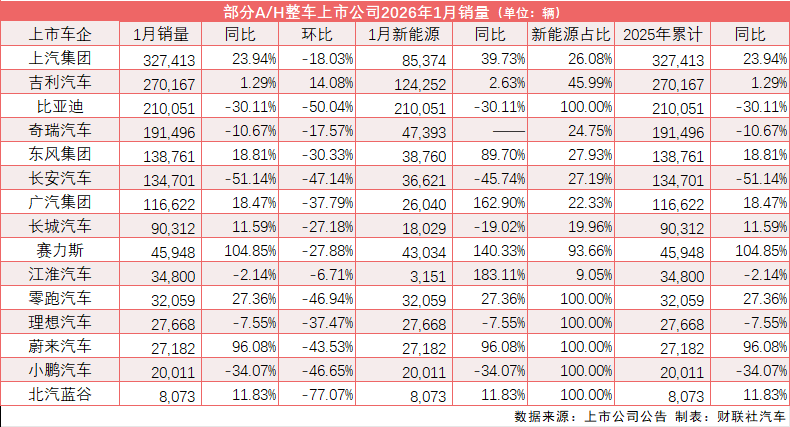
Продажи SAIC в январе составили 327 000 единиц, увеличившись на 23,94% в годовом исчислении, вернувшись на первое место по продажам. Сектор НЭТ продолжал "набирать обороты"; в январе 2026 года продажи НЭТ SAIC достигли 85 000 единиц, увеличившись на 39,7% в годовом исчислении, что позволило компании занять лидирующие позиции в отрасли.
Что касается Geely, которая заняла второе место, ее продажи в январе составили 270 200 единиц, увеличившись на 1,29% в годовом исчислении и на 14,08% по сравнению с предыдущим месяцем, став единственной компанией, добившейся положительного роста как в годовом, так и в месячном исчислении. Geely заявила: "2026 год станет крупным продуктивным годом для Geely Auto, компания планирует запустить 1-2 новых продуктов каждую четверть, включая несколько новых гибридных моделей и новое поколение автомобилей на метанол-водородной энергии, стремясь достичь целевого объема продаж в 3,45 миллиона единиц за год". В плане экспорта Geely установила цель на 2026 год в размере 640 000 единиц, что представляет собой увеличение более чем на 50% в годовом исчислении.
На рынке новых автопроизводителей в январе, согласно данным о поставках, опубликованным крупными автопроизводителями, поставки во всех случаях снизились по сравнению с декабрем 2025 года.
Среди них Leap Motor продолжал лидировать в 2026 году, заняв первое место среди новых автопроизводителей с 32 059 единицами, увеличившись на 27,37% в годовом исчислении, но снизившись на 46,94% по сравнению с предыдущим месяцем. Для стабилизации рынка Leap Motor ускорила расширение каналов, недавно добавив 85 новых магазинов. По состоянию на 5 января общее количество магазинов по всей стране достигло 1 068, обеспечивая удобство для большего числа пользователей, желающих испытать продукты и услуги Leap Motor.
2 февраля Leap Motor запустила новые выгоды при покупке автомобиля в феврале, включая новогоднюю скидку наличными в размере 11 000 юаней, новогоднее вознаграждение за рекомендацию до 10 000 энергетических баллов и новогоднее финансовое предложение с 0% процентной ставкой на срок до 5 лет.
Li Auto восстановила импульс в январе, заняв второе место после Leap Motor с 27 668 единицами, снизившись на 7,55% в годовом исчислении и на 37,47% по сравнению с предыдущим месяцем. По состоянию на 31 января 2026 года накопленные поставки Li Auto достигли 1 567 883 единиц. 5 февраля Ли Сян, председатель совета директоров Li Auto, заявил в социальных сетях, что новый Li L9 будет запущен в 2026 году, описав его как "не просто автомобиль, а пионерскую работу по созданию эмбodied AI-роботов". Журналисты Caixin узнали, что Li Auto создала структуру AI-компании, включая команды по вычислениям и данным, базовым моделям, программному обеспечению и аппаратному обеспечению, для создания возможностей по созданию "кремниевых людей".
По состоянию на 31 января 2026 года у Li Auto было 547 розничных центров по всей стране, охватывающих 159 городов, а также 547 послепродажных и авторизованных сервисных центров, охватывающих 221 город. Компания ввела в эксплуатацию 3 966 сверхбыстрых зарядных станций Li Auto с 21 945 зарядными устройствами.
NIO поставила в общей сложности 27 182 автомобиля в январе, увеличившись на 96,08% в годовом исчислении, но снизившись на 43,53% по сравнению с предыдущим месяцем. После полудня 1 февраля 60 000-й новый ES8 был поставлен в Гуанчжоу, достигнув этого рубежа за 134 дня. В тот же день NIO запустила семилетний ультра-низкопроцентный план покупки для новых ET5, ET5T, ES6 и EC6, в то время как бренд Onvo представил аналогичный план для Onvo L60 и L90 с годовой ставкой 0,49%, без комиссии за финансовые услуги и без штрафа за досрочное погашение. Бренд Firefly запустил семилетний ультра-низкопроцентный план покупки автомобиля, с заказами, заблокированными получением подарочного набора нового года лошади.
XPeng Motors поставила 20 011 новых автомобилей в январе, снизившись на 34,07% в годовом исчислении и на 46,65% по сравнению с предыдущим месяцем. В январе XPeng X9 продолжал хорошо продаваться, с 4 219 единицами, поставленными за один месяц, увеличившись на 413,9% в годовом исчислении. К концу января накопленные поставки достигли 51 897 единиц, став самым быстрым МПВ среди новых автопроизводителей, превысивших 50 000 единиц поставок. В том же месяце начался прием предварительных заказов на полностью электрическую версию XPeng X9 2026 года. Как "самый дальний 5C полностью электрический большой семиместный автомобиль в мире", новый продукт полностью соответствует популярной на рынке версии с супер-увеличенным запасом хода. До запуска нового автомобиля внесение депозита в размере 2 000 юаней может компенсировать 7 000 юаней стоимости автомобиля.
Кроме того, для Xiaomi Auto, согласно официальным данным Weibo, поставки в январе превысили 39 000 единиц, даже превзойдя Leap Motor, который занимал первое место среди новых автопроизводителей. В тот же день Xiaomi также объявила о связанных преимуществах при покупке автомобиля для Xiaomi SU7 и Xiaomi SU7 Ultra. Вся серия Xiaomi YU7 может наслаждаться "семилетним низкопроцентным" предложением! Доступен новый вариант низких ежемесячных платежей, с первоначальным взносом от 99 900 юаней и минимальным ежемесячным платежом менее 2 000 юаней. Для заказов, размещенных до 24:00 28 февраля, доступен "трехлетний беспроцентный" вариант, с первоначальным взносом от 74 900 юаней и ежемесячными платежами всего 4 961 юань. Одновременно клиенты могут наслаждаться ограниченными временными преимуществами при покупке автомобиля до 66 000 юаней.
В отношении прогресса расширения магазинов Xiaomi Auto заявила, что в январе добавила 9 новых магазинов, доведя общее количество до 484 магазинов в 139 городах по всей стране; планируется добавить 6 новых магазинов в феврале, ожидается, что они охватят 2 новых города: Цзянмень и Чжоукоу; по состоянию на 31 января уже было 270 сервисных точек по всей стране, охватывающих 159 городов.
Что касается BYD, лидера в области аккумуляторных батарей, продажи в январе достигли 210 051 единицы, с накопленными продажами новых источников энергии, превышающими 15,3 миллиона. В январе BYD экспортировала в общей сложности 100 482 НЭТ. Стоит отметить, что есть новые новости о твердотельных батареях BYD. Журналист Cailianshe узнал от отдела инвесторских отношений BYD, что BYD исследует несколько направлений в области твердотельных батарей, где сульфидные твердотельные батареи являются важным техническим направлением, достигнув прорывов в сроке службы батареи и быстрой зарядке, и ожидается, что маломасштабное производство начнется к 2027 году. В области батарей на основе натрия уже разработана технологическая платформа третьего поколения, и разработаны батареи на основе натрия с 10 000 циклов; массовое производство будет определено в зависимости от фактического спроса рынка и клиентов.
Цуй Дуншу, генеральный секретарь CPCA, прокомментировал, что, учитывая недавнее истечение срока действия налоговых льгот на покупку автомобилей, только некоторые провинции и города запустили программы замены автомобилей; вместе с тем, середина января прошлого года была пиковым периодом продаж перед Китайским Новым годом, изменение времени праздников оказывает влияние на слабые розничные продажи автомобилей в январе. Ожидается, что по мере постепенного уточнения правил замены в различных регионах, упрощения каналов подачи заявок на субсидии и постепенного освобождения потенциального спроса на покупку автомобилей перед Китайским Новым годом, розничный рынок автомобилей должен восстановиться и улучшиться.
В начале 2026 года власти на национальном и местном уровнях упоминают политику стимулирования автомобильного потребления; более 20 регионов внедряют новые программы субсидий для обмена и покупки автомобилей
С началом 2026 года, по мере прекращения государственных субсидий, на всех уровнях — от национального до местного — активно внедряется многоплановая политика стимулирования потребления. По неполным данным, более 20 провинций, городов и автономных районов, включая Пекин, Шанхай, Чунцин, Чжэцзян и Сычуань, опубликовали подробные правила программ субсидий для обмена, утилизации и обновления автомобилей или покупки новых транспортных средств.
31 декабря 2025 года Канцелярия Министерства коммерции и семь других ведомств выпустили «Правила реализации субсидий на обмен автомобилей в 2026 году», которые официально вступили в силу 1 января 2026 года. Согласно правилам, в 2026 году индивидуальным потребителям будет предоставляться единовременная субсидия при утилизации бензиновых легковых автомобилей, зарегистрированных до 30 июня 2013 года, дизельных или других легковых автомобилей, зарегистрированных до 30 июня 2015 года, или новых энергетических легковых автомобилей, зарегистрированных до 31 декабря 2019 года, и покупке новых энергетических легковых автомобилей, включенных в «Каталог моделей NEV, имеющих право на снижение или освобождение от налога на покупку транспортных средств» Министерства промышленности и информатизации, или легковых автомобилей с двигателем внутреннего сгорания рабочим объемом 2,0 литра и менее. При утилизации вышеупомянутых соответствующих старых транспортных средств и покупке новых энергетических легковых автомобилей предоставляется субсидия в размере 12% от продажной цены нового автомобиля (включая налоги, далее аналогично), при этом сумма субсидии (округленная до ближайшего юаня, далее аналогично) ограничивается 20 000 юаней. При утилизации вышеупомянутых соответствующих легковых автомобилей с ДВС и покупке легковых автомобилей с двигателем внутреннего сгорания рабочим объемом 2,0 литра и менее предоставляется субсидия в размере 10% от продажной цены нового автомобиля, при этом сумма субсидии ограничивается 15 000 юаней.
Ассоциация пассажирских автомобилей проанализировала, что ключевыми словами политики обмена 2026 года являются не «дальнейшее усиление», а «более устойчивый, более сбалансированный и более регулируемый». Изменение суммы субсидии на процент от цены автомобиля с верхним пределом направлено на достижение более сбалансированного использования субсидий, избегая ситуаций, когда субсидии приостанавливаются из-за быстрого истощения средств на ранних этапах. Корректировка алгоритма также окажет определенное влияние на структуру автомобильного рынка: стимул для моделей низкой ценовой категории значительно ослабнет, в то время как модели стоимостью от 160 000 до 200 000 юаней смогут полностью использовать субсидии, что сделает их более выгодными для покупок с целью обновления. Производителям необходимо удовлетворять рыночный спрос за счет конкурентоспособности продукции и финансовых решений, делая акцент на «долгосрочной ценности», такой как запас хода, интеллектуальные функции и опыт заправки/зарядки, а не полагаясь исключительно на разовые субсидии.
Ассоциация автодилеров Китая также заявила, что политика обмена автомобилей 2026 года усиливает общую координацию и способствует эффективному и прямому распределению субсидий. Это гарантирует, что ограниченные средства принесут пользу большему числу потребителей, в особенности удовлетворяя потребности групп с основными потребностями. Ожидается, что круг владельцев автомобилей, получающих выгоду, еще больше расширится, а поддержка будет более четко направлена на поощрение вывода из эксплуатации старых автомобилей и покупку энергоэффективных и новых энергетических транспортных средств (НЭТС). При реализации особое внимание уделяется использованию рыночных механизмов для того, чтобы субсидии в большей степени соответствовали реальным потребностям. Процесс подачи заявок прозрачен и удобен, а механизмы надзора и управления усовершенствованы. В целом ожидается, что политика будет постоянно стимулировать потребительскую активность, добавляя новый импульс для трансформации, модернизации и высококачественного развития автомобильной промышленности.
С начала 2026 года, по неполным статистическим данным, многие провинции и города, включая Шанхай, Пекин, Сычуань и Шаньдун, последовательно выпустили подробные правила политики обмена автомобилей, постоянно стимулируя местное автомобильное потребление:
[В Шанхае реализована политика обмена автомобилей 2026 года, максимальная субсидия составляет 20 000 юаней]
Политика обмена автомобилей 2026 года в Шанхае вступила в силу. Шанхайская муниципальная комиссия по торговле и семь других департаментов совместно издали «Подробные правила реализации политики субсидирования обмена автомобилей в Шанхае в 2026 году», официально запустив мероприятия по субсидированию обновления автомобилей путем вывода из эксплуатации и замены. Частные потребители могут получить максимальную субсидию в размере 20 000 юаней. Политика действует с 1 января 2026 года, заявки принимаются до 10 января 2027 года.
[В Хубэе реализованы правила субсидирования обмена автомобилей 2026 года, максимальная субсидия составляет 20 000 юаней]
Департамент торговли провинции Хубэй совместно с провинциальной комиссией по развитию и реформам, департаментом экономики и информационных технологий и пятью другими департаментами официально издали «Подробные правила реализации политики субсидирования обмена автомобилей в Хубэе в 2026 году». В них указано, что специальные субсидии будут предоставляться частным потребителям, приобретающим НЭТС и легковые пассажирские автомобили с небольшим объемом двигателя, двумя основными способами: обновление путем вывода из эксплуатации и обновление путем замены, при этом максимальная сумма субсидии составляет 20 000 юаней. Политика официально вступила в силу 1 января 2026 года.
[В Сиане введены правила субсидирования автопродаж 2026 года: до 20 000 юаней за утилизацию старых автомобилей и покупку новых энергетических транспортных средств]
Сиань опубликовал «Подробные правила реализации политики субсидирования автопродаж в Сиане на 2026 год», разъясняющие, что специальные субсидии будут предоставляться частным потребителям, приобретающим новые автомобили через две модели: утилизацию с обновлением и замену с обновлением. Политика действует в течение всего года, приём заявок на субсидии продлится до 10 января 2027 года, что дополнительно снизит расходы граждан на покупку автомобилей и поспособствует обновлению потребительского рынка автомобилей.
[Субсидии на автопродажи в Пекине в 2026 году начнутся 9 февраля, максимальная субсидия — 20 000 юаней]
Политика субсидирования автопродаж в Пекине на 2026 год официально объявлена. 6 февраля журналисты узнали, что Пекин официально опубликовал «План реализации субсидий на автопродажи в Пекине на 2026 год», который предусматривает запуск двух видов субсидий: «утилизация с обновлением» и «замена с обновлением». Система подачи заявок откроется в 10:00 9 февраля, и соответствующие критериям потребители смогут получить максимальную поддержку в размере 20 000 юаней. В частности, «утилизация с обновлением» означает сдачу старого автомобиля и покупку нового. Потребители, приобретающие пассажирские новые энергетические транспортные средства, имеют право на субсидию в размере 12% от продажной цены нового автомобиля, но не более 20 000 юаней; те, кто покупает пассажирские автомобили с ДВС рабочим объёмом 2,0 литра или менее, могут получить субсидию в размере 10% от цены нового автомобиля, максимум 15 000 юаней.
[Сычуань: поддержка автопродаж и обновления с максимальной субсидией 15 000 юаней]
Государственный комитет по развитию и реформам и Финансовый департамент провинции Сычуань выпустили уведомление о публикации «Мер политики по реализации масштабного обновления оборудования и обмена потребительских товаров в провинции Сычуань в 2026 году». В уведомлении упоминается поддержка автоматического обмена и обновления. В 2026 году индивидуальные потребители, которые переоформят регистрацию легковых автомобилей, находящихся в их собственности, путем продажи и покупки новых легковых NEV, включенных в «Каталог моделей NEV, имеющих право на снижение и освобождение от налога на покупку транспортных средств» Министерства промышленности и информатизации, или легковых автомобилей с двигателем внутреннего сгорания рабочим объемом 2,0 литра или менее, получат единовременную субсидию. Для тех, кто обменивает на новые легковые NEV, соответствующие вышеуказанным условиям, будет предоставлена субсидия в размере 8% от продажной цены нового автомобиля, с максимальной суммой субсидии 15 000 юаней; для тех, кто обменивает на легковые автомобили с ДВС, соответствующие вышеуказанным условиям, будет предоставлена субсидия в размере 6% от продажной цены нового автомобиля, с максимальной суммой субсидии 13 000 юаней.
Цуй Янь, заместитель директора Исследовательского института Голянь Миньшэн и главный автомобильный аналитик, заявила, что различные регионы последовательно инициируют субсидии на обмен в 2026 году, и в сочетании с последовательным запуском новых автомобилей перед автосалонами после Китайского Нового года, продажи автомобилей, как ожидается, стабилизируются и восстановятся. Обсуждая ситуацию с продажами на автомобильном рынке в январе, она сказала, что общий конечный спрос на автомобили в январе был относительно посредственным, в основном из-за того, что местные субсидии со стороны политики еще не были официально запущены, и в то же время на стороне предложения автопроизводители выпустили относительно мало новых моделей автомобилей. «Эти два фактора теперь улучшились. С середины до конца января местные власти последовательно инициировали субсидии на обмен; на стороне предложения, после Китайского Нового года и перед автосалонами, автопроизводители будут последовательно запускать новые автомобили или начинать предварительные рекламные акции для новых автомобилей. Ожидается, что спрос на автомобили стабилизируется и восстановится после Китайского Нового года».
Согласно CCTV News, в 2026 году Министерство коммерции в сотрудничестве с различными регионами и соответствующими ведомствами будет further продвигать обмен потребительских товаров, focusing на таких областях, как автомобили, чтобы further оптимизировать реализацию политики и continuously высвобождать потребительский потенциал. Данные бизнес-статистики показывают, что по состоянию на 5 февраля 2026 года было подано 335 000 заявок на субсидии для обмена автомобилей, что привело к продажам новых автомобилей на 53,77 миллиарда юаней, эффективно способствуя развитию автомобильного рынка и рециклингу ресурсов, а также содействуя повышению качества, модернизации и зеленой трансформации промышленности. В январе средняя цена новых автомобилей, участвовавших в программе обмена, превысила 160 тысяч юаней, что значительно выше показателей прошлого года; по всей стране было утилизировано 659 тысяч старых автомобилей, что на 50,2% больше, чем годом ранее.
9 февраля Министерство коммерции КНР провело совещание с производителями автомобилей для изучения вопросов, связанных с дистрибуцией и потреблением автомобильной продукции. В мероприятии приняли участие представители соответствующих отраслевых ассоциаций, научно-исследовательских учреждений и предприятий. Заместитель министра коммерции товарищ Шэн Цюпин присутствовал на совещании и принял участие в обсуждениях. Шэн Цюпин отметил, что китайский сверхкрупный рынок обладает прочной основой, автомобильная потребительская цепочка отличается большой длиной и значительным потенциалом, а непрерывная реализация политики обеспечивает стабильную поддержку, что делает расширение автомобильного потребления по всей цепочке весьма перспективным. В 2026 году Министерство коммерции совместно с соответствующими ведомствами объединит политическую поддержку с реформами и инновациями, интегрирует усилия существующих мер и дополнительных политик, оптимизирует реализацию политики обмена автомобилей, проведет пилотные реформы в сфере дистрибуции и потребления автомобилей, усовершенствует отраслевые системы управления и примет комплекс мер для содействия расширению и повышению качества автомобильного потребления.
12 февраля, в преддверии Праздника Весны, Канцелярия Министерства коммерции выпустила «Уведомление о качественном проведении программы обмена потребительских товаров в период празднования Праздника Весны 2026 года». В документе упоминается, что все регионы должны усилить обеспечение субсидийных средств для обмена потребительских товаров в период Праздника Весны, использовать преимущества различных каналов, гарантировать реализацию политики и лучше удовлетворять потребительский спрос. В соответствии с традициями Праздника Весны и для усиления праздничной атмосферы потребители поощряются к совершению покупок вне дома. В течение 9-дневных праздников Праздника Весны в 2026 году (с 15 по 23 февраля) потребителям будет полностью обеспечена возможность подачи заявок на субсидии для обмена бытовой техники, цифровой и умной электроники через офлайн-каналы. Потребители, приобретающие новые автомобили в течение 9-дневных праздников Праздника Весны, смогут подать заявку на субсидию по программе обмена автомобилей в соответствии с требованиями политики.