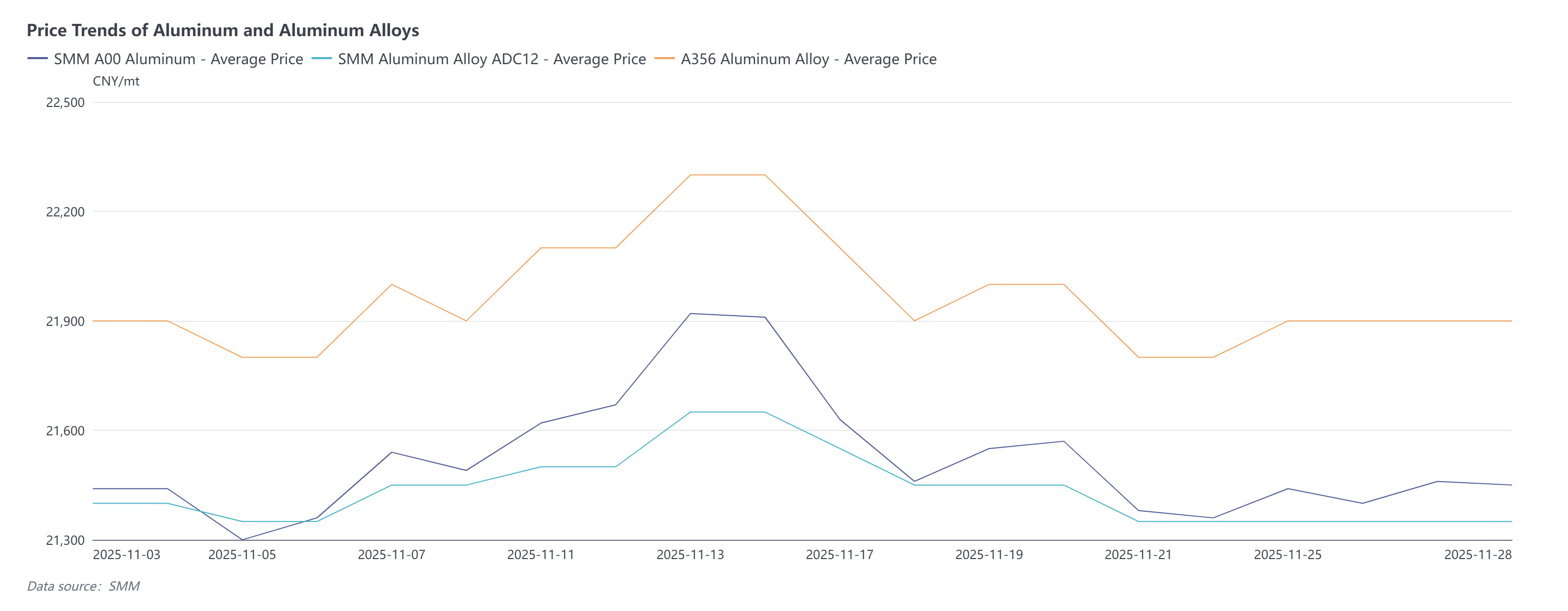
Recently, as aluminum prices continued to fluctuate at highs, SMM surveyed some aluminum alloy casting manufacturers on their current and near-term production and operations. The findings are as follows:
Enterprise A: Mainly produces automotive parts such as engine blocks and steering shafts, with an annual capacity of 25,000t. Orders are primarily long-term contracts, so current aluminum price fluctuations have a relatively small impact on orders. Actual production and orders remained relatively stable in recent months. The raw material procurement strategy focuses on ensuring normal production, maintaining raw material inventory sufficient for one week of production, without adjusting the procurement pace due to aluminum price volatility.
Enterprise B: Mainly produces parts for construction machinery, NEVs, and new energy mobility vehicles, with an annual capacity of 5,000t. Orders are mainly long-term contracts, and as downstream enterprises are currently in the stockpiling phase, order volume increased significantly. Raw materials consist primarily of primary aluminum alloy ingots. Given high aluminum prices, raw material inventory is maintained only for one week of production, reducing the frequency of restocking and adhering to just-in-time procurement.
Enterprise C: Mainly produces small automotive parts such as car radiators and seatbelt buckles, with an annual capacity of 1,200t. Orders are predominantly spot orders. Due to high aluminum prices, end-user orders in November fell 30% MoM from October. Raw materials are mainly procured at the beginning of the month based on actual orders. Losses occurred this month due to costs exceeding selling prices, leading to a 30% MoM drop in actual production from October and weakened demand for raw materials.
Enterprise D: Mainly produces motorcycle clutch components, with an annual capacity of 1,500t. Orders are primarily long-term contracts, so aluminum price fluctuations have a relatively small impact on order volume. On the cost side, the enterprise hedges by using the average aluminum price of the quarter against product selling prices, effectively mitigating cost increase pressure, with no significant impact on production. Currently, during the peak consumption season for the motorcycle industry, orders increased in both November and December, driving sustained production growth. For raw materials, procurement is planned in batches based on monthly actual orders while maintaining inventory for one week of production, balancing supply stability and cost control.
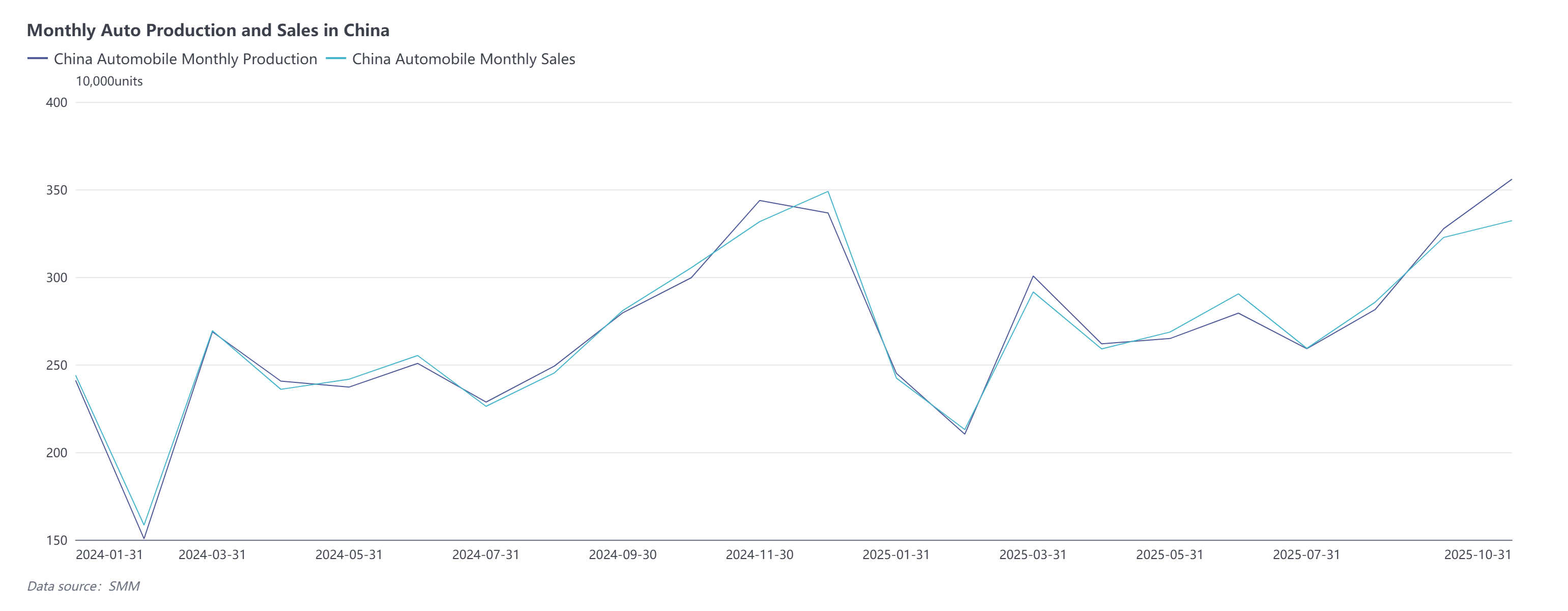
Enterprise E: Mainly produces integrated die-cast components for NEVs, with an annual capacity of 50,000t. Orders are primarily long-term contracts, and orders in the integrated die-casting market are relatively stable, so aluminum price fluctuations have almost no impact on production. Boosted by year-end sales pushes in the end-use automotive industry, November orders rose 15% MoM from October, and high production levels from November are expected to continue in December.
In summary, as casting enterprises are predominantly in the transportation sector, including automotive and motorcycle parts manufacturers, overall industry production showed growth, boosted by year-end sales pushes from end-users in the automotive sector, and December is expected to maintain the stable conditions seen in November. However, there is significant divergence in operational performance among enterprises: those focused on long-term contracts effectively withstood aluminum price volatility through order stability, cost hedging mechanisms, or peak season benefits in niche markets, maintaining steady or gradually increasing production. In contrast, enterprises reliant on spot orders, lacking the security of long-term contracts, experienced declines in both orders and production, along with losses, due to high aluminum prices and fluctuating end-use demand. From a raw material procurement perspective, most enterprises adopted a conservative strategy of maintaining short-term inventory and just-in-time procurement, adjusting the procurement pace only based on order changes, without blindly stockpiling or reducing inventory due to aluminum price volatility, reflecting the industry's cautious stance towards the current high aluminum prices.

![[SMM Daily Aluminum Billet Inventory in Two Regions]](https://imgqn.smm.cn/usercenter/EVjRH20251217171653.jpg)