Replacing copper and REE with aluminium proves beneficial for e-motors

Published: Dec 18, 2024 14:12
A Newcastle-based electric motor (e-motor) manufacturing company, Advanced Electric Machines (AEM), has announced the replacement of copper and rare earth elements with aluminium in their products owing to the latter's cost and energy efficiency.
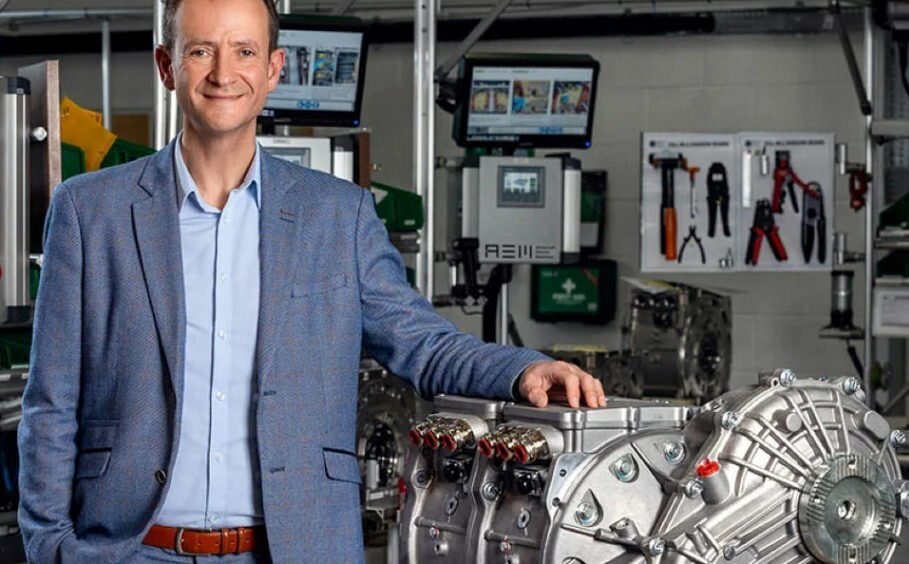
A Newcastle-based electric motor (e-motor) manufacturing company, Advanced Electric Machines (AEM), has announced the replacement of copper and rare earth elements with aluminium in their products owing to the latter's cost and energy efficiency.

Replacing copper and REE with aluminium proves beneficial for e-motorsImage Source: https://www.electricmotorengineering.com/

"Dependence on rare earth elements and copper brings significant political and financial challenges and harms the environment," a convinced CEO and co-founder James Widmer conveyed. "By replacing copper with aluminium, coil costs could be reduced by 89 per cent, and performance increased by up to 30 per cent. This technology redefines how motors are manufactured, recycled, and integrated into sustainable mobility solutions," he added.

AEM, which was founded in 2017, strives to alter the way traditional electromobility has been working to date by using aluminium instead of copper and going with a design that is absolutely free of rare earths. The startup, which surfaced from Newcastle University, ensures lower costs, enhanced performance, and an altogether green (recyclable) technology.

Unlike traditional electric motors, which depend on neodymium or dysprosium magnets, AEM offers an alternative technology that reduces dependence on rare earths and their environmentally damaging extraction.

"By eliminating permanent magnets, we have removed the effects of demagnetisation, making the e-drives safer and reducing the complexity of thermal management," describes Tom Elliott, Business Development Director at AEM, a technical advantage of the approach.

The present series that uses HDSRM (High-Density Switched Reluctance Motor) is a lighter, more sustainable and efficient aluminium-inclusive motor. It reduces power loss by 22 per cent and provides 30 per cent more continuous power, making it energy-efficient.

The motor has no magnetic losses, allowing for higher efficiency at high speeds, can function with standard three-phase inverters and is versatile in use. It operates smoothly even at high temperatures, with nada risk of demagnetisation.

AEM has already tested the HDSRM model for over three million kilometres in real-world conditions. The technology is being used in trucks, buses, and trains. Now, the company is working on a new version of motors for cars and small vehicles called the SSR, which is still in the early stages of development.

The SSRD motor can run at speeds of up to 30,000 revolutions per minute and is 94 per cent efficient. AEM engineers are also working on special electronics that will be integrated into the motor.


Source: https://www.alcircle.com/news/replacing-copper-and-ree-with-aluminium-proves-beneficial-for-e-motors-112777

Data Source Statement: Except for publicly available information, all other data are processed by SMM based on publicly available information, market communication, and relying on SMM‘s internal database model. They are for reference only and do not constitute decision-making recommendations.

For any inquiries or to learn more information, please contact: lemonzhao@smm.cn
For more information on how to access our research reports, please contact:service.en@smm.cn
Related News
Middle East Crisis Sparks Global Economic Slowdown and Inflation, UN Report Shows
9 hours ago
Middle East Crisis Sparks Global Economic Slowdown and Inflation, UN Report Shows
Read More
Middle East Crisis Sparks Global Economic Slowdown and Inflation, UN Report Shows
The *World Economic Situation and Prospects as of Mid-2026* report released by the United Nations clearly pointed out that the Middle East crisis has posed a new round of shocks to the global economy, directly leading to a slowdown in global economic growth, a renewed climb in inflationary pressures, and a further intensification of global economic uncertainty. Notably, the impact of this crisis has been highly uneven, with developing countries bearing the brunt of the shocks. As things stand, global economic growth is expected to reach 2.5% in 2026, though this figure has been revised down by 0.2 percentage points from the January forecast.
9 hours ago
EU Reaches Provisional Agreement on EU-US Trade Deal with Expiry and Safeguard Clauses
9 hours ago
EU Reaches Provisional Agreement on EU-US Trade Deal with Expiry and Safeguard Clauses
Read More
EU Reaches Provisional Agreement on EU-US Trade Deal with Expiry and Safeguard Clauses
Under this provisional agreement, the tariff concessions granted by the EU on US industrial products, certain agricultural products, and seafood will expire on the originally scheduled date if both sides do not decide to extend them. In addition, the EU plans to establish a "safeguard mechanism": if US goods imports surge sharply and cause serious damage to EU industry or agriculture, the European Commission will have the authority to launch an investigation and suspend the corresponding tariff concessions. Regarding steel and aluminum products, if the US maintains tariffs exceeding 15% on EU steel and aluminum derivative products before the end of 2026, the European Commission will likewise have the authority to suspend certain tariff concessions.
9 hours ago
Fed Minutes Signal Shift to Tightening Policy Amid Inflation Concerns, Surprising Markets
9 hours ago
Fed Minutes Signal Shift to Tightening Policy Amid Inflation Concerns, Surprising Markets
Read More
Fed Minutes Signal Shift to Tightening Policy Amid Inflation Concerns, Surprising Markets
The US Fed meeting minutes revealed that many policymakers were inclined to abandon the easing bias, with most participants indicating that if inflation remained persistently above the 2% level, it would be necessary to tighten policy. Only a few officials supported future interest rate cuts, and the hawkish tone of the language far exceeded market expectations. Additionally, according to CME data, the market is now pricing in a 60% probability of the US Fed raising interest rates by 25 basis points before year-end, while expectations for interest rate cuts in 2026 have virtually disappeared.
9 hours ago