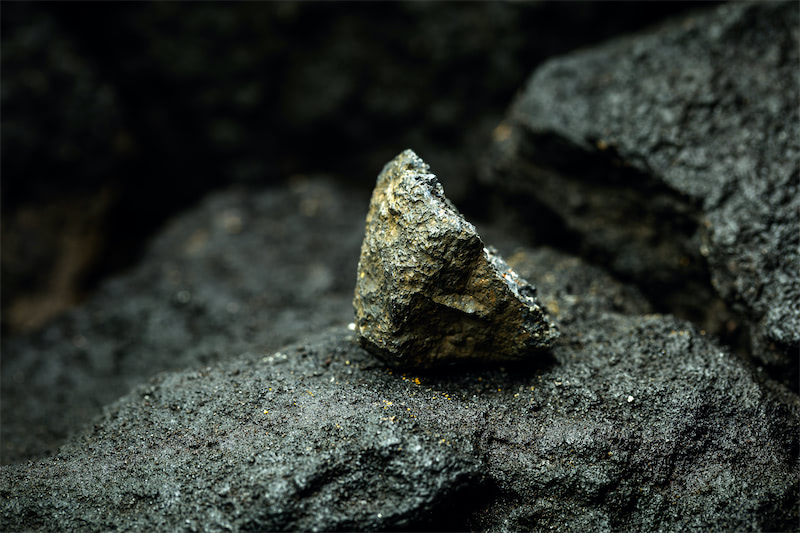
In a groundbreaking achievement, researchers from the Indian Institute of Technology, Madras (IIT-M) have unveiled a pioneering method to break down common minerals into nanoparticles using water microdroplets. This remarkable discovery marks a significant milestone, as it is the first research paper from IIT-M to be published in the esteemed ‘Science’ journal.
The study demonstrates that the seemingly simple action of water microdroplets can effectively break minerals, leading to the creation of nanoparticles. This innovation opens new avenues in the field of nanotechnology and materials science, highlighting the potential for sustainable and cost-effective production techniques.
The publication of this research in ‘Science’ underscores the global relevance and impact of the findings and places IIT-Madras on the world stage for cutting-edge scientific research.
Atmospheric water droplets, such as those in clouds and fog, can acquire a charge due to the presence of ionic species and through contact electrification. When minerals disintegrate, they create nascent surfaces where various types of catalysis can occur, forming new molecules. These processes may play a significant role in the origin of life.
Researchers suggest that "microdroplet showers" containing nanoparticles and molecules falling onto Earth could significantly affect the planet's chemical and biological evolution.
Science is the peer-reviewed academic journal of the American Association for the Advancement of Science, the world's oldest and largest general science organisation. Founded in 1880 with seed money from inventor Thomas Edison, it has been at the forefront of significant scientific discoveries. Widely regarded as one of the world's premier academic journals, its articles are consistently among the most cited globally.
Professor Thalappil Pradeep, an Institute Professor in the Chemistry Department at IIT Madras and a Padma Shri awardee, led the research. B. K. Spoorthi, the first research paper author, recently completed her PhD at IIT Madras.
Prof Thalappil Pradeep, Institute Professor, Chemistry Department, IIT-M, said, “Microdroplets are known to enhance chemical reactions, and as a result, new chemical bonds form. We thought it may also be possible to break chemical bonds in microdroplets, which led to this discovery."
“The science we reported, if it happens in nature, could be a very important way to transform rocks to natural nanoparticles, which are active ingredients of soil. To put it bluntly, we have found a way to make sand from soil. Looking into the future, I might say that with adequate resources, we can help deserts bloom."
Discussing the significant applications of this research, Spoorthi explained that the discovery provides a groundbreaking method for soil formation, rapidly speeding up natural weathering processes from taking centuries to occurring in mere moments.
BK Spoorthi said, "Beyond its environmental benefits, this method advances nanotechnology and materials science, enabling sustainable and efficient nanoparticle production with broad industrial applications. Their experiment found that pieces of tough minerals such as river sand, ruby, and alumina incorporated in tiny charged water droplets break spontaneously to form nanoparticles in milliseconds."
Koyendrila Debnath conducted the computational work under the guidance of Professor Umesh V. Waghmare from the Jawaharlal Nehru Centre for Advanced Scientific Research (JNCASR) in Bengaluru, who is also the President of the Indian Academy of Sciences. The findings were published in the May 31, 2024, issue of Science Journal (DOI: 10.1126/science. adl3364).
Prof. Umesh V Waghmare said, "The phenomenon involves complex processes inherent to microdroplets of water, and understanding its mechanism will stimulate many fundamental scientific studies."
The rapid weathering process may play a significant role in soil formation, especially considering the abundance of charged aerosols in the atmosphere. Soil forms through the weathering of rock, a process influenced by multiple factors. It typically takes 200-400 years to produce one centimetre of soil with varying-sized particles. Nanoparticles of minerals like silica are essential for the growth of crops such as rice and wheat.