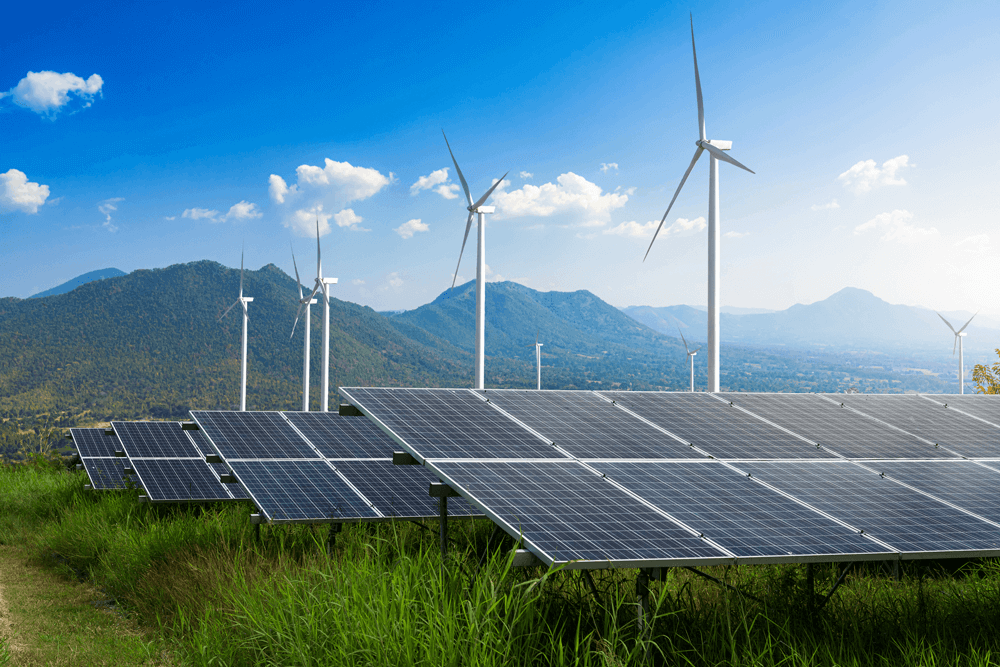
The US Department of Commerce Selected Eight Photovoltaic Companies including LONGi as the Focus of Anti-circumvention Investigation

Опубликовано: May 17, 2022 16:57
On May 13, the US Department of Commerce released the list of mandatory respondents to the ongoing anti-circumvention investigation (AD/CVD). The department is investigating the solar cell and panel makers in Cambodia, Malaysia, Thailand and Vietnam that use Chinese modules and whether the companies circumvented Chinese tariffs in the process. The department sent out a questionnaire in early-April for export details.

SHANGHAI, May 17 (SMM) - On May 13, the US Department of Commerce released the list of mandatory respondents to the ongoing anti-circumvention investigation (AD/CVD). The department is investigating the solar cell and panel makers in Cambodia, Malaysia, Thailand and Vietnam that use Chinese modules and whether the companies circumvented Chinese tariffs in the process. The department sent out a questionnaire in early-April for export details. 

A total of 76 questionnaires were distributed (Cambodia: 12, Malaysia: 20, Thailand: 18, Vietnam: 26) and two companies in each country will be further investigated. The Commerce Department chose these companies because of their large exports to the United States. 

The eight companies are: 

Cambodia: BYD and New East Solar

Malaysia: Hanwha Q CELLS and JKS 

Thailand: CSIQ and Trina Solar 

Vietnam: Boviet Solar and Vina Solar Technology (LONGi) 

Among them, Boviet Solar and NewEast Solar are both Chinese photovoltaic companies, and Vina Solar Technology is controlled by LONGi . The Commerce Department said that because each affected country has a large number of exporters or producers, it is impractical to examine each enterprise individually to determine whether the enterprise is circumventing AD/CVD as it need a lot of resources to examine all of these exporters or producers. 

The US Department of Commerce will delve into the manufacturing and export processes of the eight companies and investigate whether any Chinese  wafers, silane, silver paste, solar glass, aluminum frames, junction boxes, EVA sheets and backsheets are used in exported cells and modules, and whether the eight companies have direct ties to Chinese manufacturers , suggesting an attempt to circumvent AD/CVD. 

According to the plan, the US Department of Commerce will submit the preliminary findings of the investigation and the preliminary tariff rates for all importers of affected products on August 30, 2022, and make a final decision on January 26, 2023. 

Recently, the US Department of Commerce (DOC) issued a memorandum to provide important clarifications regarding its anti-circumvention investigations against manufacturers that use imported solar cells and modules from Cambodia, Malaysia, Thailand and Vietnam. The memorandum mentioned that the silicon wafers produced through Chinese polysilicon outside of China are not subject to the investigation. 

On February 2, the US Auxin Solar Company submitted a petition, requesting the US Department of Commerce to thoroughly investigate the solar energy products imported from four South-east Asian countries, namely Vietnam, Thailand, Malaysia and Cambodia, The company argued that Chinese companies assemble solar energy products in these regions and then export to the United States so as to maintain low production costs, which circumvent the existing AD/CV tariff sanctions. So that the US Department of Commerce launched a nationwide circumvention investigation in these regions on March 25, 2022, and if violations are found, tariffs of 50-250% will be imposed on solar panels entering the United States. 

The response of the US Department of Commerce this time stated that the solar cells and modules under investigation may have been produced in multiple countries, and some of them may have used Chinese products. For example, the PV module production process requires polysilicon to be refined, ingot cast, and then sliced​into solar cells and assembled with many other materials. Different parts of the production process may be carried out in different countries, and the silicon wafers produced by Chinese polysilicon outside the Chinese region are not subject to these circumvention investigations. 

According to PVinfolink prices data, at the end of April, in terms of selling prices of modules in the United States, the export from south-east Asia to the United States did not deliver much due to the blockage of shipments. In addition, due to the supply shortage of modules in the United States, south-east Asian manufacturers will raise prices this week to amortize possible losses brought by anti-evasion tax rate. As a result, the average price slightly increased by $0.33-0.34 yuan/watt (FOB), while the prices in the United States continued to rise to about $0.5-0.55/watt (about 3.3-3.63 yuan). 

According to PV-Tech, on the consumer side, the current spot price of modules in United States has reached $1/GW (about 6.6 yuan/GW). According to local solar energy expert, as the anti-circumvention investigation continues, the prices of modules in United States are expected to rise to $2/watt in the second half of the year amid the pandemic and transportation problems. After the US Department of Commerce decided to launch anti-circumvention investigation on south-east Asian countries, the SEIA slashed its forecast for US solar energy capacity over the next two years by 24 GW and said that 100,000 job positions in the solar energy field will disappear. 
Заявление об источниках данных: За исключением общедоступной информации, все остальные данные обрабатываются SMM на основе общедоступной информации, рыночного общения и с опорой на внутреннюю базу данных и модели SMM. Они приведены только для справки и не являются рекомендациями для принятия решений.

По любым вопросам или для получения дополнительной информации, пожалуйста, свяжитесь: lemonzhao@smm.cn
Для получения дополнительной информации о доступе к нашим исследовательским отчётам обращайтесь:service.en@smm.cn
Связанные новости
Ежедневный обзор SMM: спотовые цены на карбонат лития немного выросли 18 августа
2 часов назад
Ежедневный обзор SMM: спотовые цены на карбонат лития немного выросли 18 августа
Читать далее
Ежедневный обзор SMM: спотовые цены на карбонат лития немного выросли 18 августа
[Ежедневный обзор SMM: Спотовые цены на карбонат лития слегка выросли 18 августа] Спотовые цены на аккумуляторный карбонат лития, по данным SMM, сегодня незначительно выросли по сравнению с предыдущим рабочим днём. Контракт на карбонат лития 2701 открылся с повышением на отметке 155 000 юаней/т. После открытия средства, играющие на повышение, быстро подтолкнули цены вверх, и котировки подскочили до 157 800 юаней/т, обновив внутридневной максимум, после чего консолидировались и откатились. В утреннюю сессию цены колебались около линии средней цены, при этом их центр постепенно смещался вниз. Около полудня снижение ускорилось до 152 700 юаней/т. Во второй половине дня цены консолидировались и отскочили, быстро восстановившись примерно до 155 400 юаней/т ближе к закрытию, и по итогам закрылись ростом на 0,62% на отметке 155 400 юаней/т, а открытый интерес вырос на 8 584 лота. На спотовом рынке нижестоящие покупатели закупались точно в срок на просадках, однако закупочные настроения оставались осторожными, и часть ценовых ориентиров покупки по-прежнему находилась около 150 000 юаней/т. По мере консолидации цен на более высоких уровнях апстрим-производители литиевых химикатов проявляли большую готовность к хеджированию, а отгрузки по спотовым заказам оставались умеренно активными. В целом рыночные запросы и фактические сделки были относительно слабыми.
2 часов назад
[Литиевые аккумуляторы: проект Yongtai Technology по производству VC во Внутренней Монголии начнёт опытное производство]
2 часов назад
[Литиевые аккумуляторы: проект Yongtai Technology по производству VC во Внутренней Монголии начнёт опытное производство]
Читать далее
[Литиевые аккумуляторы: проект Yongtai Technology по производству VC во Внутренней Монголии начнёт опытное производство]
[Литиевые аккумуляторы: проект Yongtai Technology по производству VC во Внутренней Монголии начнёт опытное производство]
17 августа Yongtai Technology сообщила, что план опытно-промышленного производства проекта по выпуску 6 666,6 т VC в год, реализуемого её стопроцентной дочерней компанией Inner Mongolia Yongtai Chemical Co., Ltd., был рассмотрен и одобрен экспертами 15 августа 2026 года и признан соответствующим условиям для начала опытно-промышленного производства, которое теперь будет запущено. Первоначальная мощность компании по VC составляла 10 000 т/год. С учётом ввода новых мощностей в размере 6 666,6 т/год общая мощность компании по электролитной добавке VC достигнет 16 666,6 т/год. Запуск этого проекта позволит дополнительно увеличить производственные мощности компании по VC и эффект масштаба, укрепить развитие бизнеса в секторе материалов для литиевых аккумуляторов, упрочить позиции компании на рынке и её долю рынка, а также будет способствовать повышению общей конкурентоспособности и прибыльности компании.
2 часов назад
[Литиевые батареи: чистая прибыль Tianhua New Energy за первое полугодие 2026 года достигла 2,292 млрд юаней]
2 часов назад
[Литиевые батареи: чистая прибыль Tianhua New Energy за первое полугодие 2026 года достигла 2,292 млрд юаней]
Читать далее
[Литиевые батареи: чистая прибыль Tianhua New Energy за первое полугодие 2026 года достигла 2,292 млрд юаней]
[Литиевые батареи: чистая прибыль Tianhua New Energy за первое полугодие 2026 года достигла 2,292 млрд юаней]
17 августа компания Suzhou Tianhua New Energy Technology Co., Ltd. опубликовала полугодовой отчёт. Согласно отчёту, в первом полугодии 2026 года операционная выручка Tianhua New Energy составила 7,78 млрд юаней, увеличившись на 125% год к году; чистая прибыль, приходящаяся на акционеров компании, составила 2,292 млрд юаней против убытка в 90,86 млн юаней за аналогичный период прошлого года; по скорректированным данным за аналогичный период прошлого года рост составил 2622,89%; базовая прибыль на акцию составила 2,76 юаня. Совокупные активы достигли 27,92 млрд юаней, увеличившись на 29,43% по сравнению с концом предыдущего года. В отчётном периоде официально началось строительство второй очереди проекта по производству материалов для литиевых батарей дочерней компании Sichuan Tianhua New Energy в промышленном парке Ганьмэй; планируется построить производственную линию мощностью 60 000 тонн карбоната лития аккумуляторного качества в год. После завершения проекта Sichuan Tianhua будет располагать линиями мощностью 60 000 тонн гидроксида лития аккумуляторного качества в год и 60 000 тонн карбоната лития аккумуляторного качества в год, что позволит гибко переключаться между видами продукции в зависимости от спроса на нижестоящем рынке.
2 часов назад