SMM5 March 21: at the SMM2021 (sixth) China International Nickel, Cobalt and Lithium Summit Forum, SMM Cobalt Industry Senior analyst Huo Yuan shared the review and prospect of the global cobalt industry market from 2020 to 2023. She said that in 2000, China's cobalt consumption was still dominated by traditional industries, of which superalloys accounted for the majority of domestic cobalt consumption. Battery consumption will be dominant in 2020, with lithium cobalt oxide batteries and ternary batteries accounting for 57% of the total. At present, the stock gap of domestic cobalt raw materials is still there, and cobalt prices are expected to rise.
I. the import of cobalt concentrate is decreasing year by year, and the demand for cobalt from batteries continues to increase.
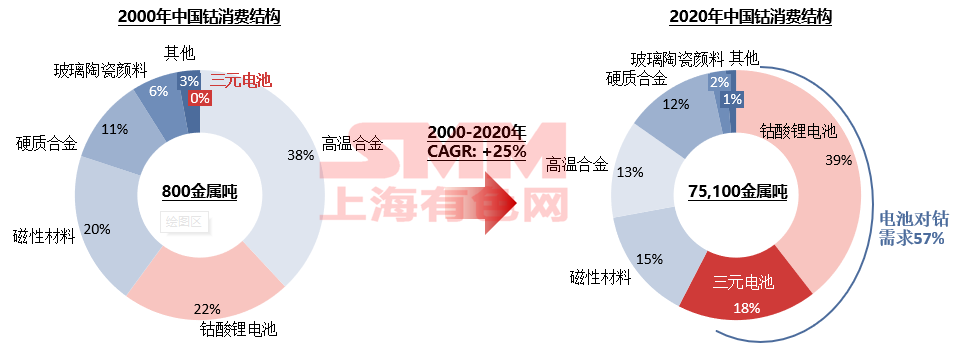
The consumption structure of cobalt in China has shifted from the traditional industry to the battery industry: from 2000 to 2020, the flow of cobalt raw materials in China has shifted from alloys and magnetic materials to lithium cobalt oxide and ternary batteries. As can be seen from the figure on the left, the consumption of cobalt in China is still dominated by traditional industries, among which superalloys account for most of the domestic consumption of cobalt. Battery consumption will be dominant in 2020, with lithium cobalt oxide batteries and ternary batteries accounting for 57% of the total.
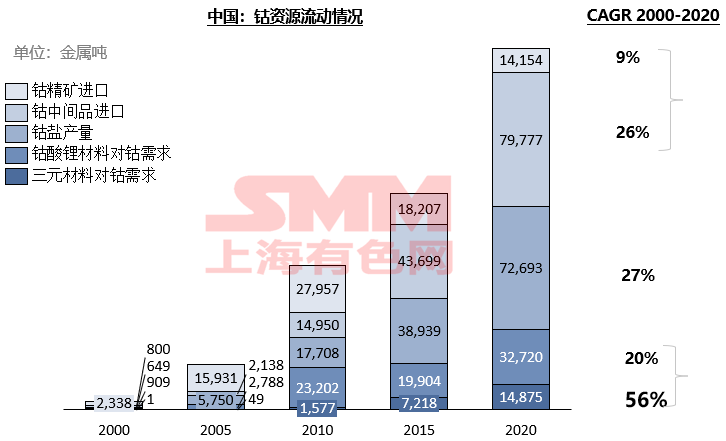
China's cobalt resources are highly dependent on imports, and the demand for cobalt from ternary materials is growing at a compound rate of 56%. Among them, the import of cobalt concentrate is decreasing year by year, and the import of cobalt intermediate products is increasing year by year. The growth rate of cobalt demand for lithium cobalt materials is decreasing year by year, and the demand for cobalt for ternary materials is the fastest.
II. The stock gap of domestic cobalt raw materials is still there, and the price of cobalt is expected to rise.
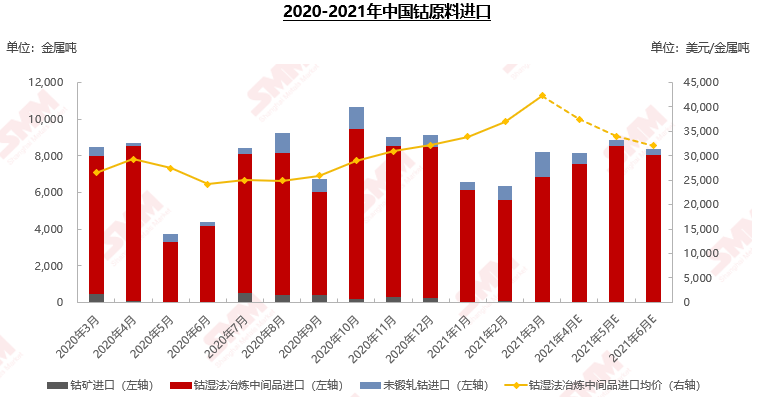
Cobalt raw materials: the import of 2021Q1 increases, and the gap is not as large as the growth rate of demand; the gap of Q2 is still there.
In 2021, Q1 domestic cobalt raw material imports increased by 6% compared with the same period last year, mainly due to the increase in cobalt intermediate products and unwrought cobalt imports, and the trend of cobalt concentrate imports is still decreasing. In 2021, the average import price of intermediate products in Q1 China's cobalt wet smelting process was 37689 US dollars per metal ton, up 51 per cent from the same period last year.
According to the SMM China Cobalt raw material balance table, in the first quarter of 2021, the domestic cobalt raw materials went to the warehouse 5100 metal tons (excluding electrolytic cobalt imports). Considering that cobalt beans or part of the cobalt plates also have a gap in dissolved and replenished raw materials, electrolytic cobalt makes up for about 1600 metal tons, mainly in March, and the overall cobalt raw material inventory gap is still more.
Since March, shipping schedule and container data from South Africa have improved, and cobalt raw materials accumulated in the port of Durban have been shipped out one after another. considering the transportation cycle of 1-1.5 months, domestic cobalt raw material stocks are expected to gradually ease in the second quarter, but they are still not sufficient. SMM expects to import 7500 metal tons of cobalt intermediate products in April, and there is still a shortfall of 1000 metal tons for domestic cobalt raw materials. From May to June, cobalt intermediate products are expected to import 8500 and 8000 gold tons, with a shortfall of 300 gold tons and 1000 gold tons respectively.
Electrolytic cobalt: raw material inventory is tight and cobalt price fluctuates greatly under the influence of epidemic situation.
In 2020, Q1 was affected by the epidemic, the demand for terminal power batteries decreased, the price of cobalt fell; the demand for Q3 new energy vehicles resumed, the demand for digital 3C exceeded expectations, the stock of superimposed raw materials was tight, and the price of cobalt rose. In 2021, Q1 domestic raw material inventory is tight, prices are up; Q2 procurement off-season is approaching, prices are weak.
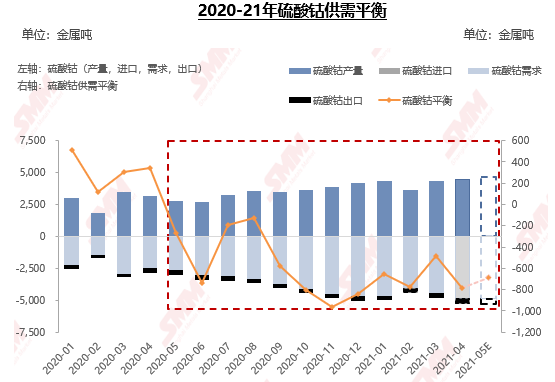
Cobalt sulfate: the deposting speed of cobalt sulfate slows down, and the price goes down.
Since May 2020, the supply of cobalt sulfate can not meet the demand of ternary precursor and cobalt tetroxide for cobalt sulfate, and the removal of cobalt sulfate continues. In 2021, the decontamination rate of cobalt sulfate gradually slows down, and the price gradually weakens.
Cobalt tetroxide: the accumulation of cobalt tetroxide increases in the off-season of digital 3C procurement.
In 2020, the supply of cobalt tetroxide was 68000 tons, an increase of 22.1% over the same period last year; supply and demand remained high in the second half of the year, and inventory was low. The inventory of cobalt tetroxide gradually accumulated in 2021 and is expected to accumulate 2900 tons in the first half of the year.
Third, the initial volume of power recovery, and the accelerated layout of enterprises in the upper and lower reaches of the industrial chain.
Only 40% of the scrapped batteries come from social decommissioned batteries, and the market flow is complex, so regulation Brooks no delay.
At present, the business model of lithium battery recycling market is complex, so it is urgent to regulate it. Only 40% of the scrapped batteries come from social decommissioned batteries, except for the unified recycling of scrapped batteries of new energy car owners at some after-sales outlets of car companies, and the unified purchase of scrapped batteries such as mobile phones at Apple and other mobile phone manufacturers. The rest of the recycling mode is basically dominated by traders, and the market flow is more complex.
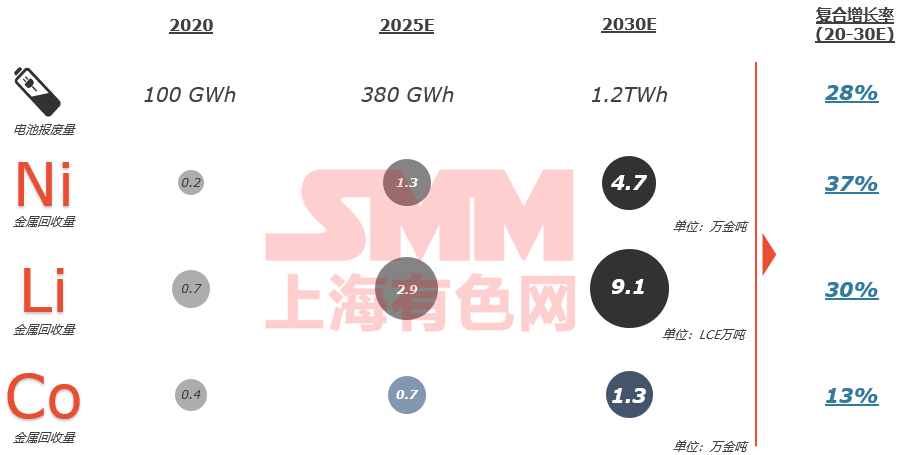
Enterprises in the upper and lower reaches of the industrial chain are actively seizing the battery recycling market.
Ganfeng Lithium Industry said that it will vigorously develop recycling economy such as lithium battery recycling. In 2030, Ganfeng will strive to achieve 200000 tons of lithium salt recovery capacity. Greengmei and BAIC will cooperate in the fields of recycling system, echelon utilization of decommissioned batteries and recycling of waste batteries. Tesla has launched the battery recycling business to deal with scrapped lithium batteries, and will develop a battery recycling system in US super factories to maximize the recovery of valuable metals such as lithium, cobalt, copper and aluminum.
IV. Introduction of SMM new energy items
Data / research: multiplayer teams track 13,000 + data points at high frequency every day
550 + price point, daily update 2000 + data point, 80 + metal varieties, survey sample coverage: 700 + mine, 800 + smelter, 1000 + downstream
Data / research: provide data and research services for more than 50 industrial chain enterprises
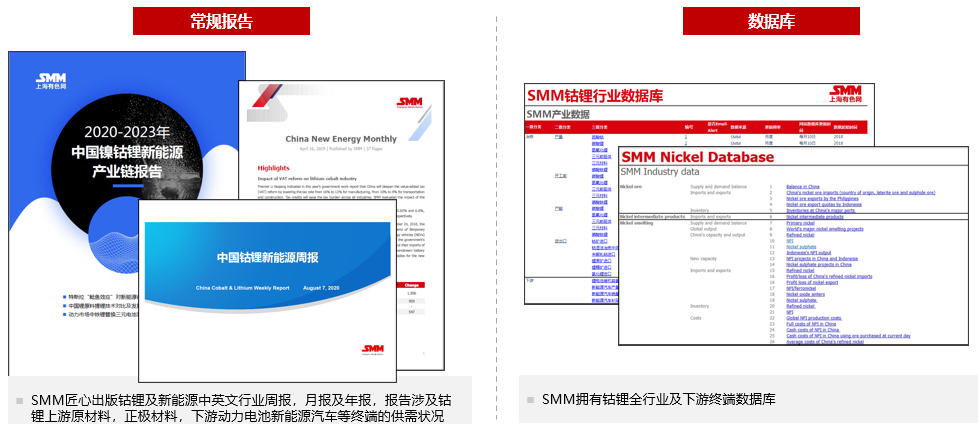
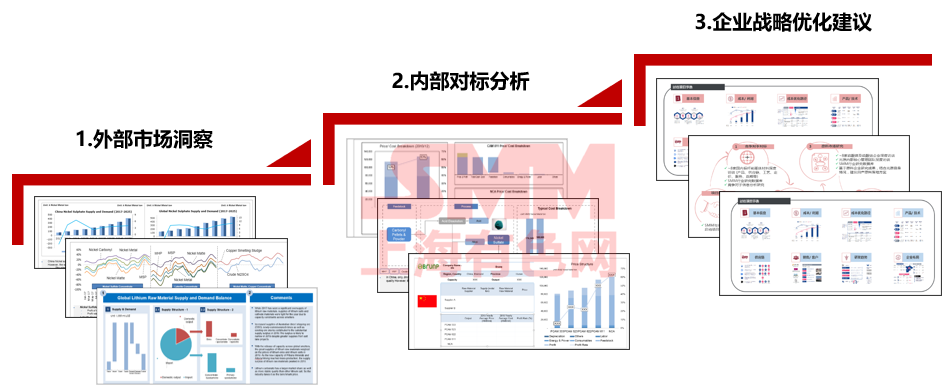
Consultation: provide strategic optimization suggestions for enterprises by combining external market research and internal benchmarking analysis.
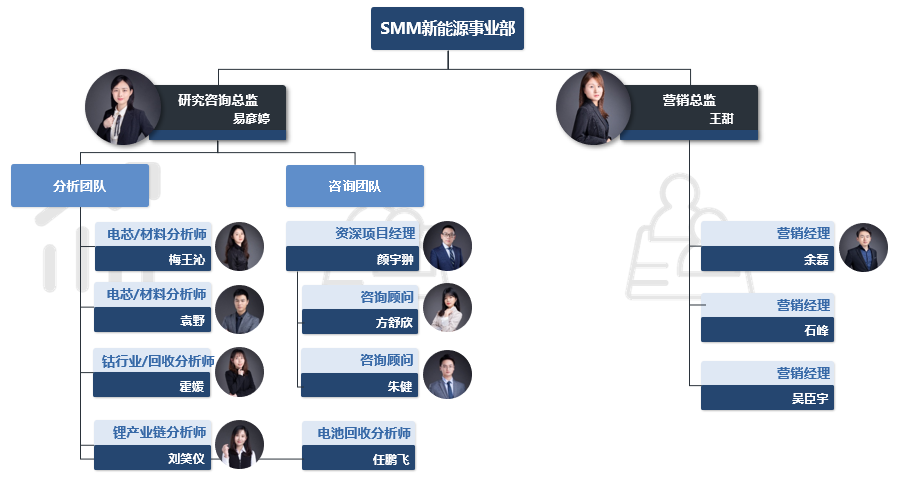
Team: analysis and research team + consulting team + marketing team integrate the resources of the whole industry chain
![Europe seeks autonomy in its lithium supply chain, so why are local lithium projects starting to look for Asian capital? [SMM Analysis]](https://imgqn.smm.cn/usercenter/ipFFo20251217171725.jpg)
![[Сводка утреннего совещания SMM по кобальту и литию] Литиевые химикаты консолидируются и расходятся, борьба спроса и предложения в производственной цепочке обостряется](https://imgqn.smm.cn/usercenter/tKgKv20251217171725.png)