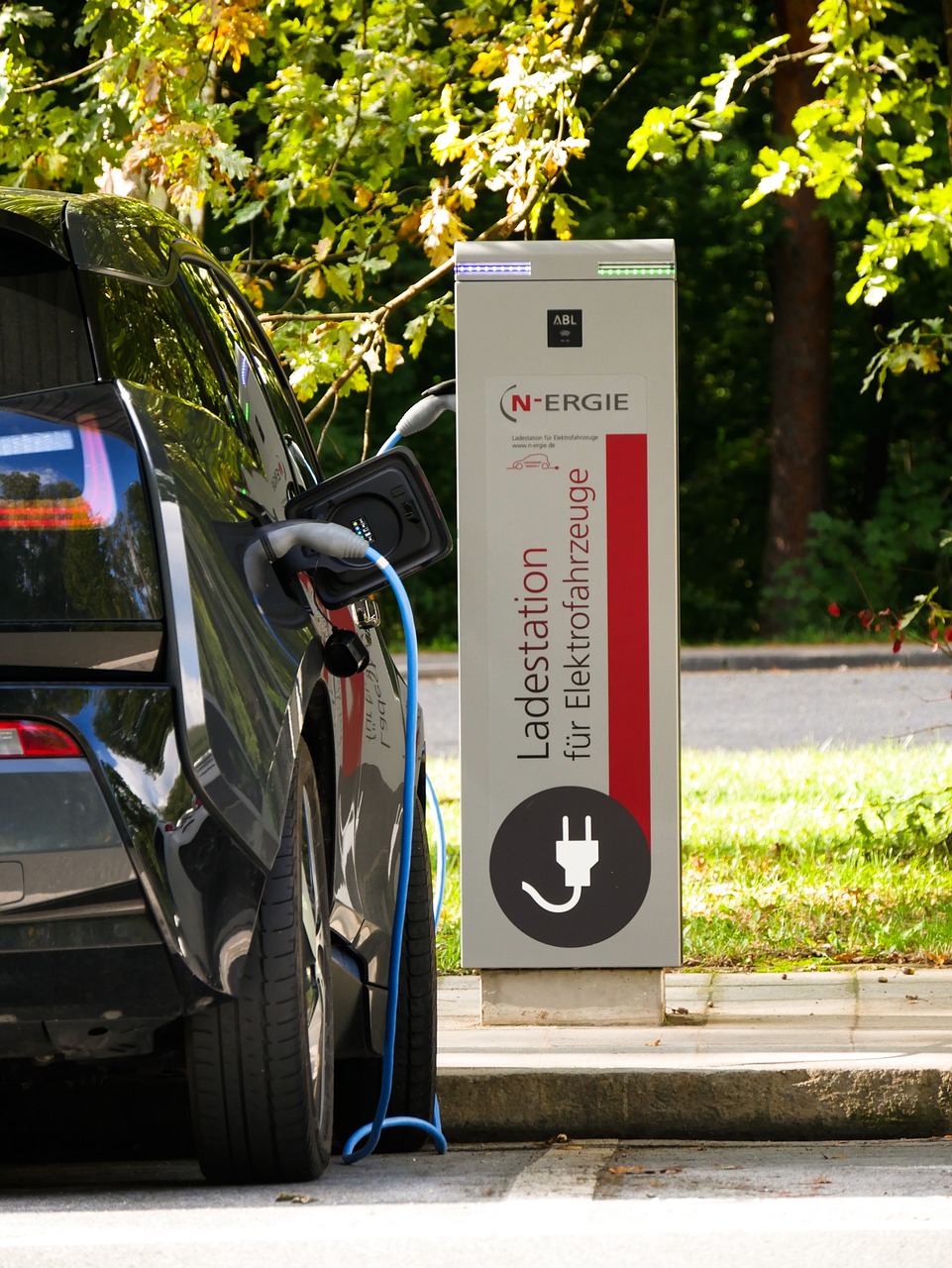
On the evening of March 15th, Volkswagen Group held the first Volkswagen Battery Day (Power Day), for the first time to show the group's electrification plan and strategy for the next decade.
The core points of the press conference are as follows:
1. By 2030, six new battery plants will be built in Europe through self-building and joint ventures, with a total capacity of 240GWh.
2. Expand the production capacity of the Northvolt plant in Sweden to 40GWh.It will be put into production in 2023.
3. Salzgit (Salzgitter) plant has a capacity of 40GWhh, and it will be put into production in 2025.
4. Using standard battery, it will be fully rolled out in 2023, and 80% of its electric models will be covered by 2030.
5. the battery cost of mass-produced models will be reduced by 30%, and the cost of entry-level models will be reduced to half.
6. Volkswagen has made plans for lithium iron phosphate, high manganese, nickel manganese cobalt and solid state batteries.
7. By 2025, Volkswagen will lay 17000 charging piles in China through Kamex.
8. Hope that one day, it will be recharged free of charge.
With the acceleration of electrification, how to meet the needs of power battery and charging is the key.
In 2021, Volkswagen Group has issued a series of interim reports on transformation, including the "Leading the Transformation" of the whole group and the "Strategic Transformation VW Group Components" of spare parts. According to reports, Volkswagen Group delivered a total of 9.2 million vehicles to global customers in 2020, including 231600 pure electric vehicles and 190500 plug-in hybrid vehicles, a total of 422100 new energy vehicles were sold, three times as many as the previous year.
According to Volkswagen Group's plan, Volkswagen's new energy vehicle sales will account for 6% of the group's total sales in 2021. According to the group's annual sales estimate of 10 million vehicles, Volkswagen's new energy vehicle delivery target this year is about 60-800000.
Facing the more distant 2030, the ACCELERATE (acceleration) strategy released by Volkswagen Group earlier this month pointed out that the share of electric vehicles in Volkswagen's European sales will rise to more than 70 per cent by 2030, double the 35 per cent previously planned. Over the same period, Volkswagen expects to increase its sales of electric vehicles in North America and China to more than 50%.
There is no doubt that the electrification transformation of Volkswagen Group is speeding up in order to narrow the gap with Tesla's electric vehicle sales as quickly as possible.
To achieve this goal, Volkswagen will launch at least one new all-electric model every year. Volkswagen will launch the four-wheel drive ID.4 GTX, in the first half of 2021 and the sporty ID.5 in the second half of the year.
In the Chinese market, Volkswagen will also launch pure electric SUV ID.6 X and ID.6 CROZZ specially designed for the Chinese market in 2021. By 2025, Volkswagen Group will sell 1.5 million new energy vehicles and 15 MEB platform models in China.
In addition, Volkswagen plans to develop an electric model below the ID.3, which has been advanced to 2025.
At the same time, Volkswagen will continue to optimize its MEB platform to improve its acceleration, charging capacity and mileage. Volkswagen is developing the next generation of high-performance pure electric drive platform, namely Scalable Systems Platform (extensible system platform). In 2026, the platform will be used for the first time in Volkswagen's flagship project, Trinity.
However, to speed up the electrified transformation, in addition to the high-quality vehicle products that need to be planned in advance, it is still one of the important tasks to meet the power battery demand and solve the charging problem.
To build production capacity, Volkswagen will have its own super factory.
In terms of power battery demand alone, Volkswagen Group forecasts that from 2025, its annual battery demand in Europe and North America will exceed 150 GWh, while battery demand in Asia will reach a similar level.
So far, Volkswagen Group has reached purchasing cooperation with battery manufacturers such as LG, Samsung SDI, SK Innovation and Ningde Times, and has successively established partnerships with Swedish battery company Northvolt, Chinese battery company Guoxuan Tech and US-based solid-state lithium battery startup QuantumScape.
But obviously, the existing cooperation structure alone may not be able to meet Volkswagen Group's power battery needs in the future. Based on this, Thomas Schmall, a member of the technical committee of Volkswagen Group, revealed in Power Day that Volkswagen Group, only in Europe, will work with partners to build six power battery factories with an annual capacity of 40GWh by 2030, with a total annual production capacity of 240GWH, so as to ensure a stable and safe supply.
In the short term, the first two will be built in Skellefte å in Sweden and Salzjit in Germany. The former is a partnership between Volkswagen Group and Northvolt, and the first batch of production is scheduled to begin in 2023, then the capacity will be gradually expanded to 40GWhh per year; the latter is the super factory operated by Volkswagen Group in Salzjit, Germany, which will mass produce its innovative batteries with an annual production capacity of 40GWh from 2025.
In addition to the above two, Volkswagen Group is also actively looking for potential locations and partners for other factories.
And this is only in Europe, as the world's second largest new energy vehicle market-China, and the new energy vehicle market is awakening in North America, Volkswagen Group naturally will not ignore, but unfortunately this Power Day did not reveal much.
Solid state battery is still an important direction to reduce cost and increase efficiency.
As mentioned earlier, Volkswagen Group will produce an innovative battery in large quantities at its Salzjit plant in Germany.
According to Volkswagen Group officials, it plans to adopt standard cells embedded with intelligent technology from 2023, will be fully rolled out in 2023, and will cover 80% of Volkswagen Group's electric models by 2030. The cost of standard cells embedded with intelligent technology will be reduced by 30% in mass-produced models and halved in entry-level models.
"on average, we will reduce the cost of the battery system to less than Euro (about 775.53 yuan) per KWh100." "this will eventually make electric cars affordable and become the dominant technology," Thomas Schmall said.
At the same time, Volkswagen Group revealed that in order to achieve further cost reduction and efficiency, Volkswagen Group Power Battery will be directly integrated into the body chassis, that is, CTC technology. In terms of battery life, due to the omission of the cast battery pack, CTC technology can minimize the weight and space of the battery pack, thus increasing the mileage of the electric vehicle.
However, it is worth noting that the space to improve the energy density through structural optimization is limited, and its core is to improve the energy density of the core.
Therefore, in order to cope with the arrival of the electrification era, Volkswagen Group has made the technical layout of lithium iron phosphate, high manganese, nickel, cobalt and manganese and solid-state batteries. Among them, with regard to solid-state batteries, Volkswagen Group believes that this will be the ultimate form of vehicle power batteries in the future, because no longer use manganese, there is no longer electrolyte, the weight of the battery will be reduced, and the charging time will be further shortened.
Take the current ID.3 as an example, the weight of its power battery is about 100kg. After switching to solid-state batteries, the weight will be greatly reduced, the charging time will be reduced by more than 50 per cent, and the mileage will be increased by 30 per cent as a result of the weight reduction.
In order to further reduce costs, Volkswagen Group officially opened its first battery recycling plant in January this year, which can industrially recycle valuable battery raw materials such as lithium, nickel, manganese, cobalt, aluminum, copper and plastics. In the long run, the goal is to recover 95% of precious metal raw materials. In the future, Volkswagen plans to use recycled raw materials to support the production of new batteries.
Lay the charging grid, so that charging is no longer a difficult problem.
When it comes to China, we can't get away from the charging problem.
Restricted by the high density of urban population in China, it is difficult to achieve a fixed parking space for everyone, and it is also difficult to achieve the speed of new energy infrastructure to meet the growing number of new energy vehicles. At the same time, up to now, public charging piles in China are still faced with slow charging of AC charging piles, crowded parking spaces occupied by non-electric vehicles, lack of maintenance and normal use, and so on. Due to various reasons, the lowest charging success rate is only 30%. For this reason, up to now, the charging problem is still one of the important factors that limit the comprehensive popularization of pure electric vehicles in our country.
But as mentioned earlier, Volkswagen Group predicts that its sales of new energy vehicles in China will reach 1.5 million by 2025. Volkswagen Group will deliver more than 2 million new energy vehicles in China in the next 10 years, which means that it will have nearly 12 million new energy vehicles in China by 2030.
Behind the 12 million new energy vehicles will be a huge demand for supplementary energy. To this end, Volkswagen Group will build the largest public high-power charging network.
This year, with the help of its joint venture Kamex (CAMS), it will install 500 charging stations and 6000 charging piles in the Chinese market, covering eight cities across the country; by 2025, 17000 charging piles will be installed, with charging power ranging from 120kW to 300kW, covering most cities.
In the construction of the charging network, Kemis will also give birth to new business opportunities. Volkswagen expects it to break even within four years and make a profit within nine years. Thus help Volkswagen Group to build a faster and more perfect charging network in China.
![[Твердотельная батарея: компания Tianneng Co., Ltd. достигла серийных поставок полутвердотельных аккумуляторных ячеек 314 Ач, с поэтапными прорывами в нескольких технологических системах]](https://imgqn.smm.cn/usercenter/JmyWy20251217171729.png)
![[Твердотельный аккумулятор: EcoPro BM создает команду по полностью твердотельным аккумуляторам, охватывающую всю цепочку «сырье — материалы — аккумуляторные ячейки», с целью коммерциализации к 2027 году]](https://imgqn.smm.cn/usercenter/JMINH20251217171728.jpg)