The trend of the dollar: a race for monetary easing

Опубликовано: Jul 15, 2019 18:32
The foreign exchange market is actually a seesaw made up of one economy and another. Through the exchange rate support axis, the two economies are effectively linked together. Like the seesaw, the seesaw balance is determined by the weight of the two people on the opposite side of the seesaw. Therefore, the game is also between these two people.

The foreign exchange market is actually a seesaw made up of one economy and another. Through the exchange rate support axis, the two economies are effectively linked together. Like the seesaw, the seesaw balance is determined by the weight of the two people on the opposite side of the seesaw. Therefore, the game is also between these two people.

The protagonists of the dollar exchange rate market are the two large economies of the euro zone and the United States. The euro accounts for 57% of the dollar index, and the weight of both economies is close to 30% of the global economy. It can be seen that the trend of the dollar (the opposite of the trend of the euro) is the result of the game between the two regional economies. And the switch of the game is precisely in the hands of the two central banks.

When everyone finds that they can control the seesaw balance in the hands of themselves and the person opposite them. The game begins: when there is no way to gain weight by eating (innovation), everyone wants to gain weight by drinking water (issuing money) in order to gain more initiative in the seesaw game. Because a properly low exchange rate means more exports, more jobs and better economic prospects.

That's why we're seeing major central banks around the world releasing water. Driven by the most direct of these, global negative yield debt is at an all-time high of more than $13 trillion.

The unprecedented size of negative-yield bonds has left some money nowhere to go. For oversized funds (over tens of billions of dollars), unless you buy negative-yielding Treasuries and wait for the central bank and others to buy further (fool's game), you can only stay away from the bond market to buy private equity, safe-haven gold. This is by far the simplest and most direct logic of global financial markets.

That is why, at a time when global bond yields are hitting record lows, the Fed and the ECB are planning to cut interest rates further and implement asset purchases for quantitative easing (QE). Because of the lack of momentum for further economic growth, European and American economies can only continue to release water, trying to cushion the riverbed to avoid floods burst, the end result can only be in vain.

Recently, we know that Fed Chairman Powell said in his semi-annual testimony that inflation in the United States has been curbed, business investment has slowed, and government debt remains high, which may be reasons for the Fed to further ease monetary policy. As a result, the Fed will take "appropriate" action to sustain US economic growth, and many members saw at the FOMC meeting in June that there was reason to relax policy to some extent.

We also see that the latest monetary policy minutes released by the ECB show that the ECB delayed raising interest rates by at least a year at its meeting on June 5-6. ECB President Draghi stressed that the ECB is likely to take more stimulus measures in the coming weeks, and last month reached a "broad consensus" on this issue, and cut interest rates and adjust policy guidelines. Even the introduction of a new asset purchase programme (tiered interest rate programme) is on the agenda. There is a general consensus among policymakers that, given the increased uncertainty and likely to continue further in the future, the ECB governing Council needs to be prepared to further relax its monetary policy position.

So, we see the U. S. stock market continue to hit record highs, so we see global central banks buying gold, gold ETF is sought after by a lot of money. Because there is no way out of these funds.

The latest figures show that global gold ETF rose 15 per cent in June, the biggest monthly increase in seven years. Global gold ETF positions rose sharply to 2548 tons in June, an increase of 127 tons, equivalent to a net inflow of $5.5 billion, to $115 billion. The main drivers are rising geopolitical uncertainty (Brexit, anti-globalisation) and signals from global central banks of loose monetary policy.

As of May 2019, the world's official gold reserves totaled 34212.25 tons, according to the latest report from the World Gold Council. Of these, the euro zone (including the European Central Bank) has a total of 10776.9 tons, accounting for 53.7 percent of its total foreign exchange reserves, and the (CBGA) signatories to the central bank's gold sales agreement have a total of 11942.6 tons, accounting for 29.3 percent of their total foreign exchange reserves.

Net purchases by central banks of more than 1 tonne or more reached 35.8t in May, bringing global net central bank purchases to 247.3 tonnes so far this year, up 73 per cent from the same period last year. Since no central bank sells gold, total purchases-the total increase in central bank gold reserves this month-are net purchases.

It is also based on these ideas that we see the trend of the dollar index in the first half of 2019:
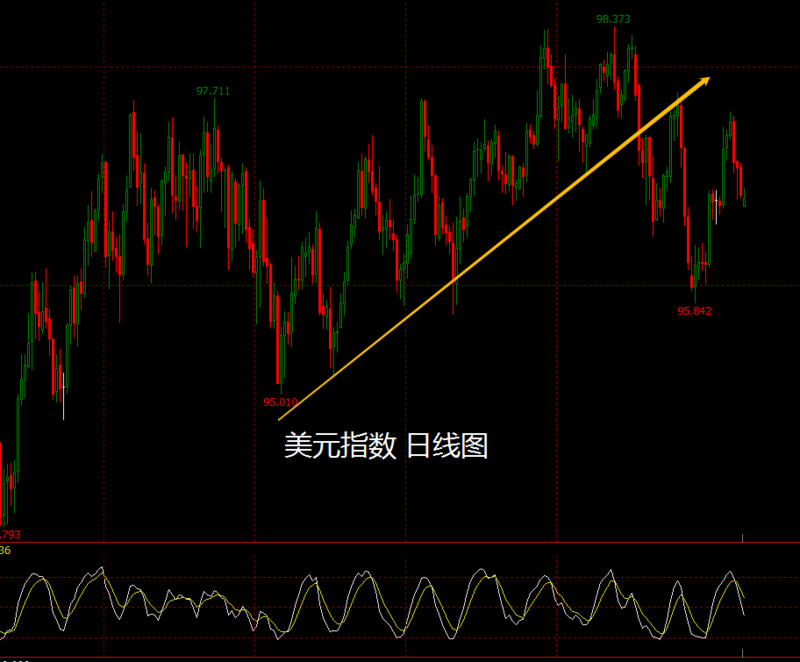
(the "perfect" match between the dollar index and the volatility index)

Because, the game does not have the clear direction, also temporarily cannot see who can win. So we see money moving slowly and convulsively towards the dollar zone. The reason is simple: Japan and Europe have a low interest rate monetary policy, so these funds can borrow euros and yen at low interest rates in exchange for high interest rate dollar arbitrage. After swapping into dollars, further choose dollar assets, stocks, real estate, or bonds. As to why it did not flow to commodity currencies such as the Australian dollar and the New Zealand dollar, as everyone has seen in the current economic situation, it is unlikely to bet on a bull market in short supply of goods.

Of course, this game will continue until one side wins. At present, we do not know the conclusion of who wins and who loses, except that there is a legend in the market that does not go against the Federal Reserve. So, for some time to come, we will also see the dollar index move very much like a volatile indicator.

Заявление об источниках данных: За исключением общедоступной информации, все остальные данные обрабатываются SMM на основе общедоступной информации, рыночного общения и с опорой на внутреннюю базу данных и модели SMM. Они приведены только для справки и не являются рекомендациями для принятия решений.

По любым вопросам или для получения дополнительной информации, пожалуйста, свяжитесь: lemonzhao@smm.cn
Для получения дополнительной информации о доступе к нашим исследовательским отчётам обращайтесь:service.en@smm.cn
Связанные новости
Медный рудник Пангунa приближается к возможной реконструкции: Lloyds Metals получила одобрение на подготовительные работы
7 часов назад
Медный рудник Пангунa приближается к возможной реконструкции: Lloyds Metals получила одобрение на подготовительные работы
Читать далее
Медный рудник Пангунa приближается к возможной реконструкции: Lloyds Metals получила одобрение на подготовительные работы
Согласно сообщениям зарубежных СМИ, компания Lloyds Metals & Energy получила разрешение на проведение подготовительных работ и мероприятий по технико-экономическому обоснованию, направленных на оценку возможного возобновления разработки медно-золотого рудника Пангуна на острове Бугенвиль в Папуа — Новой Гвинее, спустя почти четыре десятилетия после остановки предприятия. Автономное правительство Бугенвиля выдало разрешение 7 августа, позволив Lloyds выполнить утверждённую программу подготовительных работ и ТЭО, необходимую для оценки и планирования будущего возобновления разработки рудника. Lloyds выступает утверждённым партнёром правительства по развитию для принадлежащей государству компании Bougainville Minerals, которая владеет лицензией на добычу, охватывающей Пангуна. Проект представляет собой потенциально значимый долгосрочный источник поставок меди. Оставшиеся запасы Пангуны оцениваются примерно в 5,3 млн тонн меди и 19,3 млн унций золота, при этом Lloyds планирует повторно подтвердить ресурсную базу проекта в рамках процесса восстановления. Рудник остаётся закрытым с 1989 года. Последнее разрешение последовало за выдачей Bougainville Minerals в июне 25-летней лицензии на добычу, что создаёт рамки для дальнейшей оценки законсервированного актива. Однако текущее одобрение не позволяет начать строительство или добычу меди. Переход к этим этапам потребует дополнительных согласований, поэтому потенциальный перезапуск остаётся зависимым от дальнейших технических, регуляторных и девелоперских работ. Возобновление продвижения проекта Пангуна примечательно с учётом масштаба исторического месторождения и растущих глобальных усилий по наращиванию предложения меди. Немедленное влияние на объёмы добычи остаётся ограниченным, однако успешное ТЭО и повторное подтверждение ресурсов могут дать более чёткое понимание того, сможет ли один из крупнейших в мире законсервированных медных активов со временем вернуться к производству
7 часов назад
Bezant Resources завершила первый взрыв на медно-золотом проекте в Намибии, нацелившись на производство концентрата
7 часов назад
Bezant Resources завершила первый взрыв на медно-золотом проекте в Намибии, нацелившись на производство концентрата
Читать далее
Bezant Resources завершила первый взрыв на медно-золотом проекте в Намибии, нацелившись на производство концентрата
Bezant Resources PLC завершила первый взрыв на карьере Hope в рамках принадлежащего ей на 90% медно-золотого проекта Hope & Gorob в Намибии, что стало очередным шагом к началу добычи и будущему выпуску концентрата на проекте. Первый взрыв охватил около 20 000 тонн материала и, как ожидается, позволит высвободить порядка 2 000 тонн коммерчески пригодной минерализации. Предварительная оценка вскрытой минерализации показывает, что её положение и содержание в целом соответствуют действующей геологической блочной модели проекта. После взрыва работы по оперативному контролю качества сопоставят результаты анализов проб из взрывных скважин со вскрытой минерализацией для уточнения отбора руды. В ближайшее время ожидается начало добычи и транспортировки рядовой руды (ROM) на флотационную фабрику Tsaoxaub Metals, где материал будет складироваться в ожидании будущего ввода предприятия в эксплуатацию. Подготовка к дальнейшей добыче также продолжается. Для второго взрыва уже пробурены взрывные скважины, а подрядчик по горным работам приступил к расчистке площадки и разделению руды и вскрыши для вывоза. После назначения руководителя площадки фабрики продолжается набор операторов, а геологическая команда рудника совместно с внешними консультантами работает над валидацией действующей блочной модели. Первый взрыв — важная операционная веха, поскольку Hope & Gorob приближается к этапу переработки. Следующими ключевыми событиями станут поставка ROM-руды на фабрику, ввод в эксплуатацию флотационного комплекса и последующий выпуск товарного концентрата, что даст более чёткие признаки перехода проекта от стадии развития к производству меди и золота
7 часов назад
Antofagasta снизила прогноз добычи меди на 2026 год после остановки Los Pelambres
7 часов назад
Antofagasta снизила прогноз добычи меди на 2026 год после остановки Los Pelambres
Читать далее
Antofagasta снизила прогноз добычи меди на 2026 год после остановки Los Pelambres
По сообщениям зарубежных СМИ, чилийский производитель меди Antofagasta снизил прогноз добычи меди на 2026 год после остановки, связанной с погодными условиями, на руднике Los Pelambres, что уменьшает ожидаемый выпуск в период, когда мировое предложение меди из рудников остаётся под давлением. Теперь Antofagasta ожидает произвести в 2026 году 625 000–655 000 тонн меди против прежнего прогноза 650 000–700 000 тонн. Пересмотренный диапазон снижает среднюю точку производственного прогноза компании на 35 000 тонн и уменьшает верхнюю границу прогноза на 45 000 тонн. Понижение прогноза последовало за временной остановкой Los Pelambres в июле после экстремальных ливней, затронувших регион Кокимбо в Чили. Хотя о существенных повреждениях ключевой инфраструктуры не сообщалось, после сбоя требуется ремонт некоторых опор трубопроводов и систем управления водными ресурсами. Несмотря на снижение производства, более высокие цены на медь поддержали финансовые результаты Antofagasta в первом полугодии 2026 года. EBITDA выросла на 27% год к году до 2,84 млрд долларов, а операционный денежный поток увеличился на 53% до 2,77 млрд долларов. Денежные затраты в первом полугодии снизились на 8% год к году до 1,22 долл./фунт, хотя ранее компания указывала, что по итогам года затраты, как ожидается, вырастут на фоне устойчиво высоких цен на топливо. С точки зрения рынка меди, снижение прогноза означает дальнейшую корректировку вниз ожидаемого предложения рудников из Чили — крупнейшей в мире страны-производителя меди. Сбой на Los Pelambres также подчёркивает сохраняющуюся уязвимость краткосрочного предложения к операционным и погодным перебоям, а сокращённый прогноз Antofagasta усиливает уже существующие ограничения роста мировой добычи меди из рудников.
7 часов назад
The trend of the dollar: a race for monetary easing - Shanghai Metals Market (SMM)