Environmental protection and production limit "Dongfeng attack", steel price starts to rebound (attached: Tangshan production limit affects output estimation)

Опубликовано: Jun 24, 2019 15:51 (GMT+8)

On June 22, the Tangshan municipal government held a related meeting on the theme of environmental protection. Stimulated by this news, the price of Tangshan billet rose by 70 yuan / ton in just two days. Today, the price of Tangshan billet rose again by 50 yuan / ton to 3580 yuan / ton. On the 23rd, Tangshan issued "on doing a good job in the city's iron and steel enterprises to stop production restrictions," one stone to stir up thousands of waves, "as soon as the news came out, under the market expectation of tightening environmental protection restrictions, the current price of ferrous metals skyrocketed today.

In futures, the price of futures snail and futures volume rose by 3 per cent and 4 per cent respectively, in which the price of futures snail once rose to 3966 yuan per ton, which hit the highest point after the year, and the futures price also rose to the peak of 3928 yuan per ton; and the iron ore futures market is only green.

Spot, today's spot thread prices rose 30 to 90 yuan / ton compared with Friday, the national average price rose 62.3 yuan / ton. Hot roll prices around the month also rose 50 to 100 yuan / ton compared with last Friday.
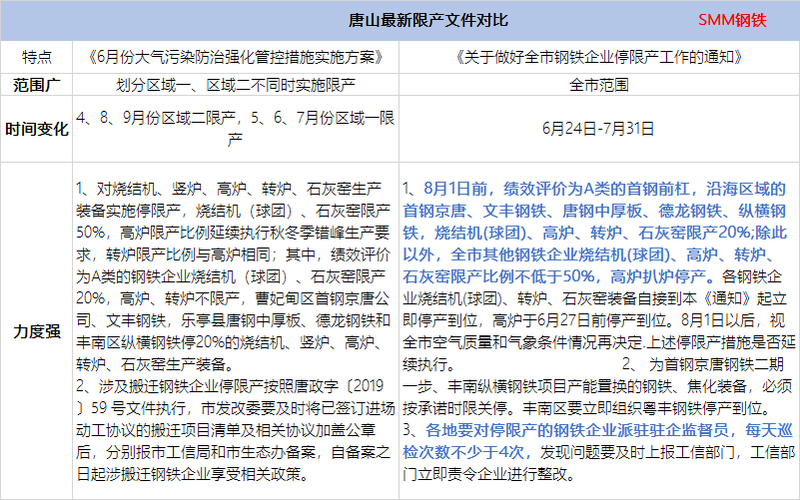
According to the documents released this time, it is imperative to tighten the environmental protection production restrictions, not only from the area where the production restrictions should have been implemented from June to July to the whole city, but also to strengthen the production restrictions, even steel enterprises involved in relocation are also inevitable. In addition, the document also requires all localities to stop production of iron and steel enterprises stationed supervisors, the number of inspections every day not less than 4 times found problems should be promptly reported to the industrial credit department, the industrial credit department immediately ordered the enterprise to carry out rectification and reform.
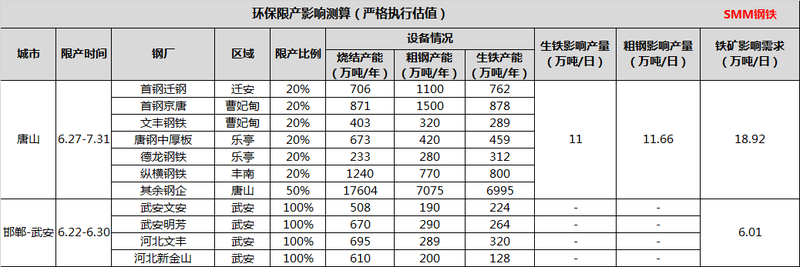
According to SMM estimates, the production limit involves a total of 34 steel enterprises in Tangshan, during the production limit, if the strict implementation of the production limit is expected to affect pig iron production of 3.85 million tons, crude steel output of 4.081 million tons, iron ore demand of 6.622 million tons; In terms of steel, the production restriction has a great impact on the supply of plates and building materials. It is understood that in the limited production capacity of local steel enterprises, plates account for about 30%, while building materials account for more than 20%. Among them, the monthly production capacity of plate is expected to affect nearly 2 million tons, and the monthly production capacity of building materials is 1.3 million tons. In the case of shrinking supply, demand has not declined significantly, steel prices are expected to rebound "on the line."


At present, the specific implementation is as follows:

Steel mill A (Lunan District): there are five blast furnaces, and only two have been opened so far. Among them, the furnace of capacity replacement has been shut down for a long time. At present, under the condition of limited production, the amount of iron water affected is 20% of the conventional output (conventional 14000 tons / day), and the amount of medium and heavy plate is 20% of the conventional output.

Steel mill B (Fengnan District): sintering and blast furnace from now on to limit production, is currently looking for a construction team, stop production of 1080 blast furnace, can be implemented this week. It affects the amount of iron water 3000 tons per day, and the overall influence on sintering is 7-8 kilotons.

Steel mill C (Zunhua area): there are now a total of three blast furnaces, which have so far been limited to 50%, and two small blast furnaces are still out of production.

Steel plant D (Caofeidian): one of the three blast furnaces is currently out of production and has a production reduction plan under the influence of policy, but it has not yet been implemented.

In addition to Tangshan, recently, Wu'an, Anyang and other regions have also issued environmental protection production restrictions, in the case of limited production of sintering machine, iron and steel enterprises can increase the procurement of lump ore, pellets to maintain production, so the impact on the output of crude steel and pig iron is relatively limited, the follow-up implementation of SMM will continue to track.



Заявление об источниках данных: За исключением общедоступной информации, все остальные данные обрабатываются SMM на основе общедоступной информации, рыночного общения и с опорой на внутреннюю базу данных и модели SMM. Они приведены только для справки и не являются рекомендациями для принятия решений.

По любым вопросам или для получения дополнительной информации, пожалуйста, свяжитесь: lemonzhao@smm.cn
Для получения дополнительной информации о доступе к нашим исследовательским отчётам обращайтесь:service.en@smm.cn
Связанные новости
Хэюань вводит строгие правила и штрафы за несанкционированное обращение с отработанными свинцово-кислотными аккумуляторами
28 Sep 2026 17:34 (GMT+8)
Хэюань вводит строгие правила и штрафы за несанкционированное обращение с отработанными свинцово-кислотными аккумуляторами
Читать далее
Хэюань вводит строгие правила и штрафы за несанкционированное обращение с отработанными свинцово-кислотными аккумуляторами
[Обзор рынка отработанных свинцово-кислотных аккумуляторов] Недавно Управление экологии и окружающей среды города Хэюань опубликовало «Уведомление о регулировании обращения с отработанными свинцово-кислотными аккумуляторами». Согласно Экологическому кодексу Китайской Народной Республики, предприятия и учреждения, осуществляющие сбор и хранение отходов без разрешения, могут быть оштрафованы на сумму от 200 тыс. до 1 млн юаней; лица, осуществляющие деятельность по утилизации и переработке без разрешения, могут быть оштрафованы на сумму от 1 до 5 млн юаней, а также им может быть предписано приостановить деятельность или прекратить её, при этом ответственные лица штрафуются на сумму от 100 тыс. до 1 млн юаней; если деяние является преступлением, наступает уголовная ответственность в соответствии с законом.
28 Sep 2026 17:34 (GMT+8)
«Гуанчжоу ужесточает управление отработанными свинцово-кислотными аккумуляторами электровелосипедов и уточняет правила обращения с опасными отходами»
28 Sep 2026 17:33 (GMT+8)
«Гуанчжоу ужесточает управление отработанными свинцово-кислотными аккумуляторами электровелосипедов и уточняет правила обращения с опасными отходами»
Читать далее
«Гуанчжоу ужесточает управление отработанными свинцово-кислотными аккумуляторами электровелосипедов и уточняет правила обращения с опасными отходами»
[Рыночная динамика отработанных свинцово-кислотных аккумуляторов от электровелосипедов] Недавно Управление экологии и окружающей среды города Гуанчжоу опубликовало уведомление о ключевых моментах экологического управления отработанными свинцово-кислотными аккумуляторами от электровелосипедов в Гуанчжоу. В документе разъясняется, что отработанные свинцово-кислотные аккумуляторы относятся к опасным отходам (HW31, 900-52), а лом аккумуляторов, образующийся при приёме в магазинах, обмене старых изделий на новые и ремонте, должен передаваться организациям, имеющим соответствующую лицензию. Организации, имеющие разрешение на сбор опасных отходов (включая 900-52), освобождаются от оформления электронных накладных на передачу в процессе сбора в рамках пилотной программы централизованного сбора.
28 Sep 2026 17:33 (GMT+8)
Перу ожидает рост производства меди на 1 млн тонн в год в течение пяти-шести лет
26 Sep 2026 01:38 (GMT+8)
Перу ожидает рост производства меди на 1 млн тонн в год в течение пяти-шести лет
Читать далее
Перу ожидает рост производства меди на 1 млн тонн в год в течение пяти-шести лет
Министр энергетики и горнорудной промышленности Перу Гильермо Шинно заявил, что страна рассчитывает увеличить годовое производство меди примерно на 1 млн тонн в течение пяти-шести лет за счет новых горнодобывающих проектов. Третий по величине производитель меди в мире ожидает, что в 2026 году добыча составит 2,5–2,7 млн тонн, что практически не изменится по сравнению с 2023 годом, поскольку снижение содержания руды и повторяющиеся социальные конфликты оказывают давление на предложение. Недавно избранное правительство стремится преодолеть эту стагнацию за счет сокращения бюрократических барьеров; за два месяца с момента вступления в должность горнодобывающие компании активизировали взаимодействие с министерством. Шинно сообщил, что чиновники выявили 27 разрешений, которые можно упразднить из примерно 100 требований в горнодобывающем секторе, не снижая экологических стандартов.
26 Sep 2026 01:38 (GMT+8)