by Raul de Frutos on JANUARY 17, 2017
Indonesia issued significant new mining rules last Thursday that will relax its ban on exports of nickel ore. Over the weekend, I went to check analysts’ opinions on this new development. Not surprisingly, almost everyone thinks this is bearish news for nickel prices.
I am often a contrarian and this time, of course, I have a different opinion. I think the outcome of this revision is bullish for prices. What’s more, I think this is a great opportunity to buy nickel since prices might trade above today’s levels for the rest of the year.
Indonesian Nickel Ban
Before we get to analyze the price impact of the new rules, let’s quickly review what the ban was about in the first place:
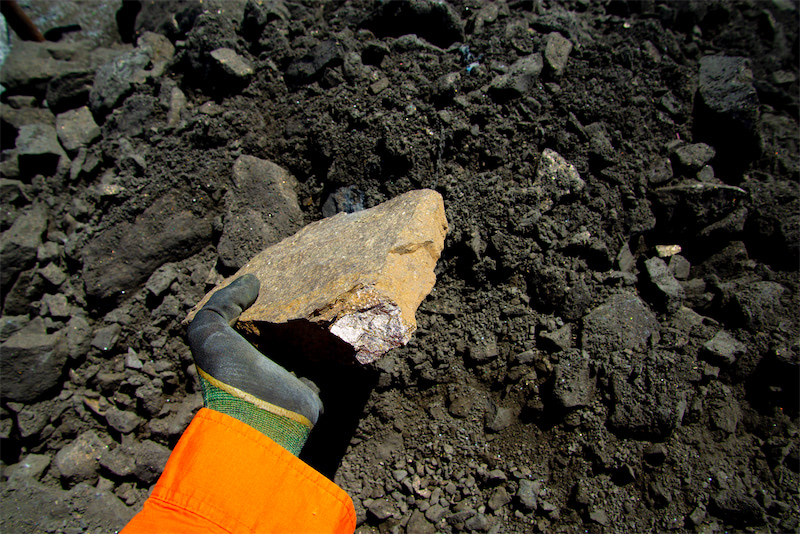
Indonesia imposed an export ban for unprocessed material — essentially raw ore — back in 2014. A year before the ban kicked in, Indonesia exported around 60 millions metric of nickel ore. Nickel ore contains an average of 1 to 3.5% of nickel. Indonesia banned exports to encourage downstream investment as this would eventually be better for the country, as it would make more revenue as the material is processed domestically and it would build a local processing industry.
So, the ban encouraged smelter investment… but those investments haven’t exactly progressed as quickly as expected. Miners are struggling to build smelters as they they see their revenues fall due to the loss of export business. As a result, Indonesia had to do something so smelters can raise cash for downstream investments.
Easing the Ban
The revisions to the earlier regulation will allow miners to only export low-grade ore (defined as 1.7% or less metal content) as long as they express a commitment to build their own smelters within five years and are able to supply domestic smelters with enough low-grade ore to meet at least 30% of the country’s input capacity.
This distinction between low-grade and high-grade ore (1.7% or more metal content) is important. Lower-grade ore increases the cost base for Chinese nickel pig-iron. In addition, NPI and ferronickel are more energy intensive than the higher grade refined nickel. Therefore, the greater use of lower grade nickel leads to more pollution, an issue that China in currently tackling.
According to Indonesia’s mining minister, Indonesia produces 17 million mt of nickel ore per year, of which 10 mmt is low-grade. The country’s nickel smelting capacity is currently 16 mmt and may reach 18 mmt this year.
Therefore, the new rule forces at least 4.8 mmt of current low-grade production (30% of the current 16 mmt of capacity) to go into domestic smelters. In conclusion, as the mining minister puts it, Indonesia may export up to 5.2 mmt of nickel ore a year under the country’s new rules. This is less than 9% of what the country used to export prior to the export ban. Clearly, Indonesia’s easing will not flood the global market as many feared.
Why This Is Bullish For Nickel Prices
It’s not just the news, but what’s already priced in that really matters. Many investors and analysts had expected Indonesia to fully lift its export ban, but the government surprised markets by allowing limited amounts of nickel ore.
Nickel reverses higher on the easing news. Source: MetalMiner analysis of Fastmarkets.com data.
Indeed, markets reacted in a bullish way to the news. Prices first sold off, falling as much as 1.5% but then prices reversed to end the day up 2.2%. This price reversal suggests that investors were expecting Indonesia to allow more exports than what the country actually announced on Thursday.
This price action is similar to what we saw on November 9th following Donald Trump’s victory in the U.S. presidential election. Stock markets opened sharply lower as fear consumed traders, but then markets reversed higher to end the day with gains as traders became more optimistic about growth prospects. Ever since, the U.S. stock market hasn’t looked back.
What This Means For Metal Buyers
Contrary to common wisdom, the new easing of Indonesian’s export ban might be bullish for nickel prices. If you haven’t done so yet, it’s a good time to minimize your risk exposure on your nickel/stainless purchases.
![[SMM Новости нержавеющей стали] Малайзия инициирует антидемпинговое расследование в отношении холоднокатаной нержавеющей стали из Индонезии](https://imgqn.smm.cn/usercenter/GmHLU20251217171733.jpg)