[SMM Analysis] Coal Cost Impact on Magnesium Prices: Regional Cost Gaps Narrowing

Published: May 29, 2026 19:10
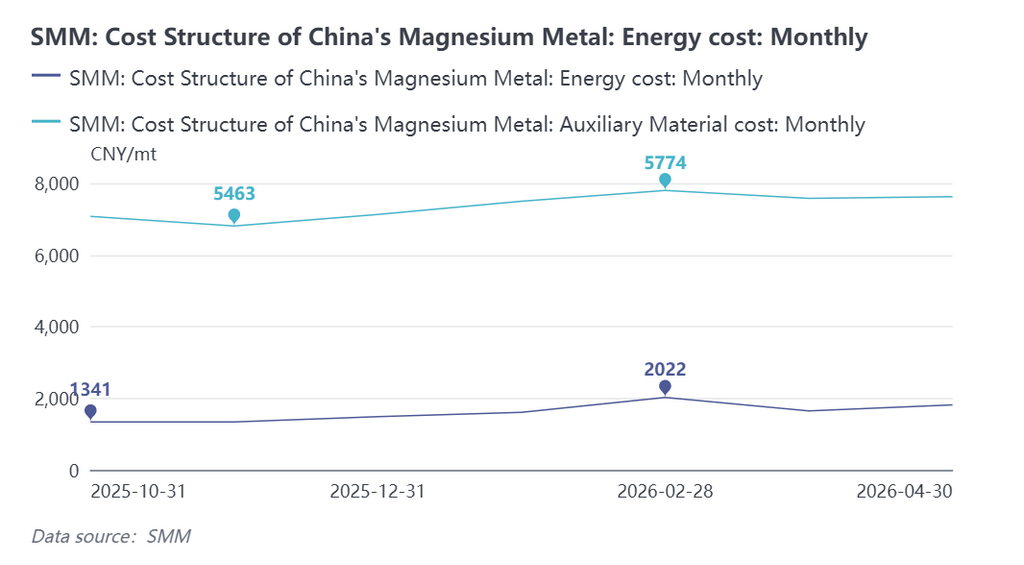
[SMM Magnesium Market Analysis: Coal Cost Transmission Imbalance, Weakened Integrated Cost Advantages, and Continued Convergence of Regional Magnesium Ingot Cost Gaps] Recently, energy cost fluctuations in the magnesium industry far exceeded ferrosilicon price fluctuations. The influence of coal prices on magnesium prices increased significantly, and the cost structure of magnesium ingots underwent a notable shift.
Recently, energy cost fluctuations in the magnesium industry far exceeded ferrosilicon price fluctuations. The influence of coal prices on magnesium prices increased significantly, and the cost structure of magnesium ingots underwent a notable shift.

Currently, coal gas prices exhibited a fluctuating trend with wild swings, mainly affected by the coal supply-demand pattern, seasonal regulation, and energy policy adjustments, with price fluctuations far exceeding those of previous years. The underlying reason was that the semi coke industry could not absorb the rising coal costs on its own, resulting in severely imbalanced cost transmission. When coal prices rose, semi coke could only pass through a small portion of costs, with the vast majority amortized by primary magnesium smelters, and this trend continued to intensify.

Recently, ferrosilicon market prices showed a relatively mild trend. Since 2026, mainstream prices of 75 ferrosilicon remained stable in the range of 5,700–6,100 yuan/mt, and the impact of ferrosilicon on magnesium costs weakened significantly. Overall, energy costs have replaced auxiliary materials as the core factor driving magnesium price trends.

Sustained losses in semi coke led to significantly higher coal gas costs that primary magnesium smelters needed to amortize. This transmission chain notably weakened the cost advantages of primary magnesium enterprises deeply tied to the semi coke industry.

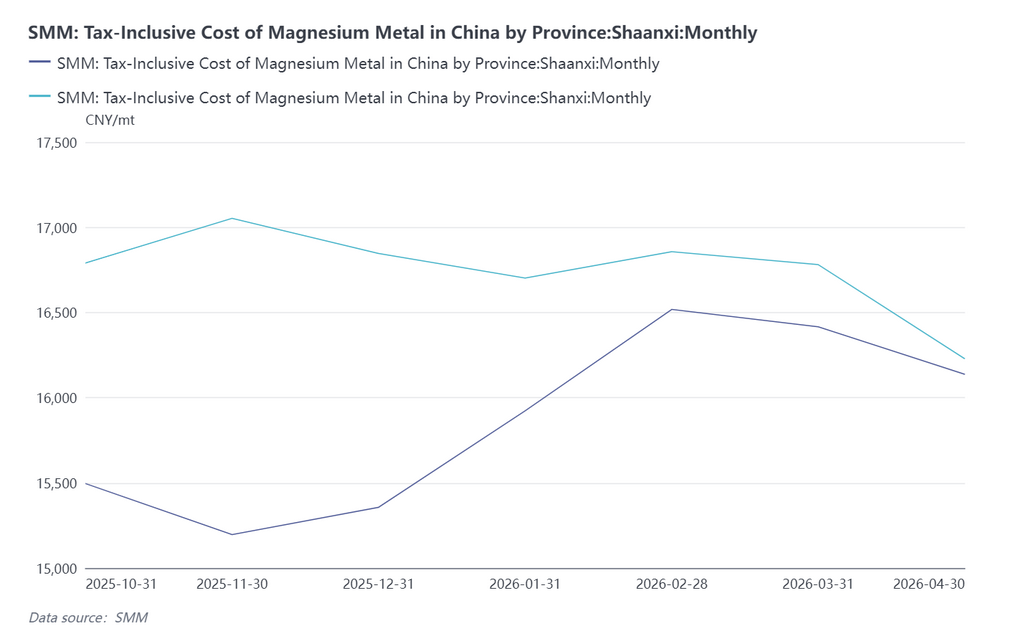
According to SMM's latest cost calculation data from April 2026, the regional cost landscape of primary magnesium smelting in China underwent a major reshaping. Smelting costs for primary magnesium in Shaanxi, which traditionally enjoyed energy industry chain advantages, continued to rise, while costs in Shanxi remained relatively stable. The price spread between the two regions narrowed significantly, and the differentiated regional cost advantages faded on a phased basis.

Overall, coal and coal gas costs have become the core factors driving primary magnesium prices, enterprise profitability, and industry dynamics, and the trend of increasing cost pressure on primary magnesium smelters continues.

Data Source Statement: Except for publicly available information, all other data are processed by SMM based on publicly available information, market communication, and relying on SMM's internal database model. They are for reference only and do not constitute decision-making recommendations.

For any inquiries or for more information, please contact: lemonzhao@smm.cn
For more information on how to access our research reports, please contact:service.en@smm.cn
Related News
Magnesium Inventories Down 3.00% MoM, Regional Disparities Evident Amid Production Cuts and Port Accumulation
Jun 18, 2026 18:05
Magnesium Inventories Down 3.00% MoM, Regional Disparities Evident Amid Production Cuts and Port Accumulation
Read More
Magnesium Inventories Down 3.00% MoM, Regional Disparities Evident Amid Production Cuts and Port Accumulation
[SMM Magnesium Weekly Inventory Brief] This week, social inventories decreased by 3.00% month-on-month, showing a regional divergence. In major production areas, inventory reduction was more pronounced due to the progress of long-term contract deliveries and production cuts by some manufacturers. Meanwhile, Tianjin Port experienced slight inventory accumulation as low-priced resources stimulated traders' stockpiling. Overall, the inventory reduction in production areas provided some bottom support for magnesium prices, but the port inventory accumulation reflects persistent export difficulties, with short-term supply-demand imbalances still awaiting resolution.
Jun 18, 2026 18:05
Conflicting supply-demand forces persist amid buyer-seller standoff. What’s next for magnesium prices?
Jun 18, 2026 13:50
Conflicting supply-demand forces persist amid buyer-seller standoff. What’s next for magnesium prices?
Read More
Conflicting supply-demand forces persist amid buyer-seller standoff. What’s next for magnesium prices?
Since the start of June, the tug-of-war between sellers and buyers over magnesium prices has been intensifying. The EXW price of 99.90% magnesium ingot (Fugu, Shenmu) moved sideways around 16,300–16,400 yuan/mt, with the trading range narrowing significantly. The magnesium market was mired in a supply-demand stalemate, as end-users' acceptance of high magnesium prices declined markedly, while primary magnesium smelters held their bottom line supported by costs.
Jun 18, 2026 13:50
Rising Fuel Costs and Shipping Congestion Drive Up International Magnesium Freight Rates
Jun 18, 2026 11:52
Rising Fuel Costs and Shipping Congestion Drive Up International Magnesium Freight Rates
Read More
Rising Fuel Costs and Shipping Congestion Drive Up International Magnesium Freight Rates
[SMM Magnesium Express]Recently, due to a combination of factors including rising fuel costs driven by geopolitical conflicts and reduced turnover efficiency caused by congestion in major European ports, shipping companies have tightened capacity and raised freight rates, leading to a significant surge in international shipping costs. According to SMM research, since late June, the freight cost for magnesium ingots shipped from Tianjin Port to Rotterdam, Netherlands, has reached approximately $130 per ton, up $20 from the beginning of the month, while the average freight cost for the India route has reached $110 per ton, up $10. SMM will continue to closely monitor freight trends and make timely adjustments.
Jun 18, 2026 11:52
[SMM Analysis] Coal Cost Impact on Magnesium Prices: Regional Cost Gaps Narrowing - Shanghai Metals Market (SMM)