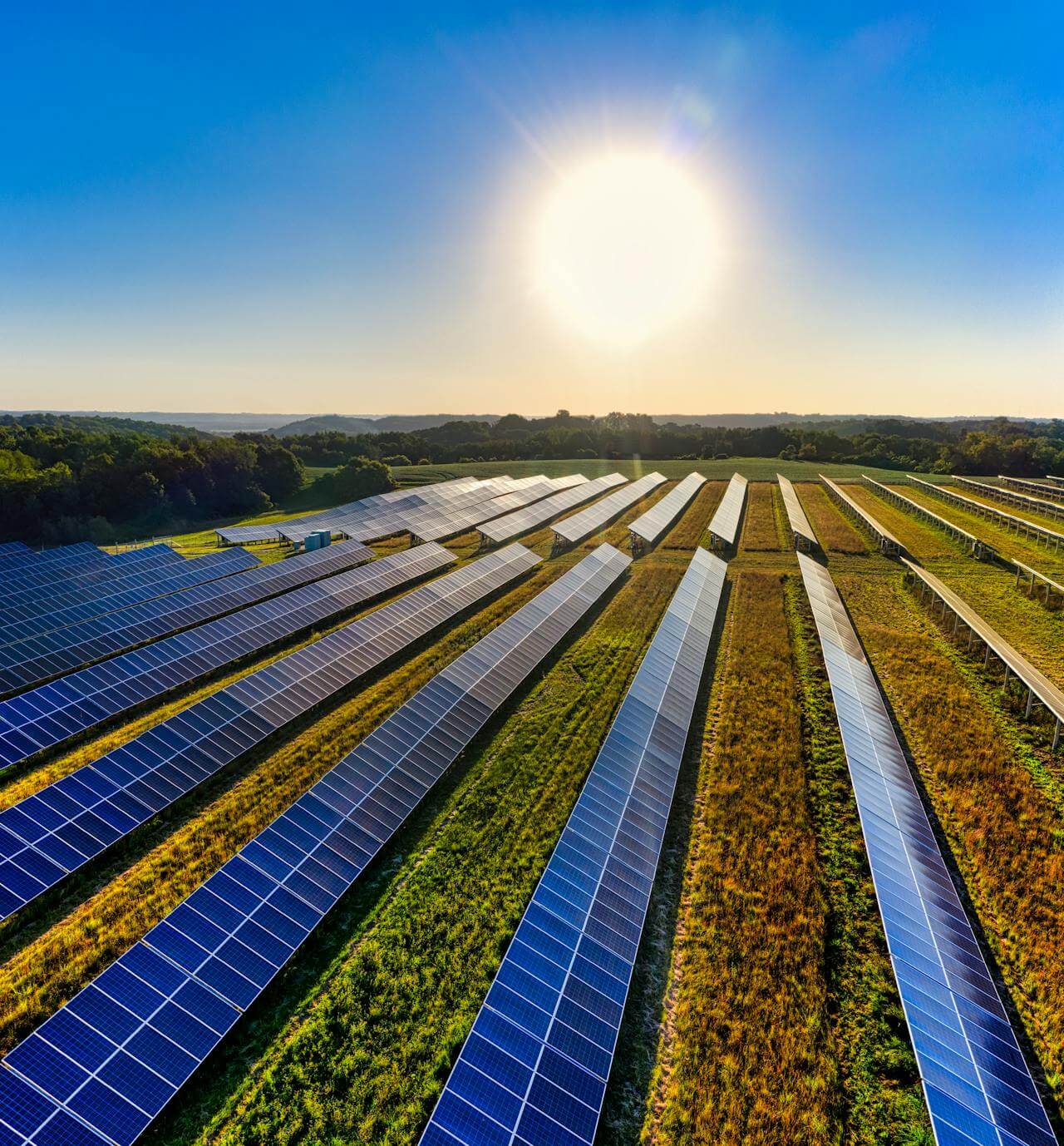
According to data from the National Energy Administration, from January to November 2024, China added 206.3 GW of new PV installations, up 25.88% YoY.
In December of the same year, Wang Bohua, Honorary Chairman of the China Photovoltaic Industry Association, stated that the forecast for new domestic PV installations for the year was raised to 230-260 GW, representing a YoY increase of 6.33%-20.2% compared to 216.3 GW in 2023.
Indeed, looking back at the past year, although the "drastic" drop in module prices caused significant challenges for enterprises, the decline in industry chain prices also stimulated enthusiasm for end-use market construction, driving demand upward and leading to a PV module bidding market in full swing.
Bidding Market | N-Type Modules Favored, 700Wp+ Era Arrives
According to statistics from Polaris, the total scale of domestic PV module public bidding in 2024 reached 299.58 GW, achieving a slight increase compared to 2023.
Tracing the ownership entities, central state-owned enterprises remained the main force in bidding, with 122 entities, led by the "Five Majors and Six Minors," collectively issuing 296 GW of centralised and individual procurement orders, accounting for 98.8% of the total bidding volume.
Specifically, 31 enterprises achieved GW-level module procurement scales.
Among them, China Power Construction, one of the central enterprise giants known as the "infrastructure maniac," led with nearly 57.94 GW. In mid-November 2024, it secured the top position among owners with a 51 GW centralised procurement of n-type TOPCon/HJT modules under its 2025 PV module framework agreement, marking the largest module procurement order in PV history. This procurement has already been tendered, with 58 module producers competing. The lowest bid price for the TOPCon section was 0.62 yuan/W, with an average price of 0.68 yuan/W, while the HJT section had a lowest bid price of 0.74 yuan/W and an average price of 0.773 yuan/W, reflecting intense competition.
China Huadian Corporation followed closely with 29.28 GW, ranking second, and all its bids have been awarded. Its annual centralised procurement projects were also a highlight, with the total volume of its first and second batch PV module centralised procurement projects in 2024 exceeding 26.58 GW, accounting for over 90% of its bidding scale.
Against the backdrop of ultra-low module prices and accelerated construction of the second and third batch of large-scale base projects, central state-owned enterprises significantly increased their procurement intentions. The number of owners with procurement scales between 10-20 GW expanded rapidly from three in the previous year to ten, including China Energy Engineering Group, China Datang Corporation, Luneng Group, China Huaneng Group, SPIC, China National Nuclear Corporation, China Three Gorges Corporation, China Energy Investment Corporation, China General Nuclear Power Group, and Beijing Energy Group.
In terms of module procurement types, among the 122.1 GW of module procurement with clear technical routes, N-type modules accounted for approximately 110.89 GW, representing over 90% and becoming the absolute mainstream in the bidding market.
At the turning point of technological iteration, competition among different cell technologies became more intense over the past year, with debates and power battles ongoing. However, in the bidding arena, TOPCon's position became more solid. In 2024, among module procurement with clear technical routes, TOPCon procurement reached nearly 96 GW, accounting for 78.61%, HJT procurement was about 12.23 GW (10.02%), and BC was approximately 1.104 GW (0.9%).
Among the approximately 160.46 GW of module procurement with clear single/double-sided and lightweight types, single-sided module procurement was about 11.91 GW, accounting for 7.42% of the clear scale, while double-sided module procurement reached 148.51 GW, accounting for 92.55%, a 45.6% increase compared to 2023 (approximately 102 GW), indicating further market acceptance.
Notably, compared to 2023, the power of PV module bidding in 2024 further increased. Among the 101.84 GW of bidding with clear module power parameters, modules with 500Wp+ and 600Wp+ accounted for over 92% combined.
Meanwhile, the era of 700Wp+ higher power officially arrived. Modules with a clear bidding power of 700Wp and above totaled approximately 7.67 GW, accounting for 7.43%, mostly HJT modules. Bidders included SPIC, China Huadian Corporation, China Power Construction, China National Nuclear Corporation, China Resources Power, Shandong Water Investment Group, Guangdong Energy Group, Quancheng Energy Group, Shandong Hi-Speed Group, and Xuancheng Eastern New City Investment. Suppliers included Tongwei, GCL Integration, Huasheng New Energy, Chint New Energy, Risen Energy, Jinko Solar, Trinasolar, Huaneng PV, DAS Solar, Canadian Solar, Seraphim, and Gokin Solar.
Awarded Market | Over 90 Enterprises Share the Market, Bid Prices Plummet
According to analysis by Polaris Solar PV Network, the total awarded PV module scale in 2024 was approximately 219.77 GW, with nearly 90.2 GW having clear specific awarded scales for enterprises.
Analyzing the awarded enterprises, no fewer than 93 module suppliers received orders in 2024, with 17 achieving GW-level awarded scales, and orders were highly concentrated among top-tier enterprises.
Specifically, Jinko Solar and Tongwei were the only two enterprises with scales exceeding 10 GW, at 12.42 GW and 11.76 GW, respectively. LONGi, Trinasolar, GCL Integration, Chint New Energy, JA Solar Technology, and DAS Solar followed, with awarded scales between 5-10 GW.
Additionally, Huayao Optoelectronics, Huaneng PV, Yingli, Risen Energy, Dahan Energy, Huasheng New Energy, Haitai New Energy, Hoshine Silicon, and CECEP Solar Energy Zhenjiang Company also achieved GW-level awarded scales.
In terms of awarded prices, under the dual pressures of capacity clearance and market competition, PV module prices in 2024 rapidly halved. Reflected in the bidding market, the average awarded price of modules showed a monthly downward trend, with ultra-low bids below cost frequently appearing, particularly in Q3 and Q4.
For example, in the third batch of PV project module equipment procurement by China Resources Power in 2024, tendered on September 3 and awarded on October 9, the first and second sections were awarded at 0.6229 yuan/W. The first section required N-type bifacial double-glass monocrystalline modules with dimensions of 2,382×1,134 mm and power ≥610Wp, while the second section required modules with dimensions of 2,278×1,134 mm and power ≥580Wp.
Similarly, in the module equipment procurement for the 600,000 kW PV project of the National Energy Bayingolin Pumped Storage Project in Bohu County, tendered on November 15 and awarded on December 20, the awarded prices for sections 1 and 2 were 0.625 yuan/W and 0.629 yuan/W, respectively, won by Shanghai Electric Hengxi PV and Hoshine Silicon. The supply required N-type bifacial double-glass monocrystalline modules with power ≥610Wp.
The lowest awarded price of 0.612 yuan/W appeared in October 2024 in the Yiyuan Xili 150 MW agrivoltaic PV project module equipment procurement by China Resources Power, which included N-type bifacial double-glass monocrystalline PV modules, supporting components supply, transportation and installation, technical guidance, and on-site commissioning.
In fact, entering H2 2024, as the oversupply situation intensified, irrational ultra-low bidding behavior aimed at short-term orders and long-term survival frequently disrupted the normal bidding market order and directly triggered widespread concerns in the end-use market about the quality and actual performance of ultra-low-priced module products. In response, industry associations and multiple top-tier enterprises issued calls for "self-discipline" and solemnly signed self-discipline agreements to maximize market stability and overcome immediate survival challenges.
At present, these measures have shown initial results. The bid prices of first- and second-tier module enterprises have gradually become rational, generally higher than or equal to the mainstream PV module cost prices regularly published by industry associations, bringing the market environment back on track.
Looking ahead, how will the domestic PV module bidding market develop? Can module prices continue to recover? How will different technical routes compete? All remain uncertain. The only certainty is that fierce competition among enterprises continues...
![[Solar: Bangladesh introduz tarifa de US$ 0,086/kWh para energia solar em telhados com medição líquida e meta de 5 GW]](https://imgqn.smm.cn/usercenter/zvkUO20251217171743.jpg)
![[Solar: Frontier Energy da Austrália fecha contratos para o projeto híbrido solar-bateria Waroona na Austrália Ocidental]](https://imgqn.smm.cn/usercenter/JNxfy20251217171742.jpg)
![[Solar: Malásia lança programa solar nacional LSS6 com 2,5 GW de energia solar e 1,25 GW de armazenamento]](https://imgqn.smm.cn/usercenter/PkttC20251217171742.jpg)