Why Would Japanese Smelters Negotiate Another BM Figure with Antofagasta? [SMM Analysis]

Publicado: Dec 25, 2024 17:01 (GMT+8)
[SMM Analysis: Why Did Japanese Smelters Negotiate a Separate BM Figure with Antofagasta?] However, after the negotiation results between Chinese smelters and Antofagasta were finalized, the negotiation results between Japanese smelters and Antofagasta are also imminent. According to market rumors, one Japanese smelter, with an annual trade volume of approximately 50,000 mt of ore with Antofagasta, is highly likely to follow the result of $21.25. Another Japanese smelter, with an annual trade volume of 300,000-400,000 mt of ore with Antofagasta, was the first to reach an agreement with Antofagasta at $25. The last Japanese smelter, with an annual trade volume of over 300,000 mt of ore with Antofagasta, is still in negotiations and is demanding a BM figure above $30 for next year.

》View SMM Copper Prices, Data, and Market Analysis

》Subscribe to View SMM Historical Spot Metal Prices

       During the month, Jiangxi Copper Corporation, China Copper, Tongling Nonferrous Metals, and Jinchuan Group finalised the 2025 copper concentrate long-term contract TC benchmark at $21.25/mt and 2.125¢/lb. The 2024 copper concentrate TC long-term contract benchmark was set at $80/mt and 8.0¢/lb.

       However, following the conclusion of negotiations between Chinese smelters and Antofagasta, the negotiation results between Japanese smelters and Antofagasta are also imminent. According to market rumors, one Japanese smelter, with an annual trade volume of approximately 50,000 mt with Antofagasta, is likely to follow the $21.25 result. Another Japanese smelter, with an annual trade volume of 300,000-400,000 mt with Antofagasta, was among the first to agree on a $25 benchmark. The last Japanese smelter, with an annual trade volume of over 300,000 mt with Antofagasta, is still in negotiations and is demanding a benchmark above $30 for next year.

       Historically, the benchmark figures quoted by Antofagasta/Freeport to smelters in China, Japan, and South Korea have remained largely consistent, with minimal differences. However, due to the significant supply-demand gap for copper concentrates next year, the forms and outcomes of long-term contracts have become more diverse. Since the last century, Japan and South Korea, with their advanced economies in Asia, had the largest demand for copper concentrates annually. As a result, Japan became the primary negotiator with Antofagasta/Freeport each year. With the subsequent economic growth of China and the expansion of its nonferrous metals industry, China replaced Japan as the primary negotiator with Antofagasta/Freeport. For a long period in the 21st century, smelters in Japan and South Korea had to accept the benchmark results negotiated between China and Antofagasta/Freeport. So why is there such a strong subjective stance from Japanese and South Korean smelters in this year's negotiations with Antofagasta?

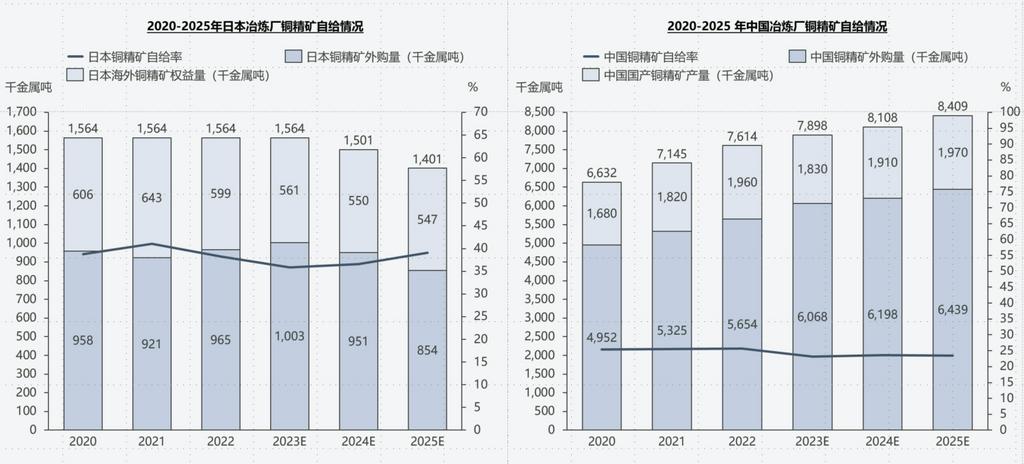
       Japanese and South Korean smelters have long recognized the scarcity of domestic resources, which cannot meet the demands of their industrial development. As a result, smelting enterprises in Japan and South Korea began investing in mines in regions such as the Americas and Australia early on. However, instead of participating in mine dividends, they secured mining rights to address the issue of insufficient domestic resources.
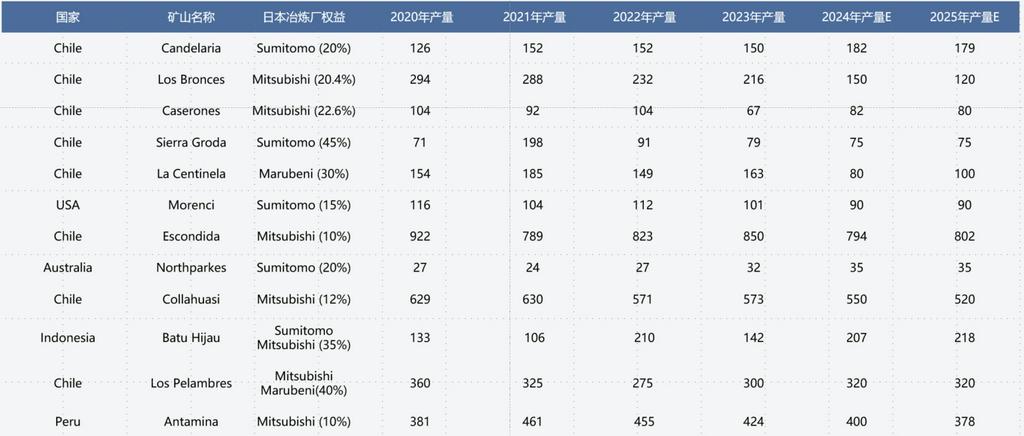
       Comparing the raw material self-sufficiency rates of China and Japan, it is evident that Japan's copper concentrate self-sufficiency rate can be maintained at 40%-50%, while China's rate is only around 25%. In other words, the raw material structure of Chinese smelters is far more dependent on external sources compared to Japanese smelters. Therefore, Japanese smelters, compared to their Chinese counterparts, have greater leverage to negotiate a benchmark figure with Antofagasta when facing significant supply shortages in the future.
》Click to View the SMM Copper Industry Chain Database


Declaração sobre a Fonte de Dados: Com exceção das informações publicamente disponíveis, todos os demais dados são processados pela SMM com base em informações publicamente disponíveis, comunicação de mercado e com base no modelo de base de dados interna da SMM. São apenas para referência e não constituem recomendações para a tomada de decisão.

Para quaisquer perguntas ou para obter mais informações, entre em contato: lemonzhao@smm.cn
Para mais informações sobre como aceder aos nossos relatórios de investigação, entre em contato:service.en@smm.cn
Notícias Relacionadas
O que uma retomada da Cobre Panamá poderia significar para a oferta global de cobre? [Análise SMM]
há 11 horas
O que uma retomada da Cobre Panamá poderia significar para a oferta global de cobre? [Análise SMM]
Leia mais
O que uma retomada da Cobre Panamá poderia significar para a oferta global de cobre? [Análise SMM]
Cobre Panamá poderá voltar a ser uma importante fonte de oferta global de cobre se o Panamá e a First Quantum chegarem a acordo sobre um novo quadro operacional. A mina produziu 330,9 mil toneladas de cobre em 2023 e historicamente forneceu cerca de 1% da produção mundial. Embora o processamento de stocks tenha sido retomado, a extração de minério continua suspensa. Qualquer reinício será provavelmente faseado, dependendo das negociações, das condições legais e da remobilização operacional.
há 11 horas
Vedanta planeja expansão de US$ 2,3 bilhões na Índia e na Arábia Saudita, e avança na retomada da fundição de Tuticorin
há 15 horas
Vedanta planeja expansão de US$ 2,3 bilhões na Índia e na Arábia Saudita, e avança na retomada da fundição de Tuticorin
Leia mais
Vedanta planeja expansão de US$ 2,3 bilhões na Índia e na Arábia Saudita, e avança na retomada da fundição de Tuticorin
A Vedanta revelou um grande plano de investimento, segundo o qual a Vedanta Copper pretende investir US$ 2,3 bilhões na Índia e na Arábia Saudita nos próximos três a quatro anos, visando uma produção anual de cobre de mais de 1 milhão de toneladas até 2030. A empresa tem como meta produzir 500 mil toneladas por ano tanto na Índia quanto na Arábia Saudita, além da produção existente de 100 mil toneladas em Fujairah, nos Emirados Árabes Unidos. Cerca de US$ 2 bilhões serão investidos em projetos de mineração, fundição e trefilação de cobre na Arábia Saudita, com uma decisão de investimento sobre a proposta de fundição de cobre saudita prevista para este trimestre. A Vedanta também busca reativar sua fundição de cobre em Tuticorin, na Índia, fechada desde 2018. A empresa espera uma decisão judicial em até três meses e, mediante aprovação, planeja investir US$ 250 milhões na reforma da instalação, visando a retomada em oito a nove meses e uma produção anual de cobre de 250 mil toneladas. Enquanto isso, sua unidade de Silvassa opera com cerca de 95% de capacidade, com produção anualizada de cátodos de cobre superior a 245 mil toneladas.
há 15 horas
Londres BTC sinaliza cobre e antimônio em Nevada Black Star
há 18 horas
Londres BTC sinaliza cobre e antimônio em Nevada Black Star
Leia mais
Londres BTC sinaliza cobre e antimônio em Nevada Black Star
London BTC Company Limited (LSE:BTC, OTCQB:VINZF) anunciou em 5 de outubro de 2026 os resultados iniciais de pXRF em campo do seu projeto Black Star de ouro e minerais críticos no Condado de Pershing, Nevada. Um programa inaugural coletou 69 amostras de fragmentos de rocha ao longo de um corredor de 2,5 km entre os alvos Western e Eastern. As leituras de pXRF mostraram antimônio de até 0,44% Sb, cobre de até 30,0% Cu, bismuto de até 0,73% Bi e prata de até 811 ppm Ag, com a associação antimônio-cobre aparecendo em ambas as extremidades do corredor. A assinatura espelha uma amostra histórica de 1985 localizada 120 m ao sul das concessões (>1% Sb, 2% Cu, 700 ppm Ag). A amostragem anterior de due diligence retornou até 16,23 g/t de ouro e 50,5 g/t de prata. As amostras estão agora com a MSALABS para ensaios laboratoriais, com geoquímica multielementar completa, incluindo antimônio, tungstênio e cobre, a seguir. O cobre, como crédito de subproduto, agrega apelo estratégico sob a política de minerais críticos dos EUA, embora os resultados permaneçam leituras preliminares de campo.
há 18 horas