Be careful! New regulations on lithium battery transportation come into effect on April 1

Publicado: Mar 25, 2022 13:27 (GMT+8)
Attention! According to the official (IATA) of the International Air Transport Association, IATA has revised the regulations governing the separate transportation of lithium batteries, which actually came into effect on January 1, 2022, but there will be a transition period before March 31, 2022 to comply with the new regulations, and the new rules will come into effect after April 1.

According to the official (IATA) of the International Air Transport Association, IATA has revised the regulations for the separate transportation of lithium batteries, which actually came into effect on January 1, 2022, but there will be a transitional period before March 31, 2022 to comply with the new rules, and the new rules will come into effect after April 1.

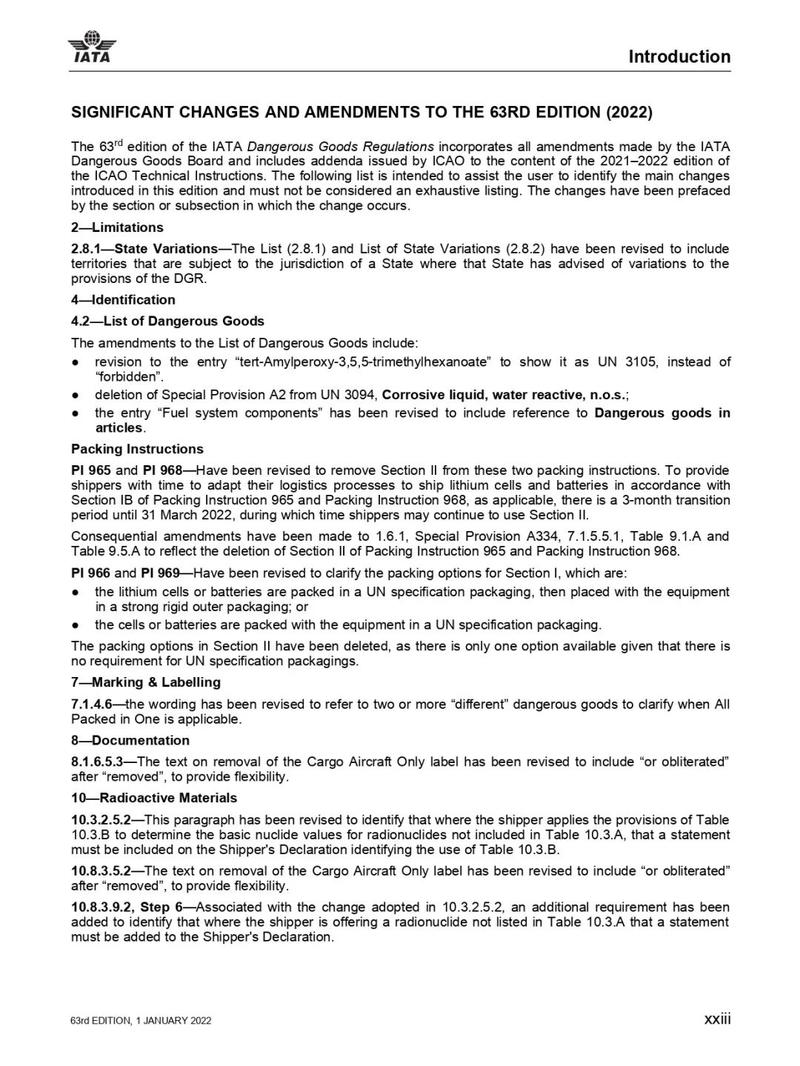
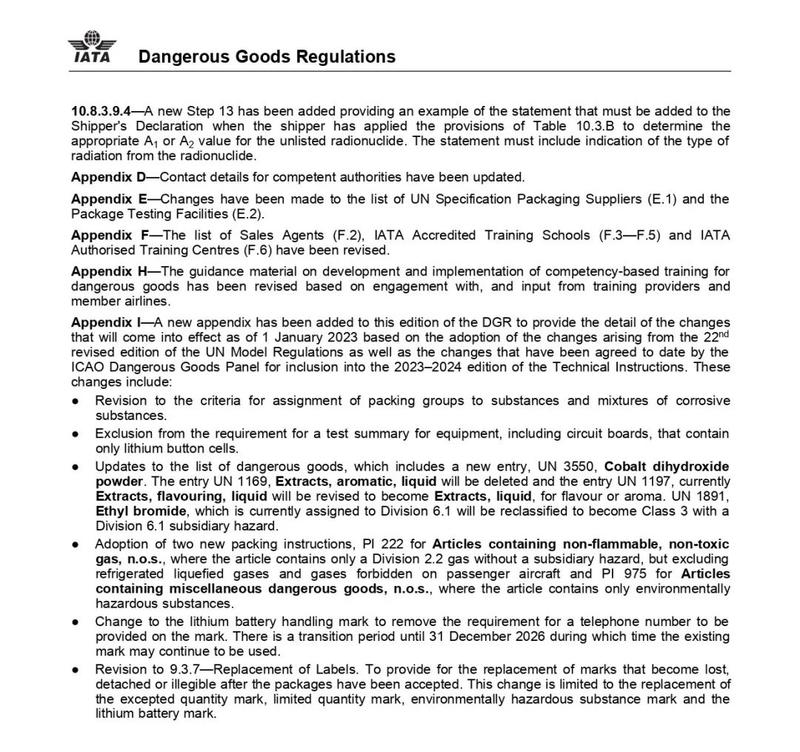
This regulatory change is mainly a revision of the multi-page packaging instructions PI 965 and PI 968 of the 63rd edition of the International Air Transport Association dangerous goods regulations. The most significant impact of this dangerous goods regulation change is the deletion of PI 965 as lithium-ion cells and batteries (including mobile power sources) and PI 968 as packaging instructions for lithium metal / primary cells and batteries. This change does not affect PI 966, PI 967, PI 969 or PI 970 for Section II lithium-containing battery products. According to the provisions of part II, neither lithium-ion batteries nor lithium-metal batteries can be transported.
In this way, all shippers who ship lithium batteries themselves are required to complete the declaration, marking and labelling of dangerous goods, as well as complete training in the air transportation of dangerous goods.

Shippers of lithium batteries have become accustomed to annual changes in transport rules, while air transport rules seem to change more frequently than other modes of transport (rail, road, sea and inland waterways). The reasons for these changes include the increase in the transportation of lithium batteries. Lithium batteries are now available for everything from mobile phones to bicycles, motorcycles, drones, trucks and a variety of scientific, medical and industrial equipment.

In addition, lithium battery accidents continue to pose a threat to safety, as if the regulations are not fully met, the battery may rapidly heat up to 400 °C while releasing toxic gases. Some airlines have invested in sealing systems that can withstand lithium battery fires, but these systems are costly and add to the cost of the supply chain, which will inevitably be borne by the shipper.

From April 1st, both lithium-ion batteries and lithium-metal batteries must be declared in accordance with the terms of IA or IB. It should be noted that this rule change does not apply to lithium batteries included in equipment or lithium batteries packaged in air transportation equipment.

In addition, the ADR (Road), RID (Railway) or IMDG (Shipping) regulations remain unchanged, and special clause 188 does make it easier to use lithium-ion batteries below 100 Wh (watt-hours) and lithium-metal batteries with a total lithium metal content of less than 2 g. Differences in rules between different modes of transport reflect different risks but also increase the complexity faced by shippers many of whom use multiple modes of transport.

The practical effect of these changes is that many packages with only lithium batteries must become larger, if only to leave enough room for the hazards and handling labels and other information that must appear on each package. According to Section IA, the shipper needs two labels, and according to Section IB, two labels and one mark are required, and the labels and marks must comply with the minimum size standards stipulated in the IATA regulations.

The shipper also needs to prepare the shipper's statement for each shipment of self-shipped lithium batteries, which are subject to full acceptance by the ground handling agent, and then enter the Captain's notice, which lists the dangerous goods that have been loaded on the aircraft.

Shippers will face higher transport costs because airlines, handling agents, integrators and freight forwarders must do more to ensure compliance. Air freight rates for most aviation divisions have risen sharply as a result of the epidemic, rising fuel prices, high demand for freight capacity, and the recent Russian-Ukrainian crisis that led to the cancellation of some capacity. Sadly, more cost increases are just around the corner.

Over time, it will become increasingly clear whether this latest regulatory amendment will further improve security or cause obstacles and delays to legitimate shippers and distributors. For all participants in the supply chain, not changing lithium battery regulations for a few years will also be a welcome respite.

Declaração sobre a Fonte de Dados: Com exceção das informações publicamente disponíveis, todos os demais dados são processados pela SMM com base em informações publicamente disponíveis, comunicação de mercado e com base no modelo de base de dados interna da SMM. São apenas para referência e não constituem recomendações para a tomada de decisão.

Para quaisquer perguntas ou para obter mais informações, entre em contato: lemonzhao@smm.cn
Para mais informações sobre como aceder aos nossos relatórios de investigação, entre em contato:service.en@smm.cn
Notícias Relacionadas
[SMM News] Solis inicia perfuração de lítio em Campo Grande
há 1 hora
[SMM News] Solis inicia perfuração de lítio em Campo Grande
Leia mais
[SMM News] Solis inicia perfuração de lítio em Campo Grande
[SMM News] Solis inicia perfuração de lítio em Campo Grande
Solis Minerals iniciou a perfuração diamantada em seu Projeto de Lítio Campo Grande, no Vale do Lítio Araçuaí-Salinas, no Brasil. A empresa planeja cinco furos totalizando cerca de 1.000 m, com profundidades planejadas de até 200 m, para testar pegmatitos de lítio ao longo de um corredor de 500 m. Os alvos baseiam-se em anomalias geoquímicas multielementares coincidentes na superfície e em resultados históricos de sondagem a trado. Trabalhos históricos da Rio Tinto e, posteriormente, mapeamento e trabalhos geoquímicos da Solis definiram os alvos. A Solis também mapeou um novo enxame de pegmatitos com três zonas de afloramento coerentes entre os furos planejados DHCG-001 e DHCG-004. O programa testará a continuidade, a geometria e o potencial de lítio dos pegmatitos abaixo da superfície, começando onde os pegmatitos mapeados coincidem com anomalias geoquímicas. A Solis afirma que a geologia e a geoquímica de Campo Grande são comparáveis às do Projeto de Lítio Colina, do Grupo PLS, cerca de 100 km a sudoeste. Separadamente, a Solis concluiu sete furos de sondagem em seu Projeto de Lítio Mandacaru, no Brasil, com resultados de análises pendentes.
há 1 hora
[SMM Notícias] Charger retoma perfuração no depósito de lítio Medcalf
há 1 hora
[SMM Notícias] Charger retoma perfuração no depósito de lítio Medcalf
Leia mais
[SMM Notícias] Charger retoma perfuração no depósito de lítio Medcalf
[SMM Notícias] Charger retoma perfuração no depósito de lítio Medcalf
A Charger Metals mobilizou uma segunda sonda de perfuração para seu Projeto de Lítio Lake Johnston, na Austrália Ocidental, como parte de um programa de 10.000 m voltado ao crescimento de recursos. Sondas diamantadas e de circulação reversa (RC) estão agora operando no depósito de lítio Medcalf, e a perfuração RC começou há pouco mais de uma semana. O programa dobrará os metros perfurados em Medcalf. A perfuração visa extensões e preenchimento na estimativa de recursos minerais inferidos de Medcalf, de 10,6 Mt com teor de 1% de Li₂O. A perfuração definiu ainda mais o Alvo de Exploração Medcalf West, de 3 a 5 Mt com 1 a 1,4% de Li₂O. O programa também visa fornecer testemunhos diamantados para testes metalúrgicos e geotécnicos. Após a recente atualização de recursos de Medcalf, que elevou o Li₂O contido em 34%, o conselho da Charger se comprometeu com um Estudo de Escopo do Projeto Lake Johnston. O recurso atual está em uma malha de perfuração predominantemente de 40 m x 80 m, incluindo 10.936 m de perfuração a um custo de US$ 32 por tonelada de Li₂O contido. O programa é totalmente financiado pela venda do Projeto de Lítio Bynoe pela Charger para a Core Lithium por US$ 3,75 milhões em dinheiro, recebidos em 17 de julho de 2026. Lake Johnston fica a 450 km a leste de Perth, na Província de Yilgarn, a cerca de 70 km do Projeto de Lítio Earl Grey, onde a Covalent Lithium iniciou mineração e comissionamento em março de 2024.
há 1 hora
[SMM News] Savannah levantou mais de 40 milhões de dólares para desenvolver o projeto de lítio português
há 1 hora
[SMM News] Savannah levantou mais de 40 milhões de dólares para desenvolver o projeto de lítio português
Leia mais
[SMM News] Savannah levantou mais de 40 milhões de dólares para desenvolver o projeto de lítio português
[SMM News] Savannah levantou mais de 40 milhões de dólares para desenvolver o projeto de lítio português
Em 23 de setembro, a Savannah Resources levantou US$ 30 milhões para o seu Projeto de Lítio Barroso em Portugal, através de 408 milhões de ações a £0,055/ação, incluindo US$ 11,2 milhões de acordos de subscrição com acionistas principais. Somados aos US$ 15,5 milhões em caixa, os fundos destinam-se à fabricação de itens de longo prazo, obras de estradas de acesso, contratação EPCM, engenharia de planta, licenciamento e direitos de uso da terra. O estudo de viabilidade definitivo da fase um do Barroso, de julho de 2026, delineou uma vida útil de mina de 14 anos com 183.000 t/ano de óxido de lítio, teor de 5,5%, com base no preço de US$ 1.788/t, gerando US$ 3,2 bilhões de EBITDA, US$ 1,9 bilhão de fluxo de caixa livre e US$ 913 milhões de VPL pós-impostos. O depósito contém 39 milhões de toneladas com 1,05% de Li2O, totalizando 411.900 toneladas contidas, o maior recurso de espodumênio de rocha dura da Europa. O financiamento impulsiona uma das poucas fontes de lítio de rocha dura em larga escala em desenvolvimento fora das cadeias de suprimentos ligadas à China, África e América do Sul, atendendo às metas de diversificação de matérias-primas críticas da UE.
há 1 hora