SMM survey: what kind of metal do you like most in 2022?
The endurance ability of new energy vehicles is undergoing the severe test of low temperature in winter.
"the main reason for the shrinkage is the battery. When the temperature decreases in winter, the electrochemical reaction resistance of the electrolyte increases, and the battery capacity decreases, resulting in a reduction in mileage. " Some industry insiders told reporters that the increase in driving resistance caused by the use of electricity in air conditioning and cold environment of electric vehicles in winter will also lead to an increase in energy consumption and a decline in driving mileage of electric vehicles in winter. "at present, the power batteries are mainly ternary batteries and lithium iron phosphate batteries. The capacity retention of lithium iron phosphate batteries is about 60-70% at 0 ℃, attenuates to 40-55% at minus 10 ℃, and leaves only 20-40% at minus 20 ℃. The ternary lithium battery can still maintain the normal battery capacity of about 70%, 80% at-20 ℃, which is undoubtedly 'worse' for models equipped with lithium iron phosphate batteries in winter."
Obviously, improving the user experience is directly related to the sustained and healthy development of new energy vehicles, which means that the problem of endurance in winter needs to be solved urgently. Can lithium iron phosphate batteries with poor low temperature resistance still take the lead?
Lithium iron phosphate becomes a "new favorite" again.
Although the market positioning is different from that of ternary batteries, lithium iron phosphate is sounding the horn of counter-attack. According to data from the China Automotive Power Battery Industry Innovation Alliance, in May, the output of lithium iron phosphate batteries was 8.8GWH, accounting for 63.6 percent of the total output, exceeding three yuan for the first time; from January to May, the cumulative output reached 29.9 GWh, accounting for 50.3 percent of the total annual output, exceeding three yuan by 0.7 percent. In July, lithium iron phosphate batteries surpassed ternary in the monthly load, accounting for 51.3% of the total installed capacity, accounting for 51.3% of the total installed capacity, 2.6 percentage points higher than ternary batteries. From January to November, the cumulative loading of lithium iron phosphate batteries was 64.8 GWh, accounting for 50.5% of the total, 1.2 percentage points higher than ternary batteries, and the annual cumulative loading exceeded ternary for the first time.

"the gradual increase in the proportion of lithium iron phosphate batteries is not surprising, which is the result of market choice." In the view of Zhang Hongli, vice president of Guoxuan General Institute of Hi-Tech Industry and Research, this counterattack is mainly driven by market demand. The mainframe factory recognizes the performance-to-price advantage of lithium iron phosphate and takes the initiative to develop and design models equipped with lithium iron phosphate batteries, causing industrial chain resonance. "Lithium iron phosphate materials have increased significantly this year, but even so, compared with ternary lithium iron phosphate batteries, the cost of kilowatt-hour electricity has an advantage of at least 15% and 20%."
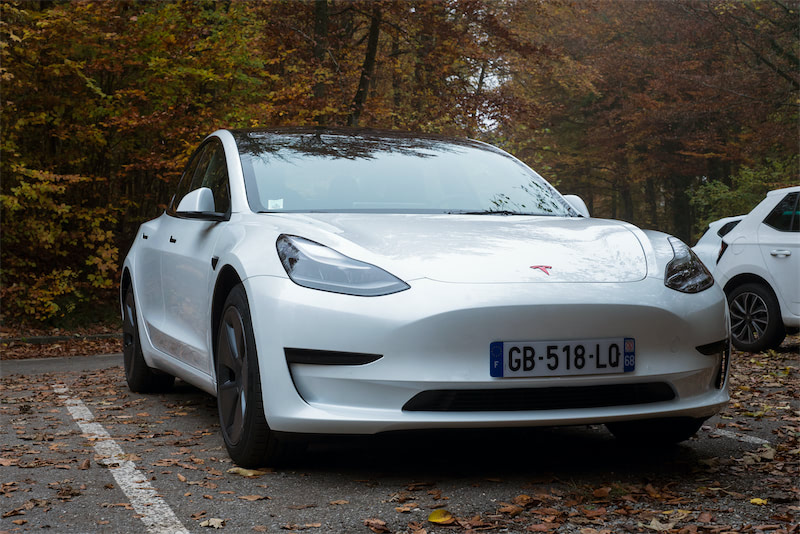
From ternary lithium batteries to lithium iron phosphate batteries, the battery route of electric vehicles did not change overnight. The reporter combed and found that in 2020, six of the top 10 new energy models in the Chinese market have launched lithium iron phosphate versions, including popular models such as Tesla Model 3, BYD Han and Wuling Hongguang Mini EV. Take the domestic Model 3 as an example, after using lithium iron phosphate battery, the car price has been reduced by tens of thousands of yuan.
In January this year, the Euler Black Cat cute version of the battery pack was replaced by a lithium iron phosphate battery. In March, Xiaopeng Automobile took the lead in launching the lithium iron phosphate version P7 and G3. In April, BYD announced that its all-electric passenger models will be equipped with lithium iron phosphate blade batteries. In July, Tesla, who installed a lithium iron phosphate battery on a domestic Model 3 last year, launched a continued version of the Model Y standard equipped with a lithium iron phosphate battery. Moreover, first-tier car companies in overseas markets, including Daimler, Volkswagen and Ford, have made it clear in their exchanges with investors that they will be equipped with lithium iron phosphate batteries on their new energy models in the future.
Coexistence of multi-technology routes
"with the large-scale use of lithium iron phosphate batteries by leading enterprises represented by Tesla, the entire industry has gradually changed its previous prejudice against lithium iron phosphate batteries and made it out of the predicament of low-end." Li Liang, deputy general manager of High Point (Shenzhen) Technology Co., Ltd., said that with the gradual decline of the subsidy policy for new energy vehicles, the era of high energy density in exchange for high subsidies is over. Lithium iron phosphate batteries with better safety and higher performance-to-price ratio have entered the vision of most car companies. "at present, any kind of battery material has its own advantages and disadvantages, no one can be invincible all over the world, the fight is cost-effective."
According to the Caixin Securities Research report, as many car companies represented by Tesla choose lithium iron phosphate batteries for matching, it is expected that the proportion of lithium iron phosphate installed in China will be 60% in 2025, while overseas will also reach 20%. The global medium-and long-term permeability of lithium iron phosphate is expected to reach 35%.
"Lithium iron phosphate production is expected to increase by about 5% month-on-month in December." CICC expects the installation of 2021 iron and lithium to be increased to 45-50 per cent and high nickel to 15-20 per cent. CICC also raised the installed permeability of iron lithium to 54% in 2025.
"the return of lithium iron phosphate batteries is a general trend." Ouyang Minggao, academician of the Chinese Academy of Sciences and vice president of the China Electric vehicle Association of 100, said, "now it is a blade battery, and in the future it will be a CTV, that is, a direct combination of the battery and the car body, but limited by the attenuation of the mileage in winter, ternary lithium batteries also have a market, and eventually it may be a combination of ternary and lithium iron phosphate."
The aforementioned industry insiders said that the strength of lithium iron phosphate does not mean that the ternary battery has stopped burning. At present, the new energy industry has entered a stage of multi-level, multi-type and diversified development. a single technology route is not enough to meet the diversified needs of the market. "different levels of models, different user groups, different prices and uncontrollable factors of the industrial chain will become influencing factors. In the future, there is not an absolute replacement relationship between different power battery technology routes, or the coexistence of multi-technology routes."
"in the power battery market, the market share of lithium iron phosphate will gradually increase, and the proportion of ternary batteries will decrease, but there will still be a need for many high-end models for battery life and high energy density, so ternary batteries will still have market space." Zeng Yuqun, chairman of Ningde Times, had predicted.
![[SMM Analysis] Espera-se que a demanda por níquel médio na China recue, preços dos precursores caem](https://imgqn.smm.cn/usercenter/olwlF20251217171731.jpg)