Recently, the Beijing Fengtai energy storage power plant, which is owned by 002074.SZ, caught fire and exploded, and the energy storage industry has once again been pushed into the focus of market attention. In fact, although it is said to have trillions of market space, due to the security risks, limited profit model and single practical application, the initiative of "players" in the energy storage market is still lacking, and the speed of development is lower than expected. I am afraid that policy support and promotion is an indispensable part of fulfilling its expectations. Correlation analysis points out that due to the low economic benefits of power supply testing and development of energy storage, manufacturers who can provide energy storage solutions may occupy a dominant position, while lithium battery manufacturers will benefit from battery advantages.
The enthusiasm for independent development is not high.
According to a reporter from the Financial Associated Press, energy storage in the power system is usually divided into two categories: physical energy storage and chemical energy storage. Among them, physical energy storage includes pumped energy storage, compressed air energy storage, flywheel energy storage and so on, while chemical energy storage mainly includes various battery energy storage schemes, such as lithium-ion battery, lead-acid battery, sodium-sulfur battery.
Due to the advantages of long life, high energy density and strong environmental adaptability, lithium-ion battery is the main application scheme of chemical energy storage in China. However, its disadvantage is also obvious, that is, the price is still on the high side, and there are certain security risks. It is reported that the Beijing Fengtai energy storage power station partly uses the lithium iron phosphate cell provided by Guoxuan Hi-Tech.
According to the different links of the system, energy storage is mainly divided into two categories: power supply side and user side, in which the power supply side mainly includes power generation side energy storage and Electroweb side energy storage, while the user side can be divided into household energy storage and industrial and commercial energy storage. Cutting peak and filling valley is one of the most typical application scenarios of energy storage on the user side. Users can use the energy storage device to store electricity in the valley period with low electricity price and use the stored energy in the peak period of electricity price.
According to the relevant research report of Chuancai Securities, according to the current construction cost of energy storage system, the peak-valley price difference of 0.6 yuan / KWh can achieve economy. However, at present, the areas where the peak-valley price difference is more than 0.60 yuan / KWh are mainly concentrated in Beijing, the Yangtze River Delta and the Pearl River Delta, and there are still many areas where it is difficult to arbitrage through the peak-valley price difference.
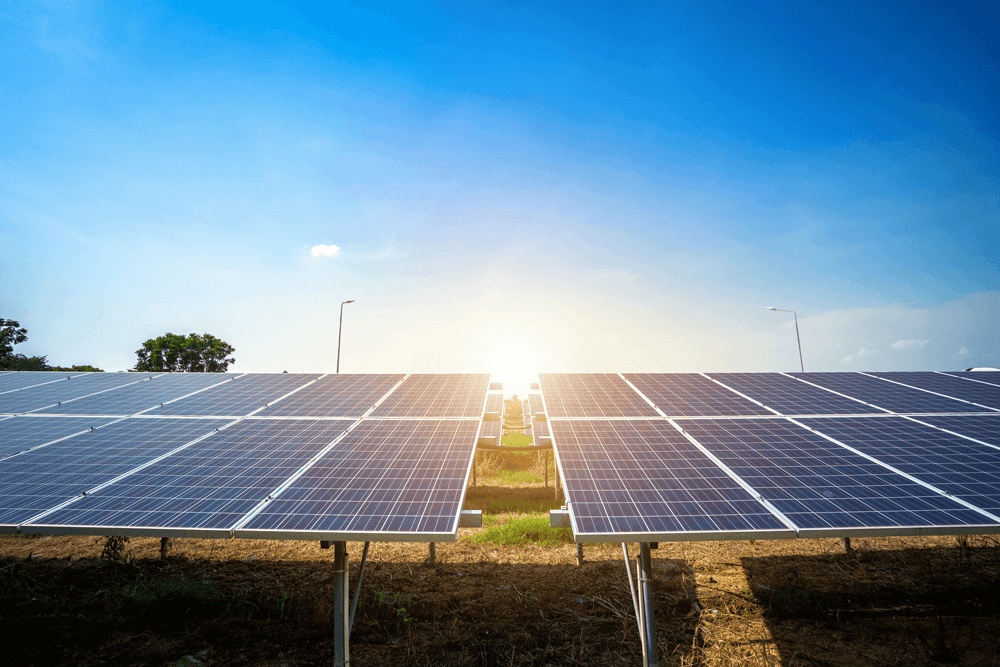
In the supply test, due to the new cost, compensation lack of stability and sustainability, its enthusiasm is not high, mainly driven by local policies. It is reported that Fengguang new energy power generation has initially entered parity, and the addition of energy storage will increase the cost of the power station by 7-15%.
On the other hand, at present, the number of hours of thermal power utilization in China is declining, and the necessity of energy storage is relatively weak. According to the Northeast Securities Research report, the installed capacity of thermal power has increased from 710 million kilowatts in 2010 to 1.245 billion kilowatts in 2020, while the number of hours of utilization has dropped from more than 5000 hours to 4216 hours in 2020.
As the domestic scenery with energy storage is not yet equal, the additional investment cost of energy storage is difficult to be included in the electricity price cost, so the power supply side is not active in matching energy storage. Industry insiders of a listed company in a power plant told the Financial Associated Press that since the cost of equipment has not yet come down and the policy support in some provinces is not clear, power supply side parity has not yet been achieved. On this basis, the cost of Fengguang power generation is already high, and the allocation of energy storage is not a cost-effective business.
Lithium giant may be the biggest winner
From the point of view of the whole power system, energy storage is regarded as an indispensable link in the process of energy transformation. According to Everbright Securities, the market space for energy storage investment will reach 1.3 trillion yuan in 2030. At the same time, according to incomplete statistics, more than 10 provinces have put forward specific quantitative requirements for the energy storage ratio of new energy, and the energy storage allocation ratio of most provinces is between 10% and 20%. Among them, Qinghai, which introduced the country's first energy storage subsidy policy, requires that, in principle, the energy storage capacity of new energy projects should not be less than 10% of the installed capacity of the project, and the energy storage time should be more than 2 hours.
However, in view of the fact that the development of the energy storage industry on the power supply side has not been benefited at present, the manufacturers who can provide energy storage solutions may occupy a dominant position.
In the cost composition of the energy storage system, the battery is the most important part of the energy storage system, accounting for 60% of the cost, followed by the energy storage inverter, accounting for 20%. As the above two parts are the core links of both high value and high barriers, the main domestic manufacturers take this as a starting point to grasp the discourse power of the energy storage industry chain.
Many lithium power plants have begun to be laid out. Domestic lithium leader Ningde Times (300750.SZ) has successively established joint ventures with Xingyun (300648.SZ), 002518.SZ, 300376.SZ, State Grid Integrated Energy and other inverter and energy service companies, and at the end of last year joined Yongfu shares (300712.SZ), a power plant construction contractor, and Yongfu shares jointly laid out photovoltaic and energy storage fields with Ningde Times "official Xuan" at the beginning of this year.
In addition, Guoxuan Hi-Tech entered the field of battery energy storage as early as September 2016, cooperating with the 11th Electronic Institute, Beijing Fuwei, Shanghai Electric, National Electroweb, Jiyuan Software and other companies / units. In October last year, Huang Zhangxi, vice president of Guoxuan Hi-Tech, publicly revealed that the company plans to achieve 40 billion yuan in revenue in 2023, of which the energy storage business is more than 30%.
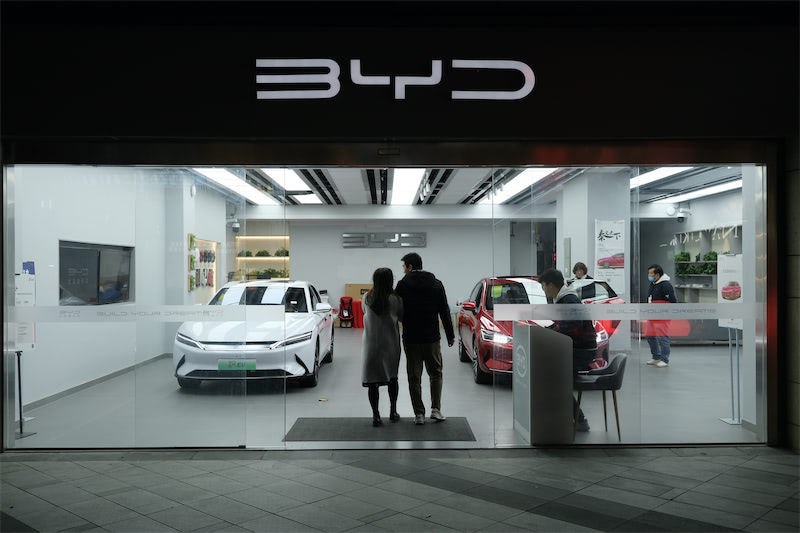
In addition, last year, 002594.SZ also launched Electroweb energy storage products and household energy storage products.
However, both Ningde era and BYD entered the bureau through cooperation and equity participation, while 688063.SH is one of the few listed companies in China that can provide one-stop energy storage system solutions. According to IHS, the company's market share of household energy storage system shipments reached 8 per cent in 2019.
![[Bateria de estado sólido: produção de eletrólito de sulfeto 70 t, janeiro-agosto]](https://imgqn.smm.cn/usercenter/Bwmed20251217171726.jpg)
![[SMM Analysis] Europa busca independência na cadeia de suprimentos de lítio, mas seus projetos atraem investidores asiáticos](https://imgqn.smm.cn/usercenter/nVnLo20251217171728.jpg)