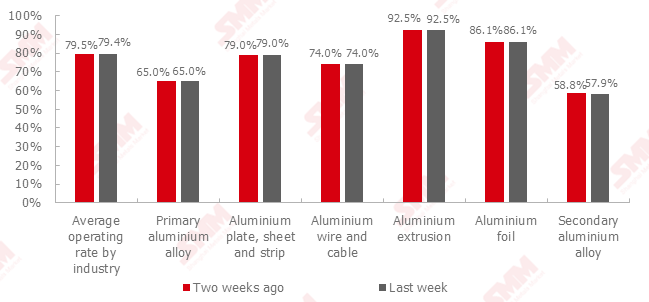
SHANGHAI, Jun 17 (SMM) – SMM surveyed 41 major aluminium processors in 12 provinces and the average operating rate remained largely flat from the previous week at 79.4% last week. Demand from the construction, home appliance and medical sectors remained strong, with robust orders for construction extrusion, ground mount solar panels, air-conditioner foil, packaging foil and medical foil.
Operating rates at major aluminium processors are expected to remain in the short term, based on current orders. High aluminium prices have significantly cooled the buying interest of downstream producers. As it takes time for overseas demand to recover, operating rates are unlikely to increase and finished product inventories will gradually increase at aluminium processors.
Operating rates at major aluminium processors by industry (updated on Jun 12)
Source:SMM
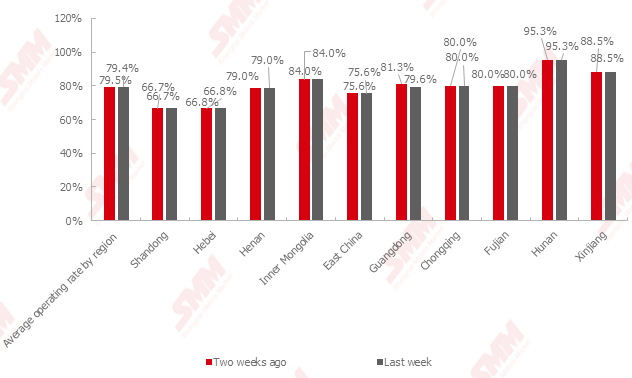
Operating rates at major aluminium processors by region (updated on Jun 12)
Source:SMM
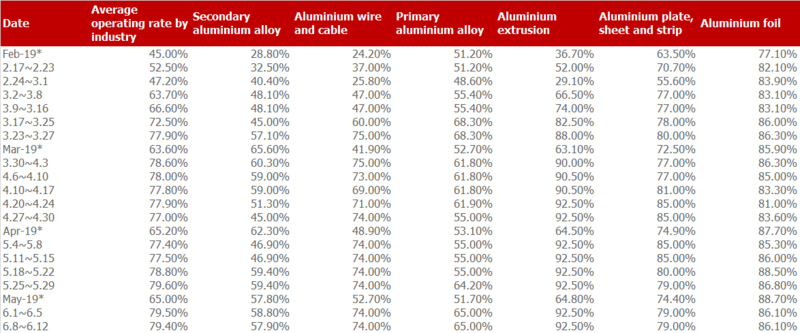
Weekly operating rates at major aluminium processors by industry
Source:SMM
Note: * denotes the monthly operating rates.
Primary aluminium alloy: Operating rates at primary aluminium alloy producers stabillised at 65%. Operating rates at aluminium wheel plants stood at 60-70% and are expected to remain at current low levels till July. Increased supply lowered ex-factory processing fees of A356.2 aluminium alloy in Wuxi to a low of 620 yuan/mt from 900 yuan/mt in mid-May when the switch to production of aluminium billets tightened aluminium alloy supply. Processing fees remained stable at 750 yuan/mt under long-term contracts.
Aluminium plate/sheet and strip: Operating rates at large aluminium plate/sheet and strip producers remained stable, but are likely to decline in the second half of June as new orders have increased at a much slower rate since late May. Domestic orders will be insufficient to make up for the decline in export orders, which are not expected to recover in the medium term. Demand for can end and tab stock remained strong, while demand for automotive sheets remained weak. Orders for construction and decorative plate and strip showed signs of weakening. Some of the producers reported high-than-normal finished product inventories as high aluminium prices kept clients hesitant about taking delivery of goods.
Aluminium wire and cable: Operating rates at large aluminium wire and cable producers remained unchanged and are unlikely to fall sharply in the near term as backlog orders could sustain production throughout June. Large producers in Jiangsu and Shandong kept operating rates above 70% and are in a rush to meet upcoming deadlines. New orders were limited. Most of the producers said the foreign trade market had limited impact on their production as COVID-19 did not have significant impact on exports to Africa, Southeast Asia and Central Asia, which are major export destinations. Only a few producers are concerned about exports. A majority of the producers have shifted their attention to tenders from State Grid and China Southern Power Grid in H2.
Aluminium extrusion: Operating rates at aluminium extrusion producers remained stable. Construction extrusion producers maintained stable operating rates on the back of robust demand, while industrial extrusion production recovered slightly. Demand from power and PV sectors was very strong, while demand from transport and machinery sectors was moderate. Exports are likely to continue to decline till Q3, given the slow recovery of overseas demand and potentially another round of COVID-19 outbreak. Producers were cautious about restocking and partially replaced domestic aluminium ingots with imported ingots in response to sharply rising aluminium prices and continued declines in aluminium billet processing fees. Production at large producers is likely to remain largely stable in June.
Aluminium foil: Operating rates at large aluminium foil producers remained stable. Large producers in Jiangsu, Henan and Zhejiang are expected to keep operating rates above throughout June as production schedules for current orders are about 1-2 months. Demand for air-conditioner foil, soft packaging foil and medical foil remained strong, while demand for battery foil and electronics foil was moderate.
Secondary aluminium alloy: Operating rates at large secondary aluminium alloy producers fell slightly to 57.9% due to maintenance at some of the producers. Demand for motorcycles, engineering vehicles, machinery equipment and civil-use products was moderate, which mainly use non-standard aluminium alloy ingots. Demand from passenger vehicles, the main downstream sector, remained lacklustre. Exports showed no signs of recovering. Traders preferred cheaper imported aluminium alloy ingots.
Aluminium billet: Aluminium billet processing fees continued to decline as downstream producers refrained from buying at high prices. The price advantage of scrap aluminium over primary aluminium did not increase. Aluminium billet producers will not increase the ratio of aluminium scrap use unless aluminium billet processing fees fall to 300-400 yuan/mt. Substitution of primary aluminium for aluminium scrap is likely to wane further in June due to continued declines in aluminium billets processing fees. Extra consumption of primary aluminium due to replacement of aluminium scrap is estimated to decline to 100,000 mt in June.