Titanium Concentrate
This week, domestic titanium concentrate (TiO2≥46%) was quoted at 1,050-1,100 yuan/mt, with an average price of 1,075 yuan/mt. The TiO2≥47% specification was quoted at 1,100-1,150 yuan/mt, with an average price of 1,125 yuan/mt. Mozambique-origin TiO₂≥46% titanium concentrate was quoted at 1,050-1,080 yuan/mt, with an average price of 1,065 yuan/mt. Nigeria-origin TiO₂≥50% titanium concentrate was quoted at 1,200-1,300 yuan/mt, with an average price of 1,250 yuan/mt. Australia-origin TiO₂≥50% titanium concentrate was quoted at 1,300-1,350 yuan/mt, with an average price of 1,325 yuan/mt. Titanium concentrate prices were flat this week.
This week, the titanium concentrate market was in the doldrums. On the supply side, some domestic titanium concentrate enterprises incurred losses and made minor production cuts or suspensions, but new production release continued to emerge, and port import ore inventory stayed high, keeping supply under persistent pressure with low-priced cargoes continuing to surface. On the demand side, although downstream titanium dioxide enterprises maintained high operating rates, the titanium dioxide market was weak, and enterprises only made just-in-time procurement while pushing for lower prices on raw materials. Overall, miners' losses widened but prices lacked momentum for a rebound, and short-term prices remained more likely to fall than rise.
Titanium Dioxide
This week, anatase titanium dioxide quotations closed at 11,700-12,300 yuan/mt, with an average price of 12,000 yuan/mt. Rutile titanium dioxide quotations closed at 11,800-14,000 yuan/mt, with an average price of 12,900 yuan/mt. Chloride-process titanium dioxide prices closed at 14,000-16,800 yuan/mt. The titanium dioxide market drifted lower this week.
This week, the titanium dioxide market extended its decline. On the supply side, the high operating rate at titanium dioxide enterprises remained unchanged, with most enterprises maintaining stable or full production, keeping supply pressure undiminished. On the raw material side, titanium concentrate prices were in the doldrums, and sulphuric acid prices diverged regionally, but the overall weak trend continued to weaken cost support, further suppressing the market. On the demand side, the arrival of the off-season, combined with some front-loaded orders from earlier, led to low purchase willingness and continued price pushing for titanium dioxide at this stage, causing multiple headwinds to converge and drive the titanium dioxide market lower. In the short term, supply pressure remains undiminished, signs of demand recovery are weak, and the market is likely to remain in the doldrums.
Titanium Slag
This week, acid-soluble titanium slag (Sichuan) was quoted at 3,400-3,600 yuan/mt, and mainstream quotations for ordinary 90 titanium slag were 5,200-5,300 yuan/mt.
This week, the titanium slag market was in the doldrums. High-titanium slag quotations were largely stable, with strong wait-and-see sentiment in the market and undiminished supply pressure. Acid-soluble slag was affected by persistently shrinking downstream demand, coupled with rising electricity costs during the dry season, putting significant production and sales pressure on enterprises. Overall, the titanium slag market faced weak demand and rising costs, with sluggish transactions, so the market still lacked upward momentum in the short term and was expected to remain in the doldrums.
Titanium Sponge
This week, grade 0 titanium sponge was quoted at 41,000-43,000 yuan/mt, with an average price of 42,000 yuan/mt. The FOB average price for grade 0 titanium sponge was $6,450/mt. Grade 1 titanium sponge was quoted at 40,000-42,000 yuan/mt, with an average price of 41,000 yuan/mt. Grade 2 titanium sponge was quoted at 39,000-41,000 yuan/mt, with an average price of 40,000 yuan/mt.
This week, the titanium sponge market remained stable. On the supply side, titanium sponge enterprises continued to maintain high operating levels, and under stable or full production conditions, overall supply pressure remained undiminished. Earlier, some producers completed a certain degree of inventory destocking through price-cut sales promotions, which subsequently lifted their willingness to hold prices firm. However, the overall weak industry pattern had not yet been reversed, and enterprises had weak willingness to further lower prices. Demand remained persistently sluggish, and the earlier low-price sales only temporarily alleviated inventory pressure, with no substantive recovery signals downstream. The sustainability of procurement and stockpiling still needed to be observed. Overall, the titanium sponge market was likely to remain in the doldrums in the short term.
Titanium Materials
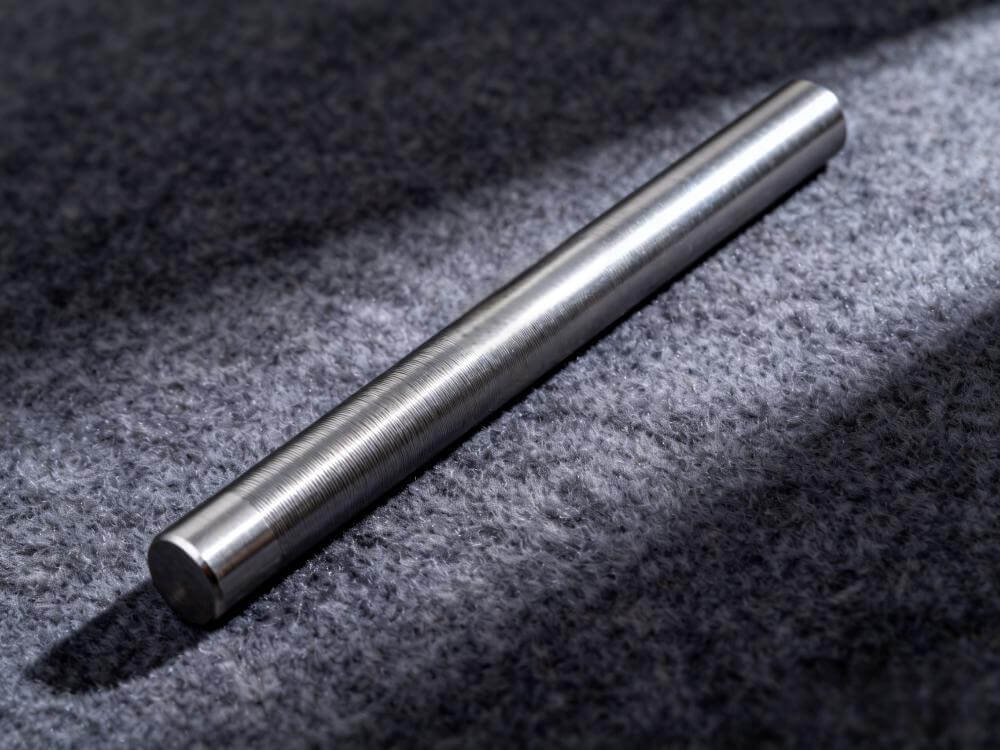
This week, TA1 titanium ingot prices were 53-55 yuan/kg, TA2 titanium ingot prices were 52-53 yuan/kg, and TC4 prices were 62-64 yuan/kg. This week, hot-rolled titanium plate (3-8mm) was quoted at 63-67 yuan/kg, titanium welded pipe was quoted at 105-110 yuan/kg, pure titanium bar was quoted at 105-110 yuan/kg, and pure alloy bar was quoted at 120-125 yuan/kg.
This week, the titanium materials market also showed pronounced weakness. Titanium pipes were dragged down by chemical and civilian product orders, with prices stable but transactions sluggish. Titanium bars relied on high-end military and aerospace grades for bottom support, while civilian product competition was fierce. Titanium plates showed huge price spreads by specification and grade, with chemical anti-corrosion plates mired in intense involution. Titanium sponge, as the raw material for titanium ingots, remained in a rigid surplus predicament of high operating rates, high inventory, and low transactions despite prices already at low levels and losses emerging. Overall, all product categories lacked substantive demand boost, and the market was likely to remain in a low-level stalemate in the short term.
Weekly Summary
This week, the titanium industry chain was generally in the doldrums. Titanium concentrate supply and demand were under pressure, with domestic ore seeing minor production cuts but incremental cargoes continuing to be released. Combined with high port import ore inventory and the outflow of low-priced cargoes, downstream titanium dioxide plants only made just-in-time procurement with significant price pushing, leaving ore prices flat but more likely to fall than rise. Titanium dioxide prices declined across all specifications, with the industry maintaining high operating rates, weakening cost support from raw materials, and downstream entering the off-season with earlier front-loaded orders, resulting in insufficient new order follow-through and persistently pressured transactions. Titanium slag consolidated weakly, with undiminished supply pressure. Acid-soluble slag faced significant production and sales pressure due to shrinking downstream demand and rising electricity prices during the dry season, with sluggish market inquiries and insufficient upward momentum. Titanium sponge remained stable, with enterprises maintaining high operating rates. After earlier price-cut sales promotions digested some inventory, willingness to hold prices firm increased, but downstream demand remained weak with no substantive recovery signals, keeping the market in the doldrums in the short term. Titanium materials showed pronounced divergence, with insufficient chemical and civilian product orders, sluggish transactions, intensifying market involution, and high-end military and aerospace grades providing support, but limited volume made it difficult to lift the broader market. The entire chain lacked demand boost, and the low-level stalemate pattern persisted.
Outlook
In the short term, the titanium market's overall weakness is difficult to reverse and is expected to persist. Supply-demand imbalance remains the core factor suppressing the market. Upstream titanium concentrate, titanium dioxide, and titanium sponge are all in a state of high supply and low demand, with no signs of demand recovery emerging in the short term. Apart from enterprises proactively cutting prices to facilitate some transactions, overall market transactions are sluggish. Therefore, the titanium market is expected to remain in the doldrums in the short term.