SMM, November 6:
According to SMM data, the operating rate of secondary copper rod producers stood at 13.82% this week, up 1.83 percentage points WoW but down 13.75 percentage points YoY. Meanwhile, the average price difference between copper cathode rod and secondary copper rod was 1,445 yuan/mt, up 578 yuan/mt WoW. In addition, the average premium of secondary copper rod in Jiangxi against copper futures was 590 yuan/mt, up 24 yuan/mt WoW. Based on SMM's gross profit model for secondary copper rod sales, the average weekly gross profit was 417 yuan/mt, down 243 yuan/mt WoW.
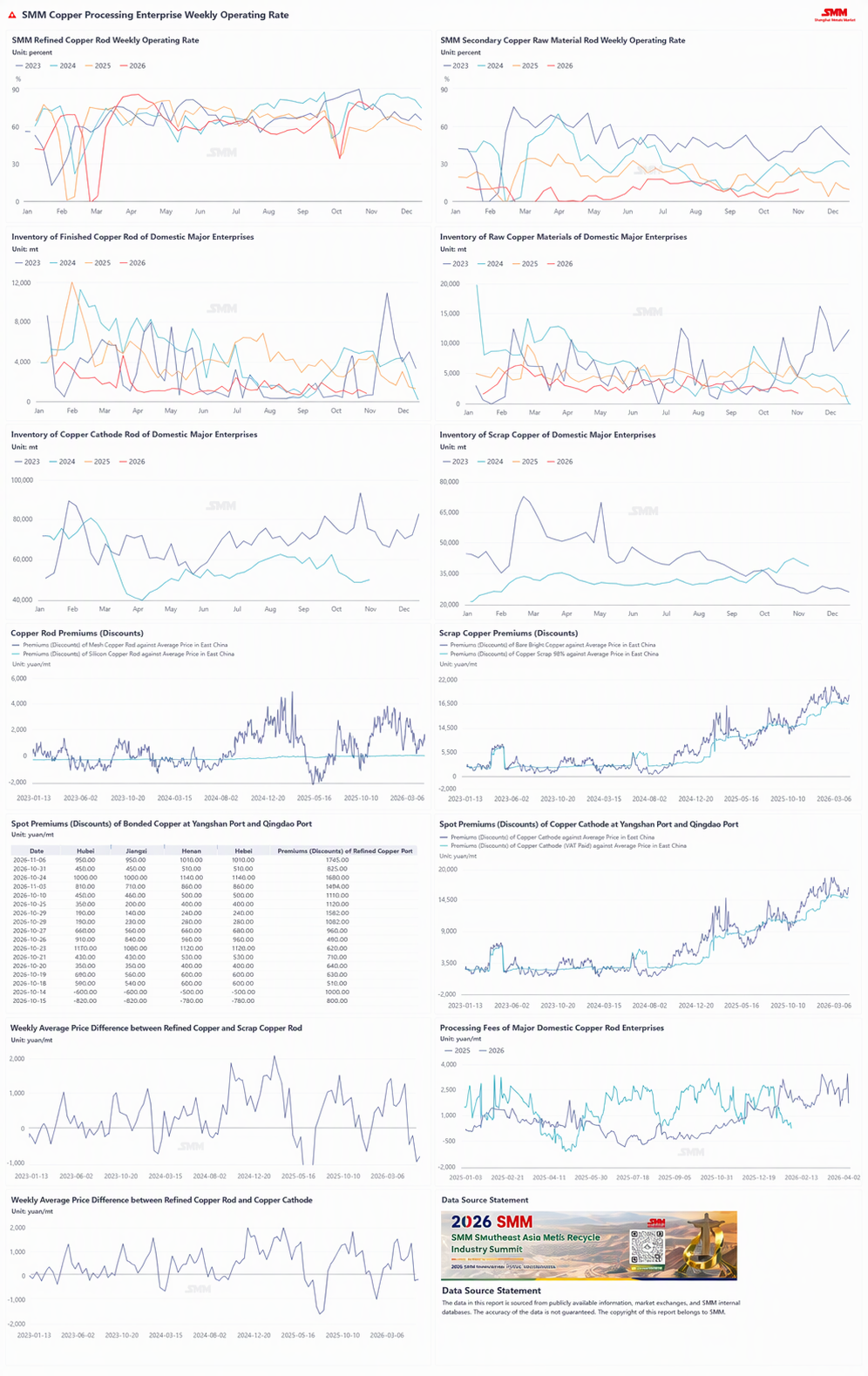
This week (October 30 to November 5), the secondary copper rod market was dominated by high copper cathode premiums. Spot copper cathode premiums climbed from 1,225 yuan/mt to 2,100 yuan/mt, with a single-day jump of 600 yuan/mt on November 4 that disrupted the futures-spot structure. The price difference between copper cathode rod and secondary copper rod pulled back from 1,390 yuan/mt to 1,040 yuan/mt before sharply recovering to 2,080 yuan/mt by the end of the week. The repeated shifts in apparent substitution advantages did not translate into smooth growth in physical purchases. Throughout the week, the overall sales sentiment index for copper scrap fell from 2.48 to 2.37, while the purchasing sentiment index dropped from 2.09 to 2.00. Both buyers and sellers turned more cautious, and the market showed a stalemate characterized by "copper prices falling without looser supply, and spreads widening without stronger transactions." Secondary copper rod enterprises showed increased purchasing interest during the copper price pullback. On November 3, end-user orders rose as copper prices declined, and enterprises' demand for raw materials naturally rebounded. Intraday trading was mainly driven by mills actively seeking cargoes. However, faced with traders holding prices firm and shifts in pricing benchmarks, rod enterprises generally chose to wait for copper prices to stabilize before resuming regular procurement. The purchasing sentiment index fell instead of rising, to 2.00, with overall activity still focused on restocking as needed and controlling order volumes. Although the price difference between copper cathode rod and secondary copper rod widened to 2,080 yuan/mt by the end of the week, raw material premiums and invoice tax rates eroded most of the spread benefits, leaving the improved economics of secondary copper rod versus copper cathode rod largely on paper. Notably, spot copper scrap premiums against futures also changed the order pricing logic for scrap-derived copper anode enterprises: spot orders for copper anode are typically settled based on the buyer's pricing against futures, but with raw materials already at a premium to futures, the mismatch in pricing benchmarks between production and sales has created relatively certain losses and loss exposure for spot order deliveries. To avoid price risks under this pricing mechanism, some scrap-derived copper anode enterprises proactively adjusted their product mix and switched back to producing secondary copper rod. This shift marginally increased the supply sources for secondary copper rod on one hand, while on the other hand intensifying procurement competition for already tight tax-inclusive copper scrap. However, before invoice constraints and raw material premiums ease, the actual production release from this switch remains relatively limited.
Overall, this week the core contradiction in the secondary copper rod market has evolved from the earlier "tax-inclusive material cannot be sourced, tax-exclusive material cannot be sold" into a triple mismatch: high copper cathode premiums have reset the pricing basis for copper scrap, suppliers holding back from selling and warehouse receipt-based pricing have dominated circulation, and rod enterprises have adopted a wait-and-see approach to procurement. The restocking demand that should have been released by lower copper prices has been offset layer by layer by spot premiums, shifts in quotation methods, and losses. The shift in production triggered by losses on spot orders for copper anode has become a new variable on the supply structure side.

As the world's largest copper consumer, China's industry chain faces three major challenges: rising dependence on upstream resources from external sources, overcapacity in midstream processing, and downstream demand suppressed by high copper prices. To help the industry navigate the changes, SMM has joined forces with copper industry chain enterprises to compile the "2026 China Copper Industry Chain Distribution Map" in both Chinese and English. Click this link to receive a free copy of the copper industry chain distribution map: . SMM joint production contact: Liu Mingkang 156 5309 0867