SMM, November 3:
I. Prices: Prices resumed their rise in late October
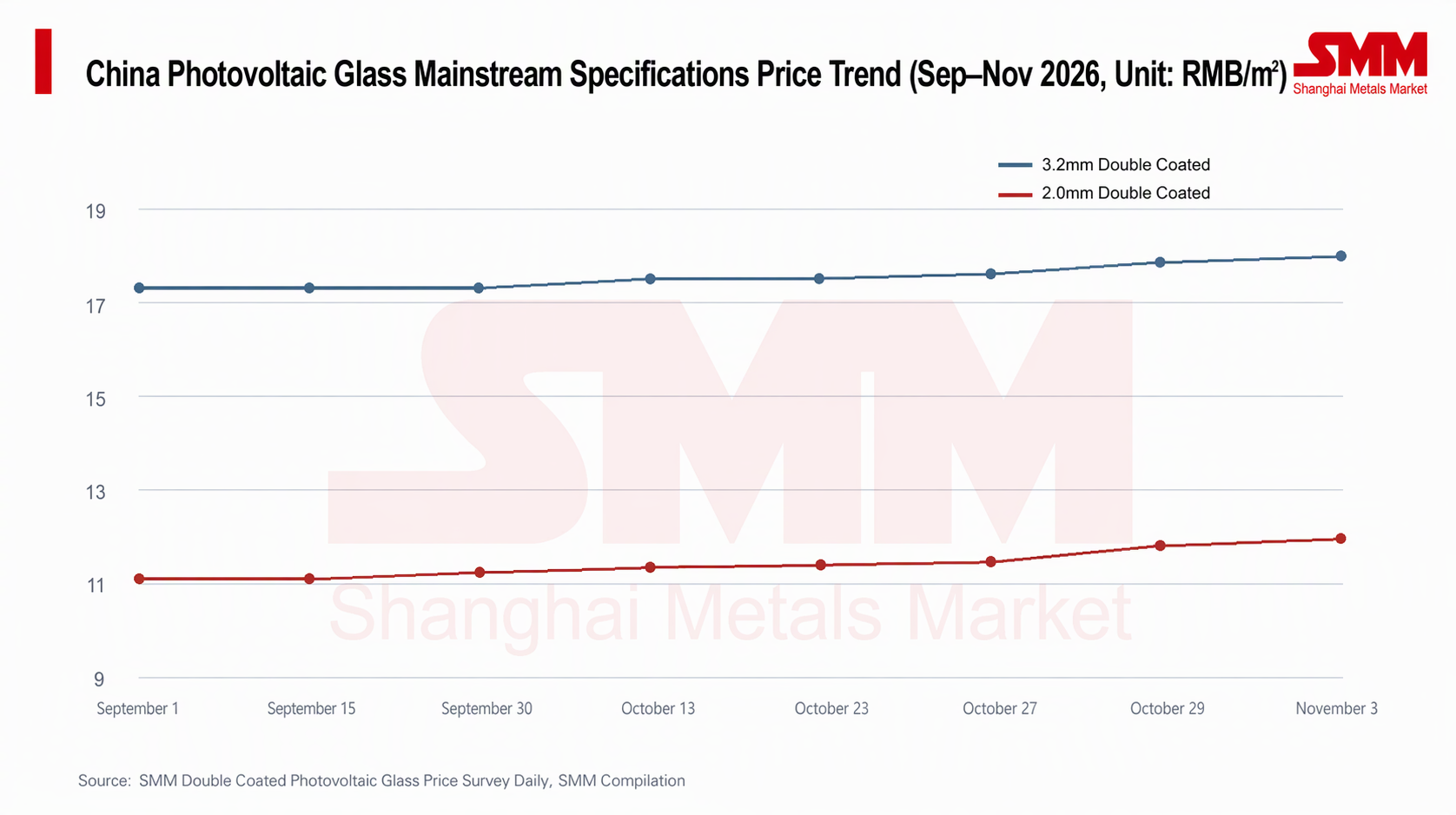
In September 2026, PV glass prices were generally in a plateau phase: the average price of 3.2mm double-layer coating held steady at 17.3 yuan/sqm, while 2.0mm double-layer coating slowly climbed from 11.1 yuan/sqm to 11.25 yuan/sqm. The turning point came in late October—starting around October 26, quotations for both specifications entered a rapid upward channel: 3.2mm rose from 17.5 yuan/sqm to 18.0 yuan/sqm on November 3, and 2.0mm rose from 11.4 yuan/sqm to 11.95 yuan/sqm, up 2.9% and 4.8% respectively within about a week, as previously accumulated repair momentum was released in a concentrated manner.
From early September to date, 3.2mm double-layer coating has risen by about 4.0% cumulatively (17.3→18.0 yuan/sqm), and 2.0mm double-layer coating has risen by about 7.7% cumulatively (11.1→11.95 yuan/sqm). The price elasticity of 2.0mm is nearly twice that of thick glass, extending the pattern of stronger demand support from dual-glass and distributed scenarios.
From a quotation perspective, the market quotation range has shifted upward overall: 3.2mm double-layer coating is quoted at 17.5–18.5 yuan/sqm and 2.0mm double-layer coating at 11.5–12.2 yuan/sqm. However, the current price increase is more about higher quotations, and actual transactions have not fully followed yet; downstream acceptance of higher prices remains to be seen.
II. Inventories: Continued destocking, but a bargaining cycle is approaching
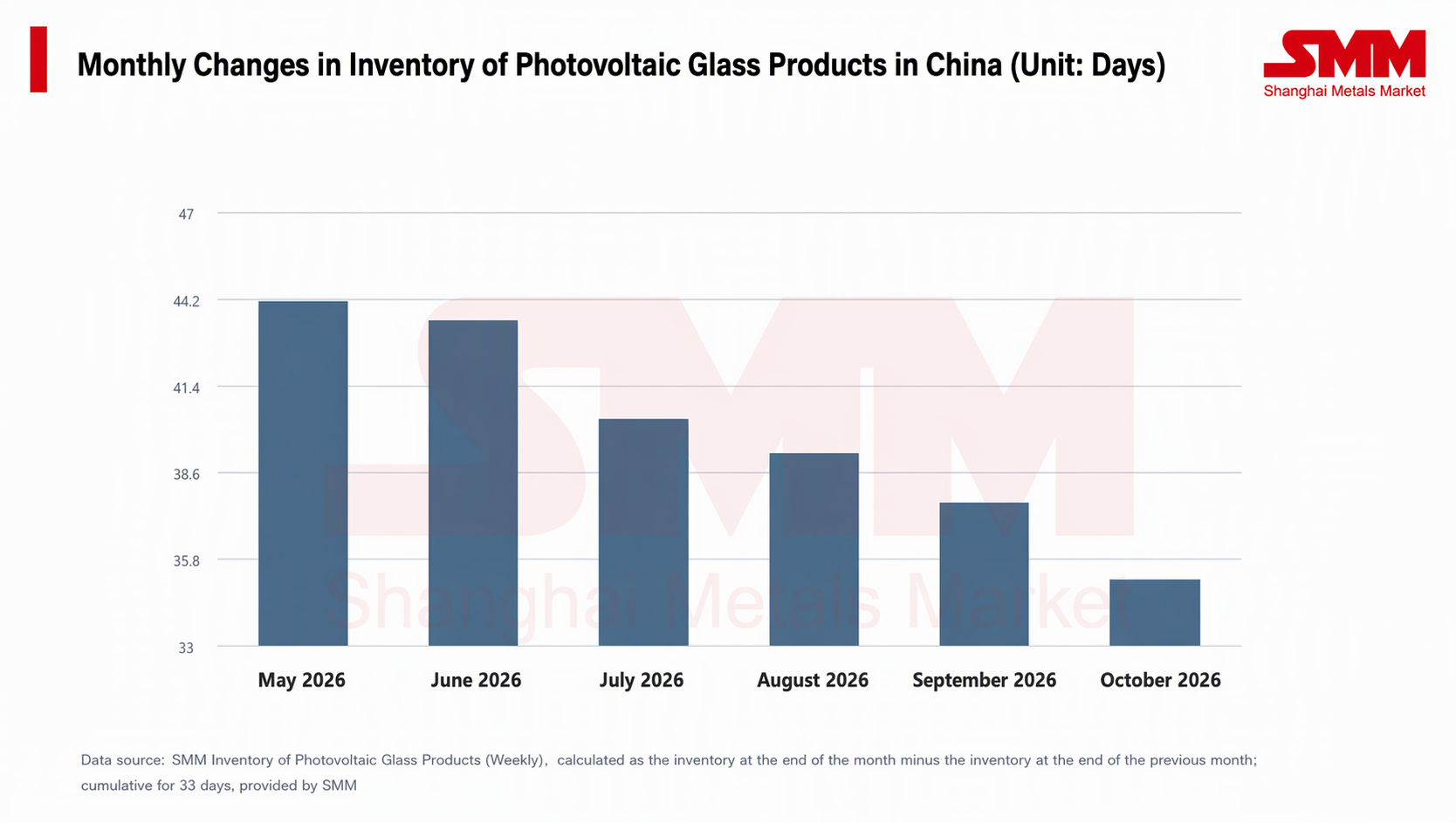
The sustainability of the price increase is directly tied to inventory performance. Since the mid-year high, PV glass finished product inventories have been on a pullback trajectory overall, with a clear destocking trend. By end-October, days of inventories had fallen to around 35 days, down more than 20% from the mid-year peak (about 46 days). However, the destocking process has not been smooth: in early October, inventories saw a weekly rebound at one point, reflecting ongoing fluctuations in the match between downstream uptake and production schedule pace.
More notably, recent transaction activity has weakened marginally, and the market is expected to enter a period of intense price bargaining, with shipment pace likely to slow down in stages. This means the "reservoir" effect of inventories has not been fully eliminated—once demand weakens marginally, inventory pressure on prices will re-emerge, limiting the upside slope of prices.
III. Supply: Production cuts and suspensions continue, with proactive supply-side contraction
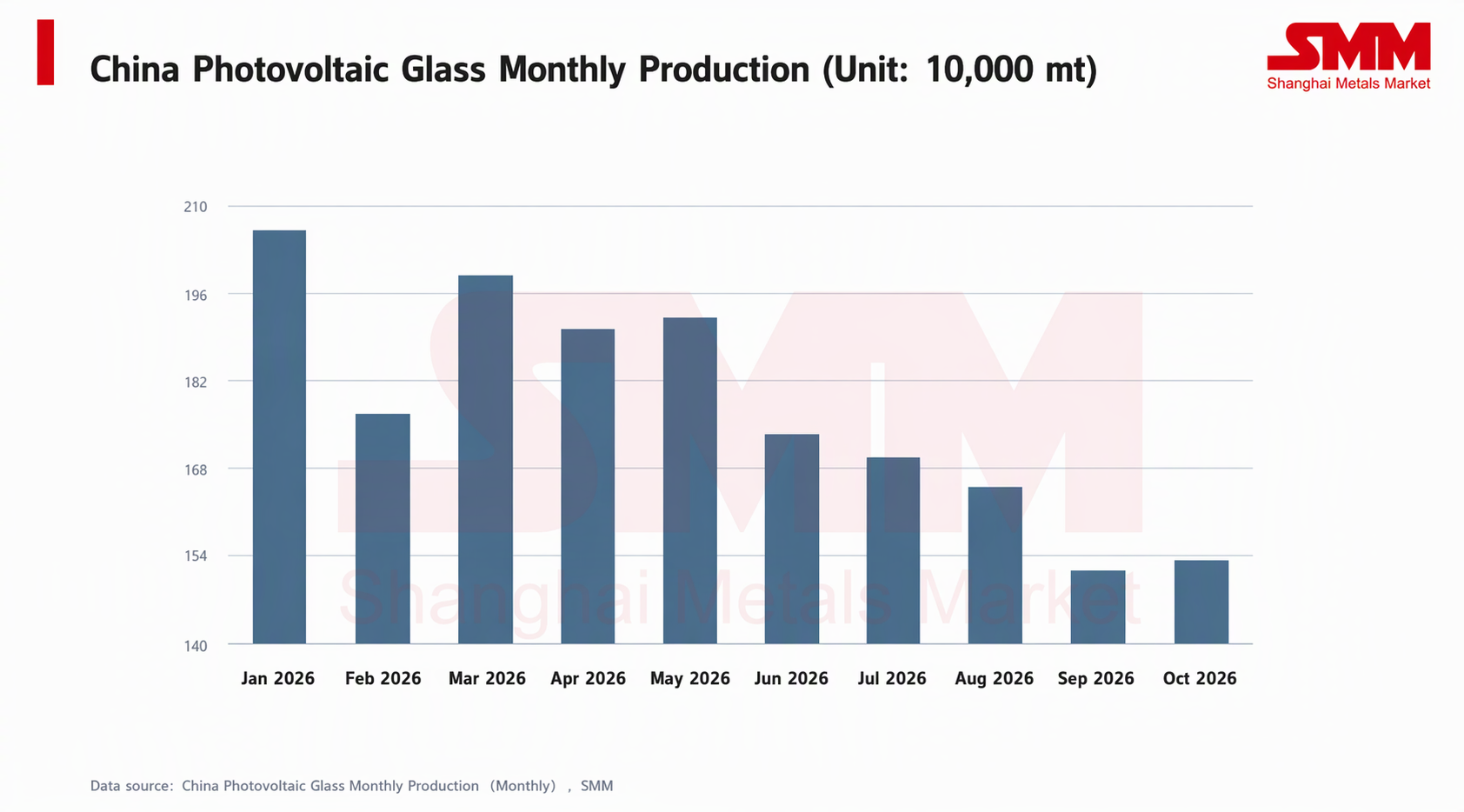
The fundamental support for this round of price repair lies in the substantial contraction on the supply side. Monthly PV glass production has continued to decline since the spring peak, falling to a year-to-date low in September and remaining basically flat in October. Meanwhile, recent operating rates have been affected by fewer production days and earlier production cuts and suspensions at top-tier players, and November supply is expected to edge down again marginally, with in-operation capacity contracting in tandem.
In the absence of an unexpected surge in demand, the supply gap created by proactive production cuts is the key factor allowing current prices to hold within the repair range. But precisely because the supply side relies mainly on "proactive contraction," its elasticity is considerable—once prices recover above the cash cost line and the willingness to resume production at cold-repaired lines strengthens, production replenishment will directly weaken upward momentum. This is a variable that warrants close tracking going forward.
IV. Cost support: Stronger fuel prices provide a floor
On natural gas, as the core fuel for furnaces, its price has been on a sustained upward trajectory since August with no slowdown in slope: taking the average price in the Hebei LNG market as an example, it was about 5,600 yuan/mt in early August and climbed further to above 7,900 yuan/mt by early November, a cumulative increase of about 40%. It has continued to shoot up from October to date, becoming the most prominent upward driver on the glass cost side recently. Although Hebei LNG reflects more of spot peak-shaving gas source prices and there is a price spread with the long-term contracted pipeline gas signed by glass enterprises, its trend clearly points to tighter gas supply and a higher fuel cost center as the heating season approaches.
V. Outlook: Quotations shift higher but transmission is limited; consolidation with a slight upward bias dominates
Entering November, the core contradiction in glass prices has shifted from "whether they can rise" to "how high they can rise." At the month-end enterprise meeting, it was agreed to uniformly raise quotations for new November orders, with some specifications (such as 2.0mm single-layer coating) intended to hold prices firm at 11.5 yuan/sqm, and the quotation level has shifted up notably overall. SMM data shows that actual average prices for double-layer coating in early November have continued to rise from October.
However, it must be clearly recognized that the transmission of price increases to end-users is not smooth. Module prices have been weak recently, and module makers continue to push for lower raw material prices, showing low acceptance of high-priced glass; actual transactions have not fully followed the higher quotations. At the same time, module scheduled production has not shown significant growth, lacking incremental demand-side pull. Therefore, November glass prices are more likely to show a consolidation pattern of "firm at highs, more likely to rise than fall, but with limited upside":
On one hand, stronger cost support (especially fuel), continued production cuts and suspensions on the supply side, and ongoing inventory destocking together form a price floor, leaving limited downside. On the other hand, module resistance and weak scheduled production create a ceiling, and the market is about to enter an intense bargaining cycle with shipment pace likely to slow, limiting further gains. If module scheduled production recovers or fuel prices continue to shoot up, upside room is expected to open; conversely, if module-side price pressure transmits further and cold-repaired lines show signs of resuming production, prices may return to consolidation at highs.