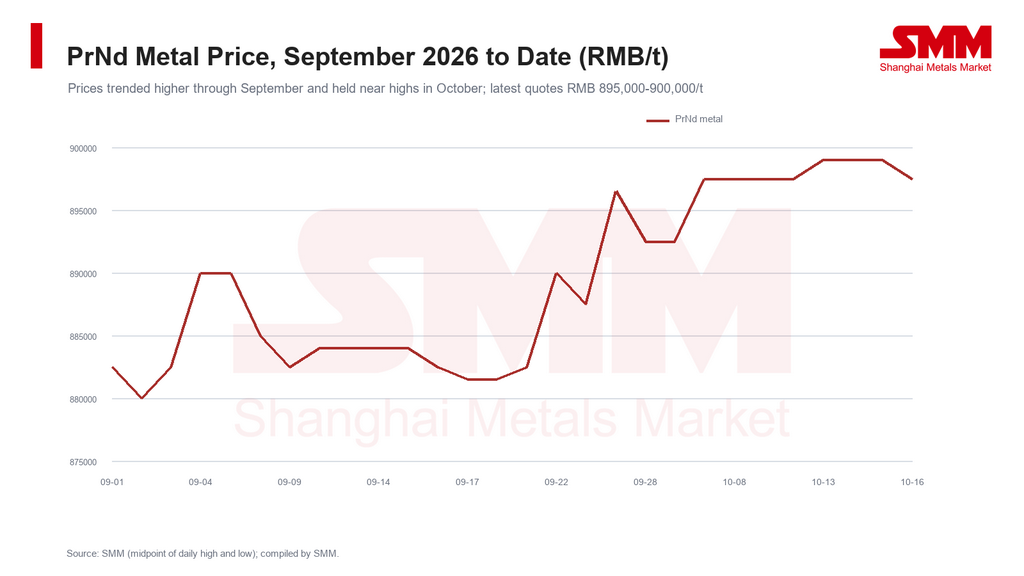
SMM weekly review, October 16, 2026 — Praseodymium-neodymium (PrNd) metal prices in China held near recent highs this week, edging higher before flattening out. As of October 16, PrNd metal was quoted at RMB 895,000-900,000/t on a delivered basis including 13% VAT, having touched RMB 903,000/t during the week. The weekly average of RMB 898,400/t was up just 0.10% from the previous week, based on the midpoint of daily high and low quotes.
Raw material moved the other way. The weekly average price of praseodymium-neodymium oxide rose 0.47% week on week, narrowing the spread between metal and oxide for a second consecutive week. The gain in metal prices was cost-driven rather than demand-led — and trade never confirmed it.
Quotes stalled at the highs as trade failed to confirm the rally
The PrNd chain stayed firm this week, but upward momentum faded noticeably. Quotes held steady early in the week as downstream buyers stuck to just-in-time purchasing. Midweek, procurement by a leading producer lifted oxide offers and tightened low-priced supply, forcing metal producers to pass through higher raw material costs; metal quotes were raised modestly. By the end of the week, oxide prices had settled into a narrow range and metal quotes held unchanged, with neither costs nor trade offering a fresh reason to move, before easing slightly on the final day.
Trading remained the weak spot. According to SMM research, magnet makers continued to buy only against immediate needs and showed limited appetite for higher offer levels, so concluded deals lagged and volumes never broke out. Prices have risen on costs and have yet to be confirmed by transaction volumes.
Costs kept climbing and margins turned negative again
Cash costs for PrNd metal producers extended their climb this week, with the weekly increase widening from the prior week. The pressure came almost entirely from oxide prices, while metal quotes barely moved.
The margin outcome reflected that squeeze. According to SMM's weekly estimates, PrNd metal net profit briefly turned positive in the week to October 9 — the first positive reading since the current inversion began — before falling back into negative territory this week. The recovery in processing margins did not hold, and producers remain in a cost inversion.
Supply is tightening while downstream restocking lags
Supply continues to contract. China's PrNd metal output fell month on month in September, ending five consecutive months of gains, and low operating appetite points to a further decline in October schedules as the inversion persists.
Demand presents a split picture: schedules point up, but actual buying has not followed. Output of neodymium-iron-boron (NdFeB) magnet blanks rose slightly month on month in September, and October schedules imply a larger increase. According to SMM research, however, motor makers are still working through monthly orders, end-use consumption remains soft and restocking interest is limited, with no large-volume orders yet released. The stronger schedule expectations still need to be validated by orders.
On the balance sheet, the PrNd metal market swung from a modest surplus in August to a small deficit in September, with the deficit expected to widen in October. Tightening supply is providing some support to prices.
Outlook: capped by demand, floored by costs
Next week, PrNd metal prices are likely to stay rangebound at high levels — capped by demand and floored by costs. Three variables matter.
Costs. Whether oxide prices hold at their highs or extend gains. If raw-material producers keep defending offers, costs will keep accumulating, the inversion will persist and production cuts could spread further. A shift into consolidation would ease the pressure and allow margins to recover.
Trade. Whether magnet makers move from just-in-time buying to bulk restocking. October magnet schedules point to a stronger month; if orders land and volumes pick up, metal prices could break higher. If concluded deals stay slow, the stall at the highs is likely to continue.
Supply. Whether cuts spread further. If the inversion persists, planned reductions in major producing regions including Jiangxi, Sichuan and Fujian may be implemented, supporting prices while also curbing metal producers' appetite for oxide.
SMM will continue to track PrNd metal prices and trading activity, the pace of recovery from the cost inversion, and the realisation of downstream magnet orders.
![Prices outside China remained stable this week, with approvals and mergers progressing on the resource side [SMM Rare Earth Ex-China Weekly Review]](https://imgqn.smm.cn/usercenter/rqOXm20251217171744.jpeg)