Lithium ore:
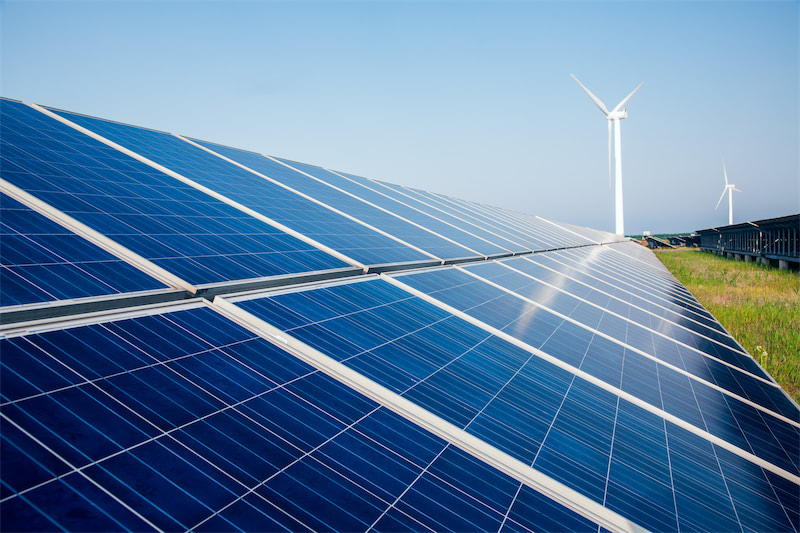
This week, the lithium ore market showed a typical "strong reality, weak expectations" divergence. The most-traded lithium carbonate futures contract LC2701 plunged 11.79% in a single day on October 12 to 104,680 yuan/mt, breaking below the 110,000 yuan mark for the first time this year and hitting a new YTD low. On the 14th, it dipped to 100,900 yuan/mt, nearly halving from the May high of 209,900 yuan. Spot battery-grade lithium carbonate fell to 108,000–112,000 yuan/mt, and 6% spodumene concentrates CIF dropped to $1,575/mt. This round of declines was not driven by deteriorating spot conditions, but rather by a dense cluster of signals pointing to looser future supply—Jianxiawo's environmental assessment is pending acceptance, Xikeng lithium mine's safety design has passed review, Australian mines Bald Hill and Finniss are resuming production, and shipments from Zimbabwe have recovered. The market is pricing in the 2027 surplus expectations ahead of schedule. However, near-term fundamentals remain tight: weekly production of 25,418 mt pulled back WoW, total inventory destocked by over 9,000 mt in a single week, October battery cell production schedules rose 4%–6% MoM, warrants continued to decline, and the basis strengthened. Caution is warranted regarding the passive signal of slightly accumulating inventory at upstream lithium chemical plants. Looking ahead, prices are expected to swing wildly in the 100,000–110,000 yuan/mt range in the short term. Futures prices are already approaching the cost boundary for externally purchased ore, reducing the appeal of chasing further downside. If the basis strengthens further alongside year-end supply disruptions in Africa and Jiangxi, there is an opportunity for stabilization and rebound; if downstream negative feedback emerges, prices will continue to test lower. Next week, focus on the pace of Jianxiawo's production resumption, the implementation of Zimbabwe's export ban, and the realization of Q4 production schedules.
Lithium carbonate:
This week, the SMM battery-grade lithium carbonate average spot price was reported at 104,400 yuan/mt on Thursday, down 17,950 yuan/mt from last Friday's average of 122,350 yuan/mt, a weekly decline of 14.7%. Spot quotes fell day by day over the four trading days of the week, with single-day declines ranging from 3,400 to 6,950 yuan/mt, and Monday saw the largest drop. On the supply side, China's lithium carbonate production edged up overall this week. By raw material, spodumene-based production recovered as some enterprises resumed production after maintenance and additional ore arrived at ports. Salt lake output pulled back as temperatures dropped, with some enterprises reducing production, while others proactively curtailed output, driving production lower. On the recycling side, production continued to decline due to maintenance at some enterprises, strong hold-back sentiment among grinding enterprises on cost considerations, widespread difficulty in sourcing LFP black mass among downstream hydrometallurgical enterprises, and mediocre nickel-cobalt demand for ternary black mass, which lowered purchase willingness at hydrometallurgical enterprises. Some enterprises have maintenance and production halts scheduled in October. On the demand side, based on actual market transactions and inventory conditions, upstream lithium chemical plants continued to ship under long-term contracts after the holiday. With futures prices falling sharply, their willingness to sell spot orders was low, and inventory at this segment accumulated slightly. Downstream material plants remained in a wait-and-see mood after the holiday, mainly drawing down long-term contracts and customer-supplied materials, and downstream inventory destocked somewhat this week.
Lithium hydroxide:
This week, coarse-particle lithium hydroxide prices extended last week's weakness and continued to decline; market pessimism in the lithium market remained unabated, driving prices further down under pressure. In terms of quotes, lithium chemical plants adopted a relatively passive selling stance, with willingness to hold prices firm weakening compared with the previous trading day; ternary cathode material order demand was broadly in line with expectations, spot order purchase willingness was low, with only sporadic small-volume transactions, mostly priced based on monthly average prices; traders' basis strengthened slightly, but the increase was limited. Entering Q4, upstream and downstream players have begun preliminary discussions on long-term contracts for the next year, with no clear long-term contract news released yet. In the short term, prices are expected to consolidate.
Refined cobalt:
This week, the refined cobalt market remained weak, with futures prices breaking below the previous 250,000 yuan/mt level and currently consolidating around 245,000-250,000 yuan/mt. Expectations of DRC quota adjustments that the market had been betting on before the holiday ultimately failed to materialize. After returning from the National Day holiday, refined cobalt prices fell back into a downward trajectory; at this week's industry conference, market expectations for Q4 cobalt prices were broadly pessimistic, further weighing on sentiment, with futures prices drifting lower. On the supply side, mainstream smelters' Ex-works prices remained unchanged for now, but their premiums over futures prices have become notably high, and the likelihood of downward revisions is rising; traders' quote basis was essentially unchanged, with low-end brands still quoted at around 2,000-3,000 yuan/mt and mainstream brand new material quoted at 14,000-15,000 yuan/mt. On the demand side, downstream enterprises maintained just-in-time procurement, with some believing that refined cobalt prices need to fall to around 200,000 yuan/mt to form the next wave of effective support, resulting in a strong wait-and-see sentiment. After the previous support level was breached, the market is searching for a new equilibrium: demand has not improved materially, and smelters' Ex-works prices still face the possibility of catch-up declines, meaning the process of refined cobalt prices hitting bottom has most likely not yet run its course.
Intermediate products:
This week, the cobalt intermediate product market remained in a vacuum of no quotes and no transactions, but miners' sentiment has quietly shifted. On the supply side, most miners chose to remain on the sidelines, planning to first store intermediate products in bonded warehouses and consider selling only after actual demand emerges in the market, with willingness to actively sell clearly reined in. The demand side was even more sluggish, with most smelters having no purchase plans for spot orders or long-term contracts for the time being, and some enterprises even expecting intermediate product prices to fall back to near miners' production costs, delaying purchases as long as possible. During the week, market rumors emerged of a transaction at just over $12/lb, which SMM has not yet confirmed. Miners moving material into bonded warehouses essentially means temporarily setting aside pricing initiative—both buyers and sellers are choosing to wait, the stalemate is being further prolonged, and the leverage to break the deadlock is tilting toward the downstream side.
Cobalt salts (cobalt sulphate and cobalt chloride):
This week, the cobalt sulphate market continued to trend downward, with the tug-of-war between buyers and sellers entering the "buyer bidding" phase. Supply side, smelters still refrained from proactively quoting, instead waiting for buyer inquiries: if prices were acceptable, deals were concluded; if the price spread was too wide, they opted to walk away. Demand side, ternary and LCO demand remained weak, and Q4 is expected to weaken further. Downstream buyers, wary of the risk of further price declines, pushed firmly for lower prices, with some downstream purchase intentions as low as 46,000-48,000 yuan/mt. Rumors of small-volume deals at even lower prices circulated at recent industry conferences. Cost side, although the current MHP cobalt payables stand near 54%, some downstream buyers have already pushed their intended MHP cobalt payables to 50% or lower. Ternary battery black mass cobalt payables are at 68%. Based on spot prices, cobalt sulphate production costs are estimated at around 48,000 yuan/mt, seemingly matching downstream purchase intentions on the surface. However, there is a time lag between procurement and production, and the actual cost of goods currently being sold externally remains at 50,000 yuan/mt, prompting some smelters to continue holding prices firm. The mismatch between book costs and inventory costs makes it difficult to bridge the price divergence between buyers and sellers in the short term. The direction of the price center still awaits a new equilibrium from the cost and demand sides.
This week, cobalt chloride market sentiment remained subdued, with the price center shifting further downward. Supply side, demand has yet to show any meaningful improvement, and the entire industry remains in a destocking phase. September production pulled back significantly MoM, and production cuts remain the primary means for producers to alleviate inventory pressure. The scope of small-plant shutdowns continued to expand, with some enterprises having essentially ceased cobalt chloride production, spreading pessimism across the supply side. Demand side, downstream Co3O4 production cuts continued to widen, further contracting raw material procurement demand. Market transactions remained sluggish with extremely poor liquidity. Downstream purchases were mostly back-to-back and need-based restocking, with no willingness to stockpile and a strong wait-and-see sentiment. In recent discussions, industry participants generally believe this year's market is largely set and unlikely to see meaningful improvement. Some downstream clients have also turned more pessimistic about demand recovery in H2 next year, keeping market trading persistently sluggish. If demand fails to show a substantive recovery, the pace of price declines may accelerate. Overall, the cobalt chloride market is expected to remain in the doldrums in the short term.
Cobalt salts (Co3O4):
This week, Co3O4 market sentiment showed no improvement, with quote centers shifting further downward WoW. The market remained in a grinding-lower atmosphere, with pessimistic expectations yet to reverse. Supply side, affected by persistently weak downstream demand, multiple enterprises remained in production cut mode. Some enterprises still held relatively high inventory levels, keeping shipment pressure unabated. Demand side, current shipments mainly consist of delivering earlier long-term contracts and undertaking processing business, with new purchases nearly absent. Downstream players are purchasing on a weekly basis strictly according to rigid demand and have clearly indicated no additional purchases this year. Order signing for November-December is also dominated by next year's orders, with purchasing sentiment extremely cautious. On the end-user side, Apple's high-end model parts orders have been revised down from the original plan, and the storage chip supply issue is expected to ease by mid-next year at the earliest, or by year-end in a pessimistic scenario. Cathode plants generally hold a bearish view on this year's market, and overall confidence across the industry chain remains insufficient. Based on recent discussions, market sentiment remains bearish. If transactions stay sluggish, prices may continue to decline. Overall, the Co3O4 market is expected to remain in the doldrums in the short term.
Nickel sulphate:
As of this Thursday, SMM battery-grade nickel sulphate average prices declined.
From the demand side, there were relatively fewer production days after the holiday, and demand has not shown significant recovery. Downstream enterprises' spot external purchase volumes were relatively limited, and price acceptance weakened notably. From the supply side, some upstream enterprises, affected by weakening downstream demand, plan to lower operating rates and seek shipments for destocking. However, operating rates at refined nickel conversion and recycling enterprises remain at relatively high levels, leaving nickel salt supply generally ample. Looking ahead, the market is expected to maintain a weak supply-demand balance in the short term, with destocking as the main theme and prices under overall pressure.
On the inventory front, this week the upstream nickel salt smelter inventory index slipped from 7.8 days to 7.6 days, the downstream precursor plant inventory index declined from 11.4 days to 10.5 days, and the integrated enterprise inventory index fell from 9.8 days to 9 days. In terms of buying and selling strength, this week the upstream nickel salt smelter Willingness to Sell Sentiment Factor held at 2.1, the downstream precursor plant purchasing sentiment factor held at 2.0, and the integrated enterprise sentiment factor slipped from 2.2 to 2.1. (Historical data can be accessed via the database.)
Ternary cathode precursor:
This week, ternary cathode precursor prices weakened. During the week, cobalt sulphate and nickel sulphate prices both declined, while manganese sulphate prices remained stable.
Regarding discounts, for November and Q4 orders, some producers still intend to hold coefficient levels firm due to higher earlier sulphate raw material costs. For long-term contracts, some producers' annual contracts were agreed at the beginning of the year, and most producers have not yet raised coefficients. Downstream acceptance of coefficient increases for quarterly orders also remains weak, so Q4 long-term contract coefficients are expected to remain stable and run slightly weak. For spot orders, given the relatively weak performance of nickel and cobalt salt prices recently, coupled with soft downstream demand for some producers, November order coefficients are expected to decline.
On the production front, top-tier producers' export orders remained strong this month, with production schedules at relatively high levels. However, some domestic top-tier producers saw operating rates decline due to end-use demand falling short of expectations and tightness in key raw materials. Although this month showed slight improvement MoM, overall levels remained below the Q3 highs.
Looking ahead, sulphate prices have yet to show a clear rebound, and new order prices will need to track actual downstream demand in Q4.
Ternary cathode materials:
This week, ternary cathode material prices extended their downward trend, with the decline further intensifying. On the raw material side, nickel sulphate prices continued to grind lower, cobalt sulphate prices saw a notably sharper drop, and lithium carbonate and lithium hydroxide prices fell sharply for consecutive sessions, accelerating the decline in ternary cathode material prices. Producers generally faced significant inventory cost pressure. On the demand side, EV market orders were revised further down from the cautious expectations at the start of the month, with producers continuing to destock, slowing their production pace, and showing weak willingness to purchase raw materials. In the consumer market, transactions were also sluggish due to soft end-user digital demand and persistently falling raw material prices, with battery cell manufacturers having no urgent need to restock and remaining on the sidelines. On the production schedule front, China's ternary cathode production schedule in October is expected to be flat versus September.
LFP:
This week, LFP market fundamentals remained generally stable, with downstream orders and producers' shipment pace relatively normal. On the supply side, mainstream producers maintained relatively high operating rates, and some further raised production to meet order delivery requirements. As new output gradually entered warehouses, industry inventory edged up. According to company feedback, this round of inventory rebound was mainly a phased inventory buildup driven by higher production, rather than a clear weakening of downstream demand. The current inventory increase remains relatively limited, and overall industry supply and demand stayed stable. On the price front, LFP prices pulled back notably this week along with lithium carbonate prices. As of 15 October, the SMM average price for LFP (powder compaction density ≥2.5g/cm³) stood at 45,350 yuan/mt, down about 5,010 yuan/mt cumulatively from the last quoted day of the previous week, a decline of about 9.95%. Over the same period, the average price of battery-grade lithium carbonate fell by about 20,600 yuan/mt cumulatively, with the rapid decline in raw material costs dragging LFP prices lower. In the short term, LFP market supply and demand are expected to remain relatively stable, while price trends will continue to be heavily influenced by fluctuations in lithium carbonate prices.
Iron phosphate:
This week, LFP market fundamentals remained generally stable, with downstream orders and producers' shipment pace relatively normal. On the supply side, mainstream producers maintained relatively high operating rates, and some further raised production to meet order delivery requirements. As new output gradually entered warehouses, industry inventory edged up. According to company feedback, this round of inventory rebound was mainly a phased inventory buildup driven by higher production, rather than a clear weakening of downstream demand. The current inventory increase remains relatively limited, and overall industry supply and demand stayed stable. Prices: This week, LFP prices pulled back notably alongside lithium carbonate prices. As of 15 October, the SMM average price for LFP (powder compaction density ≥2.50g/cm³) stood at 45,350 yuan/mt, down roughly 5,010 yuan/mt cumulatively from the last quotation day of the previous week, a decline of about 9.95%. Over the same period, the average battery-grade lithium carbonate price fell by about 20,600 yuan/mt cumulatively, and the rapid decline in raw material costs dragged LFP prices lower in tandem. In the short term, LFP market supply and demand are expected to remain relatively stable, while price movements will continue to be heavily influenced by lithium carbonate price fluctuations.
LCO:
This week, China's LCO market remained weak overall. The traditional peak-season expectations that the market had previously anticipated failed to materialise, and industry fundamentals remained under sustained pressure.Upstream Co3O4 prices continued to move lower, with cost support weakening steadily and dragging LCO product quotations down in tandem. On the supply side, Chinese cathode material producers generally maintained a cautious production scheduling strategy of producing based on sales, keeping industry output stable. However, weakness on the demand side became more pronounced, as downstream end-user clients showed limited willingness to stockpile, with purchases mostly consisting of small, need-based restocking. The pace of inventory digestion across the industry chain remained slow, and the supply-demand pattern had yet to show substantive improvement. The dual pressure from falling costs and sluggish end-use demand persisted. Overall, the weak LCO market extended after the holiday, with prices consolidating lower. If end-use demand continues to show no improvement and the peak-season rally remains absent, LCO prices still face room for further downside.
Anode:
This week, artificial graphite anode material prices were broadly stable.Cost support remained relatively strong, with petroleum coke and needle coke prices staying high and graphitisation tolling fees also showing a stable-to-firm trend. The supply-demand balance remained tight, with anode material orders growing steadily during the peak season and enterprises continuing to make progress on destocking. Market expectations for anode material price increases still existed; however, after some price hikes were implemented in late September, artificial graphite prices were relatively stable at present. Natural graphite remained weak, with no clear improvement in end-use demand and prices lingering near the cost line at low levels for an extended period. The stalemate between buyers and sellers remained unchanged.
Looking ahead, cost support for artificial graphite is expected to remain relatively solid. With end-use demand continuing to be released and the destocking pace persisting, prices still have upward momentum. Natural graphite is unlikely to see a reversal in the short term and is expected to consolidate at lows.
Separator:
This week, separator prices were broadly stable, with mainstream specification quotations basically flat WoW.According to data, quotations for 7μm+2μm wet-process coated separator were 1.143-1.35 yuan/m², 9μm+3μm wet-process coated separator were 1.14-1.3 yuan/m², and 5μm+2μm quotations held at 1.57-1.87 yuan/m², with base film prices unchanged. The market is currently in the October order negotiation cycle, with upstream and downstream players in a new round of bargaining over quotations, and actual transaction prices have yet to adjust. Supply-demand fundamentals continued to move toward a tighter balance. October separator production is expected to rise 2.3% MoM, while power battery cell production schedules are expected to grow 6.6%, and ESS battery production is expected to reach 100.22 GWh, up 5.25% MoM. Supply growth is clearly lagging end-use growth. Production schedules that were trimmed in September due to tight copper foil supply are gradually recovering, and combined with concentrated ESS deliveries in Q4, year-end stockpiling and export rush demand, battery cell manufacturers' purchase willingness is relatively strong. Separator producers' inventories remain low, and the basis for holding prices firm is unchanged. In our assessment, prices will remain stable in the short term, but the window for price stability will not last long. The direction of a widening supply-demand gap is already clear, and separator producers' bargaining position in order negotiations continues to strengthen, with a new round of price hikes in the brewing stage. Going forward, two variables warrant attention: first, whether the quotation range for coated products can shift higher again as a whole during order negotiations; and second, when quotations for 5μm+2μm will begin to adjust. This specification has the tightest supply-demand balance, and once a price hike is implemented, the increase is expected to be larger than for other specifications.
Electrolyte
This week, electrolyte market prices were temporarily stable.On the cost side, LiPF6 prices edged down, mainly dragged by the rapid decline in raw material lithium carbonate, compounded by market demand growth falling short of expectations. Downstream electrolyte producers showed weak purchase willingness, and LiPF6 transactions were sluggish. The tight supply-demand balance for the additive VC had yet to ease significantly, and mainstream producers kept quotations high and stable out of long-term business considerations. In the solvent segment, upstream raw material support was relatively strong, and solvent prices firmed slightly. Overall, electrolyte cost pass-through has a lag, and the earlier rise in raw materials had not yet been fully transmitted to finished product prices. Therefore, despite the pullback in LiPF6 prices this week, electrolyte prices remained stable in the short term. Looking ahead, ESS demand is expected to continue improving. The EV sector is benefiting from the October peak season, and combined with the export rush effect stemming from expectations of restrictions on hybrid vehicle exports to Europe, there is room for electrolyte demand to be boosted. However, some October orders were already pulled forward into September production schedules. Although electrolyte production is expected to grow, the increase is likely to be limited, providing weak support for raw material prices. In the short term, electrolyte prices lack upward momentum and are expected to remain stable, with continued focus on raw material supply-demand dynamics and price changes.
Sodium-ion battery:
This week, the sodium-ion battery industry chain entered the mid-to-late stage of the September-October peak season, with momentum persisting but divergence deepening further.Demand-side certainty is rising. Downstream battery cell majors are pressing for deliveries, and leading cathode plants continue to run at full capacity, with the "produce based on sales" pattern still unresolved. On the battery cell side, ESS orders are being released in a concentrated manner, signalling the arrival of the peak season. Demand is extending from small power and general ESS to overseas ESS, with European orders being landed one after another and large-scale export expectations pointing to next year. Supply-side release remains lagging. Cathode producers are breaking through on two fronts—capacity expansion and toll processing—with new line commissioning and ramp-up mostly falling between mid-to-late October and November. On the battery cell side, Sichuan's new base will gradually start production and ramp up in late October, while existing bases are filling gaps through toll processing. Toll processing business is dominated by ESS projects, with demand expected to last until year-end. Profitability recovery has not yet arrived. Although quotations are stable, transactions with major clients have already shown signs of softening. Combined with the continued rise in raw material costs such as iron phosphate, cathode profit pressure has intensified compared with earlier. Hard carbon anode continues to expand volume but remains trapped in price involution, with the "lose money on every tonne sold" situation unchanged. The electrolyte segment is clearly waiting for volume to ramp up, with downstream demand still dominated by small batches and project-based orders, and large-scale demand has yet to kick in. Battery cell prices remain at low levels, with the price spread versus LFP systems at nearly double, and economics remain the core constraint on commercialisation. The competitive landscape is evolving at an accelerated pace. Leading lithium battery companies are entering the sodium-ion battery space, and integrators and battery cell manufacturers are accelerating their partnerships to develop dedicated systems. The industry ecosystem is evolving from "selling battery cells" to "selling systems". Emerging applications such as AIDC are in the sampling and testing stage, and market demand is expected to see concentrated growth next year.
Recycling:
On the raw material side, lithium carbonate futures prices accelerated their decline to around 100,000 yuan/mt this week, with 15 October quotes at 101,800-107,000 yuan/mt. Meanwhile, nickel sulphate prices continued to grind lower, and cobalt sulphate prices extended their decline under pressure from weak demand.Today, looking at ternary, LCO and LFP material types separately, on the LFP hydrometallurgy side: taking LFP electrode black mass as an example, as of 15 October, LFP electrode black mass prices stood at 4,800-5,300 yuan per % lithium, down sharply by 975 yuan per % lithium from the first trading day after the holiday—affected by the continued decline in lithium carbonate prices after the holiday, downstream acceptance of current prices per % lithium has further decreased, with cargo holders increasingly willing to sell at concessions and the market returning to buyer dominance. At present, LFP battery black mass prices are 4,150-4,400 yuan per % lithium, with the price spread versus electrode black mass still maintained at a high level of around 800 yuan per % lithium. On the ternary and LCO side, ternary electrode black mass payables stood at around 71-73%, down about 1.2 percentage points cumulatively from the first trading day after the holiday. Some high-nickel ternary electrode black mass, such as 8-series and 9-series material, saw transactions fall to around 72-75%. LCO electrode black mass cobalt and lithium payables, affected by cobalt and lithium material prices, fell to 67-70%, while LCO battery black mass cobalt and lithium payables were 66-69%. At this stage, cobalt sulphate prices have fallen by more than 4,000 yuan/mt from the first trading day after the holiday. Downstream LCO hydrometallurgy producers remain very cautious in purchasing, market transactions are sluggish, and current prices remain below those of the ternary segment.
Downstream and end-users:
On 13 October, the winning candidates for the EPC general contracting of the Guangdong Jieyang Jiedong Guiling Hengli Standalone ESS Power Station Project were announced.The project has an installed capacity of 200MW/400MWh and is a 2-hour LFP ESS.
Winning candidate information: First winning candidate: Guangzhou Huayue Electric Power Engineering Design Co., Ltd., with a bid price of 328 million yuan, equivalent to a unit price of 0.82 yuan/Wh
Second winning candidate: a consortium of China Energy Engineering Group Jiangsu No.1 Electric Power Construction Co., Ltd. (lead) and Guangdong Ruineng New Energy Technology Co., Ltd. (member), with a bid price of 321.68 million yuan, equivalent to a unit price of 0.8042 yuan/Wh
Third winning candidate: a consortium of PowerChina Jiangxi Electric Power Construction Co., Ltd. (lead) and Guangdong Zhixin Hengneng New Energy Technology Co., Ltd. (member), with a bid price of 325.76 million yuan, equivalent to a unit price of 0.8144 yuan/Wh. Brief comment: All three candidates' bids fell within the 0.80-0.82 yuan/Wh range, below the lowest winning price of 0.865 yuan/Wh for 2-hour ESS EPC projects nationwide in August, marking a new low for EPC prices in South China.
News:
[Ganfeng Lithium: Net profit attributable to shareholders in the first three quarters of 2026 was 5.012 billion yuan, up 19,540.50% YoY]Ganfeng Lithium announced that Q3 2026 revenue was 13.062 billion yuan, up 109.03% YoY. Net profit attributable to shareholders of the publicly listed firm was 755 million yuan, up 35.62% YoY. Net profit after deducting non-recurring items was 788 million yuan, up 2,803.44% YoY. Revenue in the first three quarters of 2026 was 36.159 billion yuan, up 147.24% YoY. Net profit attributable to shareholders of the publicly listed firm was 5.012 billion yuan, up 19,540.50% YoY. Net profit after deducting non-recurring items was 4.636 billion yuan, up 592.14% YoY. (Jinshi Data APP)
[Tinci's Indonesia electrolyte project expected to enter trial production in December 2026]According to Tinci, the Indonesia Weda Bay Industrial Park (IWIP) recently held a ceremony for the commencement and commercial operation of nickel downstream industry projects and the first export of EV batteries. Construction of Tinci's Indonesia electrolyte project is accelerating, and trial production is expected to begin in December 2026. As the park's first lithium-ion battery electrolyte project, the project is being advanced by Tinci's Indonesian subsidiary, with a planned annual capacity of 20,000 mt of lithium-ion battery electrolyte. It will provide key material support for the park's battery industry chain and further strengthen Tinci's localised supply capability in Southeast Asia. (Jinshi Data APP)
[China's September power and ESS battery sales were 222.7 GWh, up 52% YoY]Data from the China Automotive Power Battery Industry Innovation Alliance shows that in September, China's power and ESS battery sales were 222.7 GWh, down 0.2% MoM and up 52% YoY. Among these, power battery sales were 149.2 GWh, accounting for 67.0% of total sales, up 1.7% MoM and up 35.0% YoY. ESS battery sales were 73.5 GWh, accounting for 33.0% of total sales, down 3.7% MoM and up 104.4% YoY. From January to September, China's cumulative power and ESS battery sales were 1,681.7 GWh, up 57.6% YoY cumulatively. (Jinshi Data APP)
Data source statement: Except for publicly available information, all other data are processed by SMM based on public information, market communication and SMM's internal database models, and are for reference only and do not constitute decision-making advice.
SMM New Energy Research Team
Wang Cong 021-51666838
Ma Rui 021-51595780
Lin Ziya 86-2151666902
Feng Disheng 021-51666714
Lyu Yanlin 021-20707875
Zhou Zhicheng 021-51666711
Wang Zihan 021-51666914
Wang Jie 021-51595902
Zhang Haohan 021-51666752
Chen Bolin 021-51666836
Xu Mengqi 021-20707868
![[SMM Cobalt Morning Meeting Summary] Weak Demand and Falling Costs Keep Industry Chain Prices Under Pressure and Hitting Bottom](https://imgqn.smm.cn/usercenter/yunIW20251217171723.jpeg)