During China's 2026 National Day holiday (October 1–7), Chinese buyers stepped away from the market in phases, and inquiry and trading activity in the Asian molybdenum spot market declined somewhat, but markets outside China did not come to a complete halt. In the first six days of the holiday, 57% molybdenum oxide prices generally consolidated in a narrow range; by October 7, as the Chinese market neared its reopening, some sellers raised their selling indications, and the price range shifted upward more noticeably overall.
Compared with molybdenum oxide, the ferromolybdenum market outside China was relatively quiet. Although a small number of DDP transactions were reported in Europe, overall inquiries and trading remained subdued; South Korea and other Asian markets lacked representative new transactions. Meanwhile, a fatal accident occurred at the Radomiro Tomic mine in Chile, and two unions at the Centinela mine officially went on strike, heightening market attention to the stability of Chilean mine-side supply.
Overall, the molybdenum market outside China during the holiday was characterized by "narrow consolidation in the early period, rising seller indications near the close, and downstream transactions still awaiting follow-through." The current price uptick is supported by expectations of Chinese buyers returning to the market, seller reluctance to sell, and mine-side risk sentiment, but whether a sustained rise can take hold still needs to be verified by actual post-holiday procurement and transactions.
1. Asian molybdenum oxide was stable early and rose later, with seller indications moving up at the end of the holiday
In the early part of the National Day holiday, Chinese buyers temporarily left the market, and the Asian molybdenum oxide market lacked concentrated inquiries and procurement, with both buyers and sellers mostly on the sidelines.
On October 1, the EXW price range for 57% molybdenum oxide in bonded warehouses outside China was $33.1–33.2/lb Mo. On October 2, the price range narrowed to $33.1–33.15/lb Mo; from October 5–6, it remained at $33.1–33.15/lb Mo. This shows that the market did not fall steadily in the first six days of the holiday, but mainly consolidated sideways after the price range narrowed.
While Chinese buyers were away from the market, some suppliers still had selling needs, but sellers did not significantly cut prices to sell. At the same time, downstream users lacked the impetus for concentrated restocking and had limited acceptance of high-priced cargoes. As a result, the market formed short-term support near $33.1/lb Mo, and buyers and sellers entered a narrow stalemate.
By October 7, as the Chinese market was about to reopen, some sellers outside China began to raise their selling indications, and the 57% molybdenum oxide price range moved up to $33.25–33.4/lb Mo. Low-priced cargoes became scarcer, and with market expectations that Chinese buyers would resume inquiries after the holiday, seller reluctance to sell and sentiment to hold prices firm strengthened somewhat.
However, the $33.25–33.4/lb Mo range at this stage mainly reflects the upward shift in seller indications, and there have not yet been enough new transactions to confirm the entire range. Therefore, the more accurate description of the current market state is "prices turning from consolidation to tentative upward movement," rather than actual transaction prices having already risen across the board.
In addition, Asian EXW prices cannot be directly compared horizontally with European DDP transactions. Cargoes picked up from bonded warehouses in Busan have usually not yet completed customs clearance and duty payment, while European DDP prices may include transportation, taxes, and delivery costs. Differences in origin, product form, payment terms, and delivery conditions remain important reasons for the current price divergence in markets outside China.
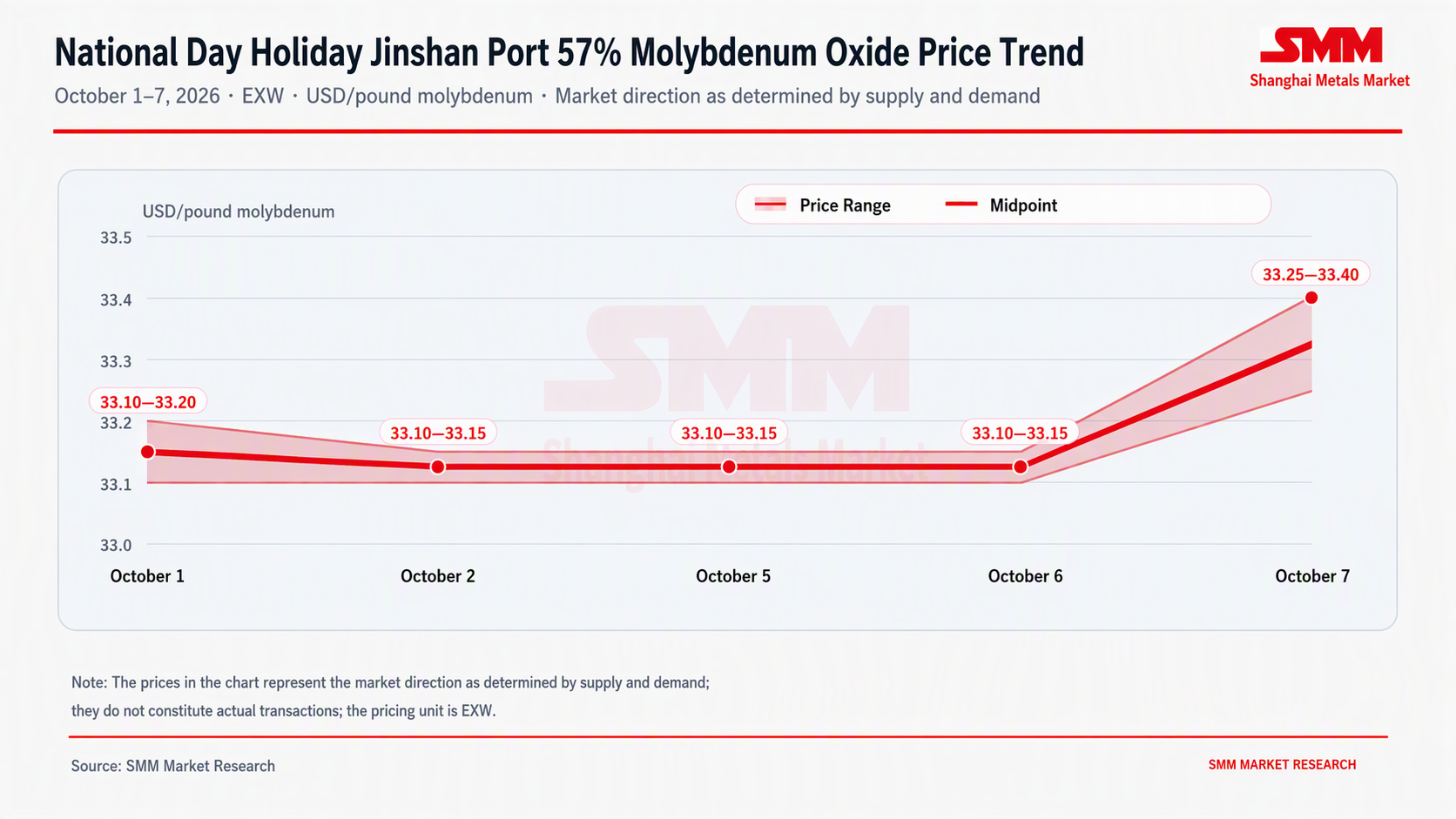
Figure1: 57% molybdenum oxide price trend at Busan port, October 1–7, 2026
Note: Bonded warehouse ex-warehouse basis, uncleared and duty-unpaid; based on comprehensive market indicative offers and feedback, reflecting only directional changes and not representing all actual transactions.
Source: SMM market research.
2. Sporadic ferromolybdenum transactions in Europe, overall trading still subdued
On the ferromolybdenum side, there was no obvious concentrated procurement in markets outside China during the National Day holiday. The pre-tax price of ferromolybdenum in Europe was approximately $75.5–75.75/kg Mo, with an import duty rate of about 2.7%.
Around October 6, ferromolybdenum transactions were reported in the southern European market at $76.5–77/kg Mo DDP. Since pre-tax offers and DDP transactions include different taxes, transportation, and delivery costs, price increases cannot be directly calculated from this comparison.
The above transactions indicate that there is still some just-in-time procurement in the European market, but both transaction volumes and sample sizes are limited, and overall inquiry activity has not shown a notable increase. Therefore, these sporadic transactions are not enough to prove that the European ferromolybdenum market has fully recovered, nor can they be used to conclude that end-use demand has shown a trend-based improvement.
In terms of timing, some transactions occurred just before the end of China's holiday, possibly including traders and downstream users making advance responses to potential raw material price changes after China's market reopening. However, it is still unclear whether the increase in transactions stems from genuine consumption improvement or from individual buyers replenishing short-term inventory.
The Asian ferromolybdenum market was even quieter. South Korea and other Asian markets saw few active inquiries and actual transactions during the holiday. Although some orders emerged in the Indian market, intermediate processing enterprises competed for limited orders, and 60% ferromolybdenum prices were once near $75–76/kg Mo, indicating that downstream bargaining pressure remained strong.
Overall, molybdenum oxide raw material prices moved up at the end of the holiday, but the ferromolybdenum side has not yet formed smooth cost pass-through. If new ferromolybdenum orders cannot increase in tandem, processing enterprises' ability to accept high-priced molybdenum oxide will remain constrained by profit margins.
3. Fatal accident at Radomiro Tomic and Centinela strike increase supply uncertainty
During the National Day holiday, safety and labor incidents occurred consecutively on the Chilean mine side, heightening market attention to the stability of South American molybdenum raw material supply.
On October 1, a fatal accident occurred at the Radomiro Tomic mine under Codelco. The accident involved the crushing and material handling area of the mine; activities in the relevant area were suspended after the incident, and an accident investigation was launched.
As of press time, Codelco has not disclosed the specific impact of the accident on overall mine production and molybdenum output. SMM survey learned that the market currently believes the accident's impact is relatively limited, but when activities in the relevant area will fully resume still needs further confirmation. Therefore, the accident should not be directly converted into a molybdenum supply reduction at this stage.
On October 7, two unions at the Centinela mine officially went on strike after government mediation failed to produce an agreement, involving 709 employees, accounting for about 22% of the mine's own workforce. Centinela produces copper concentrates, copper cathode, and molybdenum concentrates, with molybdenum production of approximately 3,400 mt in 2025, so the strike is directly linked to molybdenum raw material supply outside China.
However, Centinela stated that although the strike may have some impact on mine operations, production plans are currently expected to remain unchanged. Therefore, it cannot yet be concluded that the strike has caused a decline in molybdenum concentrate production, nor should potential risks be directly converted into specific supply losses.
In terms of timing, the Centinela strike occurred on the same day as the upward shift in molybdenum oxide seller indications on October 7. Against the backdrop of some South American copper-molybdenum mines already being affected by winter weather, power supply, road transportation, changes in ore properties, and declining molybdenum recovery rates, the new labor incident further reinforced market attention to the stability of Chilean supply.
However, molybdenum oxide price changes were simultaneously influenced by expectations of the Chinese market reopening, reduced low-priced cargoes, and seller reluctance to sell, so the upward shift in the price range on October 7 cannot be entirely attributed to a single mine incident.
Going forward, close attention should be paid to the production recovery of the relevant area at Radomiro Tomic, the duration of the Centinela strike, whether beneficiation and molybdenum recovery operations are running normally, and whether molybdenum concentrate transportation is affected. Until actual reductions are confirmed, these incidents mainly increase supply uncertainty and market risk premiums, rather than representing already-realized spot supply losses.
4. Supply risks and reopening expectations resonate, but the rise still needs transaction confirmation
Taken together, the molybdenum market outside China from October 1–7 was not a simple one-way upward move, but rather underwent a shift from narrow consolidation to rising seller indications.
On the price front, 57% molybdenum oxide was at $33.1–33.2/lb Mo on October 1, then narrowed and stabilized at $33.1–33.15/lb Mo from October 2–6, and moved up to $33.25–33.4/lb Mo by October 7. The market uptick mainly occurred in the final stretch of the holiday, and for now is reflected more in seller quotes and selling indications.
On the supply side, consecutive safety and labor incidents on the Chilean mine side increased market concerns about the stability of molybdenum concentrate supply. Without confirmed actual reductions, these incidents first affect market expectations, risk premiums, and seller willingness to cut prices.
On the demand side, the procurement pace of Chinese buyers after market reopening remains the core factor determining whether the market can sustain its momentum. Seller quotes outside China have already reflected some post-holiday restocking expectations in advance, but the limited ferromolybdenum inquiries in Asia and the limited sample of European ferromolybdenum transactions indicate that downstream has not yet formed a full-scale volume increase.
Therefore, the rise in molybdenum oxide prices at the end of the holiday does not mean that the market outside China has entered a full-scale upward phase. Only when higher quotes are confirmed by consecutive transactions and further transmitted to the ferromolybdenum side can the current market sentiment potentially translate into a more solid price trend.
5. Post-holiday outlook: watch whether high-level transactions materialize
SMM expects that the molybdenum oxide market outside China may continue to consolidate at highs in the short term. South American mine-side risks, reduced availability of low-priced cargoes, and procurement expectations after Chinese buyers return to the market will provide some support to seller quotes; however, insufficient ferromolybdenum orders and cautious downstream procurement will also limit a sustained rapid rise in molybdenum oxide prices.
If Chinese buyers actively inquire after market reopening and consecutive actual transactions form above $33.4/lb Mo, the current upward shift in seller indications may gradually translate into a new market transaction range, and molybdenum oxide prices outside China still have room for further upward exploration.
Conversely, if post-holiday procurement remains dominated by small-volume just-in-time buying, or if lower netback-priced cargoes reappear in Europe and other markets, the $33.25–33.4/lb Mo seller indications may lack transaction support, and buyers and sellers may re-enter a high-level stalemate.
On the ferromolybdenum market side, before orders from steel mills, traders, and other end-users increase significantly, it is not appropriate to judge that the market has fully turned stronger based on a small number of DDP transactions. Whether molybdenum oxide costs can be smoothly transmitted to ferromolybdenum prices still depends on actual orders, inventory levels, and processing enterprise profit margins.
Going forward, close attention should be paid to actual transactions of 57% molybdenum oxide in Busan and other Asian markets, the intensity of overseas procurement by Chinese buyers after market reopening, new ferromolybdenum orders in Europe, the production recovery of the relevant area at Radomiro Tomic, and whether the Centinela strike further affects beneficiation, molybdenum recovery, and concentrate transportation.


![[SMM Chromium Flash] South Africa’s August HC FeCr Exports Rise 20% MoM to 117,180 mt, Led by Canada and US Shipments](https://imgqn.smm.cn/usercenter/TdoSs20251217171724.jpeg)