According to the investor relations activity record released by HBIS Resources on September 22:
Q: Given the forecast of severe El Niño climate conditions over the next two years, could the company's South African operations experience flooding again, and does the company have corresponding disaster prevention and response measures in place? HBIS Resources responded: The impact of El Niño on Limpopo Province in northeastern South Africa is reduced rainfall, high temperatures, drought, and intensified evaporation, which is the opposite of the increased rainfall caused by La Niña. After this year's flood disaster, the company has further enhanced and improved its underground drainage and waterproofing systems.
Q: The Phase II copper project uses the block caving method. Since few domestic companies use this method, does the company have the necessary technical reserves? HBIS Resources responded: The company's Phase II copper project adopted the block caving method, which was determined through comprehensive evaluation of factors including the mine's geological conditions and orebody occurrence. The block caving method offers advantages such as large mining capacity, high production efficiency, and low mining costs, with cost levels approaching those of open-pit mining and outstanding economic benefits. The company's Phase I copper project has already successfully applied the block caving method, accumulating mature engineering experience and stable technical operating capabilities, and has built up corresponding technical reserves and a talent pool that can provide strong support for the safe, efficient, and stable production of the Phase II copper project.
Q: What exactly is the block caving mining process used in the company's Phase II copper mine? Why does this process result in a much longer capacity ramp-up period than ordinary mines? HBIS Resources responded: The block caving method is a mainstream, mature mining technology for large deep underground metal mines. Its core principle is to avoid large-scale drilling and blasting of the orebody. Instead, an undercut cavity is excavated at depth within the orebody, and the orebody's own gravity and deep ground pressure cause it to gradually cave naturally. The ore is then extracted centrally through a coordinated system of underground ore drawing and haulage. The method offers long-term core advantages of low mining costs and strong large-scale production capability. The capacity ramp-up period for this process is relatively longer than for ordinary mines, primarily because ensuring safe production in deep underground mining requires that core steps—such as undercut excavation, caving control, gradual opening of drawbells, commissioning of large underground equipment, and real-time monitoring and control of deep ground pressure—all proceed step by step and steadily, making it impossible to achieve rapid short-term production increases.
Q: What is the company's business strategy? HBIS Resources responded: The company has always taken "deepening its presence in the resources sector and achieving sustainable, healthy development" as its core strategic objective. Looking ahead to 2026, we will maintain a global perspective, actively seize capital market windows of opportunity, and keenly capture high-quality M&A opportunities. Internally, we are committed to deepening lean operations at our mining sites and using refined management to thoroughly identify and unlock the value of our resource holdings. Through the dual drivers of "external expansion via M&A + internal operational optimization," we will steadily expand our industrial scale and unleash strong momentum for a leap in company value.
Q: What is the current recovery status of the Phase II copper project after the flood impact? How far has the related insurance claim progressed? HBIS Resources responded: The main part of the Phase II copper project has been basically completed, and it is currently in the capacity ramp-up stage. In early 2026, affected by extreme heavy rainfall and flooding in South Africa, underground production was temporarily suspended. By mid-June, all underground water had been drained, silt removal and equipment maintenance and commissioning had been completed, working conditions had been restored to pre-disaster levels, and capacity ramp-up work is progressing in an orderly manner. The insurance loss assessment, review, and claims process for this flood involves a relatively long cycle. The company is making every effort to coordinate with the insurance company and actively advancing the compensation work.
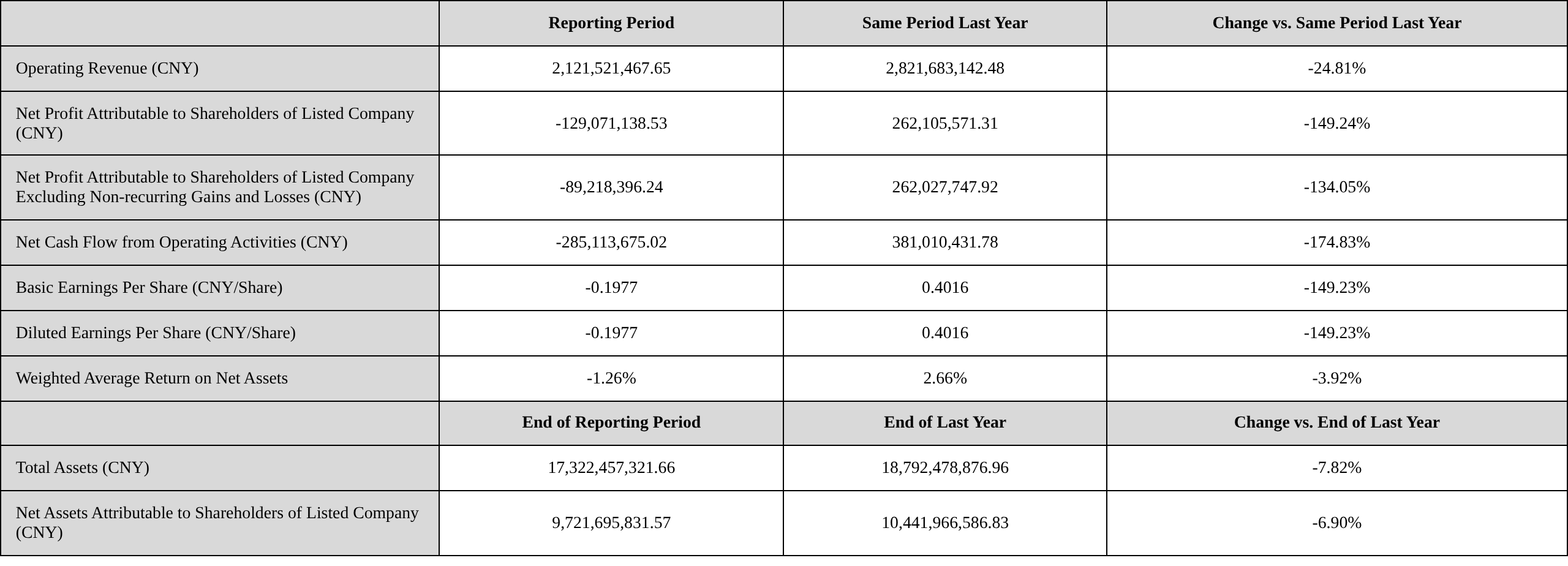
In terms of financial performance: HBIS Resources disclosed its 2026 semi-annual report on August 25, showing that in H1 2026, the company achieved total operating revenue of 2.122 billion yuan, down 24.81% YoY, and a net loss attributable to the parent company of 129 million yuan.
Regarding its main business, HBIS Resources stated in its semi-annual report: During the reporting period, the company focused its efforts on developing its mineral resources segment, with its main business being the mining, processing, and sale of copper, iron ore, and vermiculite. The publicly listed firm itself is a holding company and does not engage in mining production operations.
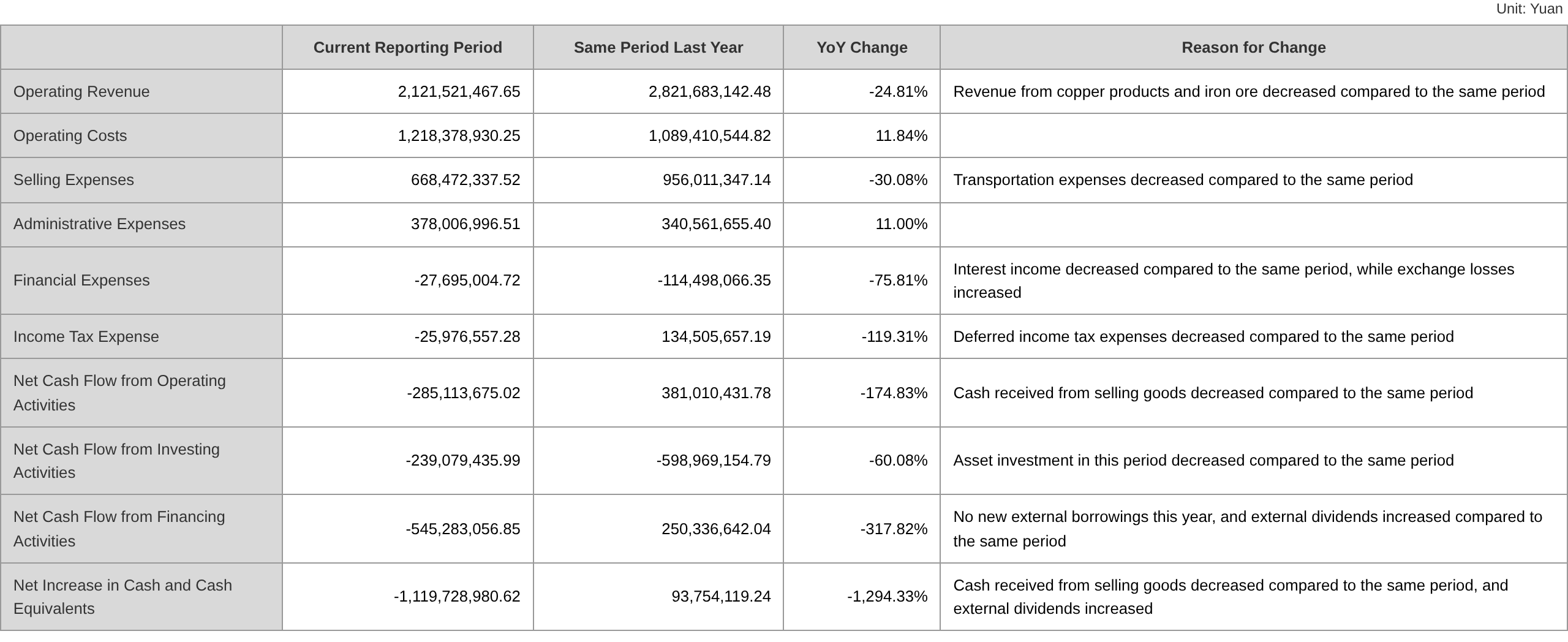
In its analysis of the main business, HBIS Resources stated: In H1 2026, the South Africa region experienced sustained heavy rainfall. Affected by the extreme rainstorm disaster, the company's underground production operations were temporarily suspended. After the disaster occurred, the company immediately activated its emergency response plan, organized all underground personnel to evacuate to safety in an orderly manner, properly sealed and protected key underground electrical equipment and components, concentrated specialized resources on pumping out underground water, and simultaneously surveyed on-site conditions, discussed and refined resumption procedures, and scientifically formulated work resumption plans. As of the end of the reporting period, all underground mines had completed hazard inspections, drainage and cleanup, and equipment verification, and had been restored to pre-disaster conditions. This disaster temporarily affected the release of capacity in the copper segment, which had a certain impact on copper metal production in H1. The magnetite segment operated generally steadily. In H1, production and sales of 65% grade magnetite products remained stable, domestic and local logistics and shipping processes were smooth, and the production and sales foundation remained solid. However, affected by geopolitical fluctuations in the Middle East, international crude oil supply tightened and oil prices climbed sharply in H1, directly driving up ocean shipping transportation costs, squeezing product profit margins, and eroding the overall profit level of the magnetite segment to a certain extent. In H1 2026, the company's magnetite production was 5.139 million mt, basically flat YoY; magnetite shipments were 5.048 million mt, up 1% YoY; and magnetite sales were 4.885 million mt, up 3.06% YoY. Copper metal production was 3,966 mt and sales were 4,977 mt, significantly lower than the same period last year, mainly due to the flood impact. Vermiculite production was 60,200 mt, down 6% YoY, and sales were 59,200 mt, down 4.7% YoY.
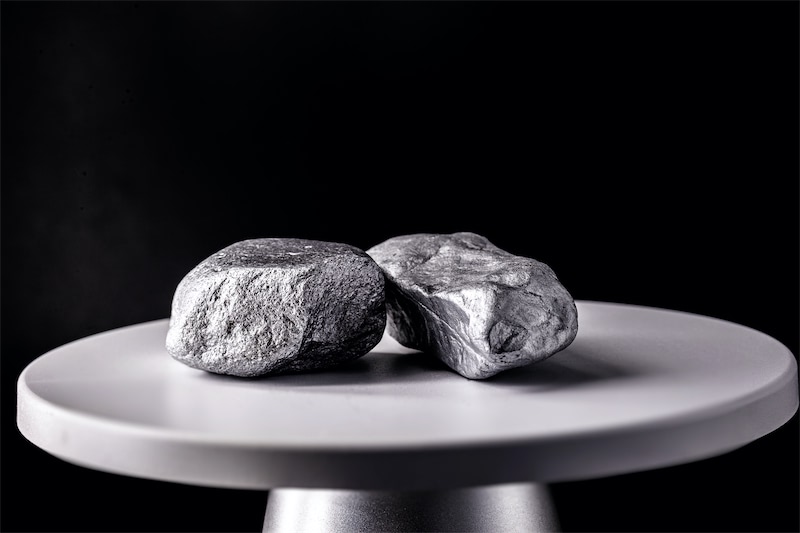
HBIS Resources also introduced its mineral resource reserves in the semi-annual report: The company's magnetite is a by-product separated during the processing of copper ore. After decades of mining, as of the end of the reporting period, the magnetite stockpile was approximately 110 million mt, with an average grade of about 55%. After grinding and magnetic separation processing, the iron content can be further increased to a maximum of 65%. In 2016, the company commissioned Shanghai Lixin Asset Appraisal Co., Ltd. to assess the reserves of the Phase II copper mine based on preliminary exploration data. The main assessment data are as follows: 1. As of April 30, 2016, within the mining area of the PC Copper Mine (Phase II), retained resources/reserves (111b+122b+333): ore volume of 362.8856 million mt, Cu metal content of 2.7183 million mt, TFe metal content of 49.7305 million mt, average geological grade of Cu at 0.75%, and average geological grade of TFe at 13.70%; 2. Assessed utilized resource reserves: ore volume of 120.5195 million mt, Cu metal content of 964,800 mt, TFe metal content of 16.3323 million mt, average geological grade of Cu at 0.80%, and average geological grade of TFe at 13.55%; 3. Recoverable reserves used for assessment as of the assessment base date: ore volume of 104.8520 million mt, Cu metal content of 839,400 mt, TFe metal content of 14.2091 million mt, average geological grade of Cu at 0.80%, and average geological grade of TFe at 13.55%. During the reporting period, the company's main business did not change, and there were no new exploration activities or related expenses.
According to a research report from Cinda Securities: Based on an assessment of the steel industry cycle, at the current juncture, with PPI at a cyclical bottom range, ample market liquidity, and upward revisions in risk premiums, the steel sector possesses strong "anti-involution" attributes, medium and long-term improvement in the supply-demand pattern, and significant room for profit recovery. High-quality steel enterprises have excellent upward elasticity from gradual earnings recovery, as well as room for sector valuation uplift from improved supply patterns. The sector still holds medium and long-term strategic investment opportunities with prominent allocation value, and the "positive" rating on the industry is maintained. Based on the above judgment, top-down focus is recommended on: 1) Regional industry leaders with high equipment advancement and excellent environmental protection levels, such as Valin, Shougang Group, Shandong Iron and Steel, Shagang, and Sangang Minguang; 2) Companies positioned for integration and restructuring with excellent growth potential, such as Baosteel, Nanjing Iron & Steel, Maanshan Iron & Steel, Xinsteel, and Angang Steel; 3) Special steel enterprises that fully benefit from the new energy cycle, such as CITIC Special Steel, Jiuli Hi-Tech Metals, Fangda Special Steel, Fushun Special Steel, Changbao, Wujin Stainless Steel, and Youfa Group; 4) High-barrier upstream raw material suppliers with outstanding competitive advantages, such as Shougang Resources, Jinling Mining, Dazhong Mining, Fangda Carbon, and HBIS Resources.
![[SMM Steel] Indonesian Q355 HRC Offered at USD 550/tonne CFR Vietnam](https://imgqn.smm.cn/usercenter/ocJKj20251217171717.jpg)