The August recycled power battery product production data was released, showing an overall divergent trend. Recycled lithium carbonate production fell by nearly 1% month-over-month (MoM) from July; recycled cobalt sulfate production edged up 1% MoM; and recycled nickel sulfate production rose nearly 6% MoM, marking the largest change among recycled products this month.
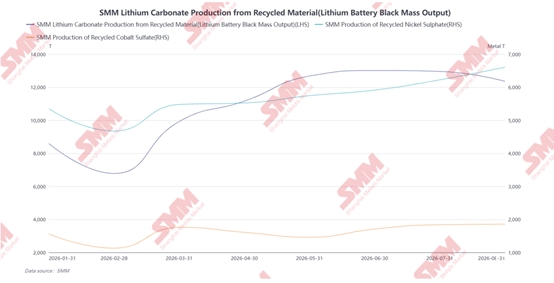
From the raw material side, the decline in scrap-derived lithium carbonate production was mainly constrained by black mass procurement. In August, difficulties in sourcing LFP (lithium iron phosphate) black mass persisted in the market, with tight supply limiting lithium carbonate recovery output. By contrast, ternary black mass procurement fared better than LFP black mass, as suppliers showed a generally strong willingness to sell, providing relatively ample ternary feedstock for the recycling sector. For LCO (lithium cobalt oxide) black mass, trading remained mediocre due to the impact of cobalt sulfate prices, with deals mostly conducted under long-term contracts and limited spot orders. In terms of prices, although spot lithium carbonate prices consolidated in August, they generally trended upward, lending some support to recyclers' quotes.
Cobalt sulfate production from scrap sources edged up 1%, but market fundamentals remained weak. In August, cobalt sulfate prices showed a clear downward trend overall, downstream consumption was relatively sluggish, and cobalt sulfate demand remained mediocre. The upward price momentum was insufficient, and scrap enterprises had limited willingness to expand production, resulting in relatively small output growth.
Nickel sulfate was a highlight this month. Recycled nickel sulfate production rose nearly 6% MoM, driven mainly by demand. Ternary cathode precursor demand edged up, and high-nickel products accounted for a relatively large share, leading to higher nickel salt consumption and sustained growth in nickel sulfate production. On the price side, nickel sulfate prices edged down in August, but with demand support, recycled-side operating rates and production remained stable.
Overall, the recycling market in August showed a pattern of "divergent supply and mediocre demand." Meanwhile, nickel sulfate performed well, driven by precursor demand, while recycled products using LFP and LCO as raw materials were constrained by both raw material procurement and weak consumption. In the short term, whether LFP black mass supply can improve and whether ternary cathode precursor demand can be sustained remain key factors affecting the production trend in the recycling sector.


![[SMM Analysis] Anode Material Output Hits New High in Aug 2026, Driven by EV and ESS Demand](https://imgqn.smm.cn/usercenter/QGlKw20251217171730.jpg)