DRC Expands State Control Over Geological Data as Critical-Minerals Mapping Accelerates

Published: Sep 08, 2026 15:23 (GMT+8)

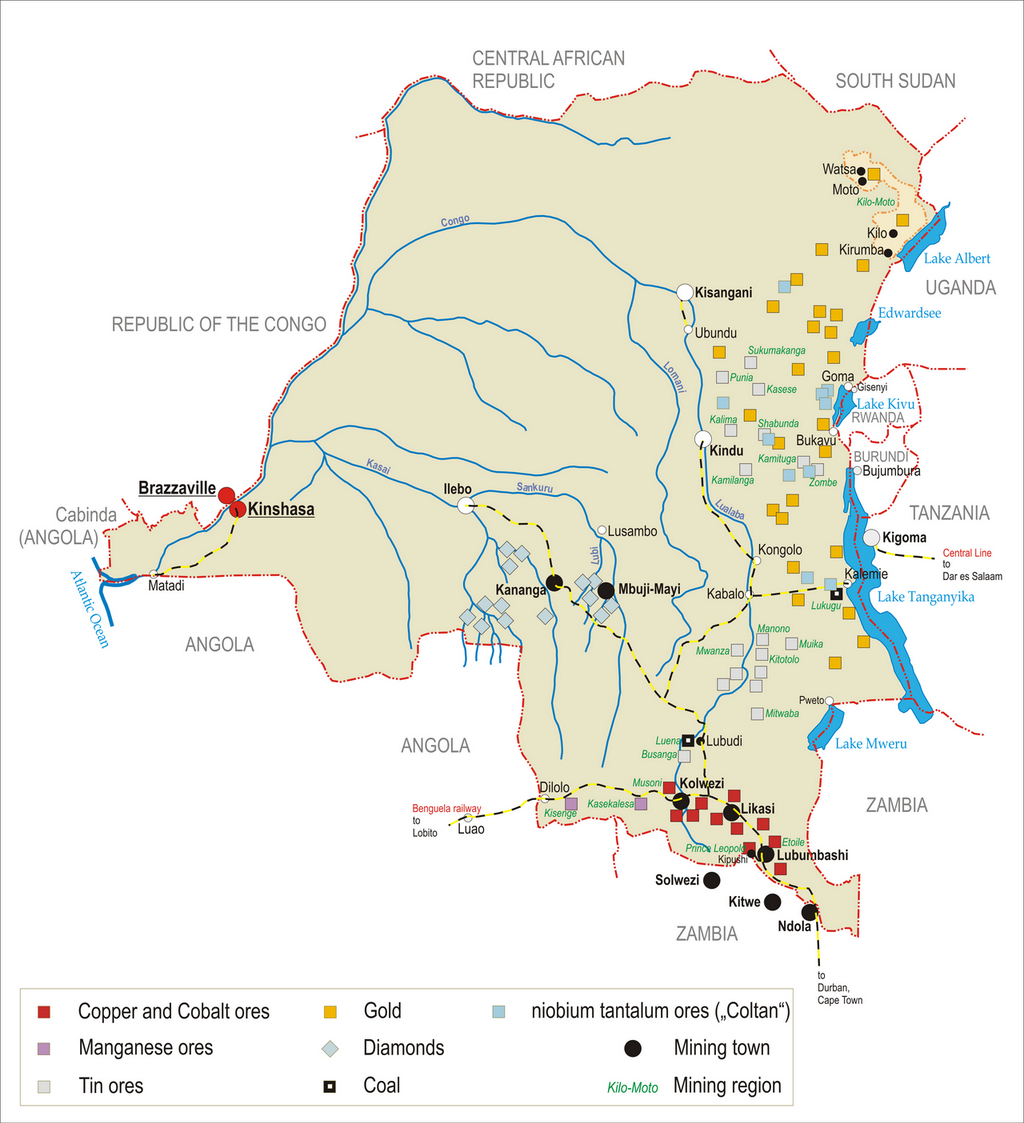
[SMM Flash] The Democratic Republic of Congo is strengthening state control over geological information as it develops a national databank covering critical minerals including tantalum, cobalt, copper, lithium and gold. The country’s geological survey told Reuters that systematic exploration currently covers only about 20% of the DRC, while a US$180 million airborne mapping programme with Spain’s Xcalibur is surveying more than 700,000 km². The national geological databank is expected to become fully operational by the end of 2026.

Basic geological information is expected to remain freely accessible, while more sensitive datasets will be subject to controlled, fee-based access. The initiative does not change current coltan production directly, but improved geological intelligence could influence where future tantalum exploration capital is deployed and strengthen Kinshasa’s negotiating position over new discoveries. The impact on actual supply will depend on whether mapped targets proceed through exploration, financing and mine development.

Data Source Statement: Except for publicly available information, all other data are processed by SMM based on publicly available information, market communication, and relying on SMM's internal database model. They are for reference only and do not constitute decision-making recommendations.

For any inquiries or for more information, please contact: lemonzhao@smm.cn
For more information on how to access our research reports, please contact:service.en@smm.cn
Related News
Malawi Sets Six-Month Development Milestones for Kanyika
2 hours ago
Malawi Sets Six-Month Development Milestones for Kanyika
Read More
Malawi Sets Six-Month Development Milestones for Kanyika
[SMM Niobium Flash] Globe Metals & Mining said on 28 September that Malawi’s Mining and Minerals Regulatory Authority had specified what the company must start building at its Kanyika niobium-tantalum project. The guidance, received on 25 September, sets a six-month period from that date to demonstrate substantial on-site development. The works include, where applicable, starting a processing plant, tailings storage facility, site offices and run-of-mine pad. Globe said the directive still requires ratification by the authority’s board. The guidance clarifies Kanyika’s next steps after its previous 27 September deadline to begin substantial mining operations. Globe reports that preparatory road and stockpile works have been completed, but it must still agree detailed engineering measures with regulators and demonstrate the required permanent works. Its aim of commercial production in early 2028 remains a company target.
2 hours ago
[SMM Chromium Flash] Global Chrome Ore Departures Rise 5.71% WoW to 660,600 mt, Richards Bay Rebounds, Maputo Slides
2 hours ago
[SMM Chromium Flash] Global Chrome Ore Departures Rise 5.71% WoW to 660,600 mt, Richards Bay Rebounds, Maputo Slides
Read More
[SMM Chromium Flash] Global Chrome Ore Departures Rise 5.71% WoW to 660,600 mt, Richards Bay Rebounds, Maputo Slides
[SMM Chromium Flash] Global Chrome Ore Departures Rise 5.71% WoW to 660,600 mt, Richards Bay Rebounds, Maputo Slides
Global chrome ore departures totaled 660,600 mt in the week ended September 25, up 5.71% week-on-week. This is a second consecutive weekly increase and the highest volume since the week ended September 4. The composition of the flows shifted markedly, however, as gains at Richards Bay and Mersin more than offset a steep pullback at Maputo. Maputo departures fell to 340,200 mt from 555,600 mt, a 38.77% decline that marks the port's lowest weekly volume since the week ended August 28. Its share of total departures narrowed to roughly 51.5% from about 89% a week earlier, ending a run of Maputo-dominated flows and pointing to a more evenly distributed export mix. Richards Bay filled the gap, returning to active shipping after two weeks of zero departures with 227,800 mt, its highest weekly volume since at least the week ended August 7 and equivalent to about 34% of total departures. Mersin also rose 22.22% to 84,700 mt from 69,300 mt, its highest weekly volume over the same period. Beira again recorded no chrome ore departures, remaining inactive for a third consecutive week. The week's data shows the resilience of overall seaborne chrome ore flows from Southern Africa despite a sharp Maputo slowdown, with Richards Bay's rebound reducing the region's reliance on a single corridor. Given the intermittent loading pattern at Richards Bay in recent weeks, whether the port sustains this level of activity will be a key factor for regional shipment volumes ahead.
2 hours ago
【Flash | Sivers Targets Over 100 Million Annual InP Laser Capacity】
2 hours ago
【Flash | Sivers Targets Over 100 Million Annual InP Laser Capacity】
Read More
【Flash | Sivers Targets Over 100 Million Annual InP Laser Capacity】
Sivers Semiconductors announced a $30 million expansion of its indium phosphide (InP) manufacturing facility in Glasgow. Upon completion, the site is expected to support annual production of over 100 million CW DFB lasers. Work will begin in H2 2026, with operations targeted for Q4 2027. Sivers linked the investment to anticipated AI datacenter and optical-networking customer ramps and expects InP lasers and semiconductor optical amplifiers to play a growing role in energy-efficient optical connectivity. SMM views the expansion as direct medium-term support for high-purity indium demand. However, current output, utilization and indium intensity were not disclosed.
2 hours ago