SMM, 2 сентября:

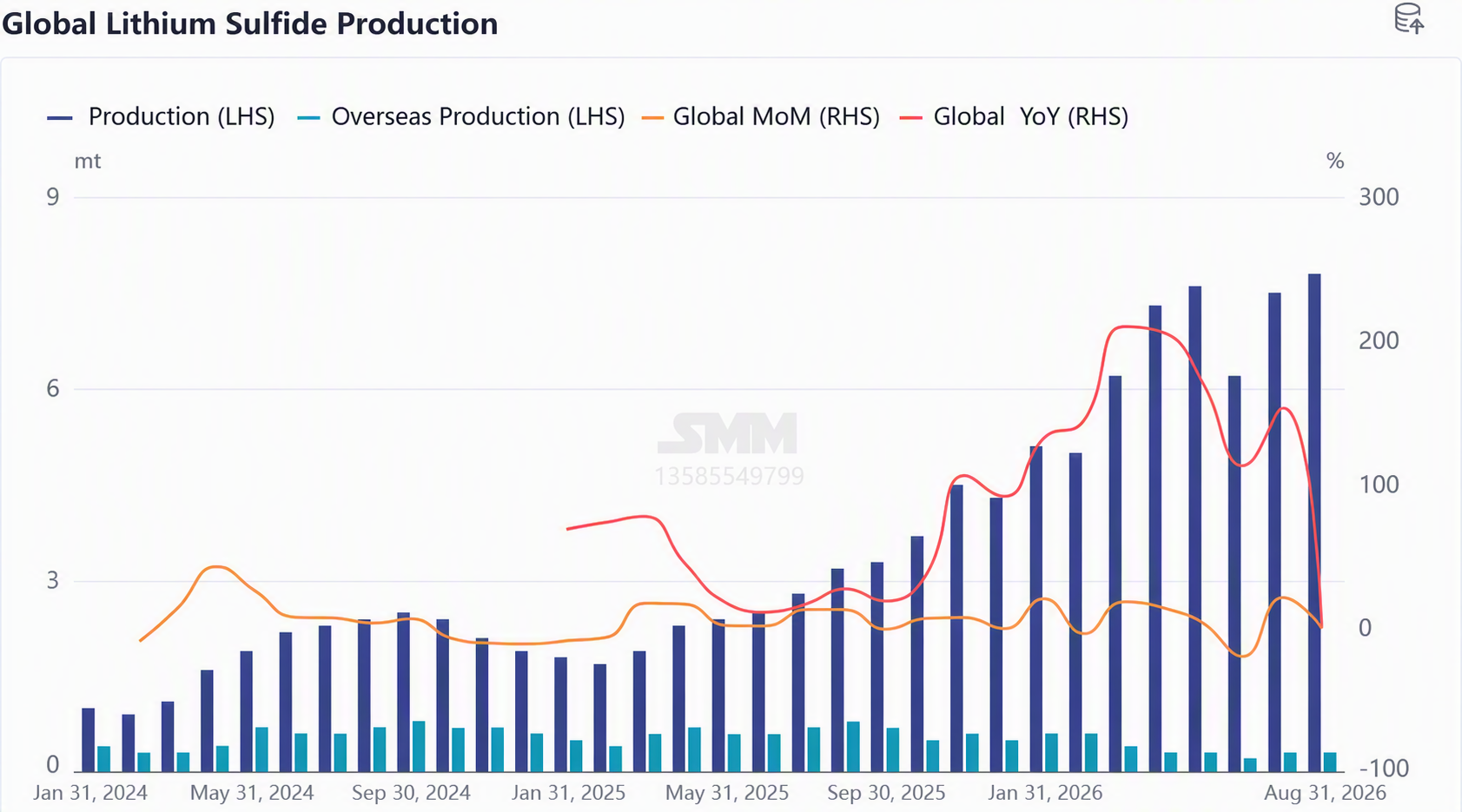
Ключевые моменты: В августе 2026 года производство сульфида лития в Китае составило 7,8 тыс. тонн, что на 3,6% больше по сравнению с предыдущим месяцем и на 143% больше по сравнению с аналогичным периодом прошлого года. Будет ли в четвёртом квартале резкий рост производства сульфида лития? Судя по спросу со стороны перерабатывающих отраслей, в настоящее время это маловероятно, однако умеренное расширение объёмов должно продолжиться. Ожидается, что среднемесячное производство достигнет диапазона 9–10 тыс. тонн, постепенно увеличиваясь по сравнению с третьим кварталом, а не скачкообразно.
1. Обзор за январь–август: Китай уже доминирует в мировом предложении
Совокупное производство в Китае за январь–август составило 52,9 тыс. тонн, что на 184% больше по сравнению с аналогичным периодом прошлого года и превышает общий показатель за весь 2025 год в 34 тыс. тонн. Внутренние мощности вступили в фазу существенного фактического выпуска. За пределами Китая производство за тот же период составило лишь 3,0 тыс. тонн, что на 39% меньше по сравнению с аналогичным периодом прошлого года. Предприятия в Японии и Южной Корее, ограниченные вводом оборудования в эксплуатацию и недостаточным объёмом заказов от перерабатывающих отраслей, по сути находятся в состоянии «мощности есть, производства нет». Из общемирового объёма в 55,9 тыс. тонн на долю Китая пришлось 95%.
Ключевой вопрос: Отражает ли производство Китая в объёме 52,9 тыс. тонн то, «сколько можно произвести», или то, «сколько требует спрос»? Ответ склоняется ко второму — текущий выпуск в большей степени определяется темпами пополнения запасов у перерабатывающих предприятий, чем узкими местами мощностей. Многие производители заранее накапливают запасы в расчёте на улучшение спроса в четвёртом квартале.
2. Показатели третьего квартала: наращивание продолжается, но темпы замедляются
Данные за август: Китай произвёл 7,79 тыс. тонн, что на 3,6% больше по сравнению с предыдущим месяцем и на 143% больше по сравнению с аналогичным периодом прошлого года. Темп роста по сравнению с предыдущим месяцем сократился с двузначных значений во втором квартале до однозначных, что свидетельствует о том, что самый крутой этап наращивания мощностей пройден. Далее последует умеренное увеличение производства, а не взрывной скачок.
Ожидания на сентябрь: Ожидается, что Китай произведёт 8,0–8,5 тыс. тонн, со средним значением 8,3 тыс. тонн, что станет новым максимумом за год. Этому способствуют три фактора: ① стабильная работа основных предприятий; ② жёсткий спрос на пополнение запасов со стороны клиентов из сектора твердотельных аккумуляторов в конце третьего квартала; ③ новые мощности Xiba, Wanbang и других компаний, всё ещё находящиеся в фазе освоения с низкой загрузкой. Но и верхняя граница столь же очевидна — клиенты из числа производителей аккумуляторных элементов ещё не вступили в цикл крупномасштабных закупок, поэтому оснований для скачка загрузки мощностей нет.
За пределами Китая производство осталось на низком уровне в 0,3 тыс. тонн, что по сути незначительно.
3. Прогноз на четвёртый квартал: скачка не ожидается
Ожидается, что среднемесячное производство в четвёртом квартале окажется в диапазоне 9–10 тыс. тонн, что примерно на 15–25% выше, чем примерно 8 тыс. тонн в месяц в третьем квартале. Это умеренное расширение объёмов, а не скачок.
3.1 Факторы, поддерживающие рост:
Во-первых, ввод новых мощностей : полностью твердотельная производственная линия в Сычуани, как ожидается, будет запущена в четвёртом квартале, линия Xiba масштабом в сотни тонн продолжает наращивать выпуск, а у Wanbang и предприятий на соляных озёрах ещё есть резервы для увеличения производства. Всё это источники существующей гибкости, которые «уже вложены, но ещё не загружены полностью».
Во-вторых, спрос, обусловленный пополнением запасов у перерабатывающих предприятий: Четвёртый квартал традиционно является сезоном пополнения запасов для предприятий по производству аккумуляторных материалов, и с ускорением пилотных линий у некоторых клиентов в сфере твердотельных аккумуляторов ожидается улучшение спроса по сравнению с предыдущим кварталом.
3.2 Факторы, сдерживающие взрывной рост:
Заказы являются жёстким ограничением: Твердотельные аккумуляторы всё ещё находятся накануне коммерциализации, и объёмы закупок сульфидного электролита ведущими производителями аккумуляторных элементов далеки от стадии «наращивания». Без конечных заказов линии по производству сульфида лития не будут работать на полную мощность — это не вопрос мощностей, а вопрос экономики.
Отсутствие опоры на зарубежные рынки: японские и южнокорейские компании в четвёртом квартале по-прежнему будут сосредоточены на вводе оборудования в эксплуатацию и мелкосерийной валидации, что означает, что рост мирового предложения может исходить только из Китая.
Количественная оценка: Среднемесячное производство в четвёртом квартале, скорее всего, окажется в диапазоне 9–10 тыс. тонн, при этом в декабре оно может достичь 10–11 тыс. тонн (в зависимости от темпов ввода в эксплуатацию полностью твердотельного проекта в Сычуани), однако общий объём производства за весь год ожидается в диапазоне 85–95 тыс. тонн, что соответствует росту в 2,5–2,8 раза по сравнению с базовым показателем 2025 года в 34 тыс. тонн.
IV. Основное противоречие: узким местом являются не мощности, а заказы
Реальное состояние рынка сульфида лития таково: существующие мощности в Китае значительно превышают фактическое производство, а фактическое производство, в свою очередь, зависит от темпов закупок со стороны клиентов из сектора твердотельных аккумуляторов.
Единственная ключевая переменная, за которой стоит следить в IV квартале: покажут ли объёмы закупок электролита у ведущих отечественных предприятий по твердотельным аккумуляторам существенный рост м/м. Если ответ «да», среднемесячный уровень в IV квартале может приблизиться к 10–11 т; если «нет», разумной серединой остаются 9–10 т.
V. Резюме одним предложением
В IV квартале «взрывного» роста не будет, но сохранится темп умеренного помесячного увеличения. Годовой итог 85–95 т уже полностью подтверждает возможности предложения. Настоящий «взрывной» рост придётся ждать до наращивания объёмов установок твердотельных батарей на стороне downstream — это как минимум история после 2027 года.
Предупреждение о рисках: если готовность downstream к пополнению запасов в IV квартале окажется ниже ожиданий (особенно при задержке прогресса пилотных проектов у клиентов твердотельных батарей), отечественные компании могут заблаговременно снизить загрузку мощностей, и месячный выпуск может столкнуться с риском снижения примерно до 8 т.
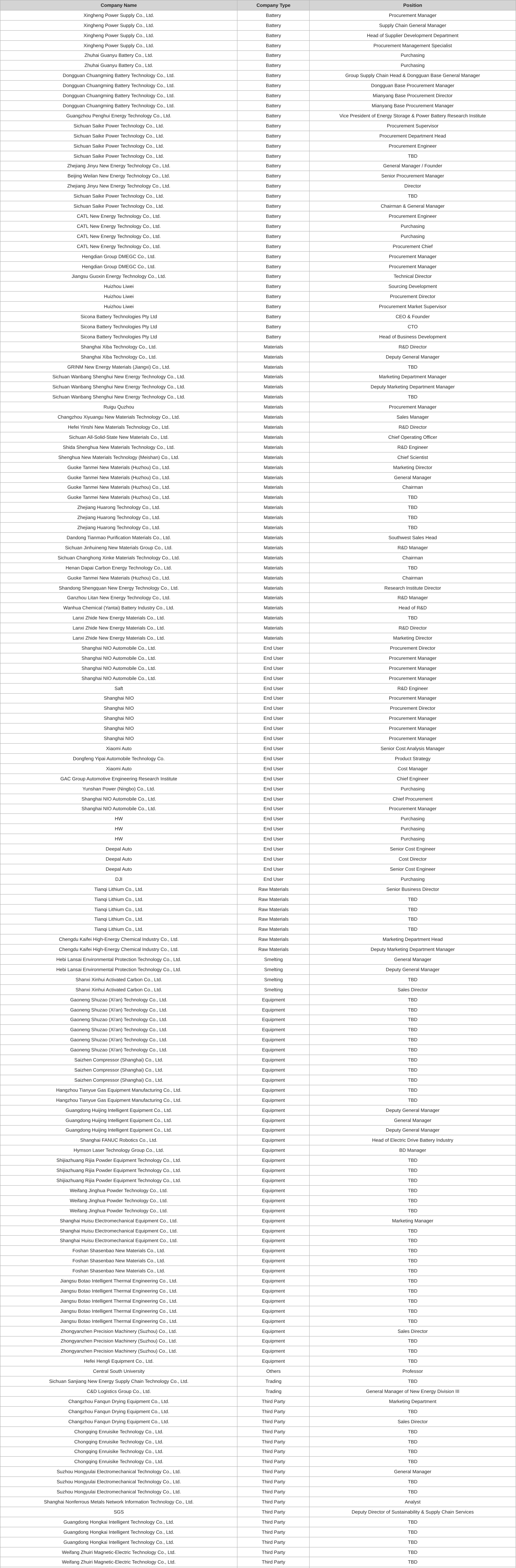
Список участников конференции SMM по твердотельным аккумуляторам (частичный)
Примечание: если вы можете поделиться дополнительными сведениями по вопросам, затронутым в этой статье, или хотите следить за развитием твердотельных аккумуляторов, пожалуйста, свяжитесь:
Тел.: 021-20707860 (или добавьте WeChat 13585549799) Ян Чаосин, спасибо!

Материалы по теме
![[SMM Flash] Albemarle завершила аукцион по сподуменовому концентрату Wodgina по цене 2307 долл. США/т CIF Китай](https://imgqn.smm.cn/usercenter/WyqWW20251217171729.jpg)
![[Ли-батарея: Ruien New Energy подписывает соглашение о строительстве завода по производству аккумуляторных элементов в Сербии с инвестициями более 100 миллионов евро]](https://imgqn.smm.cn/usercenter/ajAmi20251217171726.jpg)
![[Ли-батареи: Индия рассматривает план стимулирования производства современных компонентов для аккумуляторов на сумму 1,4 млрд долларов США]](https://imgqn.smm.cn/usercenter/ipFFo20251217171725.jpg)