บทความก่อนหน้าของเราเผยแพร่เมื่อวันที่ 20 สิงหาคม ณ จุดนั้น คณะกรรมาธิการเหลือเวลาอีก 11 วันก่อนถึงกำหนดเส้นตายตามกฎหมายของตนเอง และยังไม่มีสิ่งใดปรากฏในราชกิจจานุเบกษา
ขณะนี้กฎระเบียบได้ประกาศออกมาแล้ว ข้อบังคับการดำเนินการของคณะกรรมาธิการ (EU) 2026/1963 ได้รับการรับรองเมื่อวันที่ 31 สิงหาคม โดยได้รับการสนับสนุนเป็นเอกฉันท์จากประเทศสมาชิกเมื่อวันที่ 19 สิงหาคม ซึ่งตรงกับกำหนดเส้นตายตามกฎหมายพอดี
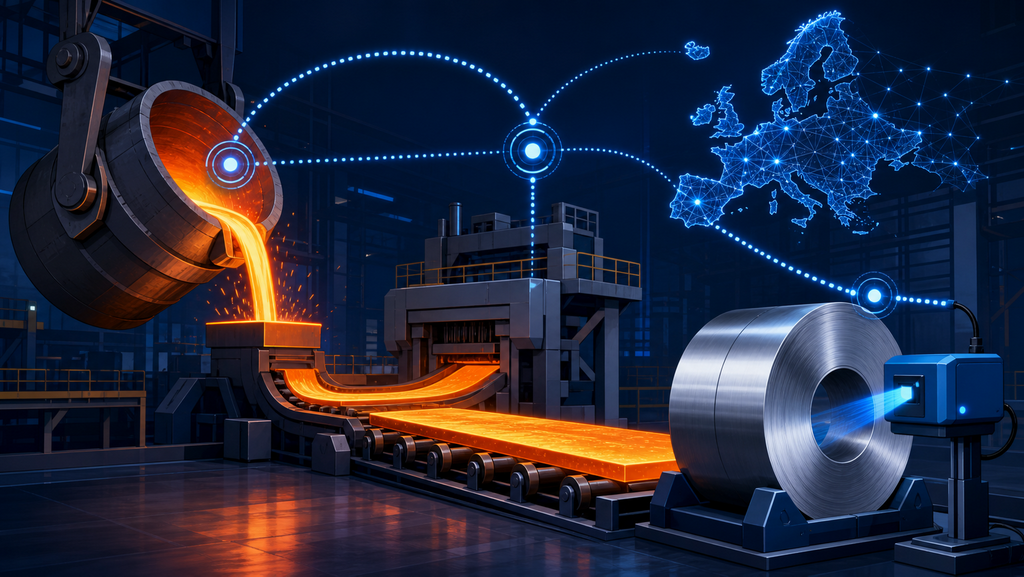
ตั้งแต่วันที่ 1 ตุลาคมเป็นต้นไป สินค้าสแตนเลสทุกรุ่นที่เข้าสู่สหภาพยุโรปต้องระบุว่าเหล็กถูกหลอมที่ใดและมาจากความร้อนชุดใด
I. สองช่องข้อมูล และไม่มีช่องใดเป็นทางเลือก
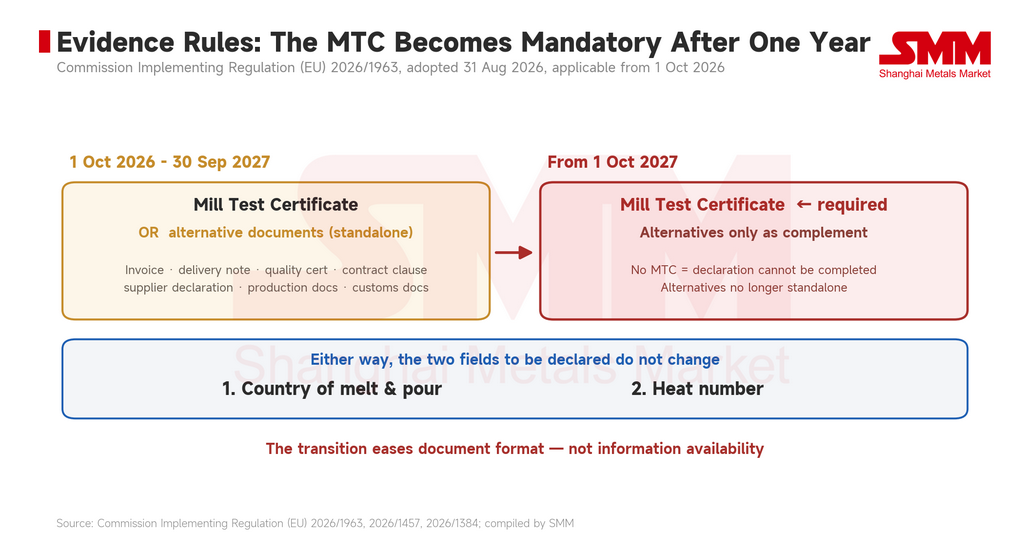
ผู้นำเข้าต้องสำแดงประเทศที่หลอมและเทในใบขนสินค้าและมีหลักฐานรองรับ
หลักฐานหลักคือใบรับรองการทดสอบจากโรงงาน (MTC) ซึ่งต้องระบุทั้งประเทศที่หลอมและเท และหมายเลขความร้อน
ในกรณีที่ MTC ขาดช่องข้อมูลใดช่องหนึ่ง หรือไม่สามารถแสดงได้เลย ศุลกากรอาจยอมรับเอกสารต่อไปนี้เป็นหลักฐานเสริมหรือหลักฐานเดี่ยว โดยต้องมีข้อมูลสองจุดเดียวกัน ได้แก่ ใบแจ้งหนี้ ใบส่งสินค้า ใบรับรองคุณภาพ ข้อกำหนดในใบสั่งซื้อหรือสัญญาที่ดำเนินการแล้ว ใบรับรองผู้จัดหาระยะยาว เอกสารบัญชีต้นทุนและการผลิต เอกสารศุลกากรจากประเทศผู้ส่งออก จดหมายโต้ตอบทางการค้า และคำอธิบายการผลิต
รายการยาว แต่เกณฑ์มีเพียงข้อเดียว คุณระบุประเทศที่หลอมและหมายเลขความร้อนได้หรือไม่ รูปแบบเอกสารยืดหยุ่นได้ แต่ข้อมูลยืดหยุ่นไม่ได้
คณะกรรมาธิการระบุว่ากฎระเบียบนี้จัดทำขึ้นจากความคิดเห็นของผู้มีส่วนได้ส่วนเสียเกือบ 170 รายในการรับฟังความคิดเห็นแบบเจาะจง โดยมีเป้าหมายเพื่อให้ตรวจสอบย้อนกลับได้โดยไม่สร้างภาระการปฏิบัติตามที่ไม่จำเป็น
II. ช่วงเปลี่ยนผ่านหนึ่งปีที่ผ่อนปรนเอกสาร ไม่ใช่ความพร้อมของข้อมูล
จนถึง วันที่ 30 กันยายน 2027 เอกสารทางเลือกอาจใช้เป็นหลักฐานเดี่ยวได้ สินค้าที่ไม่มี MTC เลยยังสามารถผ่านพิธีการได้ด้วยการรวมใบแจ้งหนี้ ใบรับรองผู้จัดหา และบันทึกการผลิต
ตั้งแต่ วันที่ 1 ตุลาคม 2027 เอกสารเหล่านั้นจะได้รับการยอมรับเพียงเป็นเอกสารเสริมของ MTC เท่านั้น ไม่ใช่ใช้โดยลำพัง
สิ่งที่ช่วงเวลาหนึ่งปีผ่อนปรนคือคำถามว่าจะทำอย่างไรเมื่อไม่มี MTC แต่ไม่ได้ผ่อนปรนคำถามว่าประเทศที่หลอมและหมายเลขความร้อนมาจากไหน สองช่องข้อมูลนี้ไม่เปลี่ยนแปลงตลอดช่วงเวลา
สำหรับผู้ส่งออกสแตนเลส ปีนี้คือช่วงเวลาแห่งการเปิดความสัมพันธ์กับซัพพลายเออร์ต้นน้ำนี่ไม่ใช่ปีที่จะรอให้ผ่านไป
III. เลขฮีตคือปัญหาที่แท้จริง — และสเตนเลสยิ่งหนักกว่า
ประเทศที่หลอมนั้นตรงไปตรงมาสำหรับผู้ที่มีกำลังการผลิตสเตนเลสครบวงจรในประเทศ คุณเป็นผู้หลอม ประเทศก็ถูกกำหนดไว้แล้ว
เลขฮีตคือส่วนที่ยาก และสเตนเลสยากกว่าเหล็กกล้าคาร์บอน
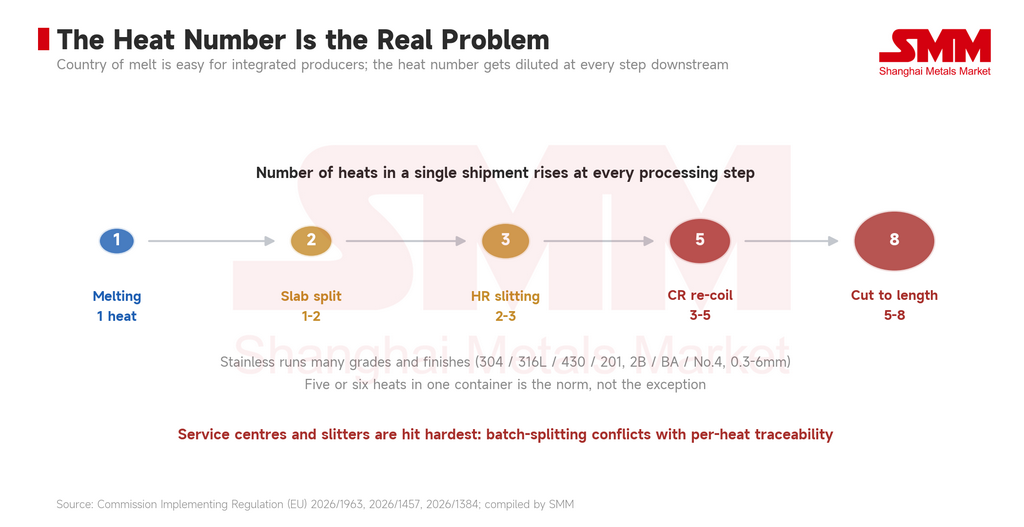
เลขฮีตระบุถึงประจุเตาหลอมหนึ่งครั้ง มันมีอยู่แต่แรกที่โรงงาน แต่ถูกเจือจางลงในทุกขั้นตอนปลายน้ำ: การตัดแบ่งสแล็บ การสลิตเตอร์รีดร้อน การม้วนใหม่หลังรีดเย็น การสลิตแถบแคบ การตัดตามความยาว สเตนเลสยิ่งซ้ำเติมด้วยการแตกย่อยของเกรดและผิวสำเร็จ — 304, 316L, 430, 201; 2B, BA, No. 4; ความหนาตั้งแต่ 0.3 มม. ถึง 6 มม. คำสั่งซื้อหนึ่งรายการมักประกอบขึ้นจากหลายฮีต
ห้าหรือหกฮีตในตู้คอนเทนเนอร์เดียวคือเรื่องปกติในการค้าสเตนเลส ไม่ใช่ข้อยกเว้น
ตั้งแต่วันที่ 1 ตุลาคมเป็นต้นไป แต่ละฮีตเหล่านั้นต้องโยงกลับไปยังบันทึกการหลอมต้นทางได้ นั่นคือปัญหาทางบัญชีแยกประเภท ไม่ใช่ปัญหาทางเอกสาร
ผู้ประกอบการแปรรูปและสลิตเตอร์มีความเสี่ยงสูงสุด โมเดลธุรกิจของพวกเขา — การแยกคอยล์ใหญ่ การรวมหลายแหล่งเข้าเป็นคำสั่งซื้อเดียว — ขัดแย้งโดยตรงกับการตรวจสอบย้อนกลับรายฮีต
IV. สี่กลุ่ม แบ่งตามสองตัวแปร
เมื่อซ้อนกฎการหลอมและการเทลงบนการจัดสรรโควตารายประเทศ ผู้ส่งออกแบ่งออกตามสองแกน: มีกำลังการหลอมสเตนเลสในประเทศหรือไม่ และโควตาของตนใช้ช่องทางเดียว MFN หรือช่องทางคู่ FTA
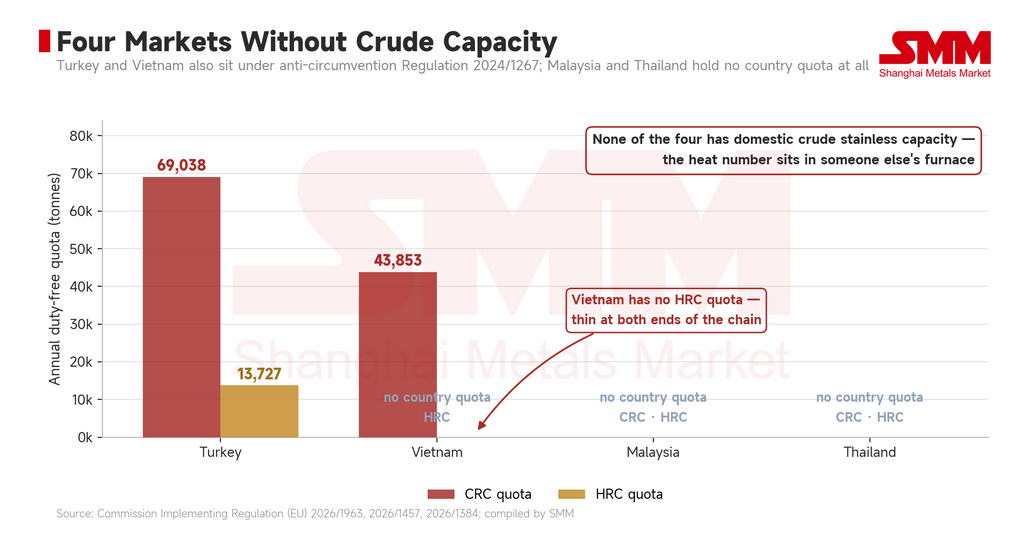
กลุ่มที่หนึ่ง: ไม่มีกำลังการหลอมในประเทศ — ตุรกี เวียดนาม มาเลเซีย ไทย
ภาระหลักฐานที่หนักที่สุดอยู่ที่นี่
ตุรกีถือโควตา CRC 69,038 เมตริกตัน และเวียดนาม 43,853 เมตริกตัน — ทั้งสองตัวเลขไม่น้อยเลย มาเลเซียและไทยไม่มีการจัดสรร CRC เฉพาะประเทศและต้องดึงจากโควตาคงเหลือ
สิ่งที่รวมสี่ประเทศนี้เข้าด้วยกันคือการไม่มีกำลังการหลอมสเตนเลสในประเทศ เลขฮีตไม่ได้อยู่ในมือของพวกเขา แต่อยู่ในเตาหลอมของผู้จัดหา
ช่วงเปลี่ยนผ่านอนุญาตให้ใช้เอกสารทางเลือก แต่เอกสารเหล่านั้นก็ยังต้องมีเลขฮีต หากโรงงานต้นทางไม่ให้มา เอกสารทางเลือกก็ผลิตออกมาไม่ได้เช่นกัน
เวียดนามสมควรมีหมายเหตุแยกต่างหาก: ถือโควตา CRC แต่ไม่มีการจัดสรร HRC เฉพาะประเทศเส้นทางของมัน — นำเข้าคอยล์รีดร้อนจากอินโดนีเซีย รีดเย็น แล้วส่งออกไปยังสหภาพยุโรป — มีโควตาครอบคลุมเฉพาะปลายทางสินค้าสำเร็จรูปเท่านั้น หากแหล่งหลอมเหล็กกลายเป็นเกณฑ์ในการระบุแหล่งกำเนิด รากฐานโควตาภายใต้เส้นทางนั้นก็บางมาก
ตุรกีและเวียดนามมีชั้นซับซ้อนเพิ่มอีกหนึ่งชั้น ภาษีตอบโต้การทุ่มตลาด 19.3% และภาษีตอบโต้การอุดหนุน 20.5% ของสหภาพยุโรปสำหรับเหล็กกล้าไร้สนิมรีดเย็นจากอินโดนีเซียถูกขยายไปยังไต้หวัน (มณฑลของจีน) ตุรกี และเวียดนามภายใต้ข้อบังคับการหลบเลี่ยงมาตรการ 2024/1267 ทั้งสามประเทศอยู่ในขอบเขตการหลบเลี่ยงอยู่แล้ว การระบุแหล่งหลอมและเทเพิ่มประตูเอกสารซ้อนทับบนภาษีที่บังคับใช้อยู่แล้ว
มาเลเซียเป็นกรณีที่ชัดเจนที่สุด การส่งออกไปยุโรปในท้องถิ่นเป็นการรีดเย็นล้วน ๆ คอยล์รีดร้อนและสแลบซื้อเข้ามาทั้งหมด เตาหลอมต้นทางอยู่ที่ใดขึ้นอยู่กับว่าการซื้อครั้งปัจจุบันมาจากอินโดนีเซีย ไต้หวัน (มณฑลของจีน) หรือเกาหลีใต้ แหล่งหลอมไม่ใช่คำตอบตายตัวในที่นี้ แต่เป็นตัวแปรที่ต้องกำหนดใหม่ทุกครั้งที่ขนส่ง
ตุรกีเริ่มตอบสนองแล้ว Nikel Paslanmaz ประกาศการลงทุนเกิน 150 ล้านดอลลาร์สหรัฐในปีนี้ในโรงงานผลิตภัณฑ์ยาวเหล็กกล้าไร้สนิมครบวงจรและโรงรีดเย็น โดยทยอยเริ่มเดินเครื่องตลอดปี 2027 และ 2028 ตุรกีนำเข้าเหล็กกล้าไร้สนิมประมาณ 700,000 ตันต่อปี เหตุผลเชิงกลยุทธ์สำหรับการบูรณาการในประเทศสอดคล้องกับตารางเวลาการระบุแหล่งหลอมและเทอย่างใกล้ชิด
กลุ่มที่สอง: มีกำลังการผลิตเหล็กดิบ แต่เส้นทาง MFN ในทั้งสองหมวด — จีนแผ่นดินใหญ่และไต้หวัน (มณฑลของจีน)
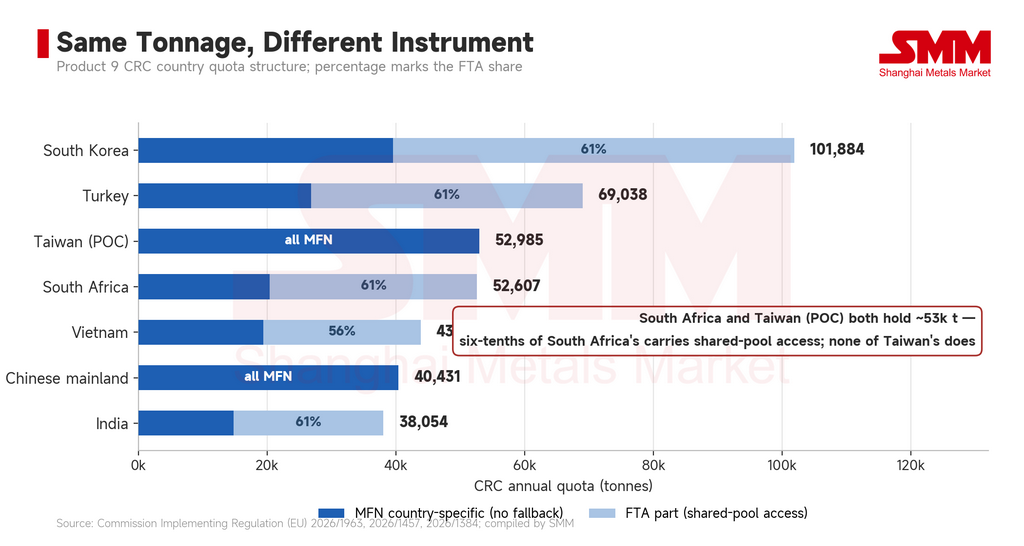
ไต้หวัน (มณฑลของจีน) ถือโควตา CRC 52,985 ตัน อยู่ในอันดับสามของหมวด จีนแผ่นดินใหญ่ถือ 40,431 ตัน ทั้งสองมีศักยภาพการหลอมเหล็กกล้าไร้สนิมดิบในประเทศ มีใบรับรองโรงงาน (MTC) และเลขเตาหลอมอยู่ในบันทึกการผลิตของตนเอง
ความท้าทายในวันที่ 1 ตุลาคมของทั้งสองคือการออกแบบกระบวนการใหม่ ไม่ใช่การจัดหาเอกสาร: การสร้างบัญชีที่เชื่อมโยงเลขเตาหลอมกับสินค้าส่งออก เป็นงานหนัก แต่เส้นทางชัดเจน
ข้อจำกัดที่แท้จริงคือโครงสร้างโควตา — และมีผลกับทั้งสองหมวด ไต้หวัน (มณฑลของจีน) ถือ CRC 52,985 ตัน และ HRC 19,984 ตัน จีนแผ่นดินใหญ่ถือ CRC 40,431 ตัน และ HRC 9,515 ตัน การจัดสรรทั้งสี่รายการอยู่บนเส้นทาง MFN ทั้งหมดโดยไม่มีส่วน FTA เลย และภายใต้ภาคผนวก II มาตรา 3 ทั้งสองไม่สามารถใช้โควตาคงเหลือได้ เมื่อโควตาเฉพาะประเทศหมดลง ผู้ส่งออกต้องเผชิญภาษี 50% โดยไม่มีกันชน
เกาหลีใต้ทำให้ความแตกต่างชัดเจน จากโควตา CRC 101,884 ตัน เป็น MFN 39,565 ตัน และ FTA 62,319 ตัน — หกในสิบของปริมาณมีสิทธิ์เข้าถึงพูลร่วม ดังนั้นการหมดโควตาประเทศจึงไม่ปิดเส้นทาง โควตา 52,985 ตันของไต้หวัน (มณฑลของจีน) เป็น MFN ทั้งหมด ไม่มีกันชนแม้แต่ตันเดียว
ช่องว่างไม่ใช่แค่สองต่อหนึ่งในเชิงปริมาณ ในเชิงโครงสร้างนี่คือเครื่องมือสองชนิดที่ต่างกัน: อย่างหนึ่งคือบัตรผ่านที่มีทางสำรอง อีกอย่างคือตั๋วเที่ยวเดียว
ไต้หวัน (มณฑลของจีน) มีสถานการณ์เพิ่มเติม ในฐานะผู้ถูกดำเนินคดีหลบเลี่ยงมาตรการปี 2024 ผู้ผลิตเหล็กกล้าไร้สนิมแปดรายได้รับการยกเว้น แต่ต้องแสดงอย่างต่อเนื่องว่ามิได้เพิ่มการซื้อวัตถุดิบจากอินโดนีเซียอย่างมีนัยสำคัญ ต่อมา EUROFER ได้คัดค้านคำตัดสินการยกเว้นเหล่านั้นในสองคดี (T-390/24, T-391/24) ซึ่งยังอยู่ระหว่างพิจารณา การระบุแหล่งหลอมและเทเปลี่ยนระดับรายละเอียดของหลักฐานจากการตรวจสอบการปฏิบัติตามรายปีเป็นรายการศุลกากรทุกรายการ
กลุ่มที่สาม: ได้เปรียบทั้งสองตัวแปร — เกาหลีใต้อินเดียแอฟริกาใต้
โควตา CRC 101,884 ตันของเกาหลีใต้ใหญ่ที่สุดในสนาม โดยหกในสิบอยู่บนเส้นทาง FTA ด้วยศักยภาพเหล็กกล้าไร้สนิมดิบในประเทศ การระบุแหล่งหลอมและเทจึงไม่สร้างอุปสรรคใหม่ โควตา HRC 20,735 ตันรวมส่วน FTA 12,166 ตัน — มีกันชนอีกเช่นกัน
จุดแข็งของอินเดียอยู่ที่ผลิตภัณฑ์ยาวและท่อเหล็กกล้าไร้สนิม: เหล็กเส้น 92,557 ตัน ลวดเหล็ก 18,772 ตัน ท่อไร้รอยต่อ 15,329 ตัน ทั้งหมดเป็นอันดับหนึ่งด้วยส่วนต่างกว้าง CRC ที่ 38,054 ตันไม่โดดเด่น แต่ 23,276 ตัน — เกิน 60% — อยู่บนเส้นทาง FTA HRC ที่ 26,019 ตันอยู่อันดับสอง ใบรับรองโรงงานและเลขเตาหลอมอยู่ภายในระบบของตนเอง
แอฟริกาใต้ถือโควตา CRC 52,607 ตัน ใกล้เคียงกับตัวเลขของไต้หวัน (มณฑลของจีน) — แต่ 32,178 ตันเป็น FTA ตัวเลขพาดหัวเท่ากันในช่วงห้าหมื่นต้น ๆ หกในสิบของแอฟริกาใต้มีสิทธิ์เข้าถึงพูลร่วม ส่วนของไต้หวัน (มณฑลของจีน) ไม่มีเลย ตัวเลขเดียวกัน แต่ตำแหน่งต่างกันโดยสิ้นเชิง
สิ่งที่ทั้งสามมีร่วมกัน: กฎทำให้ช่องทางของผู้อื่นแคบลง และส่วนแบ่งสัมพัทธ์ของพวกเขาก็เพิ่มขึ้นตาม
กลุ่มที่สี่: อินโดนีเซีย — ไม่ใช่ผู้ได้ประโยชน์ แต่เป็นจุดที่ความเสี่ยงมาบรรจบ
เริ่มจากตัวเลขที่ชวนให้อ่านผิด
อินโดนีเซียถือโควตาประเทศใหญ่ที่สุดในเหล็กกล้าไร้สนิมรีดร้อนที่ 35,843 ตัน นำหน้าอินเดีย เกาหลีใต้ และไต้หวัน (มณฑลของจีน) ดูจากตัวเลขนั้นเพียงอย่างเดียวเหมือนเป็นผู้ชนะในรายการนี้
เปิดหมวดรีดเย็นดู อินโดนีเซียไม่มีโควตาเฉพาะประเทศเลย รายชื่อประเทศ CRC เรียงดังนี้ เกาหลีใต้ 101,884 ตัน ตุรกี 69,038 ตัน ไต้หวัน (มณฑลของจีน) 52,985 ตัน แอฟริกาใต้ 52,607 ตัน เวียดนาม 43,853 ตัน จีนแผ่นดินใหญ่ 40,431 ตัน อินเดีย 38,054 ตัน อินโดนีเซียไม่อยู่ในรายชื่อ เข้าถึงได้เฉพาะพูลร่วม FTA — 22,217 ตัน มาก่อนได้ก่อนสำหรับคู่ค้า FTA ทั้งหมด — หรือพูลคงเหลือ MFN
ในปัจจุบันนี่ไม่ใช่ปัญหา เพราะการระบุแหล่งหลอมและเทเป็นเพียงหน้าที่ในการแจ้ง และการจัดสรรโควตายังคงตามแหล่งกำเนิดทางศุลกากร เหล็กหลอมอินโดนีเซียที่รีดเป็นคอยล์รีดเย็นในเวียดนามใช้โควตา 43,853 ตันของเวียดนาม ไม่ใช่บัญชีของอินโดนีเซีย
ปัญหาอยู่ที่ขั้นต่อไป
ตั้งแต่วันที่ 1 ตุลาคม 2027 ข้อมูลแหล่งหลอมและเทจะถูกป้อนเข้าสู่การจัดสรรโควตาประเทศ ภายในวันที่ 30 มิถุนายน 2028 คณะกรรมาธิการต้องประเมินว่าแหล่งหลอมควรเป็นเกณฑ์สำหรับสิทธิ์โควตาหรือไม่
หากขั้นตอนนั้นเสร็จสมบูรณ์ บัญชีจะถูกปรับใหม่: คอยล์รีดเย็นแหล่งกำเนิดอินโดนีเซียที่ปัจจุบันบันทึกไว้กับเวียดนามและตุรกีจะกลับเข้าบัญชีของอินโดนีเซีย และอินโดนีเซียไม่มีโควตา CRC เฉพาะประเทศมารองรับ
การคำนวณคร่าว ๆ จากตัวเลขปัจจุบัน โควตา 43,853 ตันของเวียดนามบวก 69,038 ตันของตุรกีรวมเป็น 112,891 ตัน ก่อนเพิ่มปริมาณจากมาเลเซียและไทยที่ดึงจากพูลคงเหลือ วัตถุดิบจากอินโดนีเซียคิดเป็นสัดส่วนที่มีนัยสำคัญของการส่งออกไปยุโรปของทั้งสองตลาด — แม้คิดเพียงครึ่งเดียว ก็เกิน 50,000 ตันที่ต้องหาที่อยู่ใหม่ พูลร่วม FTA ของอินโดนีเซียรวม 22,217 ตัน ซึ่งต้องแบ่งกับคู่ค้า FTA ทุกราย
มันไม่พอดี
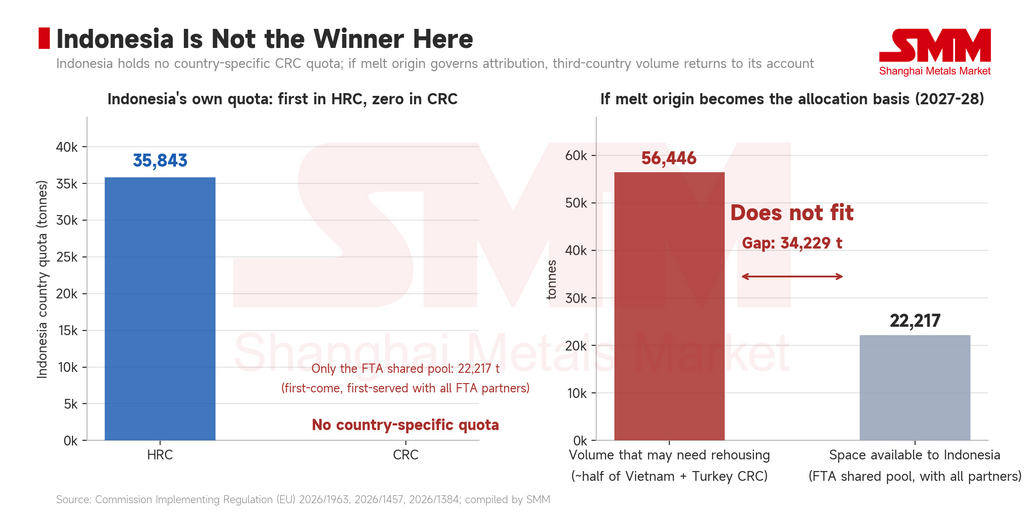
และสิ่งที่ไม่พอดีก็ตกอยู่ที่สมุดคำสั่งซื้อของอินโดนีเซีย
หากเหล็กหลอมอินโดนีเซียมีโควตาครอบคลุมไม่เพียงพอในสหภาพยุโรป ผู้แปรรูปในเวียดนาม ตุรกี และมาเลเซียจะคำนวณใหม่ก่อนซื้อสแลบและคอยล์รีดร้อนจากอินโดนีเซีย: วัสดุนี้ยังเข้าไปยุโรปได้หรือไม่เมื่อรีดแล้ว ใช้โควตาของใคร จะเกิดอะไรขึ้นเมื่อโควตานั้นหมด
เมื่อคำตอบไม่แน่นอน ทางเลือกที่สมเหตุสมผลคือเปลี่ยนวัตถุดิบ ผู้แปรรูปเหล่านี้เป็นผู้ซื้อรายใหญ่ของผลิตภัณฑ์กึ่งสำเร็จรูปเหล็กกล้าไร้สนิมอินโดนีเซีย — และส่วนใดก็ตามที่มุ่งไปยุโรปแล้วเปลี่ยนไปใช้วัสดุจากไต้หวัน (มณฑลของจีน) หรือเกาหลีก็ลดคำสั่งซื้อจากโรงงานอินโดนีเซีย
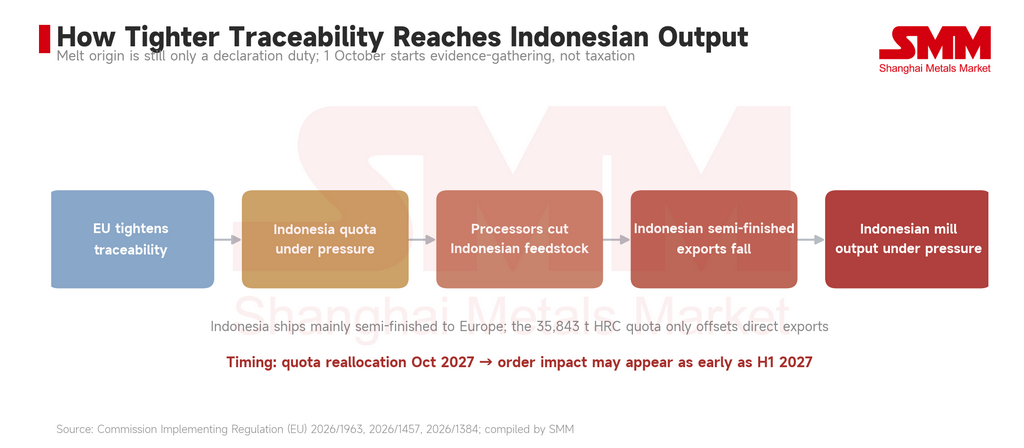
ห่วงโซ่การส่งผ่านดำเนินไปดังนี้:
สหภาพยุโรปเข้มงวดการตรวจสอบย้อนกลับ → โควตาอินโดนีเซียถูกกดดัน → ผู้แปรรูปประเทศที่สามลดการซื้อวัตถุดิบอินโดนีเซีย → ความต้องการส่งออกผลิตภัณฑ์กึ่งสำเร็จรูปอินโดนีเซียลดลง → ตารางการผลิตของอินโดนีเซียถูกกดดัน
อินโดนีเซียไม่ได้รับเส้นทางเพิ่มในที่นี้ แต่ถูกกำหนดให้รับความเสี่ยงโควตาของห่วงโซ่ทั้งหมด
โควตา HRC 35,843 ตันชดเชยได้หรือไม่
ได้เพียงบางส่วน มันชดเชยการส่งออกผลิตภัณฑ์สำเร็จรูปโดยตรง ในขณะที่การไหลของอินโดนีเซียไปยุโรปส่วนใหญ่เป็นผลิตภัณฑ์กึ่งสำเร็จรูป — สแลบและคอยล์รีดร้อนที่ขายให้ผู้แปรรูปประเทศที่สาม โดยมีสัดส่วนผลิตภัณฑ์สำเร็จรูปส่งออกตรงต่ำ โควตา HRC มีเหลือเฟือ แต่การเปิดช่องทางนั้นต้องให้โรงงานอินโดนีเซียสร้างความสัมพันธ์กับลูกค้ายุโรปโดยตรง พัฒนาศักยภาพการรายงาน CBAM และแก้ปัญหาด้านโลจิสติกส์และระยะเวลาส่งมอบ ไม่มีสิ่งใดแก้ได้ในหนึ่งหรือสองไตรมาส
ในระยะใกล้ ตำแหน่งที่เป็นไปได้มากกว่าคือ: ช่องทางตรงใช้ประโยชน์น้อย ช่องทางอ้อมถูกบีบอัด
จังหวะเวลาคือตัวแปรสำคัญ
ไม่มีสิ่งใดเกิดขึ้นจริงในเดือนตุลาคม 2026 ในขั้นนี้การระบุแหล่งหลอมและเทเป็นเพียงภาระความโปร่งใส โควตายังคงตามแหล่งกำเนิดทางศุลกากร และเส้นทางการค้าเดิมยังทำงานต่อไป
แต่ตั้งแต่วันที่ 1 ตุลาคม เหล็กกล้าแหล่งกำเนิดอินโดนีเซียทุกล็อตที่เข้าสหภาพยุโรปผ่านประเทศที่สามจะถูกบันทึกแหล่งหลอม ชุดข้อมูลนั้นคือสิ่งที่คณะกรรมาธิการจะใช้เมื่อปรับการจัดสรรโควตาในเดือนตุลาคม 2027 และประเมินว่าจะเปลี่ยนเกณฑ์การจัดสรรในปี 2028 หรือไม่
วันที่ 1 ตุลาคมเริ่มการเก็บหลักฐาน ไม่ใช่การเก็บภาษี
สำหรับโรงงานอินโดนีเซีย วันที่ต้องจับตาคือเดือนตุลาคม 2027 หากรอบการจัดสรรนั้นเริ่มปรับปริมาณของเวียดนามและตุรกีตามข้อมูลแหล่งหลอม ตลาดจะตอบสนองล่วงหน้าหนึ่งถึงสองไตรมาส ผลกระทบต่อสมุดคำสั่งซื้ออาจปรากฏในช่วงครึ่งแรกของปี 2027
V. ปฏิทินโควตาเหล็กกล้าไร้สนิมยังเดินหน้าต่อ
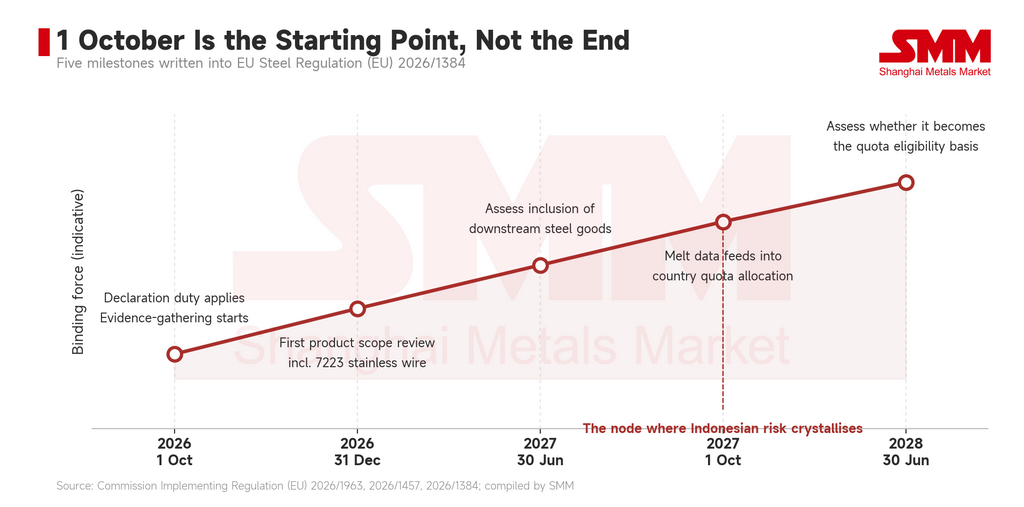
วันที่ 1 ตุลาคมคือจุดเริ่มต้น ไม่ใช่จุดสิ้นสุด
ภายใต้ข้อบังคับเหล็กกล้าสหภาพยุโรป (EU) 2026/1384: การทบทวนขอบเขตผลิตภัณฑ์ครั้งแรกเสร็จสิ้นภายในวันที่ 31 ธันวาคม 2026 โดยลวดเหล็กกล้าไร้สนิมภายใต้พิกัด HS 7223 อยู่ในรายการรับฟังความคิดเห็น ภายในวันที่ 30 มิถุนายน 2027 คณะกรรมาธิการประเมินว่าจะรวมสินค้าปลายน้ำที่มีปริมาณเหล็กกล้าสำคัญหรือไม่ ตั้งแต่วันที่ 1 ตุลาคม 2027 ข้อมูลแหล่งหลอมและเทถูกป้อนเข้าสู่การจัดสรรโควตาประเทศ และภายในวันที่ 30 มิถุนายน 2028 คณะกรรมาธิการต้องประเมินว่าแหล่งหลอมควรเป็นเกณฑ์สำหรับสิทธิ์โควตาหรือไม่
มีบทบัญญัติอีกข้อหนึ่งที่เกี่ยวข้องกับโควตาโดยตรง การยกยอดโควตาที่ไม่ได้ใช้ได้รับอนุญาตในรอบปีแรก (1 กรกฎาคม 2026 – 30 มิถุนายน 2027) หลังจากปีแรก คณะกรรมาธิการตัดสินใจโดยกฎหมายบังคับใช้ว่าจะให้ยกยอดต่อไปหรือไม่ โดยชั่งน้ำหนักแรงกดดันการนำเข้า อัตราการใช้โควตาเฉลี่ย — โดยเฉพาะเมื่อสูงกว่า 80% — และความพร้อมของอุปทาน
ข้อนี้ควรจับตาสำหรับเหล็กกล้าไร้สนิม เมื่อ CRC ถูกตัด 53% และ HRC ถูกตัด 65% อัตราการใช้จะสูงกว่าเกณฑ์ 80% อย่างแน่นอน การยกยอดจะอยู่รอดปีแรกหรือไม่จะกำหนดพื้นที่ว่างที่มีอยู่ในช่วงครึ่งหลังของปี 2027 โดยตรง
แนวโน้ม
บทความก่อนหน้านี้ถามว่ากฎอยู่ที่ไหน คำตอบ: ในวันสุดท้ายที่เป็นไปได้
สำหรับผู้ส่งออกเหล็กกล้าไร้สนิม การรอคอยสิ้นสุดลงแล้ว และหน้าต่างการเตรียมตัวคือสี่สัปดาห์ รายการสั้น แต่ทุกรายการเริ่มตอนนี้
ยืนยันว่าผู้จัดหาต้นน้ำจะออกใบรับรองโรงงานที่ระบุทั้งประเทศแหล่งหลอมและเลขเตาหลอมหรือไม่ หากไม่ จะต้องรวบรวมชุดเอกสารทางเลือก และเริ่มสร้างบัญชีเชื่อมโยงเลขเตาหลอมกับสินค้าส่งออก — เพราะหลังเดือนตุลาคม 2027 ใบรับรองโรงงานไม่ใช่ทางเลือกอีกต่อไป
ช่วงเปลี่ยนผ่านหนึ่งปีฟังดูเอื้อเฟื้อ แต่สิ่งที่ให้คือเวลาแก้เอกสาร ไม่ใช่เวลาแก้กระบวนการ
สำหรับผลิตภัณฑ์ที่มีการกระจายเป็นล็อตย่อยสูงโดยธรรมชาติ งานด้านกระบวนการต้องเริ่มตอนนี้
![[SMM สรุปการประชุมช่วงเช้าตลาดนิกเกิล] การพบปะระหว่างผู้นำจีน-สหรัฐฯ จุดประกายความคาดหวังการฟื้นตัวของตลาด สัญญานิกเกิล SHFE ที่มีปริมาณซื้อขายสูงสุดปรับตัวขึ้นในช่วงการซื้อขายแรก](https://imgqn.smm.cn/usercenter/qLeLR20251217171733.jpg)

![[แฟลชตลาดนิกเกิล SMM] โรงถลุงนิกเกิลพิกไอรอน RKEF ใน IMIP ของอินโดนีเซียลดกำลังการผลิตประมาณ 30%-40%](https://imgqn.smm.cn/usercenter/LNpBh20251217171732.jpeg)