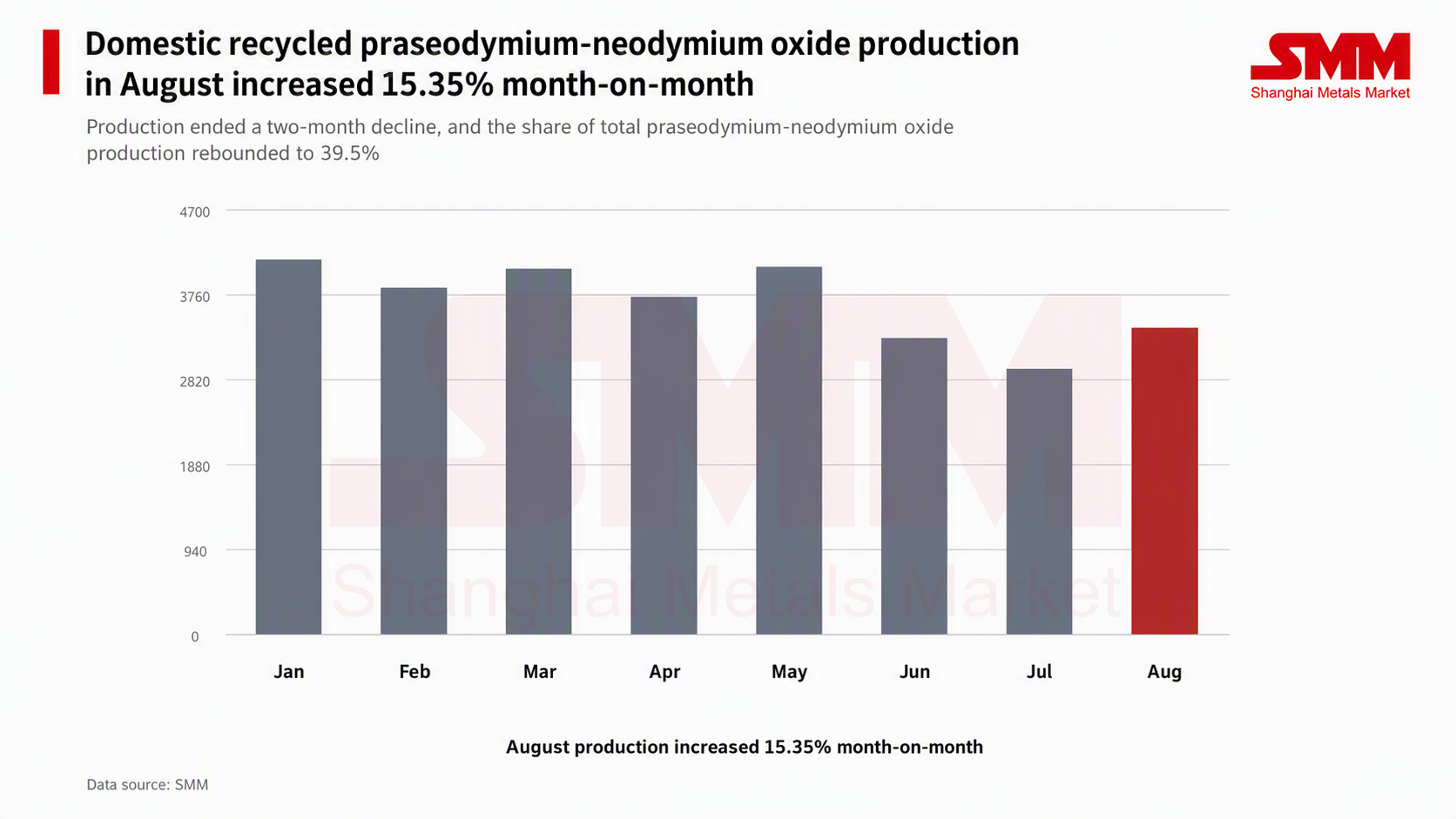
SMM, September 1: In August, China's recycled Pr-Nd oxide production reached 3,381 mt, up 15.35% MoM, with its share of total Pr-Nd oxide output rebounding from 37.7% in July to 39.5%. Output showed a recovery trend, ending the previous two consecutive months of decline. By region, Shandong and Jiangxi posted notable MoM production growth: Shandong output rose 27.27% MoM, while Jiangxi output increased 16.04% MoM. The rebound in both regions was mainly driven by higher operating rates at local leading recyclers, resulting in greater recycled Pr-Nd oxide output.
From the perspective of operating pace, this round of output recovery carried a strong "pent-up release" character. Although some scrap recyclers had scheduled maintenance shutdowns earlier, they did not halt raw material purchases during maintenance, instead maintaining a normal restocking pace, leaving current NdFeB scrap raw material inventories relatively ample. After maintenance ended, enterprises were able to quickly ramp up loads and release output without waiting for a material preparation cycle, driving a notable MoM rebound in recycled Pr-Nd oxide production.
Notably, the main growth in this round of output came from leading producers, while operating rates at small and medium-sized enterprises remained at relatively low levels. The reason is that compliant tax-inclusive scrap supply is tight, procurement costs for recyclers have increased, and profit margins in the recycling industry are being squeezed. Leading producers, leveraging their technological advantages, have higher tolerance for high-priced scrap, and combined with raw material inventories accumulated earlier, were able to restore operating rates first, thereby pushing recycled Pr-Nd oxide production higher MoM.
Overall, although recycled Pr-Nd oxide output in August showed a clear MoM recovery, the August output level and the 39.5% production share remained below the H1 monthly average (H1 share was approximately 43.5%). Industry-wide operating rates remained at relatively low levels, and the divergence within the recycling industry—"leading players recovering, SMEs under pressure"—became more pronounced.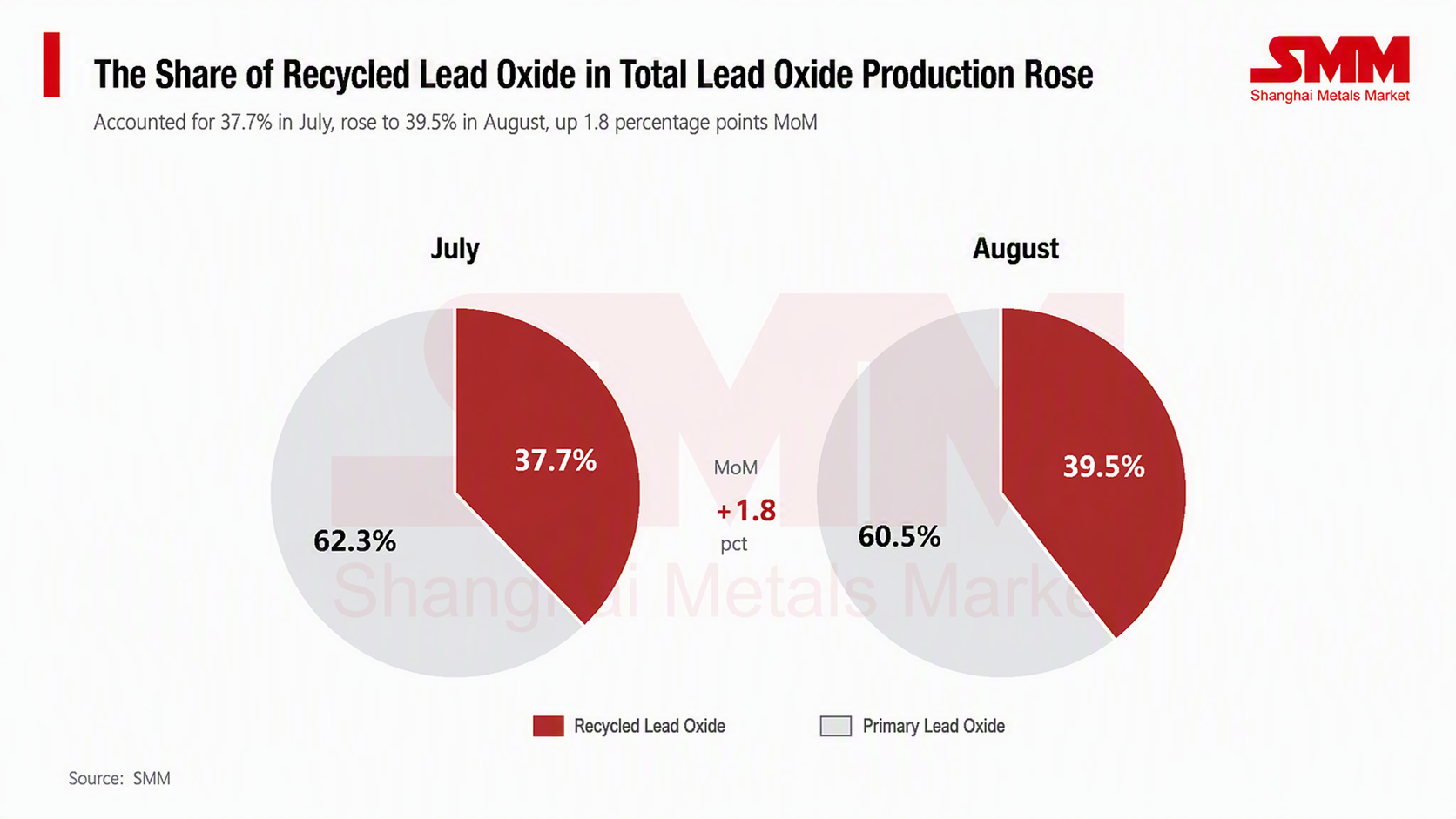
Looking ahead, the rare earth scrap recycling market remains tightly linked to "XT" invoices (special invoices for rare earths). The threshold for purchasing compliant tax-inclusive scrap is high, and scrap suppliers, considering compliance costs, are less willing to sell at low prices. The tight supply pattern for tax-inclusive scrap is unlikely to reverse in the short term. As the "September-October peak season" demand arrives, coupled with continued tightness in Pr-Nd oxide supply, the Pr-Nd oxide price center is expected to move further upward. Scrap suppliers' willingness to sell will strengthen accordingly, and available tax-inclusive scrap supply in the market may increase, which is expected to drive continued growth in recycled Pr-Nd oxide production. However, constrained by the overall tight supply of tax-inclusive scrap and the difficulty of significantly expanding volumes in the short term, the incremental space that can be released from the scrap side is limited, and the growth in recycled Pr-Nd oxide production is expected to be relatively modest.