SMM, August 31: In August, China's Pr-Nd oxide production rose about 10% MoM. In terms of supply structure, this increase was mainly contributed by scrap recycling enterprises, while the raw ore separation side had not yet seen significant volume release; operating rates at the two process routes diverged. Scrap recycling enterprises became the main driver of this month's production growth, with operating rates raised noticeably from the prior period, supported by two factors. First, the raw material side provided a foundation. Some scrap plants had scheduled maintenance shutdowns earlier, but did not halt purchases during the shutdowns; instead, they maintained a normal restocking pace, leaving current raw material inventories relatively ample. After maintenance ended, they could quickly ramp up production and release output without waiting for a feedstock preparation cycle. Second, market sentiment turned more optimistic. Most industry participants held bullish expectations for September Pr-Nd oxide prices and generally judged it profitable to raise production and accelerate shipments during the window of rising prices. As maintenance wrapped up, they proactively lifted operating rates and pushed output, further amplifying the supply increase from the scrap side.
By comparison, the raw ore separation side was steady: this month, the improvement in operating rates at raw ore separation enterprises was limited, and actual incremental output was not significant. Judging from the pace, a marked rebound in raw ore separation operating rates may not gradually materialize until around October, meaning that in September and even earlier, scrap recycling remains the key variable supporting Pr-Nd oxide supply.
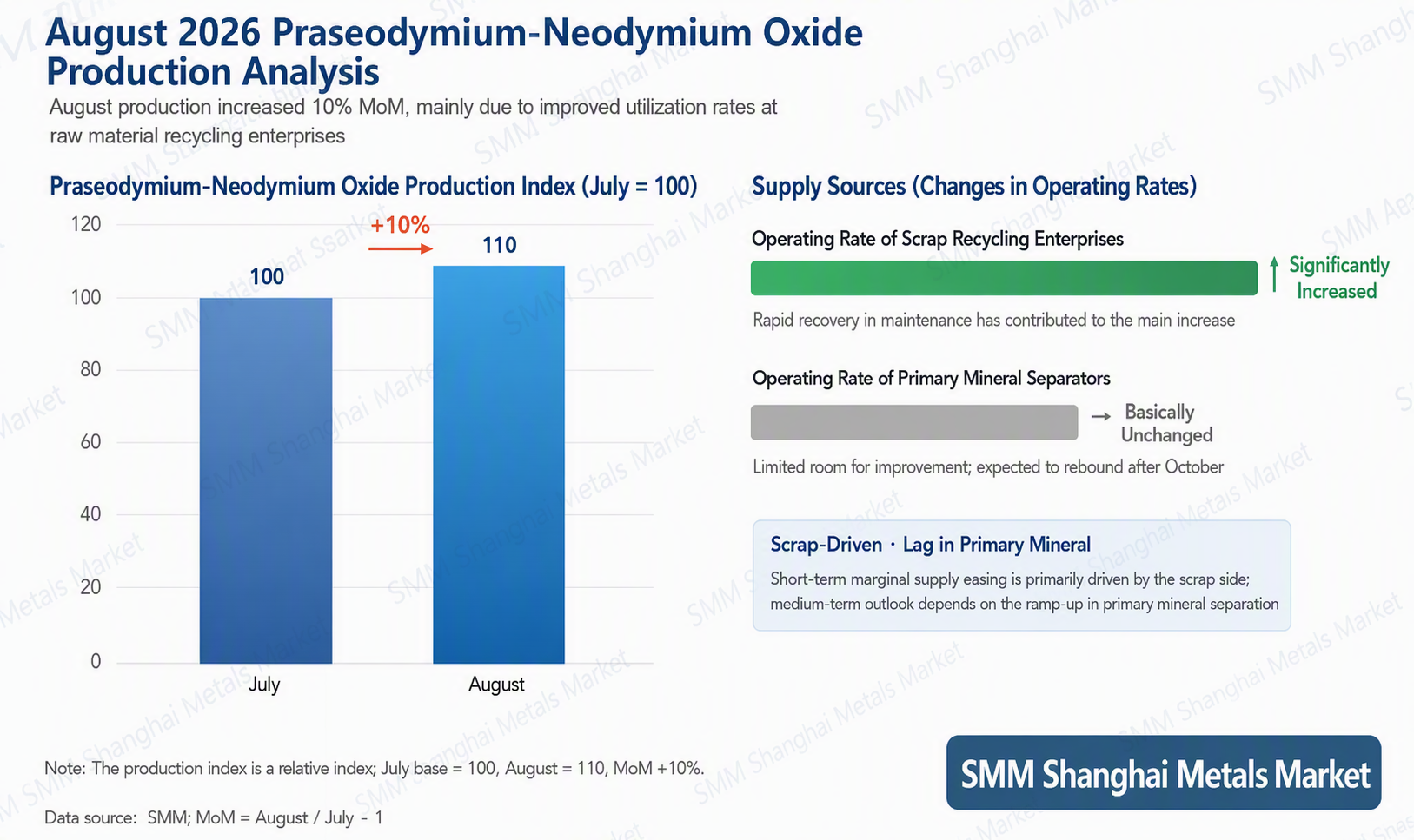
Overall, the rebound in Pr-Nd oxide production in August showed a "scrap-driven, raw ore lagging" pattern. Under the combined effect of ample inventories and bullish expectations, scrap plants were the first to release volume, effectively supplementing market supply; the raw ore separation side was constrained by pace and raw materials, with its volume release window coming relatively later. Going forward, two points warrant close attention. First, how quickly scrap plants work down previously accumulated inventories: if inventories are depleted rapidly while prices rise as expected, their operating rates may remain high. Second, after raw ore separation enterprises raise operating rates around October, attention should be paid to the impact that incremental supply may have on price expectations and downstream procurement pace. In general, the short-term marginal easing of supply is dominated by the scrap side, while in the medium term, the market needs to watch the rebalancing effect of volume releases from the raw ore separation side on the supply-demand balance.