The Shift
South Africa has gone more than a year without load shedding, while Zimbabwe has also experienced a prolonged period of improved electricity supply. Yet PGM producers in both markets continue to pursue private power contracts. Rather than abandoning national utilities, producers are increasingly separating electricity generation from grid access: private generators supply an increasing share of their power while national utilities remain responsible for transmission, balancing and residual supply.
The Paradox
The original case for private power was straightforward: unreliable national grids posed a direct threat to mining operations. But the operating environment has changed. Eskom recorded 365 consecutive days without load shedding on 16 May 2026. Its energy availability factor reached 65.85% for the year to 12 March 2026 and it supplied without interruption for 98.9% of the financial year to 31 March 2026, against 9% two years earlier (Eskom, 2026a). In Zimbabwe, ZESA reported 188 consecutive days without nationwide load shedding by late June 2026. Lake Kariba's usable storage had also recovered to 48.09% on 22 June 2026, compared with 23.47% a year earlier and just 13% at the bottom of the drought in 2024. Meanwhile, the Zambezi River Authority increased the 2026 water allocation to 36 billion cubic metres from 30 billion (Newsday Zimbabwe, 2026b; Energy News Network, 2026).
Yet improvements in grid reliability have not halted private-power investment. If anything, contracting has accelerated. Envusa completed its 520 MW Koruson 2 cluster in August 2026. Sibanye-Stillwater signed two trader agreements in February 2026, bringing its contracted portfolio to 765 MW. ARM Platinum commissioned a 100 MW plant in December 2025, while Siyanda Bakgatla signed a private-power agreement in July 2026. Zimplats, meanwhile, allocated the largest share of its March 2026 quarterly capital expenditure to solar development (Mining Weekly, 2026a, 2026b, 2026c; Newsday Zimbabwe, 2026a).
Northam's chief executive articulated this point while the electricity system was already recovering, noting that power remained a significant risk despite the reduction in load shedding because Eskom tariffs were expected to continue rising faster than consumer price inflation (Creamer, 2024). For PGM producers, therefore, private power is increasingly becoming a strategic procurement decision rather than simply an emergency response to unreliable supply.
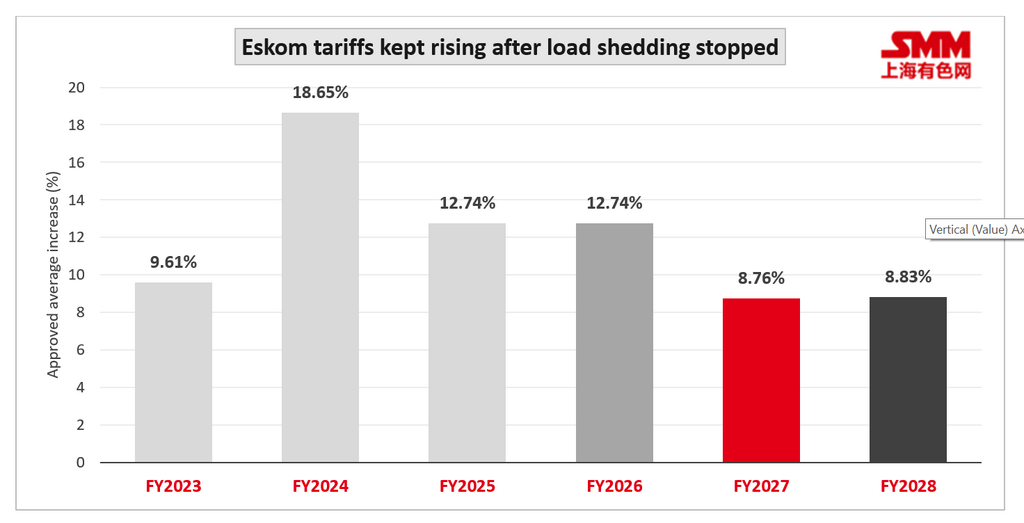
Figure 1. Approved average Eskom tariff increases for direct customers, FY2023 to FY2028.
What Changed the Calculation
NERSA approved an 8.76% average increase for Eskom direct customers from 1 April 2026 and 9.01% for municipal bulk purchasers from 1 July 2026, with a further 8.83% already approved for 2027/28 (Eskom, 2026a). Eskom is also shifting cost recovery towards fixed charges. The fixed portion of the generation capacity charge rises from 20% in FY2026 to 30% in FY2027 and that portion is excluded from the energy credit available under wheeling and net billing (Eskom, 2026b). That detail reduces the value of a wheeled megawatt-hour relative to one generated behind the meter.
Against that path, producers report private supply at a discount. Sibanye-Stillwater forecasts its renewable cost at 20% to 30% below forecast Eskom wholesale tariffs, worth more than R1 billion a year from 2028. Valterra estimates savings from Koruson 2 at about 10% below 2026 tariffs and recorded roughly R36 million in electricity cost savings in the first half of 2026 from 181 GWh of renewable supply. Northam expects its Zondereinde plant to cut energy costs at that operation by 15%, against group power spending of about R2.6 billion a year (Mining Weekly, 2026a; Valterra Platinum, 2026b; Creamer, 2025).
The decarbonisation rationale has not disappeared. It is what makes the contracts long. Valterra’s Envusa offtake runs 20 years and is tied to a 30% absolute emissions reduction by 2030, with grid electricity accounting for about 87% of company emissions. Sibanye cites 2.63 million tonnes of CO2e avoided annually from 2028, a 41% reduction against 2024, with 92% of group emissions originating from Eskom. Northam frames its two power purchase agreements as a reduction of up to 45% in its carbon footprint. The tenor that delivers price certainty is underwritten by the emissions case (Valterra Platinum, 2026a; Sibanye-Stillwater, 2026; Northam Platinum Holdings, 2025).
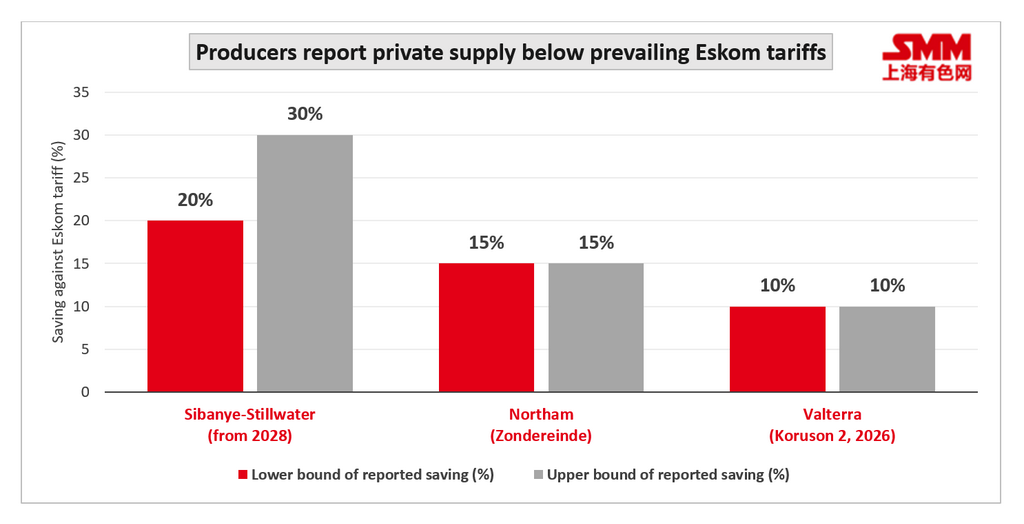
Figure 2. Company-reported cost position of contracted private supply against Eskom tariffs.
The Project Map
The inclusion criterion is any privately procured, privately financed or mine-controlled electricity generation or storage project directly associated with a named Southern African PGM operation. Generic corporate renewable targets are excluded. Twenty-eight projects meet the criterion. Where a producer holds both a physical plant and a trader portfolio, the two are counted separately so that capacity is not double counted. 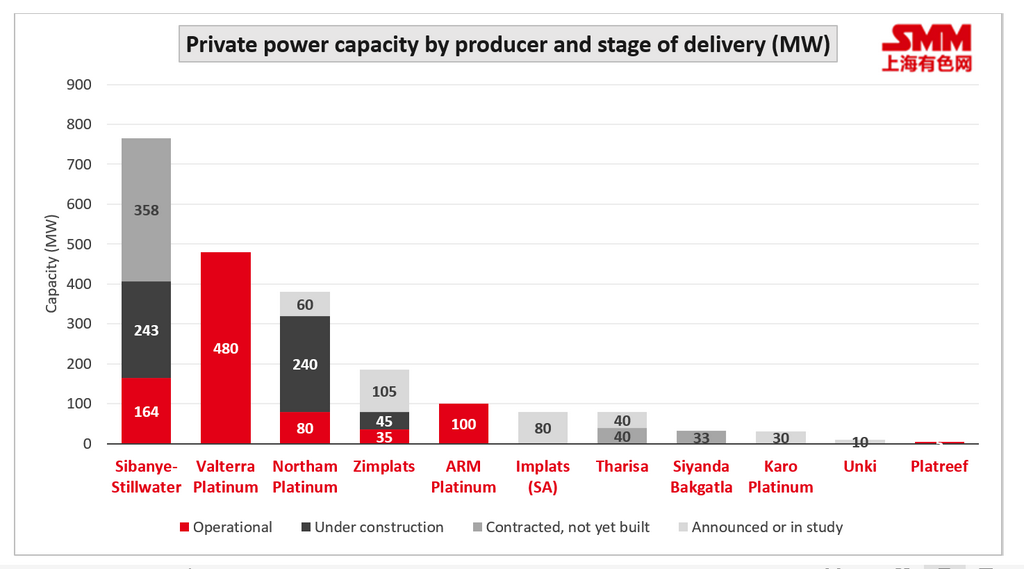
Figure 3. Private power capacity by producer and stage of delivery.
Four Contracting Models
- Bilateral wheeled PPA
The producer contracts one named project, built at a remote site and delivered across the Eskom transmission network. Sibanye’s Castle wind farm is the reference case, a 15-year build, own, operate and transfer agreement supplying about 309 GWh a year, roughly 5.5% of the group’s South African demand. ARM Platinum's 100 MW plant is the largest wheeled facility contracted by a single PGM producer outside the Sibanye and Envusa portfolios, a 20-year R2.5 billion PPA with SOLA Group and African Rainbow Energy delivering about 270 GWh a year from December 2025 (Engineering News, 2023; Mining Weekly, 2023).
- Trader aggregation
The producer contracts a licensed trader drawing on a portfolio of generators. This model is displacing bilateral contracting because it decouples supply from any single project’s construction risk. Sibanye signed 138 MW with NOA and about 220 MW with Etana in February 2026. Siyanda Bakgatla secured 288 GWh a year from NOA in July 2026 on a medium-term contract with an extension option (Mining Weekly, 2026a, 2026b).
- Behind-the-meter PPA
The plant sits on the mining right and feeds the operation directly. Northam’s 80 MW Zondereinde plant occupies 170 hectares within a 9,257 hectare mining right and delivers about 220 GWh a year behind the Eskom meter. Northam’s stated rationale is that behind-the-meter supply cannot be curtailed and carries no wheeling charge (Northam Platinum Holdings, 2024; Creamer, 2024).
- Miner-funded captive
The producer funds and owns the asset. Zimplats is the largest case, its 185 MW Selous programme funded from its own capital expenditure plan with US$34 million cumulative spending on Phase 2A by 31 March 2026. Phase 1A generated 66 053 MWh in FY2025. Smaller cases are Northam’s Eland solar and battery project, Ivanhoe’s 5 MW plant at Platreef and Valterra’s early-stage Unki plant in Zimbabwe (Zimplats Holdings, 2026; Newsday Zimbabwe, 2026a; Ivanhoe Mines, 2025).
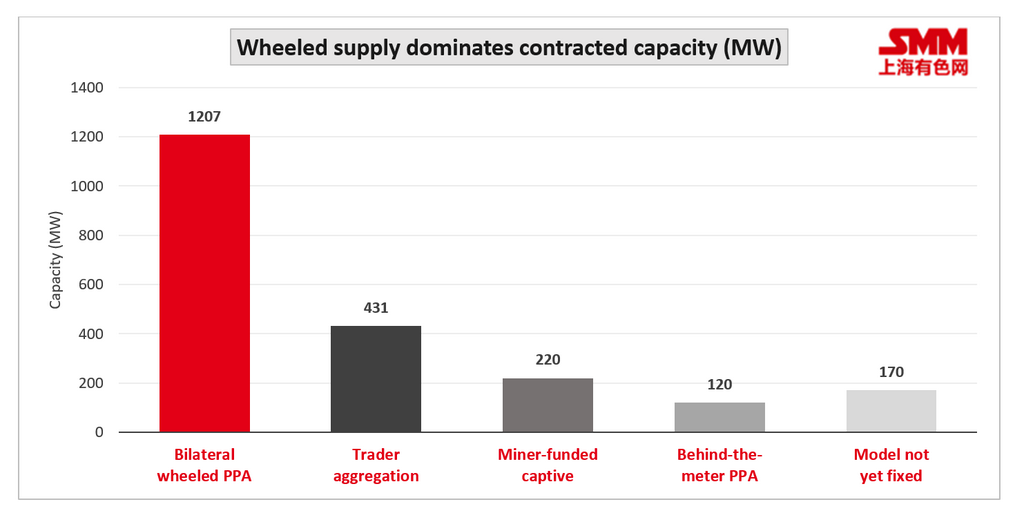
Figure 4. Capacity by contracting model.
Who Builds and Who Buys
Two variables are commonly conflated and are in fact independent. The first is where the plant sits, on the mine behind the meter or remote and wheeled. The second is who carries the capital, the miner or a third party.
Northam demonstrates the independence. Its 80 MW solar plant is on Northam ground and was still developed through a power purchase agreement with a consortium of STANLIB Infrastructure Fund II, Royal Bafokeng Holdings and Energy Group, with project finance from Nedbank and Standard Bank, rather than as a self-funded project. The same company contracts wheeled wind from Karreebosch and is self-funding solar and storage at Eland. One producer therefore sits on both sides of the divide at once, funding some plant itself and buying the rest (Engineering News, 2026; Northam Platinum Holdings, 2024).
Implats stated the shift plainly in March 2026, telling a media roundtable that the plan no longer involved the company building its own facilities and that it was seeking wheeling arrangements for Rustenburg and Marula instead. Sibanye describes its entire 765 MW portfolio as secured through off-balance-sheet financing by independent power producers and third parties. Of the 1,783 MW mapped in South Africa where funding is disclosed, 98.6% is third-party funded (Creamer, 2026; Mining Weekly, 2026a).
Two Markets, Two Strategies
The divergence between South Africa and Zimbabwe does not rest on reliability, since both grids improved through 2026. It rests on market structure. South Africa has a functioning wheeling framework, licensed traders, a licensing requirement for embedded generation that was raised to 100 MW in 2021 and removed entirely in December 2022 and a private transmission substation at Koruson designed to connect up to 1.5 GW. A producer can therefore buy megawatt-hours without owning a plant.
Zimbabwe has no equivalent market. In March 2026 the Zimbabwe Energy Regulatory Authority issued a request for proposals to determine charges for wheeling electricity through the transmission and distribution networks and for electricity banking fees, which places the framework at design stage rather than in operation (ZERA, 2026; Engineering News, 2026, April 28).
Zimbabwe’s government has instead required large industrial users to bring their own generation, which converts the same objective into capital expenditure on the miner’s balance sheet. The underlying exposure remains structural. The country spent approximately US$881.7 million on imported electricity between January 2021 and March 2026 and Kariba South supplies about 45% of national generation from a reservoir whose allocation is revised annually against rainfall. Zimplats’ renewable electricity share held at 31% against a 35% target in the first half of FY2026, held back by drought constraining hydropower imports from Zambia’s ZESCO (Mining Zimbabwe, 2026; Newsday Zimbabwe, 2026b; Creamer, 2026).
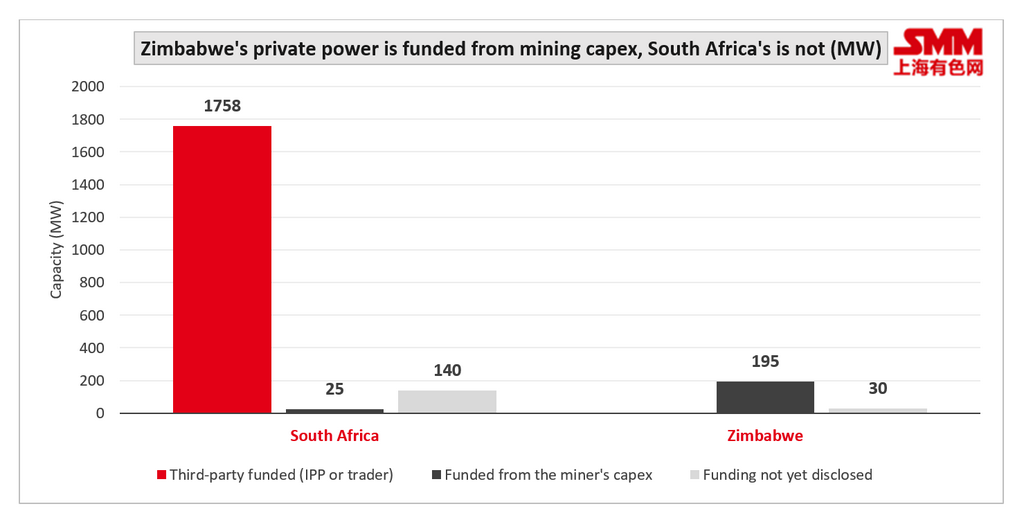
Figure 5. Source of capital for private power capacity, South Africa against Zimbabwe.
Announced, Contracted, Delivered
Announced capacity is a poor proxy for electricity delivered. Of 2,148 MW announced or programmed across the mapped set, 1,823 MW is contracted, 1,392 MW is under construction or complete and 864 MW is generating. Sibanye itself put roughly 20% of its 765 MW portfolio in operation as at February 2026.
Three cases explain most of the gap. Karo Platinum’s solar concept, announced at 300 MW in 2018 as an alternative to a coal-fired plant, now appears as approximately 30 MW with the national grid remaining the primary supply under an agreement with ZETDC. Zimplats has built 35 MW of a 185 MW programme first licensed several years ago. Tharisa’s 40 MW Buffelspoort project has been shovel-ready since 2021 and is delayed pending Eskom interconnection approvals, a constraint the company attributes to grid congestion in North West province (Tharisa plc, 2025).
The 2022 self-build plans are the longer-run comparison. A survey that year recorded Sibanye planning 175 MW of its own solar, Anglo-American Platinum a 100 MW plant at Mogalakwena and Implats a 10 MW plant at Marula. None proceeded in that form. The capacity arrived through third parties instead (Energy Capital & Power, 2022).
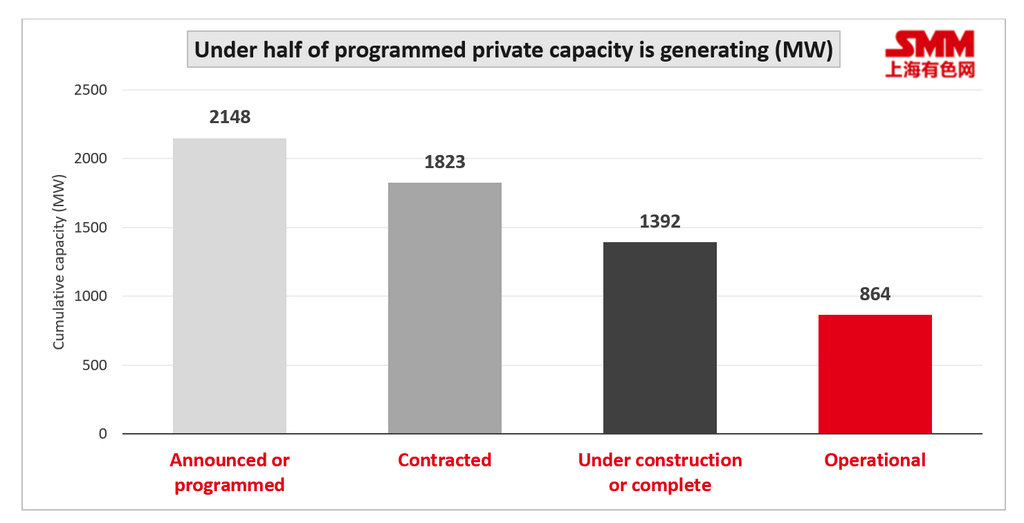
Figure 6. Mapped private power capacity by stage, cumulative and nested.
Outlook
The ceiling on private supply is usually set by three things, none of them the availability of projects. The first is grid access. Tharisa’s delayed plant shows that interconnection approval, not capital, is the binding constraint in congested provinces. The second is tariff design. Eskom’s shift towards fixed charges and its exclusion of part of the generation capacity charge from the wheeling energy credit, narrows the arithmetic advantage of wheeled supply against behind-the-meter supply. Should that continue, the sector may rediscover the model Northam chose. The third is intermittency. Storage appears in only a handful of the mapped projects and PGM mining is a continuous load. Wheeling and aggregation manage this contractually rather than physically, which works while the grid remains available as a residual supplier.
That is the point the megawatt totals obscure. Sibanye expects renewable supply to meet about 56% of South African demand by 2028, Northam more than 70% of group requirements before the end of the decade, Tharisa 68% at a single mine, Valterra about a third of group demand and ARM Platinum about 30%. None targets 100% and the residual is what keeps the relationship with Eskom and ZESA intact.
The question for the next reporting cycle is therefore not whether more capacity will be contracted. It is whether the contracted share can rise beyond roughly half of demand without storage and whether the tariff structure will still reward wheeling when it does.
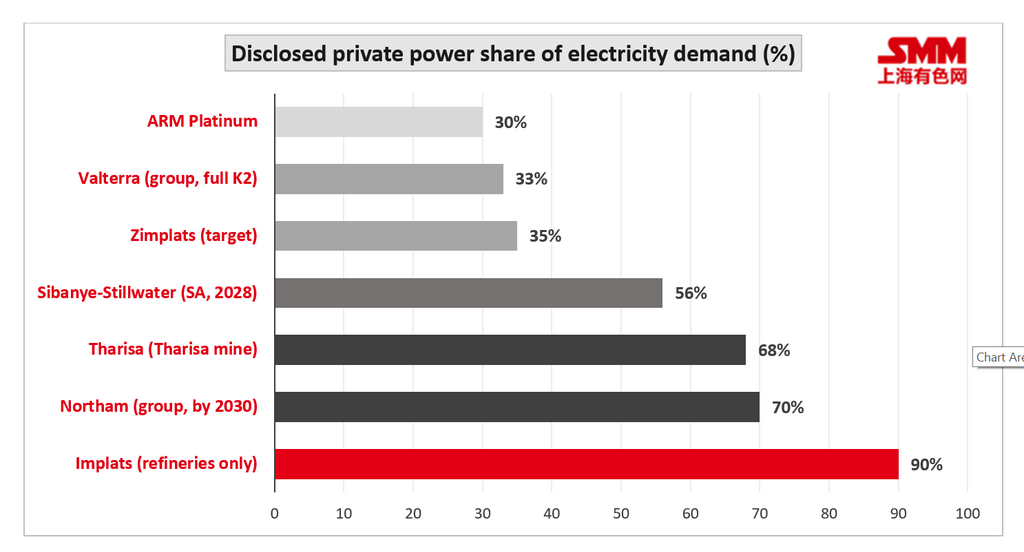
Figure 7. Disclosed private power share of electricity demand, by producer.
References
African Rainbow Minerals. (2026). Interim results and renewable energy update. https://senspdf.jse.co.za/documents/2026/jse/isse/ARIM/HY2026.pdf
Businessday. (2026, February 13). Sibanye-Stillwater signs renewable energy deal with NOA Group. https://www.businessday.co.za/companies/2026-02-13-sibanye-stillwater-signs-renewable-energy-deal-with-noa-group/
Chamber of Mines of Zimbabwe. (2025). State of the mining industry survey report. https://chamines.co.zw/
Creamer, M. (2024, August 30). Northam Platinum enters into 80 MW solar farm agreement at energy-intensive mine. Engineering News. https://www.engineeringnews.co.za/article/northam-platinum-enters-into-180-mw-solar-farm-agreement-at-energy-intensive-mine-2024-08-30
Creamer, M. (2025, March 21). Northam Platinum’s big solar thrust to save R700m a year, much more to come. Mining Weekly. https://www.miningweekly.com/article/northam-platinums-big-solar-thrust-to-save-r700m-a-year-much-more-to-come-2025-03-21
Creamer, M. (2026, March 5). Solar power for Marula and Rustenburg platinum mines being sought by Implats. Mining Weekly. https://www.miningweekly.com/article/solar-power-for-marula-and-rustenburg-platinum-mines-being-sought-by-implats-2026-03-05
Ecofin Agency. (2026, July 10). South Africa: NOA signs 288 GWh-a-year power deal with Siyanda Bakgatla mine. https://www.ecofinagency.com/news-industry/1007-57285-south-africa-noa-signs-288-gwh-a-year-power-deal-with-siyanda-bakgatla-mine
Energy Capital & Power. (2022, June 17). 5 South Africa mining companies adopting solar energy. FurtherAfrica. https://furtherafrica.com/2022/06/17/5-south-africa-mining-companies-adopting-solar-energy/
Energy News Network. (2026, August). Kariba power generation and the 2026 water allocation. https://energy-news-network.com/industry-news/kariba-power-generation-water-allocation-2026/
Engineering News. (2023, November 3). African Rainbow Minerals solar photovoltaic power project, South Africa. https://www.engineeringnews.co.za/article/african-rainbow-minerals-solar-photovoltaic-power-project-south-africa-2023-11-03
Engineering News. (2026, April 28). Envusa Energy confirms supply of renewable energy to key mines. https://www.engineeringnews.co.za/article/envusa-energy-confirms-supply-of-renewable-energy-to-key-mines-2026-04-28
Engineering News. (2026, May 29). Sibanye-Stillwater renewable-energy projects, South Africa – update. https://www.engineeringnews.co.za/article/sibanye-stillwater-renewable-energy-projects-south-africa-update-2026-05-29
Engineering News. (2026, July 17). Zondereinde solar PV project, South Africa – update. https://www.engineeringnews.co.za/article/zondereinde-solar-pv-project-south-africa-update-2026-07-17
Eskom. (2026a, March 16). Eskom implements NERSA decision for Financial Year 2027. https://www.eskom.co.za/eskom-implements-nersa-decision-for-financial-year-2027/
Eskom. (2026b). 2026/2027 tariff increase – Distribution. https://www.eskom.co.za/distribution/2026-2027-tariff-increase/
Impala Platinum Holdings. (2025). Annual integrated report for the year ended 30 June 2025. https://www.implats-ir.co.za/reports/implats-iar-2025/
Impala Platinum Holdings. (2026, March 5). Implats delivers robust interim performance [News release]. https://www.implats-ir.co.za/results/2026/interim-results-2026/pdf/news-release.pdf
Ivanhoe Mines. (2025). Platreef integrated development plan 2025. https://www.ivanhoemines.com/wp-content/uploads/250329-Platreef-IDP25_RevF.pdf
Kazunga, O. (2026, June 29). Zim to emerge top platinum producer: Expert. The Herald. https://www.heraldonline.co.zw/zim-to-emerge-top-platinum-producer-expert/
Mining Weekly. (2023, September 19). Clean energy on way to platinum mines from R2.5bn solar project in North West. https://www.miningweekly.com/article/clean-energy-on-way-to-platinum-mines-from-r25bn-solar-project-in-north-west-2023-09-19
Mining Weekly. (2025, September 30). Low-cost renewables will make up 30% of Sibanye-Stillwater power supply by 2027. https://www.miningweekly.com/article/low-cost-renewables-will-make-up-30-of-sibanye-stillwater-power-supply-by-2027-2025-09-30
Mining Weekly. (2026a, February 13). Sibanye-Stillwater secures more renewable energy in offtake agreement with NOA. https://www.miningweekly.com/article/sibanye-stillwater-secures-more-renewable-energy-in-offtake-agreement-with-noa-2026-02-13
Mining Weekly. (2026b, July 10). Platinum metals mine concludes wheeled renewables energy deal. https://www.miningweekly.com/article/platinum-metals-mine-concludes-wheeled-renewables-energy-deal-2026-07-10
Mining Weekly. (2026c, August 5). All three components of R16bn Koruson 2 renewables cluster now operational. https://www.miningweekly.com/article/all-three-components-of-r16bn-koruson-2-renewables-cluster-now-operational-2026-08-05
Mining Zimbabwe. (2026, May 5). Power imports surge towards US$1bn as energy shortfalls pressure Zimbabwe’s mining industry. https://miningzimbabwe.com/power-imports-surge-towards-us1bn-as-energy-shortfalls-pressure-zimbabwes-mining-industry/
Newsday Zimbabwe. (2026a, May 4). Zimplats ramps up solar investment to cut power risks. https://www.newsday.co.zw/business/article/200054868/zimplats-ramps-up-solar-investment-to-cut-power-risks
Newsday Zimbabwe. (2026b, June 29). Kariba powers Zim as load-shedding eases. https://www.newsday.co.zw/local-news/article/200057751/kariba-powers-zim-as-load-shedding-eases
NewZimbabwe.com. (2026, May 11). “No more electricity load shedding beyond 2026”, says ZESA Group CEO. https://www.newzimbabwe.com/no-more-electricity-load-shedding-beyond-2026-says-zesa-group-ceo/
Northam Platinum Holdings. (2024, October 4). Finalisation of an agreement in respect of an 80MW solar power plant at the Zondereinde operation [SENS]. https://www.northam.co.za/investors-and-media/announcements/2024/1628-finalisation-zondereinde-operation-80mw-solar-power-plant-agreement-20241004
Northam Platinum Holdings. (2025). Climate change report 2025. https://www.northam.co.za/downloads
Northam Platinum Holdings. (2025, February 19). Northam finalises a further renewable energy deal [SENS]. https://www.northam.co.za/investors-and-media/announcements/2025/1649-northam-finalises-a-further-renewable-energy-deal
Sedibelo Resources. (2026). Financial statements 2024. https://sedibeloresources.com/wp-content/uploads/2026/03/Sedibelo_Resources_Limited_Financial_Statements_2024Final.pdf
Sibanye-Stillwater. (2026). Climate change and energy management. https://www.sibanyestillwater.com/sustainability/environment/climate-change-energy/
Sibanye-Stillwater. (2026). Sustainability report 2025. https://reports.sibanyestillwater.com/2025/download/SSW-SR25.pdf
Tharisa plc. (2025). Sustainability overview and sustainability report 2025. https://www.tharisa.com/sustainability.php
Valterra Platinum. (2026a, March 18). Valterra Platinum advances 2030 emissions target as Mooi Plaats solar project reaches commercial operation [Press release]. https://www.valterraplatinum.com/media/press-releases/2026/18-03-2026
Valterra Platinum. (2026b, July 29). Interim results announcement for the six months ended 30 June 2026. https://dn.sharenet.co.za/v3/sens_display.php?seq=18&tdate=20260729080500
Zimbabwe Energy Regulatory Authority. (2026, March 18). Request for proposal for determining charges for wheeling of electricity and electricity banking fees. https://egp.praz.org.zw/
Zimplats Holdings. (2026). Integrated annual report 2025. https://zimplats.com/data/2026/05/2025-Integrated-Annual-Report.pdf