Gold is showing signs of recovery after falling below $4,000 an ounce in July. Futures closed at $4,380.40 on August 14, up 8.18% over two weeks. The metal remains 17.64% below its January record of $5,318.40.
Key Takeaways
- Gold has recovered strongly, but remains well below its January record.
- Jeff Currie expects gold to eventually reach $10,000 an ounce.
- Years of weak mining investment could restrict future supply as commodity demand rises.
Gold’s August Recovery Puts Prices Back Above $4,300
Gold has regained important ground after its July selloff. Futures rose 0.91% last week to $4,380.40, extending a two-week gain to 8.18%.
The recovery followed a decline to roughly $4,000. Currie had already warned in May that gold could fall to that level before starting a much larger advance.
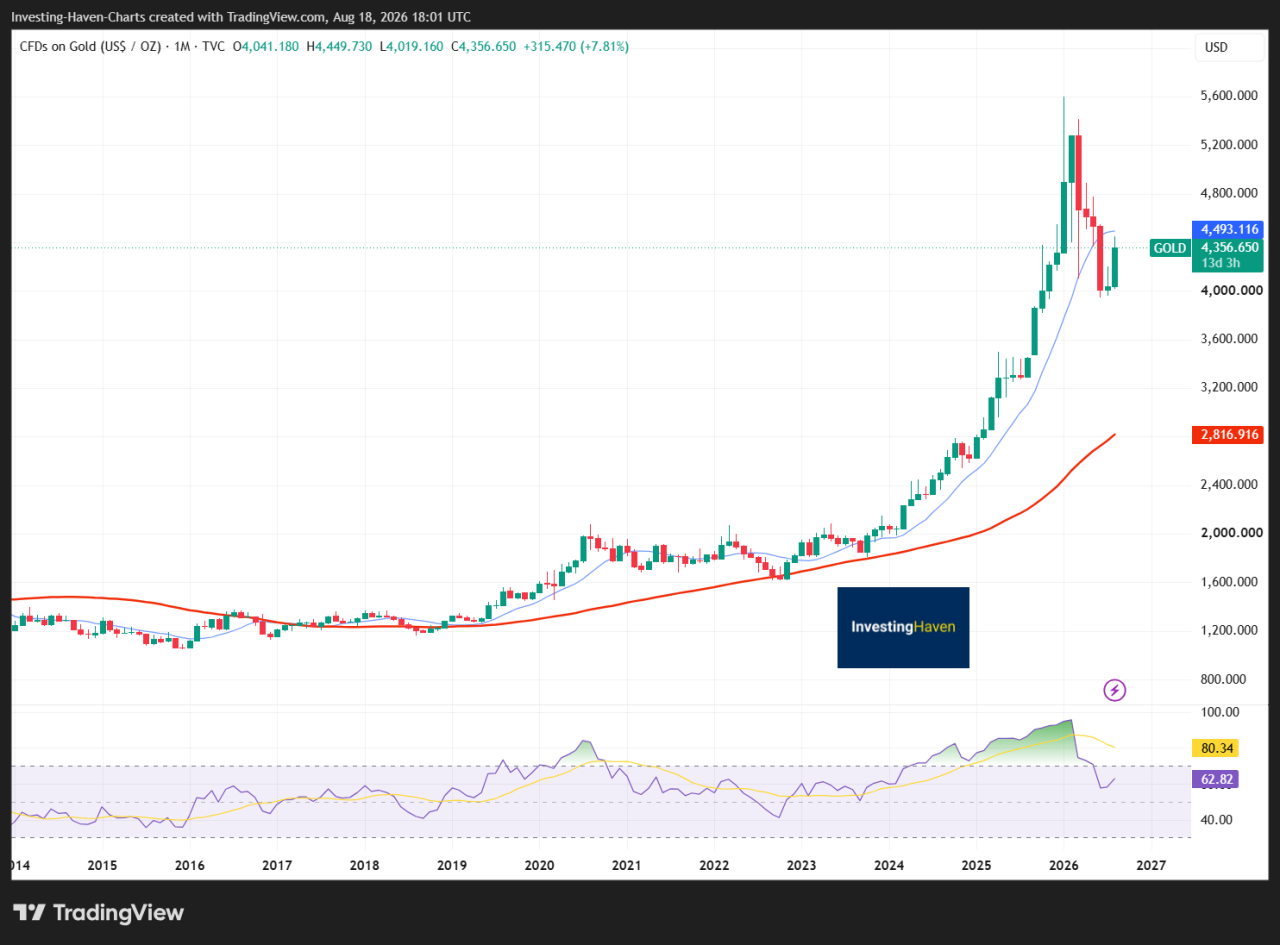
The market still has work to do. Gold remains more than $900 below its January peak. The latest rebound also faces higher Treasury yields and shifting expectations for Federal Reserve policy.
That leaves the $4,300 area as an important reference point. A sustained move higher would strengthen the case that July marked a significant correction rather than the end of the broader advance.
Why Jeff Currie Still Sees $10,000 Gold
Currie’s $10,000 call relies on a longer time horizon. In May, he argued that gold could first decline toward $4,000 before eventually surging to $10,000.
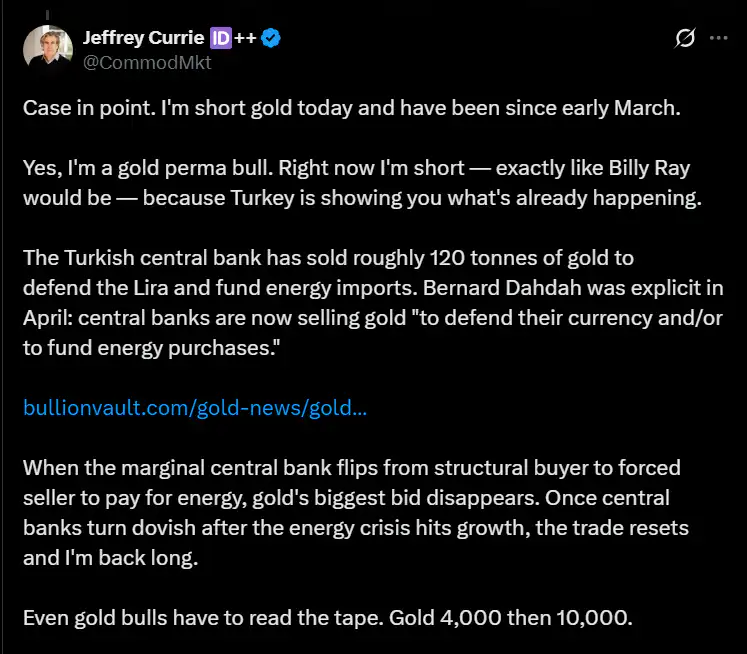
The first part of that forecast has already played out. Gold fell to around $4,000 before recovering.
Currie now places gold inside a much wider commodity cycle. He argues that years of weak investment have left producers struggling to expand supply quickly. Meanwhile, artificial intelligence infrastructure requires large amounts of physical resources.
This creates a longer-term setup that differs from a simple safe-haven rally.
Mining Investment Is The Critical Supply Constraint
Currie has pointed to a large gap in mining investment. Capital spending by the top 20 mining companies remains about 40% below its 2012 peak, according to research cited alongside his commodity outlook.
This gap is important because new mines take years to develop. Higher prices cannot immediately create additional production.
The research also argues that the current investment cycle is shifting toward physical assets. AI data centers require electricity, infrastructure and raw materials, linking technology investment to commodity demand.
For gold, this supply constraint adds weight to Currie’s longer-term argument. A move toward $10,000 would still require major changes in investment demand, monetary conditions and physical buying. It is not a forecast for the next few months.
Conclusion
Gold’s rebound has brought prices back above $4,300, but the metal still trades well below its January record. Currie’s unusual forecast is therefore becoming more relevant as the market moves beyond its July correction.
The question now is whether gold can build a sustained advance while supply remains constrained. This requires tracking price structure, central-bank demand, investment flows and the wider commodity cycle together.
For investors following those signals closely, Investing Haven’s premium gold,and silver research provides deeper market analysis with a focus on the price levels and trends shaping the next phase of the precious-metals market.