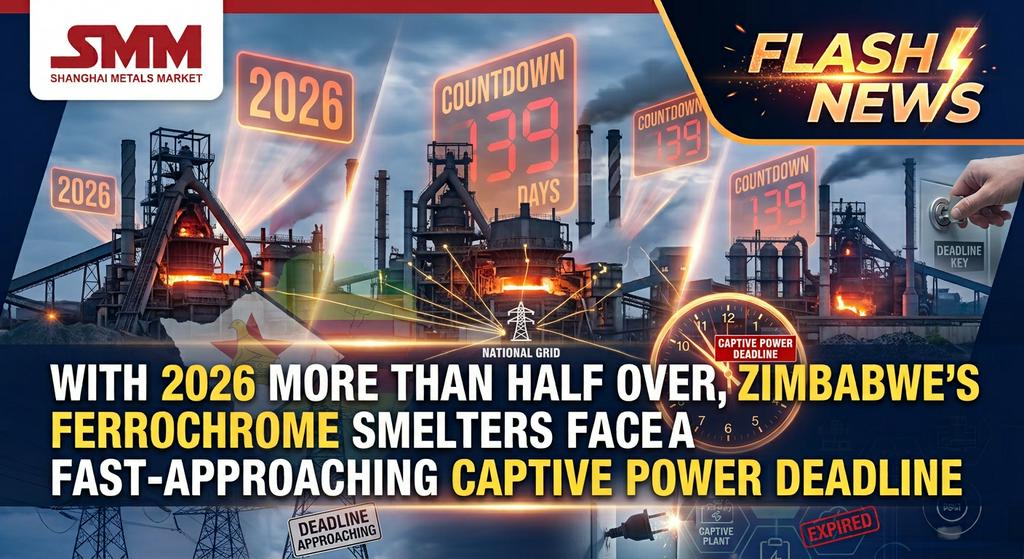
El gobierno de Zimbabue ha fijado 2026 como plazo para que las fundiciones de ferrocromo del país desarrollen su propia generación de energía cautiva, principalmente a partir de fuentes renovables, poniendo fin a un período de tarifas eléctricas de red subvencionadas para el sector, según señaló a principios de este año la Asociación Internacional para el Desarrollo del Cromo. Este requisito responde a una limitación física estricta más que a una consideración puramente comercial: la fundición de ferrocromo consume entre 3.500 y 4.000 kWh por tonelada producida, una carga que la red de Zimbabue, agobiada por la deuda y con déficit de generación, no puede absorber a gran escala sin comprometer el suministro a otros usuarios.
Con más de la mitad de 2026 ya transcurrida, el plazo se acerca al mismo tiempo que Zimbabue impulsa una agresiva agenda de beneficio de minerales —incluida una prohibición de exportación de mineral en bruto en febrero de 2026 y centros regionales de beneficio recientemente anunciados que destinan las zonas productoras de cromo a la producción dedicada de ferrocromo y aleaciones de cromo—. Aún está por verse si los productores de ferrocromo del país, muchos de ellos operaciones con inversión china que todavía están ampliando su capacidad, han avanzado lo suficiente hacia la generación renovable cautiva para cumplir el plazo de fin de año, una cuestión con implicaciones directas para cuánto de la ambición de beneficio de cromo de Zimbabue podrá materializarse realmente según lo programado. SMM seguirá de cerca las actualizaciones concretas sobre el avance de los proyectos de energía cautiva en el sector del ferrocromo de Zimbabue a medida que avance el año.
![[SMM Cromo Flash] FS Mining inicia la construcción de un proyecto de fundición de cromo y energía de 500 millones de dólares en Zimbabue](https://imgqn.smm.cn/usercenter/KXEYG20251217171725.jpg)