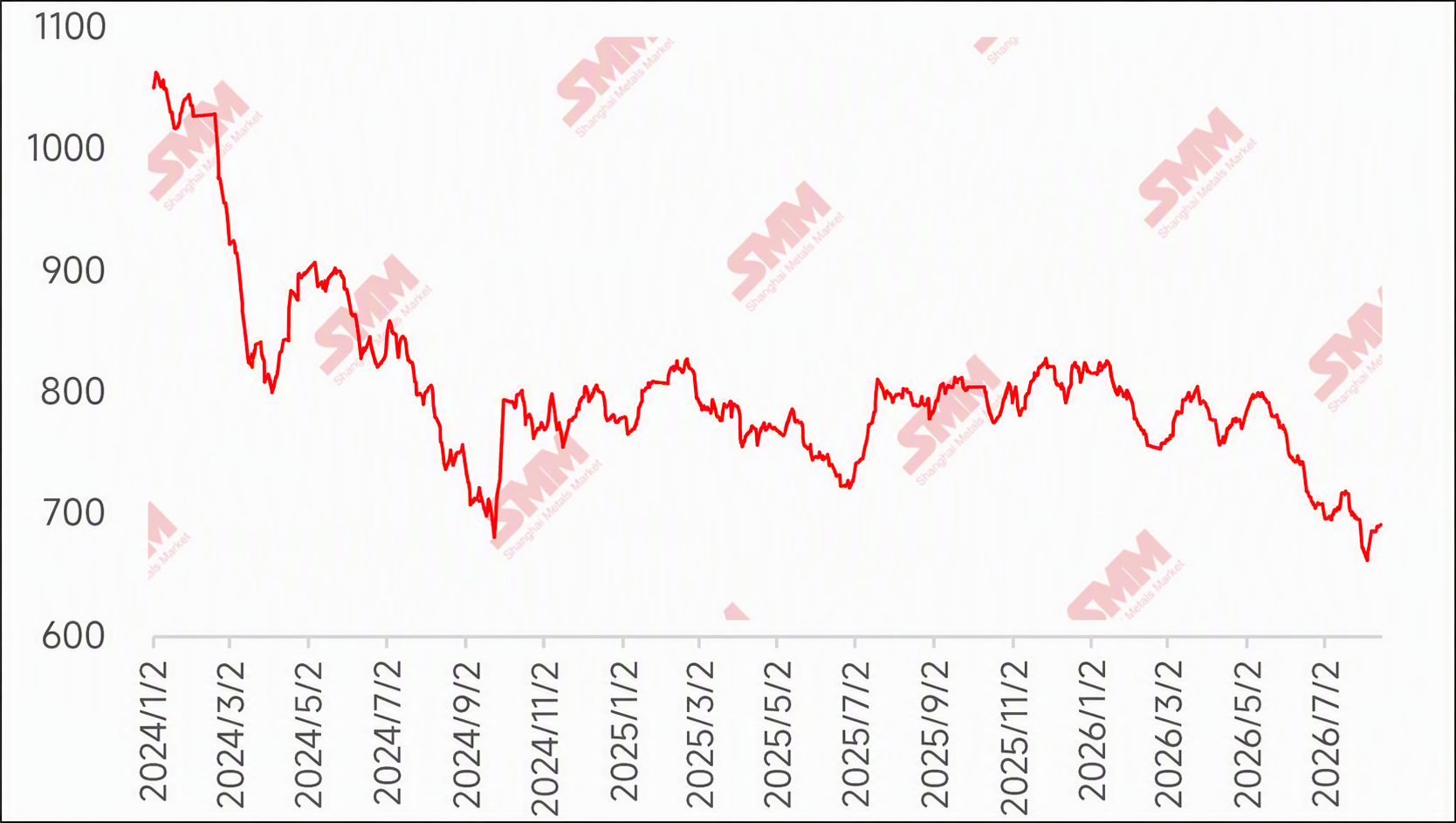
Iron ore prices drifted higher this week, the most-traded contract completed its rollover, and the I2609 contract hit an intraweek high of 727 yuan/mt. The price moves were driven mainly by news-related disruptions rather than a substantive improvement in fundamentals. First, BHP’s Port Hedland strike negotiations remained at a stalemate; the 24-hour strike originally scheduled to start on August 9 was postponed to August 18 after consultations, which lifted sentiment somewhat but had a limited impact on actual shipments. Second, market rumors that long-term contract negotiations had started triggered temporary concerns about tight supply of medium- and low-grade ore. At the macro level, the central bank conducted 500 billion yuan of outright reverse repo operations at the beginning of the month, signaling looser liquidity and offering warm sentiment support to the market. Fundamentals continued to be weak: extreme weather triggered by Typhoon Dolphin disrupted end-user construction and further weakened steel demand; steel mills became more cautious in procurement; spot market trading was sluggish; and the rise in iron ore prices lacked strong demand-side support.
Chart: MMI 61% Port Spot Index
Source: SMM
This week, China’s iron ore concentrate prices showed mixed performance with pronounced regional divergence. Prices in Tangshan, Qian'an, and Qianxi in Hebei were basically stable; Chaoyang, Beipiao, and Jianping in western Liaoning also remained steady; east China saw prices edge down by 10-15 yuan/mt.
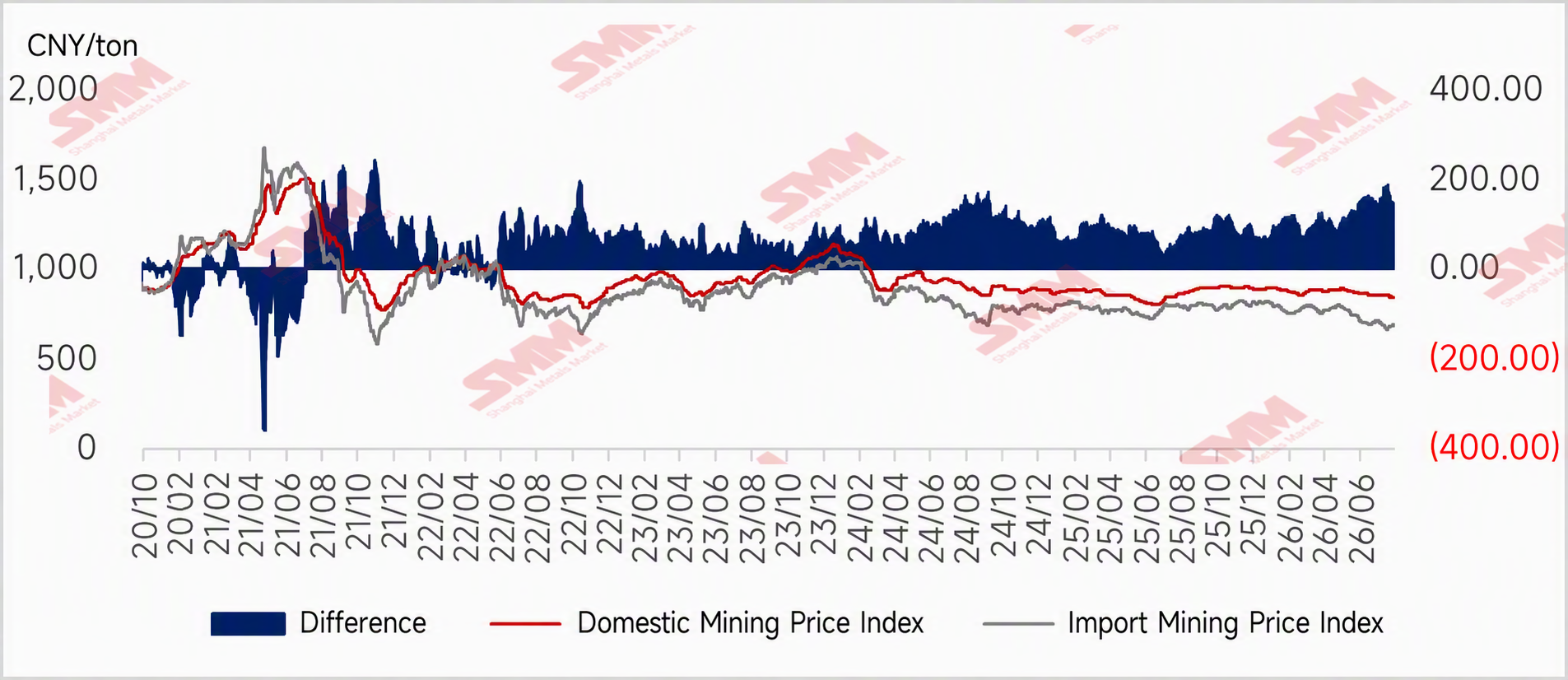
In the Tangshan area, the tax-inclusive EXW price of 66% grade iron ore concentrate on a dry basis was quoted at 950-955 yuan/mt, with prices weakening slightly. On the supply side, resources at mine and beneficiation plants remained tight, but had eased somewhat compared with earlier, and overall supply trended looser; mines in other regions mostly maintained normal production according to plan. On the demand side, steel mills mainly purchased as needed, and some mills had already formulated new maintenance plans, weakening rigid demand support for iron ore concentrate; meanwhile, steel mills showed a strong desire to bargain down prices, and the price spread between domestic and imported ore was narrowing. Overall, China’s iron ore prices remained relatively stable this week.
Chart: The price spread between domestic and imported ore narrowed slightly this week, and is expected to widen slightly next week
Outlook for Next Week
Imported Ore:
Looking ahead to next week, iron ore prices may continue to move sideways in a narrow range, with both upward and downward drivers insufficient. Fundamentals-wise, end-use demand is unlikely to improve in the near term: new typhoons will continue to form and may affect China, downstream construction pace will continue to be disrupted, and with hot metal output staying low, steel mills’ rigid consumption demand for iron ore will be hard to expand. On the supply side, there is an expectation of supply growth; overseas mines still have room to boost shipments; port inventories may accumulate further, capping the upside for ore prices. News side, the progress of strike negotiations at BHP's Port Hedland and rumors around long-term contract talks may still cause periodic disruptions to market sentiment, but given their limited impact on actual supply and demand, they are unlikely to drive trend-like price fluctuations. Overall, the market currently lacks clear directional contradictions, and iron ore prices may move sideways in a narrow range next week.
Domestic ore: Looking ahead to next week, domestic iron ore concentrate resources are expected to remain tight. Demand side, there are expectations for production resumptions at some steel mills. Combined with the recent rise in imported ore spot prices, the price spread between domestic and imported ore has continued to narrow. Meanwhile, iron ore futures are showing relative strength, which may lend some support to domestic ore prices. However, domestic ore price gains are expected to lag those of imported ore, and the price spread between domestic and imported ore is likely to continue narrowing.
![[SMM Steel]](https://imgqn.smm.cn/usercenter/zbJUC20251217171718.jpg)
![[SMM Steel]](https://imgqn.smm.cn/usercenter/ENDOs20251217171718.jpg)