SMM August 11:
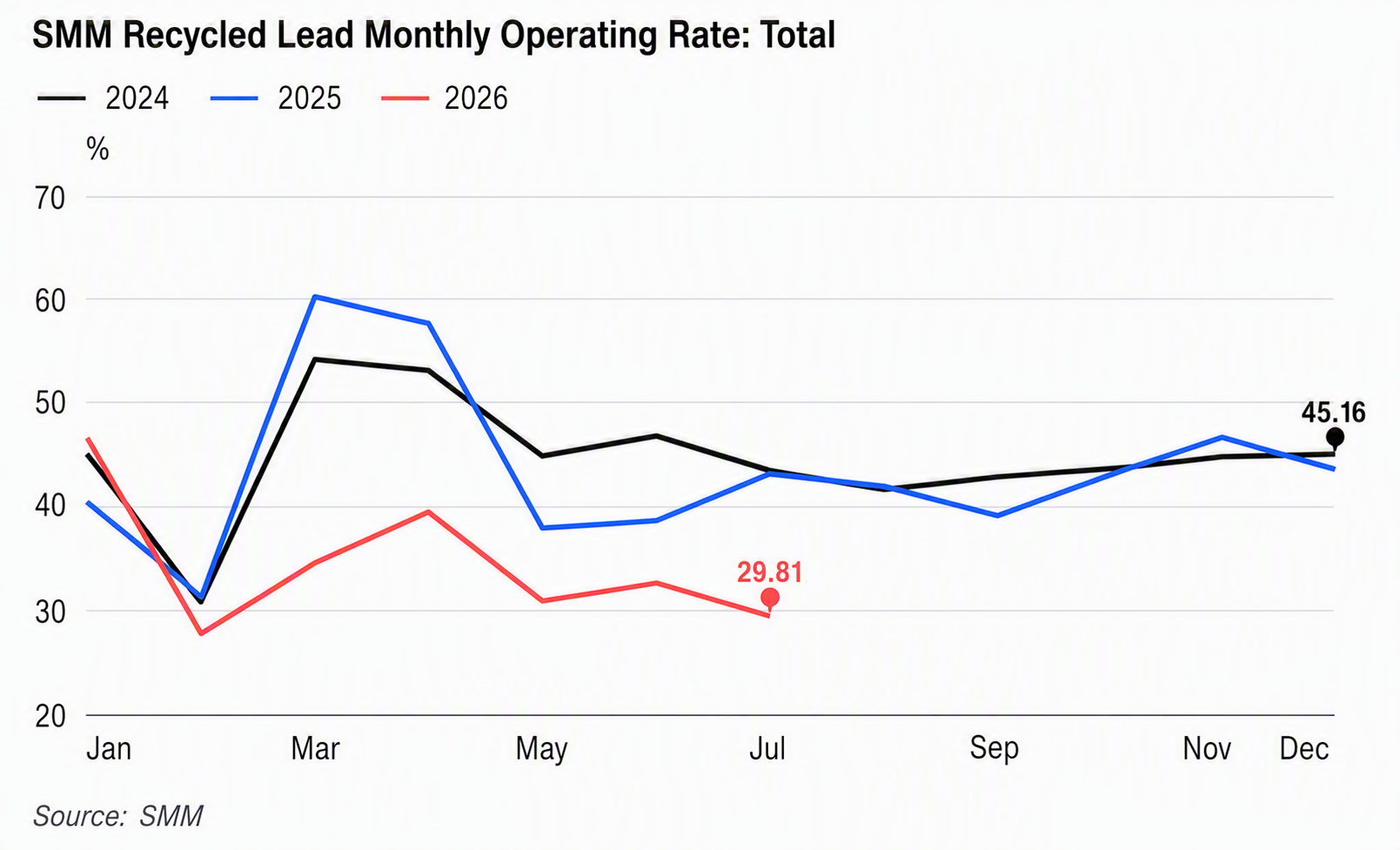
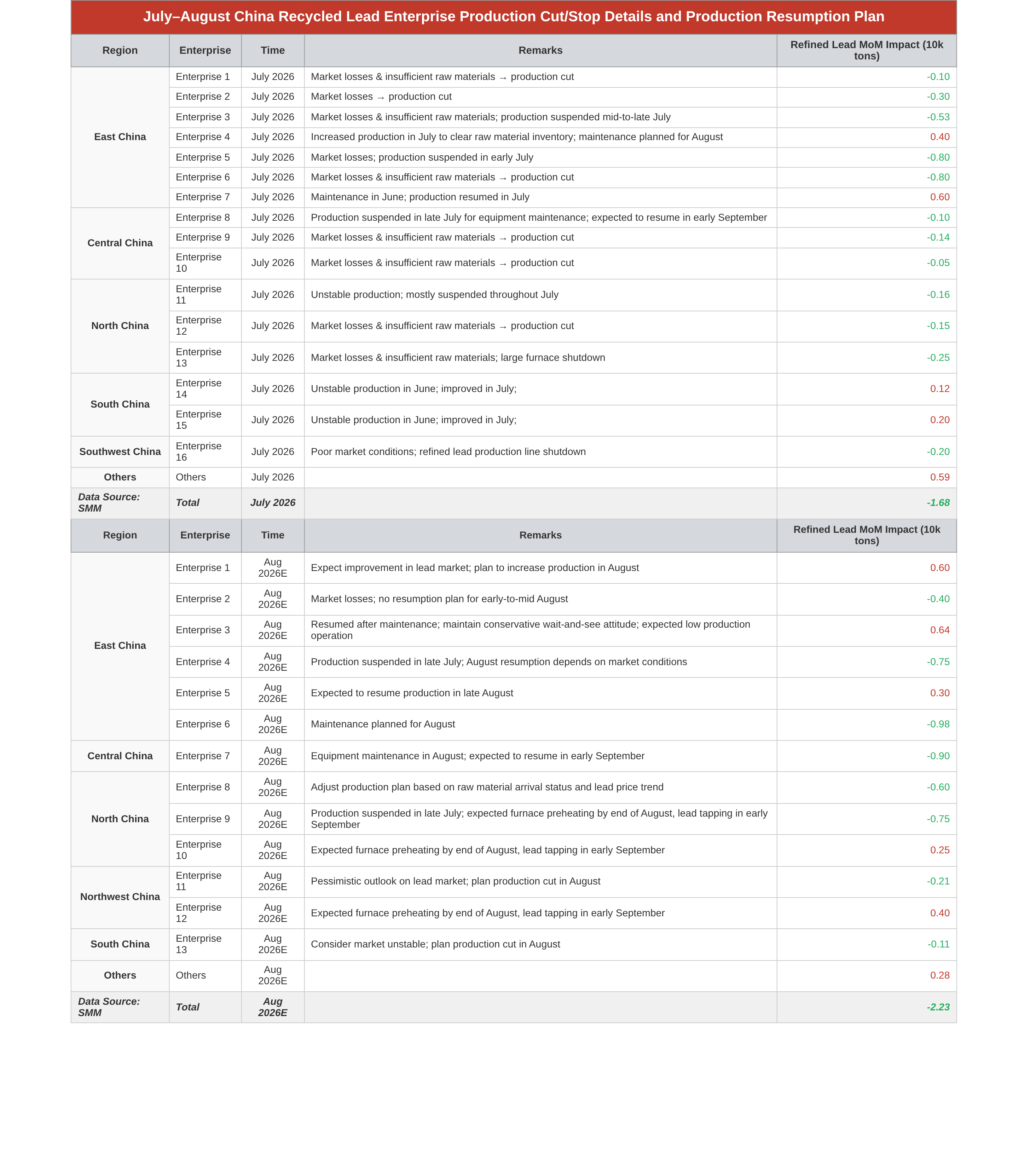
According to SMM production schedule data, in July, the total MoM impact volume of refined lead from China's secondary lead enterprises was -16,800 mt. Most smelters proactively cut production due to dual pressures of market losses and raw material shortages, causing the industry's monthly operating rate to pull back to 29.81%, significantly lower than the level in the same period of previous years.
August production schedules are under further pressure, with the MoM impact volume of refined lead reaching -22,300 mt. Most enterprises had previously held a pessimistic outlook on the future market, making maintenance and low-load operations the mainstream. Many smelters' original plans to resume production have been postponed to September.
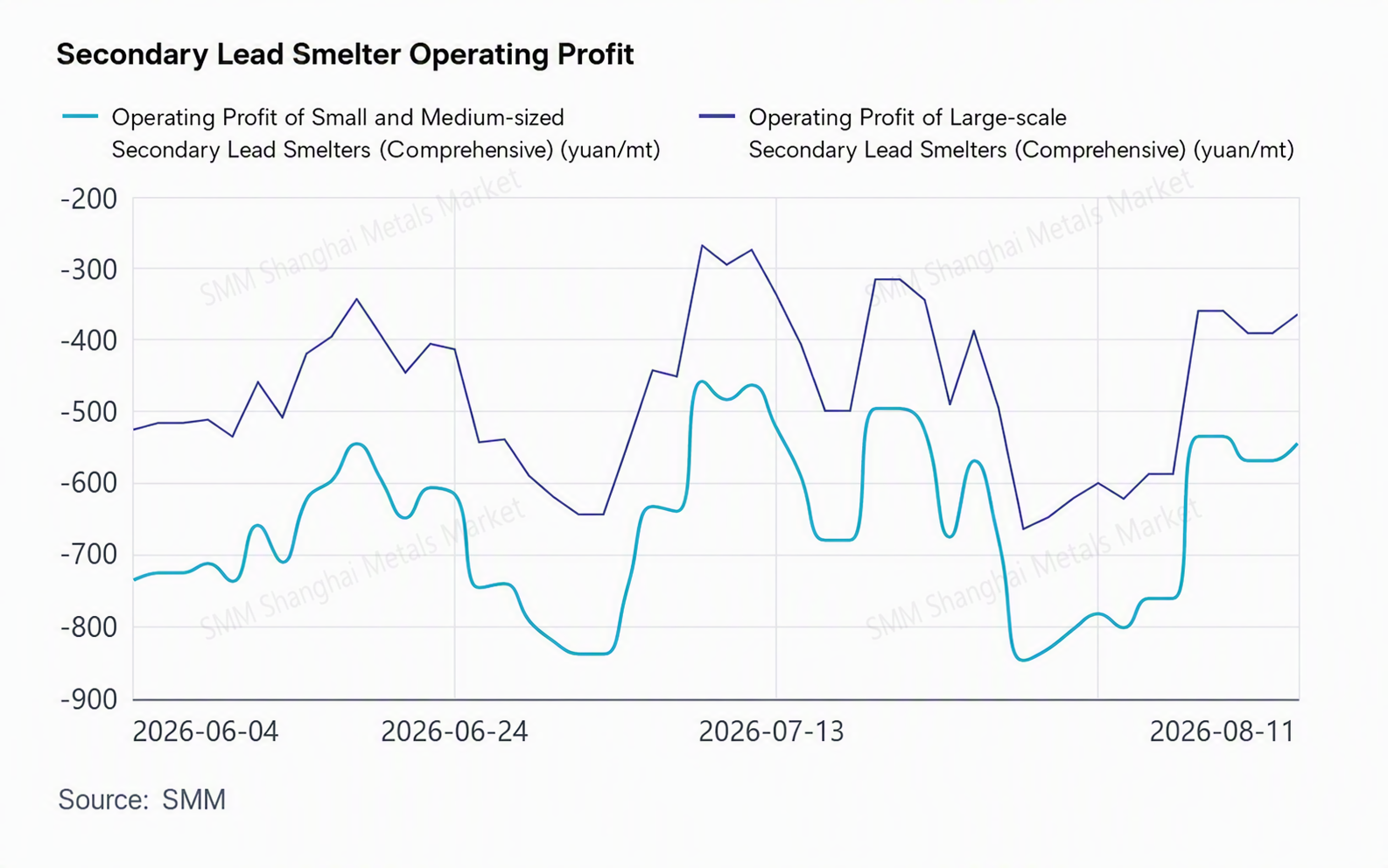
Recently, futures have seen a phased rebound, with secondary refined lead prices following the rise and smelter losses narrowing somewhat. On the profitability side, although still in loss-making territory, margins have improved, leading to divergent production sentiments: A few smelters in East China, seeing profit recovery, are showing a willingness to ramp up production; some smelters in North China have broken with their original plans and chosen to resume production early with small furnaces. However, the industry as a whole remains deeply mired in negative earnings territory, with small and medium-sized plants still suffering relatively large losses, and no widespread wave of production restarts has yet emerged.
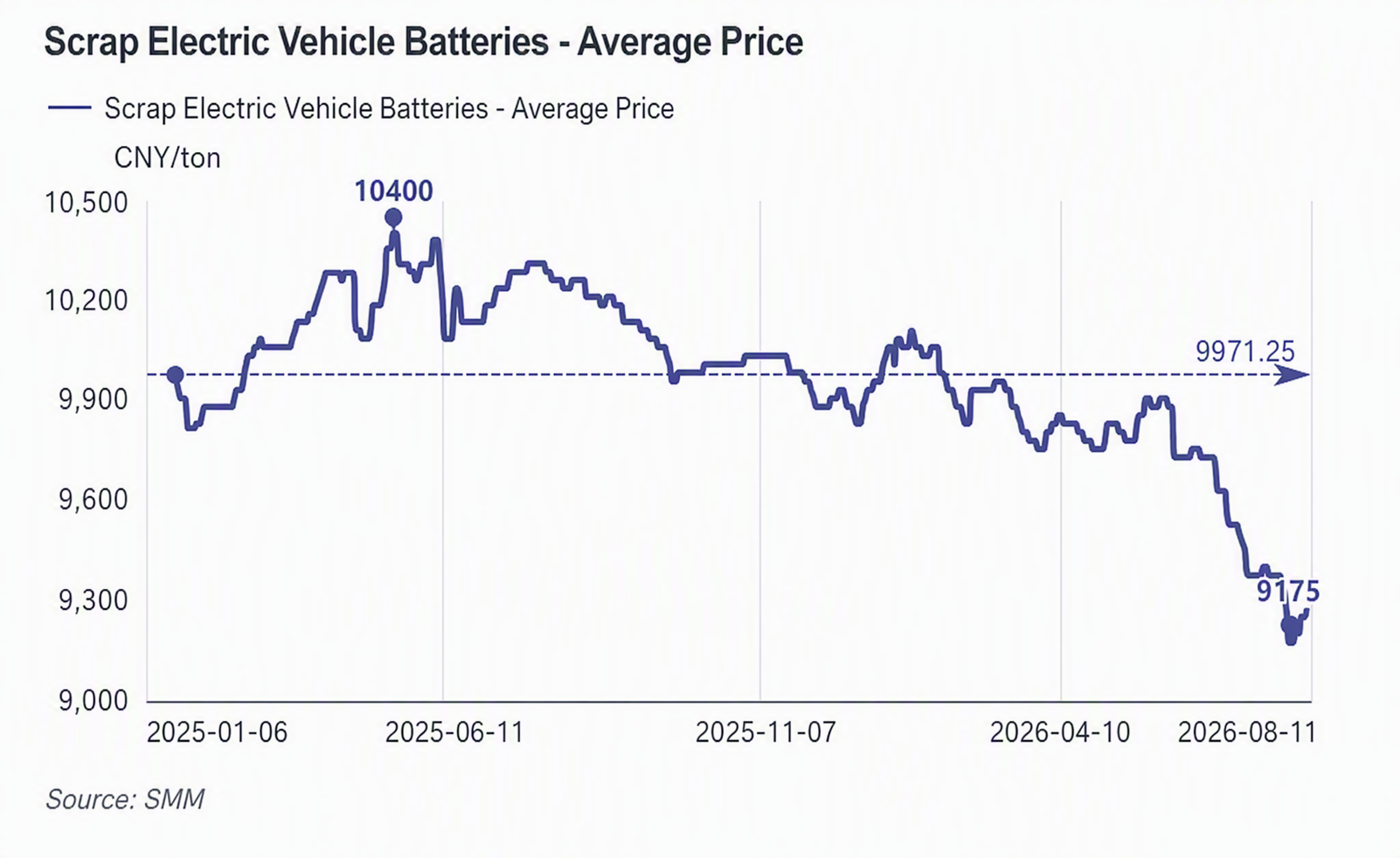
Raw material side, the price of waste e-bike batteries pulled back to 9,175 yuan/mt, easing raw material cost pressures somewhat. However, scrap battery recycling supply has not increased significantly, continuing to constrain overall output. Looking at the details of production schedules, East China, as a major secondary lead-producing region, shows clear divergence: Only a few enterprises plan to ramp up production, while most smelters remain shut down or at low loads. In Central and North China, most furnace revivals and production resumptions are still concentrated at the end of August to September, limiting overall growth in August. Enterprise production is highly anchored to lead prices and raw material arrivals.
Demand side, the lead-acid battery industry remains in its traditional off-season, with overall downstream procurement being cautious, limiting any boost to lead prices. This round of lead price rebound is driven more by supply contraction in the primary sector and speculative bears closing positions ahead of delivery, without a simultaneous recovery in end-use consumption. In summary, overall secondary lead supply in August will remain at low levels. While narrowing losses have led to localized production ramp-ups and early restarts, this does not yet constitute a full supply recovery. Whether subsequent output can see a substantial rebound still depends on the sustainability of the lead price recovery, the release of scrap battery recycling volume, and the recovery of downstream battery demand. The realization of production resumptions in September remains uncertain.
![Open interest continued to pull back, pushing up lead prices, while spot lead performance limited the gains [Lead Futures Brief]](https://imgqn.smm.cn/usercenter/riosq20251217171722.jpg)

![Secondary Lead: Smelters show strong willingness to raise offers, and downstream expects spot order discounts to continue widening [SMM Lead Daily Review]](https://imgqn.smm.cn/usercenter/xVgcv20251217171721.jpg)