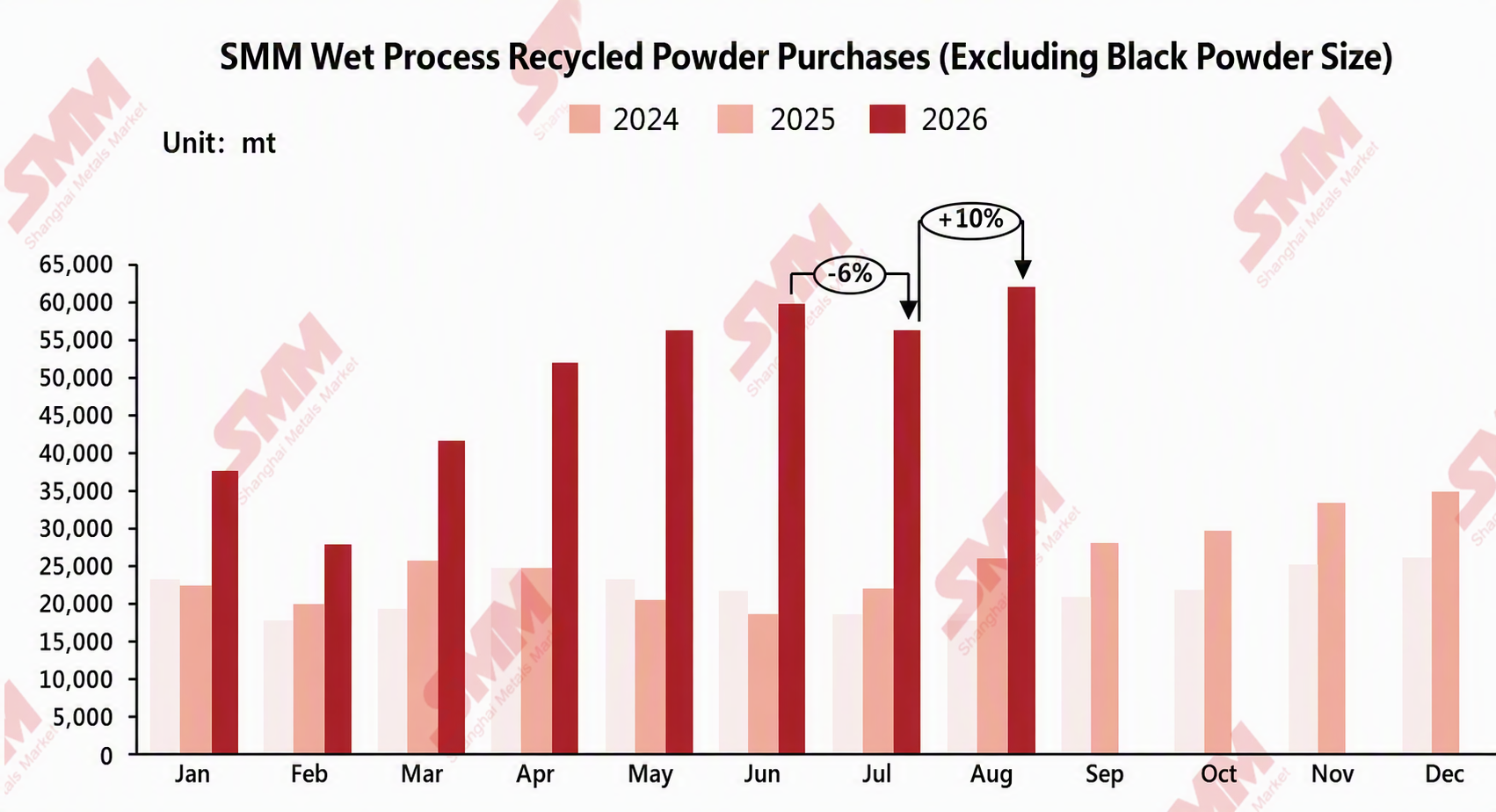
According to the latest SMM survey, in July 2026, the procurement of battery scrap (on a black mass equivalent basis) by mainstream hydrometallurgical plants in China fell by approximately 6% MoM from the high level in June. Nevertheless, as market conditions stabilize and demand expectations improve, procurement in August is expected to rebound by 10%. Looking back at the July market, both supply and demand sides and price negotiations showed significant structural divergence. The misaligned expectations between grinding enterprises and hydrometallurgical plants were the core factor behind the sluggish trading.
Demand side, although end-user demand from the energy storage and power battery sectors edged up slightly in July, most enterprises already held relatively ample raw material inventory due to the earlier mid-year target push by some hydrometallurgical plants. Their procurement strategy shifted to purely making just-in-time procurement, which led to lower actual transaction volumes and subdued overall market activity throughout the month. Supply side, as scrap material supply from production scrap and end-of-life battery channels continued to increase, the overall supply of black mass in the market gradually shifted from tight to loose. However, there were structural differences: except for LFP electrode black mass, whose supply remained relatively tight due to expanding repair demand for LFP, the supply pressure for other raw material black mass was effectively eased. In terms of material composition, LFP black mass still dominated the current market.
The key variable behind the decline in July procurement was price negotiation across the industry chain. Lithium carbonate prices drifted lower for most of the month, with only a mild pullback at month-end, which directly led to grinding enterprises’ extremely low willingness to sell. The underlying reason is that most grinding enterprises built their inventory when lithium carbonate prices were at earlier highs, whereas hydrometallurgical plants are now quoting black mass procurement prices essentially linked to lithium carbonate futures or spot prices, far below the psychological expectations of grinding plants. As a result, grinding enterprises generally held back from selling. For ternary and LCO black mass, cobalt sulphate prices continued to grind lower, while nickel sulphate touched bottom and edged up slightly later in the month after declining in the first half. Weighed down by the continuous decline of cobalt salts, black mass offers moved lower in tandem, and hydrometallurgical plants showed low acceptance of high prices, leaving the market in a destocking posture overall.
In July, total domestic black mass production pulled back slightly MoM but the decline was mild, with overall volumes remaining historically high. By product type, LFP black mass saw procurement difficulties for hydrometallurgical plants as grinding plants held back from selling, leading to lower operating rates. Ternary black mass production also edged lower, pressured by end-user caution and tightening production schedules. LCO continued to be depressed by sluggish consumer electronics demand. Going forward, as power battery and energy storage orders are released steadily and the earlier raw material tightness gradually eases, overall supply and demand are expected to move toward equilibrium, though the low-level operating environment for LCO is unlikely to reverse in the short term.

![Black Mass Imports: Policy Channels Opened, Market Circulation Still Faces Multiple Bottlenecks [SMM Analysis]](https://imgqn.smm.cn/usercenter/smDhO20251217171726.jpg)