As "production lines running at full capacity" and "flooded with orders" define the realistic picture of the energy storage sector in H1, a growth surge driven by both AI computing power and energy transformation is pushing the global ESS battery market to an unprecedented level.
Data from the National Energy Administration shows that in H1, investment in China's key energy projects maintained positive growth on the high base of last year, with the new-type energy storage sector up 74.3% YoY. By the end of June, the installed capacity of new-type energy storage projects with construction completed and put into operation nationwide reached 153 GW/396 GWh, up 61% YoY. Compared with 136 GW/351 GWh at the end of 2025, new installations in H1 are estimated at 17 GW/45 GWh.
For new-type energy storage, the National Energy Administration also noted that China has gradually formed a diversified development pattern where "lithium-ion battery ESS dominates, with multiple technology routes advancing simultaneously."
Set to exceed 1 TWh! Robust global ESS battery annual sales growth
The latest data from the China Automotive Power Battery Industry Innovation Alliance shows that in H1, China's cumulative ESS battery sales were 318.1 GWh, accounting for 32.5% of total sales, up 83.4% YoY; cumulative ESS battery exports were 58.6 GWh, accounting for 32.3% of total exports, up 28.5% YoY.
Looking at the global market, data released by SMM shows that global ESS battery cell shipments in H1 were approximately 486 GWh, up 93% YoY. By shipment structure, utility-scale (including commercial & industrial) battery cell shipments exceeded 432 GWh, while residential battery cells totaled nearly 54 GWh, with utility-scale scenarios remaining the absolute main force.
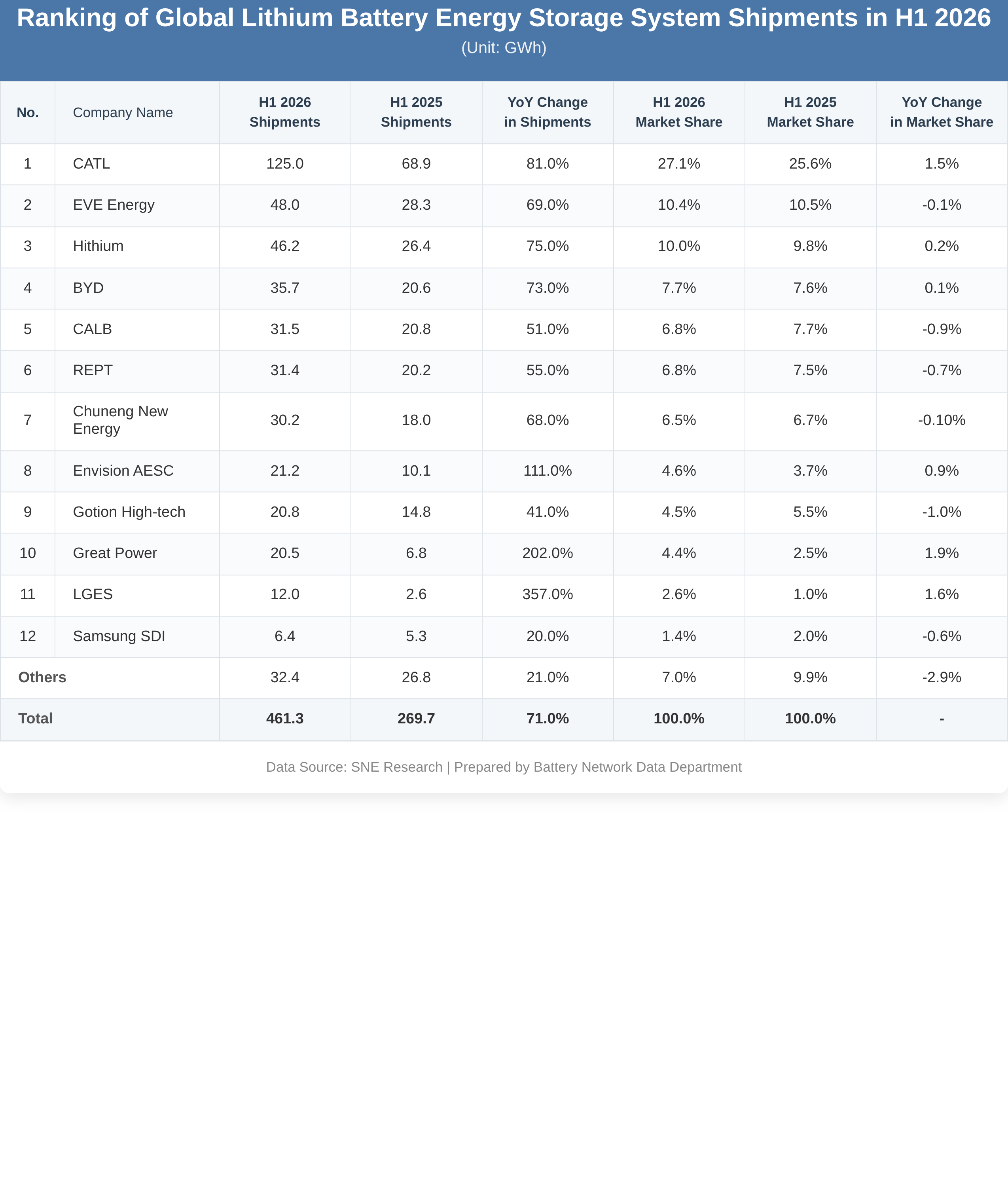
Data from South Korea's SNE Research further confirms this trend: in H1, global lithium battery ESS shipments reached 461.3 GWh, up 71% from 269.7 GWh in the same period last year. In H1, Chinese battery enterprises continued to dominate the global top 10 ESS battery shipments, and the combined market share of the top three (CATL, EVE, Hithium) climbed from 45.8% to 47.5%, with Chinese enterprises' global influence continuing to rise.
This growth surge is not accidental. CCTV Finance recently reported on a battery factory in Huizhou, Guangdong, whose ESS battery orders surged 30-fold in H1; a veteran employee of 15 years had never seen such robust market demand, and the R&D director stated that H1 production was "busy to the point of smoking."
The driving force behind this is the explosive expansion of AI computing power infrastructure. Given the current strong momentum of ESS battery growth, annual shipments are expected to historically break the 1 TWh milestone.
Extending the timeline, a research report from CSC Financial pointed out that after the industrialisation of computing-power coordination is realised, computing-power ESS will become the second growth curve for lithium battery ESS, and the industry's compound growth rate is expected to exceed 30% over the next three years.
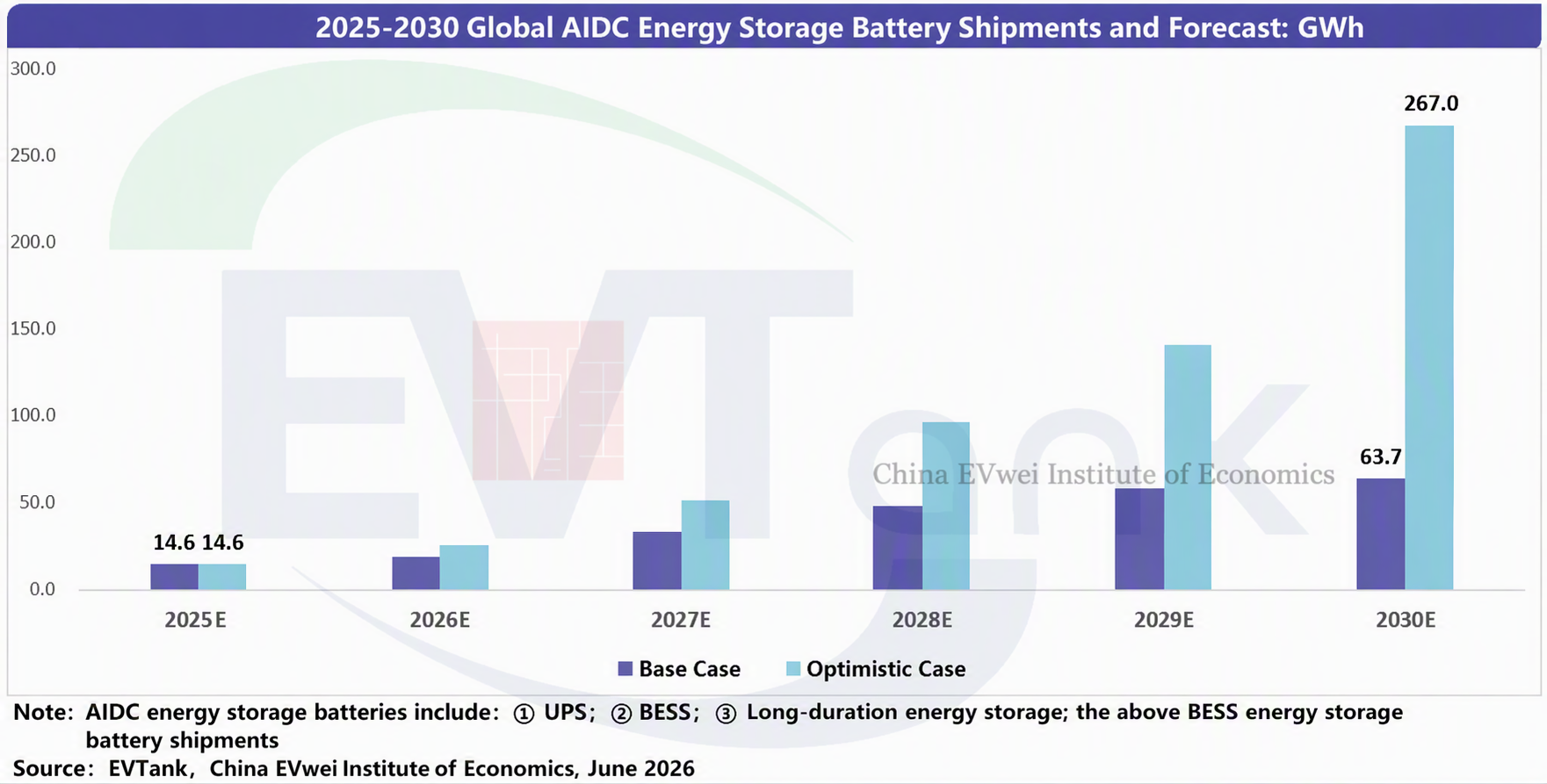
Research institution EVTank forecasts that as AI penetration accelerates across various fields, electricity consumption from data centers will continue to rise. Configuring based on a 20-50% ESS ratio and 3-5h energy storage duration, in an optimistic scenario where data centers' share of total electricity consumption rises to 6% in 2030, this will drive new demand for AIDC-used ESS batteries (BESS) up to 267 GWh, with existing demand reaching 607 GWh.
The policy level is also signaling growth. The "15th Five-Year Plan for New Power System Construction" recently issued by the National Development and Reform Commission (NDRC) and the National Energy Administration sets the target: during the 15th Five-Year Plan period, approximately 80 GW of new grid-side standalone new-type ESS capable of undertaking peaking and supply security roles will be added nationwide, aiming for an equivalent peaking duration of 4 hours. By 2030, grid-side standalone new-type ESS capable of undertaking peaking and supply security roles will reach 140 GW.
A continuous flow of major orders! Top-tier ESS battery players frequently increase their deployment
Amidst market and policy dividends, enterprises are taking frequent actions.
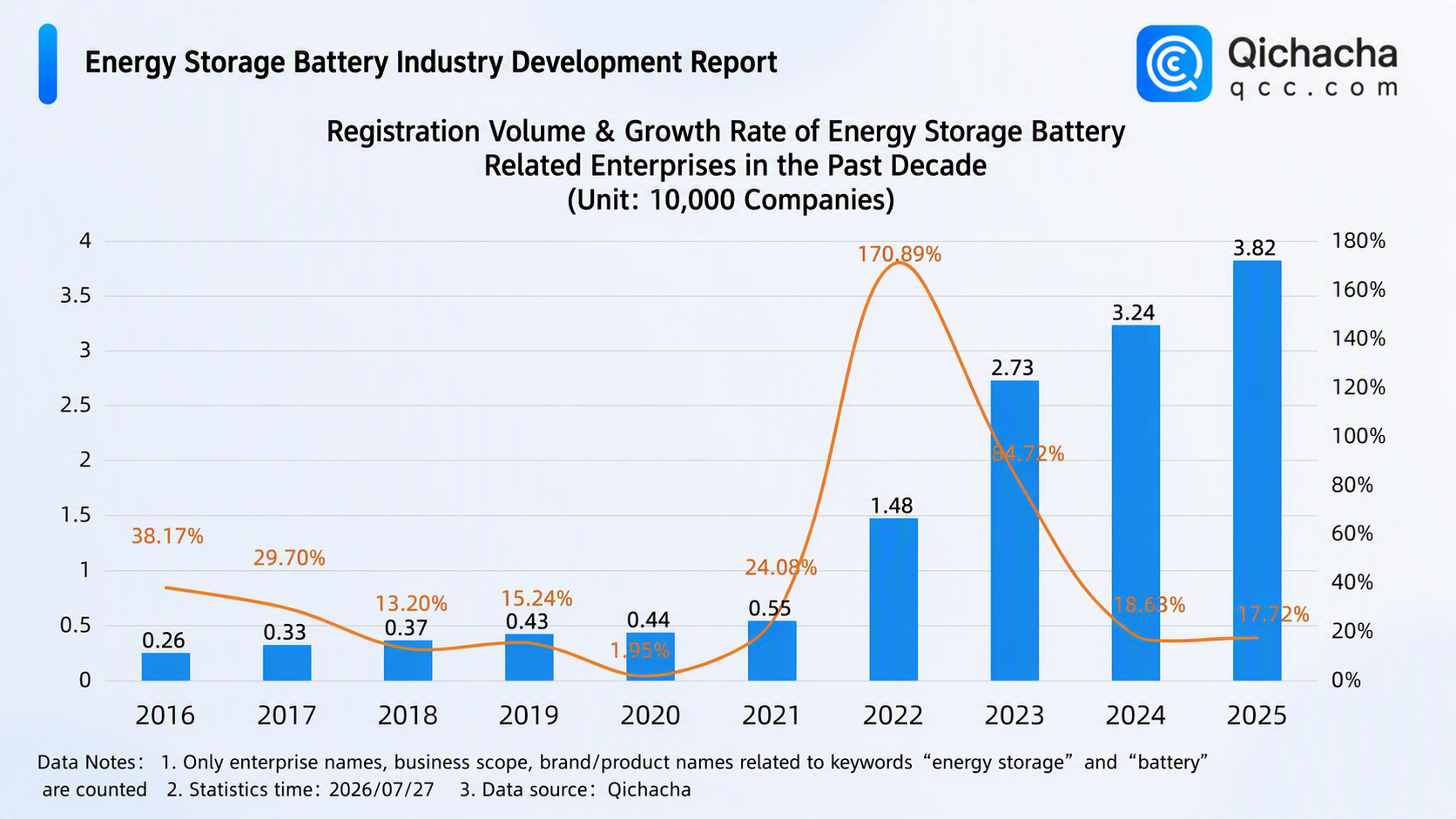
Qichacha data shows that as of July 27, there were 146,200 existing ESS battery-related enterprises in China, of which over 60% were established in the past three years. Registrations of ESS battery-related enterprises have grown continuously in the past decade, including 24,400 registered this year so far.
The top-tier camp has seen a constant stream of good news:
In H1, CATL's ESS battery system revenue was 53.261 billion yuan, up 87.54% YoY, with a gross margin of 23.96%. Recently, CATL signed a Memorandum of Understanding with Alfen N.V., a leading new energy integrator in Europe. The two sides plan to deploy 5 GWh of Tianheng sodium-ion ESS in Western European countries such as the Netherlands starting in 2027.
EVE recently also mentioned that shipments of its 628 Ah battery cell are expected to exceed 10 GWh this year, and orders on hand for next year have already exceeded 30 GWh. Currently, EVE's cumulative global ESS battery shipments have surpassed 200 GWh.
On July 28, Hithium reached a strategic cooperation with Statkraft, a top-tier European renewable energy producer, to provide a full-scenario integrated energy storage solution for a wind farm in Spain, empowering the upgrade and renovation of old wind power projects with advanced energy storage technology.
After securing the 12.5 GWh project in Saudi Arabia, the world's largest grid-side ESS project, BYD's ESS segment recently won another deal in the strategic energy highland of the Middle East, signing an 11.275 GWh cooperation agreement with UAE energy giant Masdar to provide ESS solutions for the RTC (Round The Clock) project.
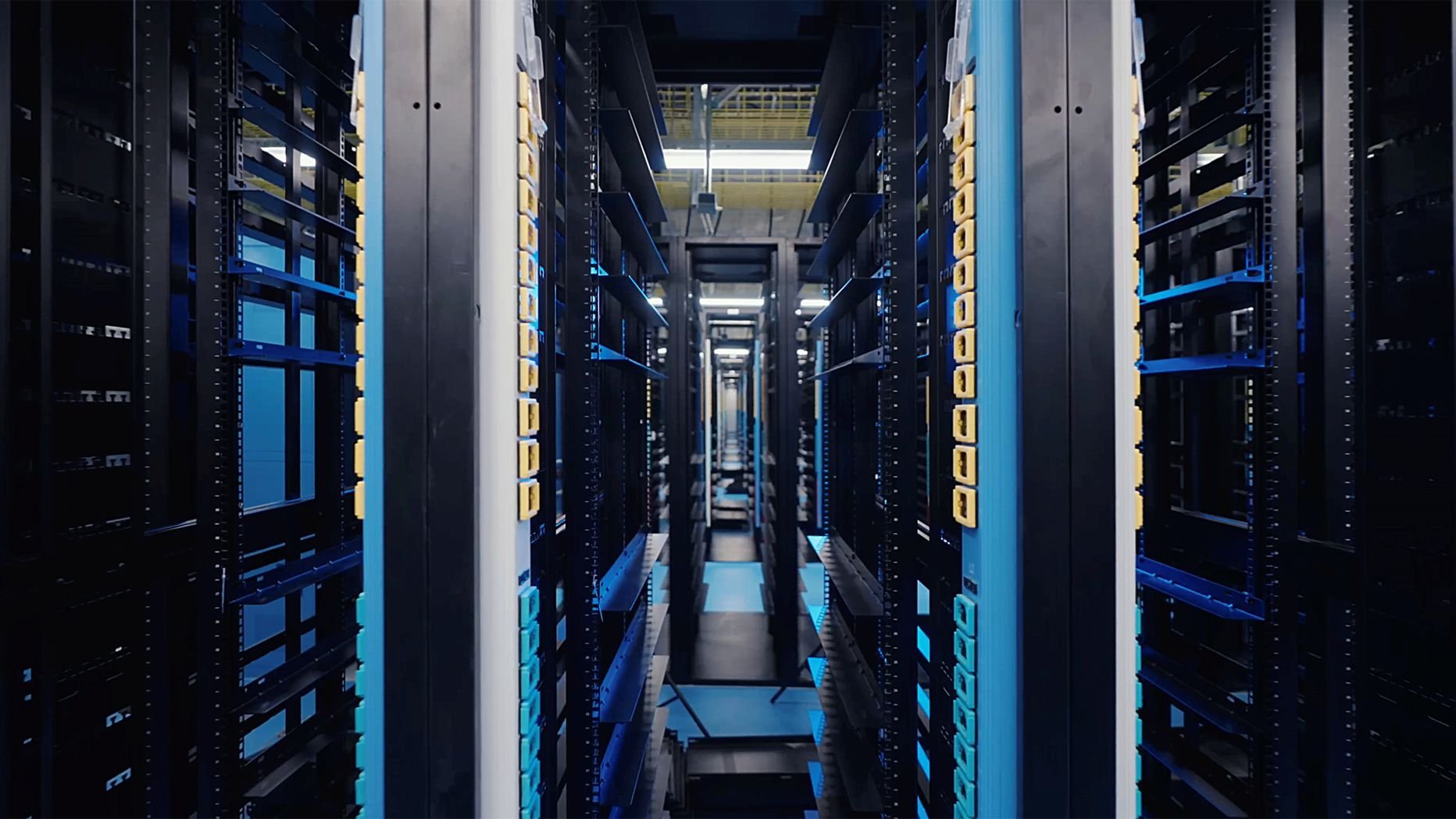
Photo/Envision
On August 6, Envision Group announced the completion of the world's largest AI computing power super single unit in Ulanqab, marking the official commissioning of the Envision Ulanqab Xinghe Base. On July 15, Envision AESC's Yichang Super Factory officially held its commissioning ceremony, with the first batch of 790 Ah large-capacity ESS battery cells shipped to Germany. In addition, Envision AESC recently made three consecutive moves in the European ESS market, partnering with German ESS developer ju:niz Energy, global independent power producer Elements Green, and UK ESS leader Pulse Clean Energy to advance a combined total of over 2.1 GWh of energy storage projects in Germany and the UK.
...
Additionally, according to earlier incomplete statistics from Battery Network, in the first half of June alone, order signing officially announced by enterprises in the ESS sector (including battery cells and systems) exceeded 180 GWh.
With surging revenue, explosive order growth, and frequent overseas successes, the recent boom in the ESS battery sector has also attracted publicly listed firms to increase their deployment.
On August 4, Sungrow's investment and development platform, Sungrow New Energy, signed an agreement with Qixia City, Yantai City, Shandong Province, planning a total investment of approximately 836 million yuan to build a 200 MW/800 MWh new-type standalone ESS power station, using electrochemical ESS equipment independently developed and produced by Sungrow.
On July 29, to effectively expand its lithium-ion battery capacity scale and consolidate its industry position in the ESS sector, PRET announced that its indirectly held subsidiary, Jiangsu Highstar Energy Storage Technology Co., Ltd., plans to invest in the construction of a "Large-Format Advanced Battery Production Line Upgrade and Renovation Project." The total planned investment is approximately 500 million yuan to upgrade and renovate existing capacity by adding two high-speed automated production lines.
On July 24, Sunwoda announced that its subsidiary, SEVB, is undergoing a Series C+ capital increase and share expansion, introducing strategic investors such as Sungrow with a total capital contribution of 805 million yuan, planning to leverage the equity cooperation with Sungrow to strengthen the company's ESS battery cell business segment.
Conclusion
Beyond capacity expansion, undercurrents are also stirring on the price side: Upstream material side leader in LFP, Hunan Yuneng, announced a 2,000 yuan/mt price raise for its entire product series starting August 1; midstream ESS PCS producers like Sinexcel, EAST, and Infypower also reportedly issued price adjustment notices, with increases ranging from 10% to 30%; downstream battery enterprise EVE, due to changes in battery consumption tax policies, announced a synchronous adjustment of product prices starting September 1 in accordance with relevant regulations, passing on the newly added consumption tax cost.
Industry insiders pointed out that the fundamental driver of this round of ESS battery price increases is the sudden and sharp increase in downstream demand, pushing top-tier producers' capacity to full load. At the same time, the imminent implementation of lithium battery consumption tax, the narrowing of export tax rebate channels, and rising upstream material costs are factors that, when combined, suggest this round of price increases is most likely not a short-term impulse but a prelude to structural price reshaping, and ESS batteries may encounter a new wave of price increases!
The ESS battery industry stands on the threshold of the 1 TWh era, representing the undisputed new growth pole after power batteries. With the full implementation of computing-power coordination, continuous penetration into markets outside China, and the expansion of the residential ESS and other markets, a new "golden window" is expected to open.
![[SMM Analysis] South Korea's NEV Exports Drop in August, but Cumulative Growth Persists Despite Production Disruptions](https://imgqn.smm.cn/usercenter/IpglC20251217171727.jpg)