In July 2026, the operating rate of secondary copper rod was 12.43%, lower than the expected 12.61%, down 0.18 percentage points MoM and 18.47 percentage points YoY. In July 2026, the copper scrap rod market operated under the dominant theme of the most-traded SHFE copper contract shooting up from 102,000 yuan/mt to above 106,000 yuan/mt, with a monthly gain exceeding 3,000 yuan/mt. Driven by the one-sided rally of copper cathode and insufficient follow-through from copper scrap, the price difference between primary metal and scrap widened from around 2,000 yuan/mt at the start of the month to over 4,000 yuan/mt at month-end, and at one point mid-month it even reached 4,800 yuan/mt. The price difference between copper cathode rod and secondary copper rod also hit the economic threshold of above 1,800 yuan/mt during the copper price surge. Under the dual framework of continued reverse invoicing compliance constraints and deepening high-temperature off-season, the market displayed a distinct polarization: structural tightness in supply, robust downstream arbitrage-driven purchases, and an off-season that was even weaker for physical consumption. Starting July 1, the new "three-in-one reverse invoicing" policy (with the prepayment rate of individual income tax for natural persons with annual sales of up to 600,000 yuan reduced to 0.25%) was formally implemented, further reshaping the regional supply landscape.
On the supply side, the copper scrap market continued the structural tightness seen since 2026, with the underlying constraint still being the combined impact of the reverse invoicing policy and the phase-out of fiscal and tax subsidies: inspections in Hubei and other regions became stricter, and invoicing quotas in areas such as Shuyang, Jiangsu remained restricted. More critically, in July, Henan province abolished fiscal and tax subsidies while reverse invoicing could still be implemented. In Shuyang, Jiangsu, following the reverse invoicing controls, companies were notified in July of the cancellation of subsidies, and most scrap utilization enterprises had suspended operations to wait and see. Some unfulfilled orders from Jiangsu flowed to neighboring provinces, and available compliant and deductible copper scrap remained tight. Mainstream copper scrap invoice tax rates had exceeded 11%, rising to 12% in some areas, further driving up raw material procurement costs for enterprises.
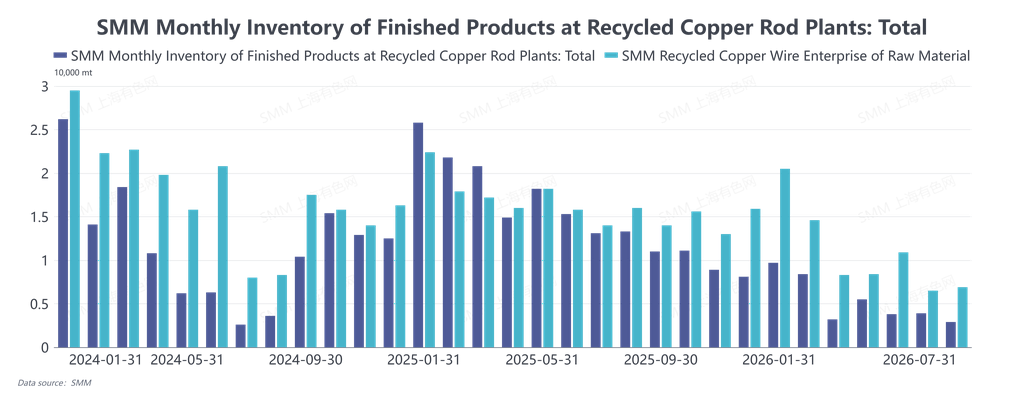
On the demand side, as the price difference between primary metal and scrap widened to above 3,800 yuan/mt, the economic viability of copper scrap became evident, and secondary copper rod enterprises' purchase willingness was remarkably robust. However, this robust purchase willingness was mainly directed at futures arbitrage rather than physical restocking. During the copper price surge, secondary copper rod enterprises widely adopted a hedging logic of "buy raw materials and sell futures" to purchase copper scrap. After securing enough for the day's demand during the morning session, they stopped quoting and did not chase higher prices to accept goods. However, such arbitrage-driven purchases initially did not fully translate into actual production restocking. The end-user wire and cable and enamelled wire industries were squeezed by the dual pressures of low copper cathode inventories with high premiums and high absolute copper prices, with pervasive fear of high prices. New orders became even weaker in the off-season. At month-end, secondary copper rod enterprises’ raw material inventory had reached a relatively ample level after mid-month hedging purchases, and the purchasing sentiment index dropped from 2.21 to a low of 2.03. The core market contradiction shifted from "spread dividend goes to arbitrage" to "ample inventory suppressing transactions." Overall, the core contradiction in the secondary copper rod market in July shifted from "copper price level" to "who gets the spread dividend" and "where compliant supply is located" — the price difference between primary metal and scrap of around 4,000 yuan/mt brought by the copper price surge was essentially captured by arbitrage funds; secondary copper rod enterprises’ operations of buying raw materials and shorting futures supported the circulation of copper scrap, but this was not transmitted to physical consumption. The cancellation of subsidies in Henan, Shuyang in Jiangsu, and other regions triggered a regional supply restructuring, further concentrating compliant cargoes in areas with a relatively stable policy environment. The outflow of orders from Jiangsu to neighboring provinces is a direct reflection of this restructuring.
Looking ahead to August, if the price difference between primary metal and scrap can stabilize above 4,000 yuan/mt, the implementation standards for reverse invoicing become clearer, and quotas in some regions are marginally relaxed, this may drive some restocking demand. Otherwise, amid a combination of low copper cathode inventory, high premiums, and downstream users’ fear of high prices, the secondary copper rod market will continue with a weak equilibrium pattern of "suppliers sell when copper prices rise, rod enterprises hedge and buy, but both sides wait and see when prices are high." A genuine recovery in physical consumption will still need to wait for a correction in copper prices or a material improvement in end-user orders.